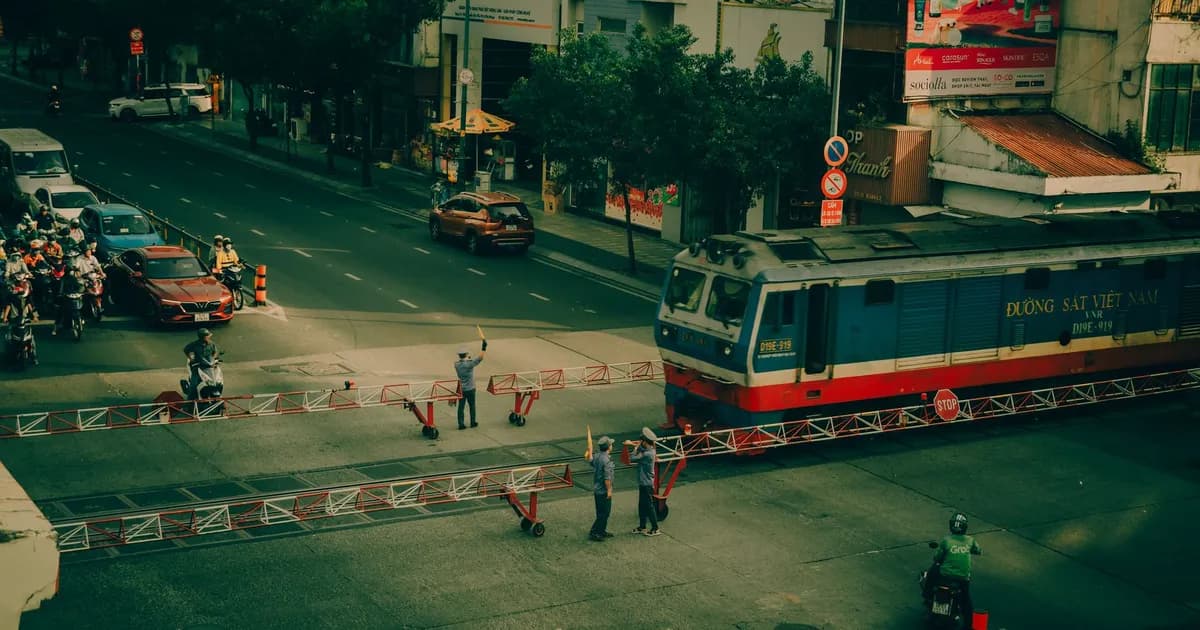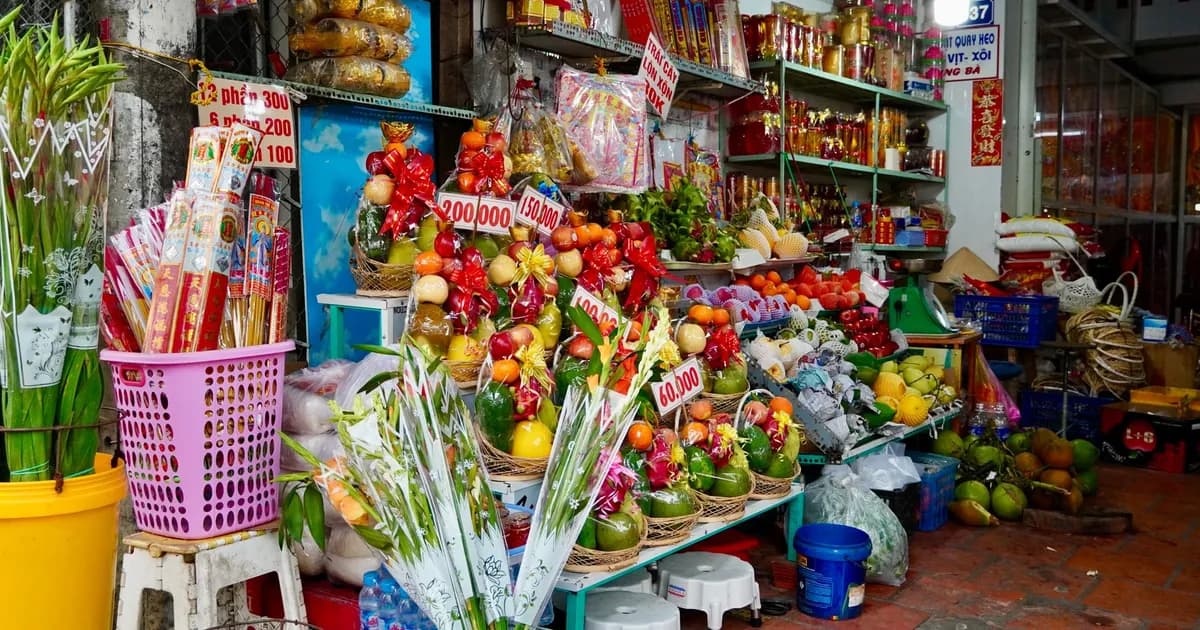
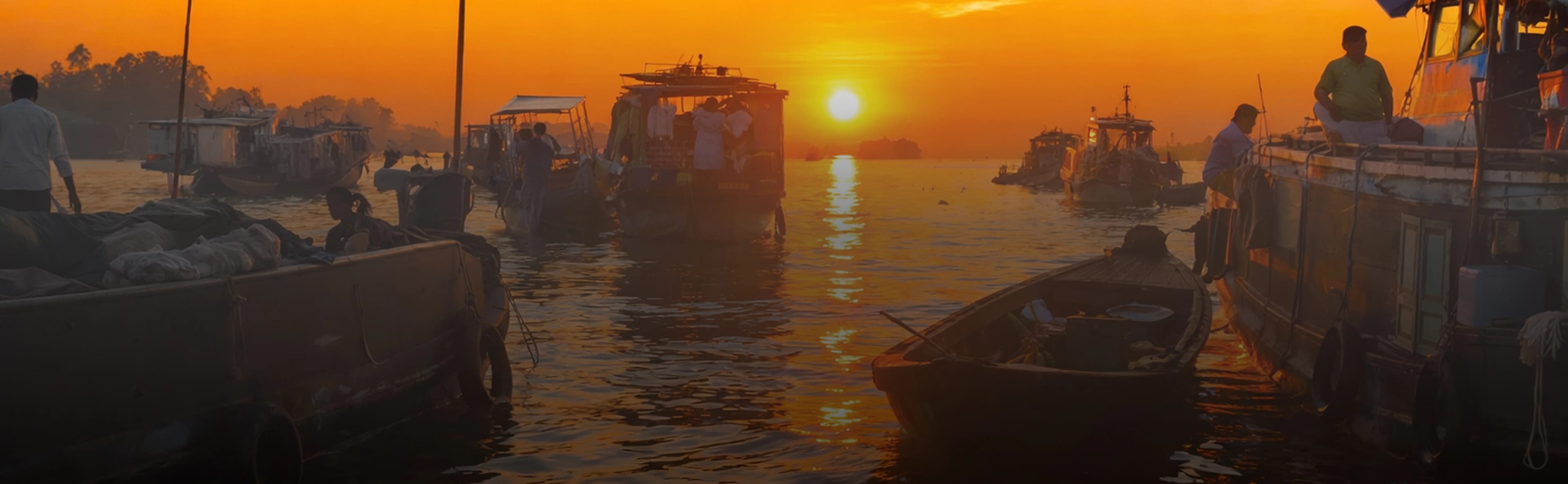

Vietnam rewards patience. Here's how to stop rushing — and start actually experiencing the country.
Why Slow Travel Works Better in Vietnam
Vietnam is a country that rewards those who take their time. The street food is best eaten unhurried on a plastic stool. The landscapes reveal themselves on long, winding roads. The people open up when you stay long enough to become a familiar face.
Yet many travelers approach Vietnam with a fast-paced, checklist mindset — trying to see everything in one trip. The result is a fragmented experience: too many buses, not enough depth, and a nagging feeling that you somehow missed the real thing.
Here are 10 common slow travel mistakes to avoid if you want to truly experience Vietnam.
One request. Up to five tailored proposals.
Skip contacting agencies one by one — share your trip once and let up to five trusted Vietnam agencies come to you. Free, with no obligation.
Get my free quotesMistake 1: Trying to See Everything at Once
Vietnam is long — over 1,600 kilometers from north to south — and extraordinarily diverse. Attempting to cover the entire country in two or three weeks leads to exhaustion, not discovery.
What to do instead: Choose two or three regions and explore them deeply. You'll come home knowing a place rather than just having passed through it. A focused trip to the north (Hanoi, Ha Giang, Ninh Binh) or the central coast (Hoi An, Phong Nha, Quy Nhon) will be far more memorable than a frantic sprint from Hanoi to Ho Chi Minh City with stops everywhere in between.
🗺️ Rule of thumb: If your itinerary has more than one overnight bus or flight per week, you're moving too fast.
Mistake 2: Following Standardized Itineraries
Pre-packaged tours and copy-paste itineraries from travel blogs prioritize efficiency over experience. They'll get you to the famous viewpoints — but rarely to the moments you'll actually remember.
What to do instead: Use itineraries as a starting point, not a script. Build in blank days. Ask guesthouse owners and locals what's worth seeing nearby. The best experiences in Vietnam are rarely listed on page one of Google.
Get matched with up to 5 trusted Vietnam agencies
- Free
- No obligation
- Up to 5 agencies
Mistake 3: Ignoring Secondary Destinations
Limiting your trip to major cities and iconic landmarks means missing a large part of Vietnam's richness. Hanoi, Ho Chi Minh City, and Ha Long Bay are worth visiting — but they're also the most crowded, most commercialized versions of the country.
What to do instead: Add at least one lesser-known destination to your route:
- Ha Giang for raw northern landscapes and ethnic minority culture
- Phong Nha for cave systems and jungle tranquility
- Quy Nhon for uncrowded beaches and authentic coastal life
- The Central Highlands for coffee culture and indigenous traditions
These places offer the most authentic experiences Vietnam has to give — and they're still genuinely off the main tourist trail.
Mistake 4: Moving Too Fast Between Places
Constant transportation — back-to-back overnight buses, daily relocations, perpetual packing and unpacking — breaks the rhythm of your journey. You arrive tired, leave before you've settled in, and never really get a feel for anywhere.
What to do instead: Commit to a minimum of three to four nights in each destination. Two nights is barely enough to find your favorite coffee shop. Four nights is when you start to notice the rhythms of a place — the morning market, the afternoon light, the way locals use the streets.
Slow travel isn't about moving less. It's about arriving somewhere and actually being there.
Mistake 5: Choosing Convenience Over Authenticity
International hotel chains and large resort complexes are comfortable — but they can completely disconnect you from local culture. When your hotel has a Western buffet breakfast and an English-language TV channel, you could be anywhere.
What to do instead: Choose locally owned guesthouses, boutique hotels, and homestays whenever possible. The difference in experience is enormous:
- Breakfast is often home-cooked and regional
- Owners become informal guides, pointing you to the best local spots
- Your money stays within the community
- The atmosphere is irreplaceable
In Vietnam, locally owned accommodation is not a budget compromise — it's often genuinely the better choice.
Mistake 6: Avoiding Street Food
This one is non-negotiable. Food is central to Vietnamese culture — it is how families gather, how neighborhoods define themselves, how history is passed down through flavor.
Avoiding street food out of caution or unfamiliarity means missing the most essential part of the country.
What to do instead: Eat where the locals eat. Look for busy stalls with high turnover — fresh ingredients and a crowd are the best indicators of quality and safety. Some unmissable experiences:
- Bún bò Huế in Hue — a spicy, complex beef noodle soup that puts plain pho to shame
- Bánh mì from a street cart — the Vietnamese baguette sandwich in its natural habitat
- Cơm tấm in Ho Chi Minh City — broken rice with grilled pork, a southern breakfast staple
- Bánh xèo (sizzling crepes) wrapped in lettuce and herbs, eaten with your hands
Street food in Vietnam is not a risk. It's the point.
Mistake 7: Overplanning Every Detail
A tightly scheduled itinerary leaves no room for the unexpected — and in Vietnam, the unexpected is often the best part.
What to do instead: Plan your transport and accommodation for the first few nights, then leave space. Stayed somewhere longer than expected because it was beautiful? Do it. Heard about a waterfall from a fellow traveler? Go find it. Met someone interesting who invited you to a local festival? Say yes.
Spontaneity isn't irresponsibility — it's the mechanism through which the best travel stories happen.
Mistake 8: Not Engaging with Locals
It's possible to spend two weeks in Vietnam and barely speak to anyone who lives there. Between tourist restaurants, group tours, and English-language bubbles, the distance can become significant.
What to do instead: Make engagement a deliberate practice:
- Learn a handful of Vietnamese phrases — even broken attempts are met with warmth and laughter
- Eat at local restaurants where menus may not be in English
- Accept invitations when they feel genuine
- Ask questions with real curiosity, not just polite small talk
Simple, respectful interactions can completely transform your experience of a place. Vietnamese people are warm, funny, and generous with those who show genuine interest.
Mistake 9: Ignoring Your Environmental and Cultural Impact
Travel choices matter — more than most travelers acknowledge. Overtourism is already affecting iconic destinations in Vietnam, and irresponsible visitor behavior puts pressure on fragile ecosystems and local communities.
What to do instead:
- Support responsible businesses — guesthouses, tour operators, and restaurants with transparent ethical practices
- Minimize single-use plastic — carry a reusable bottle; many cafés will refill it
- Stay on marked trails in national parks and protected areas
- Avoid exploitative wildlife experiences — elephant riding, tiger selfies, and similar activities cause real harm
- Respect sacred sites — dress appropriately, keep your voice low, follow posted guidelines
Traveling responsibly isn't about guilt. It's about ensuring that the places you love remain beautiful for the travelers who come after you.
Mistake 10: Staying Constantly Connected
The instinct to document everything — to post, to check in, to stay online — is one of the biggest enemies of deep travel. It creates a layer of mediation between you and the actual experience.
What to do instead: Build intentional offline time into your days:
- Leave your phone at the guesthouse for a morning
- Eat a meal without photographing it
- Sit at a café and just watch the street
- Take a walk without a destination or a map
Vietnam rewards presence. The texture of a morning market, the sound of rain on a motorbike canopy, a conversation held entirely in gestures and laughter — these are the experiences that stay with you. They don't happen when you're looking at a screen.
The Slow Travel Mindset: A Summary
| Fast Travel | Slow Travel |
|---|---|
| Maximize destinations visited | Maximize depth of experience |
| Follow fixed itineraries | Build in flexibility and blank days |
| Stay in convenient, familiar hotels | Choose local, immersive accommodation |
| Rush through iconic sights | Explore secondary destinations |
| Eat safe, familiar food | Embrace local street food culture |
| Document everything | Be fully present |
Final Thought: Vietnam Is Not Meant to Be Consumed
The travelers who leave Vietnam most deeply affected are never the ones who saw the most. They're the ones who stayed longest in one place, ate the most unexpected meal, got lost most productively, and connected most honestly with the people they met.
Vietnam is not a checklist. It is a country to be lived — slowly, curiously, and with an open mind.
Slow down. Everything changes when you do.
Looking for where to start? Read our guide to Vietnam's emerging regions — the destinations best suited to the slow travel mindset.