

Vietnam's Best-Kept Regional Secrets: Slow Alternatives to the Obvious
The most visited places in Vietnam are not its best-kept secrets — they are its most legible ones. Ha Long Bay, Sapa, and Hoi An have been translated into a language that mass tourism understands: cable cars to summits, lantern-lit streets ticketed at the gate, cruise circuits timed to the hour. That translation has costs. It costs the traveller the encounter they came for. It costs local communities the agency to shape how their home is seen. This guide pairs each of those three icons with a quieter counterpart — not as a budget workaround, but as a considered alternative. The choice between Ha Long and Lan Ha Bay, between Sapa and Pu Luong or Ha Giang, between Hoi An and Quy Nhon, is not primarily about price. It is about what kind of traveller you want to be, and what kind of memory you want to carry home.

Ha Long Bay vs Lan Ha Bay
Ha Long Bay receives an estimated four to five million visitors per year. Quang Ninh province, which administers it, has already suspended cruise vessels over safety concerns and caps the number of licensed operators. On a busy weekend, the main anchorages near Tuan Chau harbour can feel less like a seascape and more like a floating car park.
Lan Ha Bay sits just south of Ha Long, wrapping around Cat Ba Island in Hai Phong province. In September 2023, it was inscribed alongside Ha Long as part of the Ha Long Bay – Cat Ba Archipelago UNESCO World Heritage Site. It has over 300 islands, hundreds of small beaches, and the same karst drama — but far fewer overnight boats.
What Lan Ha offers the slow traveller
- Kayaking through enclosed lagoons where you may see only a handful of other groups
- Cai Beo floating fishing village, one of Vietnam's oldest, where families still live from aquaculture
- Cat Ba Island as a land base: national park trails, small guesthouses, and the option to combine a bay cruise with hiking
- Comparable pricing: overnight cruises typically run US$110–220 per person for two days/one night, broadly in line with mid-range Ha Long options
How to book it well
- Depart from Cat Ba rather than Ha Long City — tender times into quieter coves are shorter.
- Choose a two-night itinerary. Single-night boats often share routes with Ha Long traffic.
- Ask operators directly which bays they anchor in. Some "Lan Ha" cruises still spend the majority of time in standard Ha Long circuits.
- Budget for kayak hire and Cat Ba National Park entry fees — these are sometimes excluded from headline prices.
From Hanoi, new expressways and the Cat Hai bridge put Cat Ba roughly 2.5 to 3 hours away by road plus a short ferry crossing.

One request. Up to five tailored proposals.
Skip contacting agencies one by one — share your trip once and let up to five trusted Vietnam agencies come to you. Free, with no obligation.
Get my free quotesSapa vs Pu Luong and Ha Giang
Sapa's transformation is well documented. The Hanoi–Lao Cai expressway opened in 2014. The Fansipan cable car followed in 2016, capable of carrying up to 2,000 passengers per hour to the summit. Lao Cai province received 5.2 million visitors in 2019 and is targeting 10 million by 2030. The town itself — overbuilt, noisy at night, with trekking routes that now have queues — is a different place from the hill station that drew travellers in the 1990s.
Two alternatives answer the question differently, depending on what you are looking for.
Pu Luong: village-centred and gentle
Pu Luong Nature Reserve lies in Thanh Hoa province, about 160–180 km southwest of Hanoi. Established in 1999, it covers more than 17,600 hectares of lowland forest and terraced rice paddies, inhabited by Thai and Muong communities. The villages — Ban Don, Ban Hieu and others — are connected by footpaths rather than paved roads.
What to expect:
- Multi-day trekking between stilt-house villages, with nights in family homestays (US$10–20 per person including breakfast)
- Boutique ecolodges from US$40–120 per night for those who prefer more comfort
- River tubing, small waterfalls, and cultural evenings organised by village committees
- Bus or shared shuttle from Hanoi: around US$10–15 one way, 4.5–5 hours
Thanh Hoa's tourism department promotes Pu Luong as a model for community-based tourism, with local households managing homestays directly and receiving hospitality training.
Ha Giang: geopark-scale and raw
Ha Giang province, bordering China in the far north, is home to the Dong Van Karst Plateau — a UNESCO Global Geopark since 2010 recognised for its limestone landscapes and ethnic diversity. The Ha Giang Loop, a three-to-five-day motorbike circuit through Dong Van and Meo Vac, passes sheer cliffs and river gorges that many experienced travellers consider more dramatic than anything in Sapa.
What to expect:
- Guided Loop tours with local ethnic minority drivers from around US$70–90 per day, including bike, fuel, accommodation and most meals
- Sleeper buses from Hanoi to Ha Giang City: US$12–18, six to seven hours
- Stricter enforcement of motorbike licence and insurance requirements since April 2024 — carry documentation and verify your licence is valid for Vietnam
- A new provincial initiative (announced May 2026) encouraging homestays to register officially and meet safety standards
The key distinction between the two: Pu Luong suits travellers who want to walk slowly between villages and sit with a family over rice wine. Ha Giang suits those who want geological scale and the sensation of riding through a landscape that feels genuinely remote. Both reward patience. Neither rewards rushing.
Hoi An vs Quy Nhon
Hoi An Ancient Town is a UNESCO World Heritage Site of genuine beauty. It is also a place where, before the pandemic, around 5.3 million visitors per year passed through streets designed for a trading port of a few thousand residents. Entry to the heritage core now requires a ticket (120,000 VND, approximately US$4.70 for foreign visitors). Vietnamese media have reported that local officials themselves worry about the town becoming, in their words, an open-air theme park.
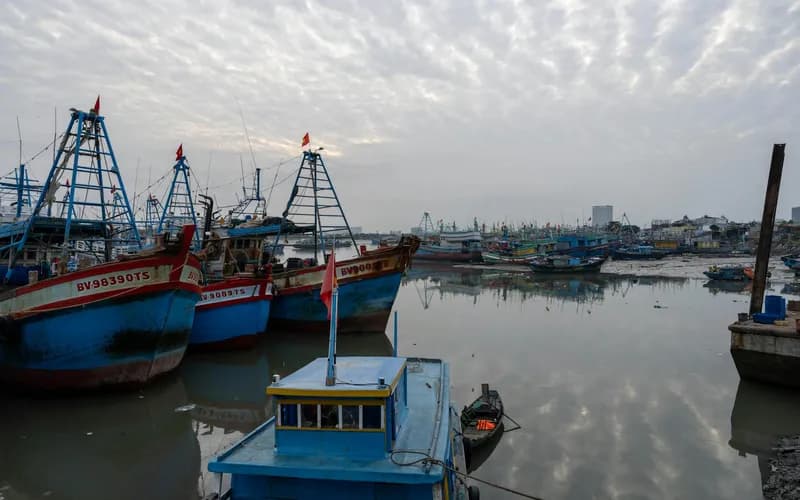
Quy Nhon is a coastal city in Binh Dinh province, roughly midway between Hoi An and Nha Trang. It has long beaches, Cham towers dating from the 11th and 12th centuries, a working fishing harbour, and almost no international tourist infrastructure in the sense that Hoi An has it.
What Quy Nhon offers instead
- Banh It Towers and Thap Doi (Twin Towers): significant Cham heritage sites without the lantern-commerce overlay
- Ky Co and Eo Gio: clear-water beaches and rocky capes that remain genuinely quiet on weekdays
- Hon Kho Island: fishing-village visits and snorkelling, accessible by short boat trip
- Bai choi folk singing and traditional martial arts: promoted by provincial tourism as living practices, not staged performances
- Mid-range sea-view hotels: typically US$25–60 per night, lower than equivalent riverside hotels in central Hoi An
- Phu Cat Airport: domestic flights from Hanoi or Ho Chi Minh City frequently available for US$40–80 one way outside peak holidays
In late May 2026, Binh Dinh authorities announced a campaign to standardise beach service pricing in Quy Nhon — a direct response to overcharging complaints seen elsewhere. It is a small signal that the city is managing its growth with some care.
The trade-off is real. Quy Nhon has fewer restaurants with English menus, less nightlife, and requires more initiative to navigate. Travellers who have made the choice consistently report empty beaches at dawn and seafood eaten at plastic tables beside the boats that caught it that morning.
Get matched with up to 5 trusted Vietnam agencies
- Free
- No obligation
- Up to 5 agencies
What to Do Next
These alternatives do not require a complete itinerary overhaul. They require a decision made early, before the default booking takes hold.
- Decide which pairing matters most to you. If you have ten days, you cannot do all three alternatives well. Choose one and give it time.
- Book Lan Ha through an operator who specifies anchorage locations. Ask before you pay. A two-night itinerary is worth the extra day.
- For Pu Luong, contact homestays directly or through a community-based operator. Advance booking is essential in harvest season (September–October).
- For Ha Giang, verify your motorbike licence is valid in Vietnam before you arrive. If it is not, book a guided tour with a local driver rather than renting independently.
- Add at least three nights to any Quy Nhon visit. The city reveals itself slowly. One night is not enough to find the rhythm.
- Check current regulations before departure. Hoi An's ticketing rules, Ha Giang's licence enforcement, and Lan Ha's cruise licensing all shift. Local-source information, booked close to travel, is more reliable than year-old blog posts.
Frequently Asked Questions
Will I regret skipping Ha Long Bay, Sapa, or Hoi An?
Travellers who choose the alternatives consistently report no regret — but they also note that these places require lower expectations of nightlife, shopping, and seamless logistics. If iconic photographs and well-worn infrastructure matter to you, the classics deliver those things efficiently. If encounter and quiet matter more, the alternatives are the better choice.
Is Lan Ha Bay actually less crowded than Ha Long?
On current evidence, yes — particularly on two-night itineraries with smaller boats departing from Cat Ba. The gap may narrow as Lan Ha's UNESCO status attracts more attention. The time to go is before that happens.
How much extra time do the alternatives require?
Pu Luong and Ha Giang each need at least one additional travel day compared with Sapa. Quy Nhon requires a separate flight or a longer train journey than Da Nang. Budget for that time honestly. Trying to fit an alternative into a tight itinerary designed for a classic destination usually produces the worst of both.
Do I need a special motorbike licence for Ha Giang?
Yes. Ha Giang authorities require a valid motorbike licence and insurance. Since April 2024, police checkpoints have been actively fining foreign riders without proper documentation. If your home licence does not cover motorbikes or is not recognised in Vietnam, book a guided tour with a local driver rather than renting independently.
Are the alternatives more expensive than the classics?
At mid-range level, costs are broadly comparable. Lan Ha cruises run slightly below equivalent Ha Long prices. Pu Luong homestays are genuinely affordable. Ha Giang guided tours cost more per day than a Sapa guesthouse but include transport, accommodation and most meals. Quy Nhon hotels are cheaper than central Hoi An. The choice is not primarily financial.
How do I find ethical operators for Ha Giang or Pu Luong?
Look for operators who use local ethnic minority guides, specify homestay revenue-sharing arrangements, and cap group sizes. Social enterprises such as YESD in Hanoi are transparent about their community-benefit model. Ask any operator directly how guides and homestay hosts are compensated before booking.
What is the best time of year to visit each alternative?
Lan Ha Bay is best from October to April, when seas are calmer and skies clearer. Pu Luong's rice terraces are most dramatic during harvest in September and October, and again when fields are flooded in May and June. Ha Giang's buckwheat flowers bloom in October and November — the most visited period, so book ahead. Quy Nhon's dry season runs roughly from January to August, with the clearest beach conditions from March to July.