

Vietnam is not a destination to rush through. The deeper you go — into its regions, its culture, its food, its rhythms — the more it reveals. This is your complete guide to experiencing Vietnam slowly, intentionally, and unforgettably.
Why Vietnam Is Made for Slow Travel
Vietnam stretches over 1,600 kilometers from north to south, encompassing a staggering range of landscapes, climates, and cultures within a single country. With over 21 million international visitors in 2025 alone, the country is also one of Asia's most rapidly growing destinations — which makes how you travel here increasingly significant. Mountains give way to coastal plains. Ancient imperial cities sit a few hours from remote ethnic minority villages. Megacities pulse with energy while river deltas unfold in near silence. Trying to "see everything" in one trip — the approach most first-time visitors take — almost always leads to a fragmented experience and a nagging sense of having missed the real thing.
This is precisely why Vietnam is one of the best destinations in the world for slow travel. Traveling slowly here is not simply a philosophy or a stylistic preference. It is, in many ways, a necessity. The country's richness cannot be captured in a checklist or compressed into a ten-day sprint. It reveals itself in small, unhurried moments: a conversation with a guesthouse owner who becomes an informal guide, the smell of a morning market in a town that doesn't appear in guidebooks, the way a landscape changes over a full day of travel by road or rail.
The more time you give Vietnam, the more it gives back. This guide is designed to help you structure that time well — by region, by rhythm, and by intention.
One request. Up to five tailored proposals.
Skip contacting agencies one by one — share your trip once and let up to five trusted Vietnam agencies come to you. Free, with no obligation.
Get my free quotesWhat Slow Travel Actually Means in Vietnam
Slow travel is often misunderstood as simply moving at a leisurely pace. In practice, it means something more specific: traveling with intention rather than obligation. It means building an itinerary around depth rather than distance, choosing authenticity over efficiency, and leaving enough space in your schedule for the unexpected to happen.
In Vietnam, this translates into a few concrete habits. It means spending at least three or four nights in each destination rather than moving every day. It means choosing locally owned guesthouses and homestays over international chain hotels. It means eating where locals eat rather than where menus come in English. It means taking the train instead of the plane when the journey itself is worth experiencing. And above all, it means resisting the pressure to tick off every famous viewpoint and landmark in favor of actually understanding the place you are in.
Vietnam's richness cannot be experienced on the surface. It reveals itself in shared meals with local families, in the daily life visible at any wet market, in the quietness of a countryside road at dawn. These are not experiences you can schedule or book in advance. They emerge naturally when you slow down long enough to notice them.
Understanding Vietnam by Region
To travel Vietnam well, it helps to understand the country through its three distinct macro-regions: the North, the Center, and the South. Each has its own identity, its own climate, its own cultural character, and its own pace. No single region is more or less "worth visiting" than the others — but they reward different types of travelers in different ways.
Northern Vietnam — Culture, Mountains, and Identity
The north is often described as the soul of Vietnam, and for good reason. This is where the country's cultural identity is most deeply rooted — in the streets of Hanoi's Old Quarter, in the ethnic minority villages of the highlands, in the karst landscapes that have defined the Vietnamese aesthetic imagination for centuries.
Hanoi, the capital, is a city that rewards slow exploration. Its thirty-six guild streets, its lakes, its French colonial architecture, its temple complexes, and above all its food culture make it a destination worth spending four or five days in rather than the standard two. Ha Long Bay is iconic, but the experience varies enormously depending on how you approach it — a one-night mass cruise offers very little, while a slower, less crowded departure from the lesser-visited Lan Ha Bay or Bai Tu Long Bay reveals something genuinely extraordinary.
The highlands are where the north truly distinguishes itself. Sapa, with its dramatic terraced rice fields and Hmong and Dao communities, has become increasingly visited in recent years — but Ha Giang, further north along the Chinese border, remains one of Vietnam's most spectacular and least-touristy regions. The Ha Giang Loop — a multi-day motorcycle or jeep circuit through the Dong Van Karst Plateau Geopark — is consistently described by travelers who have done it as one of the most memorable experiences in all of Southeast Asia. Ninh Binh, often called the inland Ha Long Bay for its similar karst scenery set among rice paddies and rivers, rounds out the north's natural highlights and is far less crowded than its coastal counterpart.
Northern Vietnam is ideal for cultural travelers, photographers, trekkers, and anyone with a genuine curiosity about ethnic diversity and mountain landscapes. It is a region that demands at least a week, and rewards two.
Central Vietnam — Heritage, Balance, and Natural Wonders
Central Vietnam offers a more balanced rhythm than either the north or south — a region where imperial history, artisan culture, coastal beauty, and extraordinary natural landscapes coexist within easy reach of one another.
Hue, the former imperial capital, is one of Vietnam's most underappreciated cities. Its UNESCO-listed complex of royal tombs, pagodas, and palace ruins spans both banks of the Perfume River and can occupy days of genuinely absorbing exploration. The city's cuisine is among the most refined and distinctive in the country — a reflection of its royal history — and exploring it properly requires time and appetite.
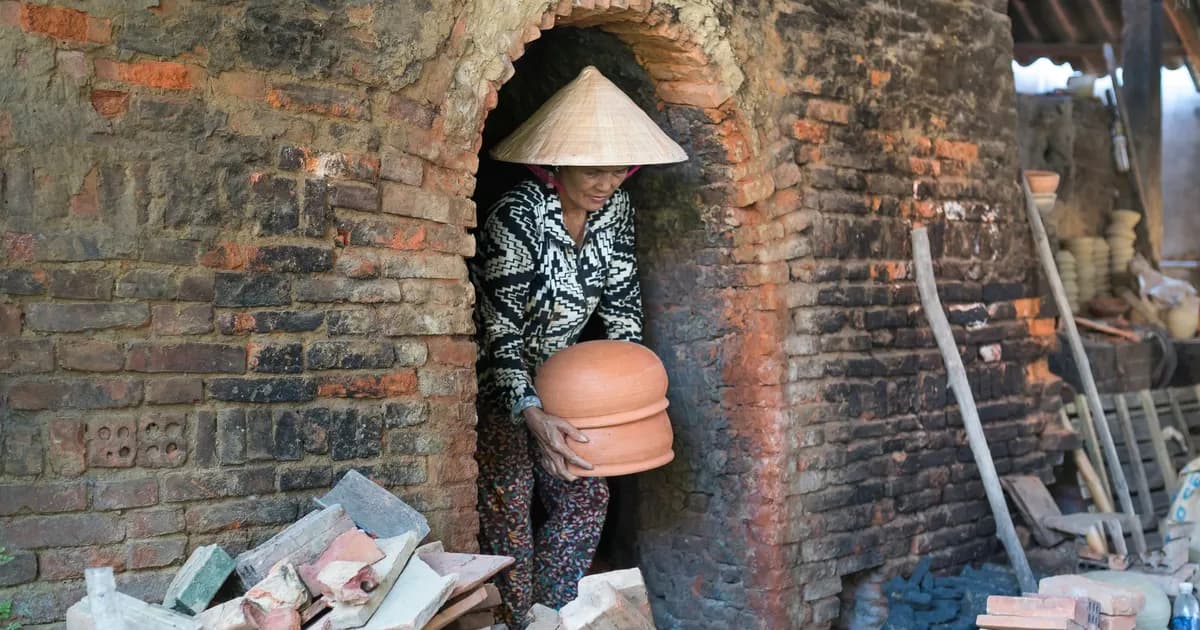
Hoi An is perhaps Vietnam's most photographed town, and its lantern-lit ancient quarter deserves its reputation. What it also deserves is more than the single day that most tours allocate to it. Staying two or three nights allows you to experience the town before and after the day-trip crowds arrive, to cycle into the surrounding countryside and rice paddies, to engage with the tailors and ceramicists and lantern-makers whose craft traditions define the town's cultural identity.
Phong Nha-Ke Bang National Park, in the Quang Binh province north of Da Nang, is one of central Vietnam's most remarkable and least-crowded destinations. Home to Son Doong — the largest cave in the world — and dozens of other cave systems, rivers, and jungle landscapes, it offers a combination of adventure and tranquility that is genuinely rare. Cycling through the surrounding villages, kayaking on the Son River, and exploring the cave systems at various levels of difficulty make it a destination that can absorb three or four days with ease.
Central Vietnam suits first-time visitors, couples, and anyone seeking a coherent journey that touches on culture, history, coast, and nature without requiring the long overland distances of a north-to-south route.
Southern Vietnam — Energy, River Life, and Urban Depth
The south of Vietnam operates at a different frequency. Where the north is introspective and historically weighted, the south is dynamic, entrepreneurial, and outward-facing — shaped by decades of commerce, migration, and rapid economic development.
Ho Chi Minh City is not a city that immediately reveals its depth, but it rewards those who stay long enough to find it. Beyond the tourist circuit of the War Remnants Museum and Ben Thanh Market, the city has a remarkable food culture, a thriving arts and design scene, and neighborhoods — Binh Thanh, District 3, Thu Duc — that offer a more lived-in, less packaged version of Vietnamese urban life.
The Mekong Delta, a few hours south of the city, is one of the most rewarding slow travel destinations in all of Vietnam. Life here unfolds on the water — on narrow canals lined with fruit orchards, on floating markets at dawn, on wooden boats navigating a landscape shaped entirely by rivers and tides. The pace is genuinely slow, the interactions are natural, and the experience of spending several days moving through the delta by boat and bicycle is among the most humanly rich things you can do in the country.
Phu Quoc, Vietnam's largest island, offers a more varied experience depending on where you stay and how you approach it — ranging from large-scale resort luxury to quiet fishing village life on the island's quieter coasts.
Get matched with up to 5 trusted Vietnam agencies
- Free
- No obligation
- Up to 5 agencies
How to Structure Your Trip: Thinking in Regions, Not Kilometers
One of the most common and consequential mistakes travelers make when planning a Vietnam trip is organizing it around distance rather than coherence. The impulse to travel the full length of the country — Hanoi to Ho Chi Minh City, north to south — makes geographic sense but often produces a journey that is exhausting, superficial, and ultimately unsatisfying.
A more rewarding approach is to build your itinerary around coherent regional combinations, with enough time in each area to actually settle in.
For a trip of ten to twelve days, the smartest strategy is to focus on a single region with one meaningful extension. The North — Hanoi, Ninh Binh, and Ha Long Bay or Ha Giang — is an excellent standalone journey. So is a Central itinerary anchored by Hue, Hoi An, and Phong Nha.
For fourteen to sixteen days, combining two regions becomes genuinely possible without rushing. A North-to-Central journey — Hanoi, Ha Giang, Ninh Binh, Phong Nha, Hue, Hoi An — gives you enough time to absorb each place if you resist the urge to add unnecessary stops.
For eighteen to twenty-one days, a full north-to-south journey is achievable at a meaningful pace, but only if you make deliberate choices about where to slow down and where to move through. Fewer destinations, longer stays, and a willingness to leave some things for a future trip are the hallmarks of a well-paced full-country journey.
The key principle throughout is rhythm. Two nights is barely enough to find your bearings. Three nights is when you start to understand a place. Four nights or more is when it begins to feel like somewhere you actually know.
Practical Principles for Traveling Vietnam Slowly
Accommodation: Choose Local Over Convenient
The choice of where to sleep has an outsized impact on the quality of a slow travel experience. International hotel chains and large resorts offer comfort and predictability, but they insulate you from the country you have come to experience. Locally owned guesthouses, boutique hotels, and homestays do the opposite. Breakfast is often home-cooked and regional. Owners become informal guides, pointing you toward the best local markets, the least-known viewpoints, and the most authentic restaurants. Your spending stays within the community. The texture of the place seeps into your daily life in ways it simply cannot when you are staying somewhere that could be anywhere.
Food: Street Food Is Not Optional
Vietnamese cuisine is one of the richest and most regionally diverse in the world, and the most authentic expressions of it are found not in restaurants but on the street. The best bowl of bún bò Huế in Hue costs less than two dollars and is eaten on a plastic stool at six in the morning. The best bánh mì is assembled from a cart, handed over in paper, and consumed while walking. Cơm tấm in Ho Chi Minh City, bánh xèo in the central region, cao lầu in Hoi An — these dishes are inseparable from the places that produced them, and eating them in their proper context is an act of genuine cultural engagement. Slow travelers eat where locals eat, follow the crowds rather than the menus, and understand that the fear of street food is almost always more significant than the actual risk.
Transportation: The Journey as Part of the Experience
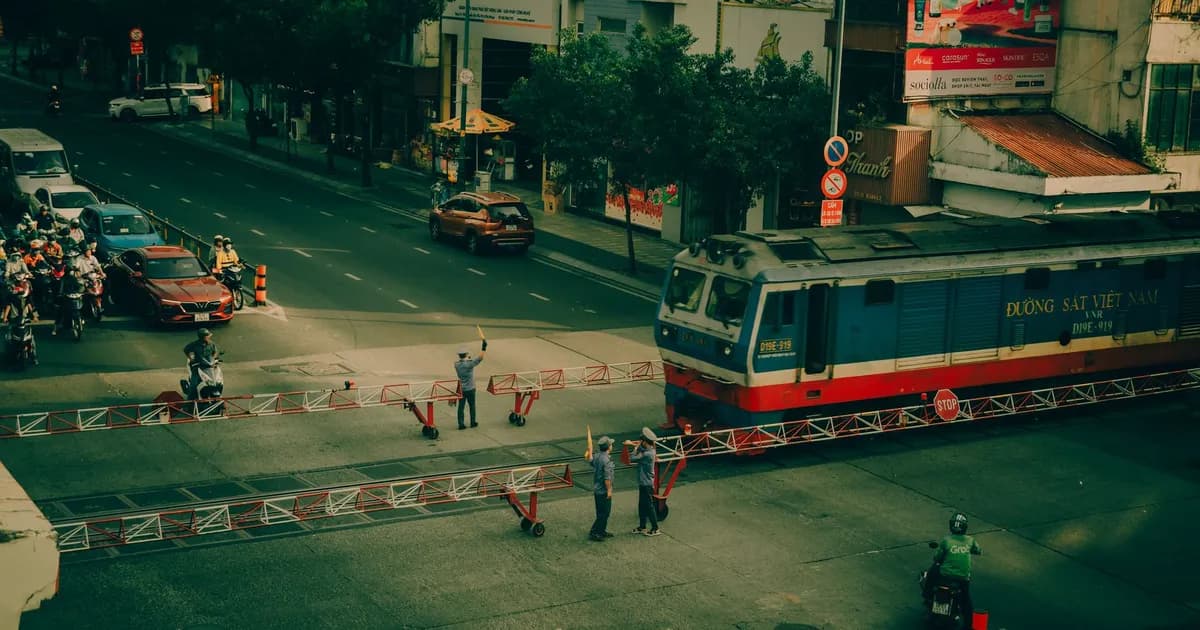
Vietnam's domestic transport options have improved dramatically in recent years, but not all options are equally suited to slow travel. Domestic flights are fast, cheap, and tempting — but they skip everything in between. The Reunification Express train running the full length of the country is one of Southeast Asia's great rail journeys, offering coastal scenery, mountain passages, and an intimate cross-section of Vietnamese daily life that no flight can replicate. For medium distances, private transfers offer flexibility and the chance to stop along the way. In cities, Grab has become the reliable, hassle-free standard for getting around without fare negotiation.
The slow travel principle for transportation is simple: choose the option that makes the journey itself worthwhile, not just the arrival.
Digital Balance: Be Present
Vietnam's digital infrastructure is excellent — cheap SIM cards, strong 4G coverage, and a growing range of app-based services make staying connected easy. But one of the quiet casualties of constant connectivity is presence, and presence is precisely what slow travel requires. Building intentional offline time into each day — a morning without the phone, a meal eaten without photographing it, a walk taken without a destination or a map — is not a sacrifice. It is how the most memorable moments in a journey actually happen.
Practical Information for Travelers
Visas and Entry: Most nationalities can apply for a Vietnamese e-visa entirely online, with approval typically within a few business days. The e-visa allows stays of up to 90 days and covers both single and multiple entries. Always verify the current requirements through official government channels before departure, as policies can change. For the latest updates on Vietnam's entry rules and travel conditions, our 2026 on-the-ground overview covers the key developments in one place.
Getting Around: Domestic flights connect major cities affordably and quickly. The train network is scenic and comfortable for longer distances, particularly the coastal route through central Vietnam. In cities, Grab is the standard for ride-hailing. For rural and highland areas, private transfers or hired motorbikes offer the most flexibility.
Money: Cash remains essential throughout Vietnam, particularly in rural areas, markets, and smaller towns. In major cities, card payments and mobile payment apps like MoMo and ZaloPay are increasingly accepted. Carry a mix of local currency and a low-fee travel card, and exchange money at banks rather than airports for better rates.
Connectivity: Local SIM cards are cheap, easy to obtain, and often available directly at international airports. A 30-day data package typically costs between five and ten dollars. eSIM options are available for compatible devices.
Safety: Vietnam is consistently rated as a very safe destination for international travelers. The main hazards are traffic — particularly in cities, where motorbike density and road culture can be disorienting — and petty theft in crowded tourist areas. Travel insurance is strongly recommended, especially for activities like motorbike riding, trekking, or cave exploration.
Climate: Vietnam's climate varies significantly by region. The north is coolest and driest between October and April. Central Vietnam is best visited between February and August. The south is most pleasant during the dry season from November to April. No single month is universally ideal across the whole country, which is another reason that regional itineraries — timed to match local weather — tend to produce better experiences than hurried full-country routes.
The Role of a Good Local Partner
Designing a meaningful slow travel journey in Vietnam is more complex than booking a standard package tour. Distances are long, regional differences are significant, and the quality of local operators varies enormously. Working with a knowledgeable local agency — one that understands slow travel, maintains genuine relationships with local communities, and prioritizes quality over volume — can make the difference between a good trip and an exceptional one.
The best local partners are not those who offer the most destinations in the fewest days. They are those who help you choose fewer destinations, stay longer, and engage more deeply — and who have the local knowledge and community connections to make those experiences genuinely authentic rather than performative.
Frequently Asked Questions
What is the best time to visit Vietnam?
The answer depends almost entirely on which region you plan to visit. The north is best from October to April, when temperatures are cool and dry. Central Vietnam is most pleasant from February to August. The south is ideal from November to April. For a multi-region trip, March and April offer the most balanced conditions across the country.
How many days do you need?
For a single region, ten to twelve days allows for a genuine slow travel experience. Two regions benefit from fourteen to sixteen days. A full north-to-south journey deserves at least eighteen to twenty-one days — and ideally more. The most common mistake is not visiting too few places, but allocating too few days to the places you do visit.
Is Vietnam suitable for first-time travelers in Asia?
Yes — Vietnam is one of the most accessible and well-structured tourism destinations in Southeast Asia. Infrastructure is solid, English is widely spoken in tourist areas, and the range of experiences available suits travelers at every budget level and comfort threshold. The main adjustments are around traffic and cultural etiquette, both of which are manageable with a little preparation.
How do you travel Vietnam more authentically?
The single most effective thing you can do is stay longer in fewer places. Beyond that: choose local accommodation over international chains, eat at local establishments rather than tourist restaurants, explore secondary destinations alongside the famous ones, and engage with people with genuine curiosity rather than transactional efficiency. Authentic travel in Vietnam is not about finding secret places — it is about showing up with enough time and openness to let the country meet you halfway.
Vietnam Is Not a Destination — It Is a Rhythm
Vietnam is not a country you visit once and fully understand. It is a place you experience gradually, in layers — and differently each time you return. The first trip shows you the landscape and the food. The second shows you the culture. The third begins to show you the people.
Slow travel is not simply a better way to see Vietnam. For many who have tried both approaches, it is the only way to truly connect with it.
In a world where travel is increasingly rushed, algorithmically optimized, and oriented around the production of content rather than the accumulation of genuine experience, Vietnam offers something quietly radical: the opportunity to travel with meaning.
Slow down. The country will meet you there.
Planning your slow travel journey through Vietnam? Explore our regional guides, our practical overview of what has changed for travelers in 2026, and our list of the emerging destinations that most travelers still miss.