
Vietnam's e-visa rules have changed more in the past three years than in the previous decade — and a surprising number of travelers are still planning around outdated information. The most consequential misunderstanding: Vietnam's tourist e-visa is no longer capped at 30 days. Since August 2023, the limit has been 90 days, available to all nationalities, on both single and multiple-entry terms. That reform matters enormously for slow travelers. But the 90-day ceiling comes with a firm condition — e-visas cannot be extended inside the country. Overstay enforcement has tightened. And visa-free allowances, which vary from 14 to 45 days depending on your passport, are widely misread. What follows is a clear account of how the system actually works in 2026, who qualifies for what, and how to structure a longer itinerary without crossing into violation.
What the E-Visa Actually Allows in 2026
As of August 2023 — and confirmed through current official guidance — Vietnam's e-visa carries a maximum validity of 90 days. The official e-visa portal at evisa.gov.vn states clearly that validity cannot exceed 90 days and that travelers must depart by the date printed on the visa.
The e-visa is open to all nationalities and territories. Both single-entry and multiple-entry options are available. Government fees are US$25 for single entry and US$50 for multiple entry, paid online at the time of application. Processing typically takes three to five working days, though this can extend around public holidays and peak travel periods.
One rule carries particular weight for anyone planning a long stay: e-visas are not extendable inside Vietnam. If you reach your exit date and want more time, you must leave the country and apply for a new visa. There is no in-country mechanism to add days to an approved e-visa, regardless of circumstance.
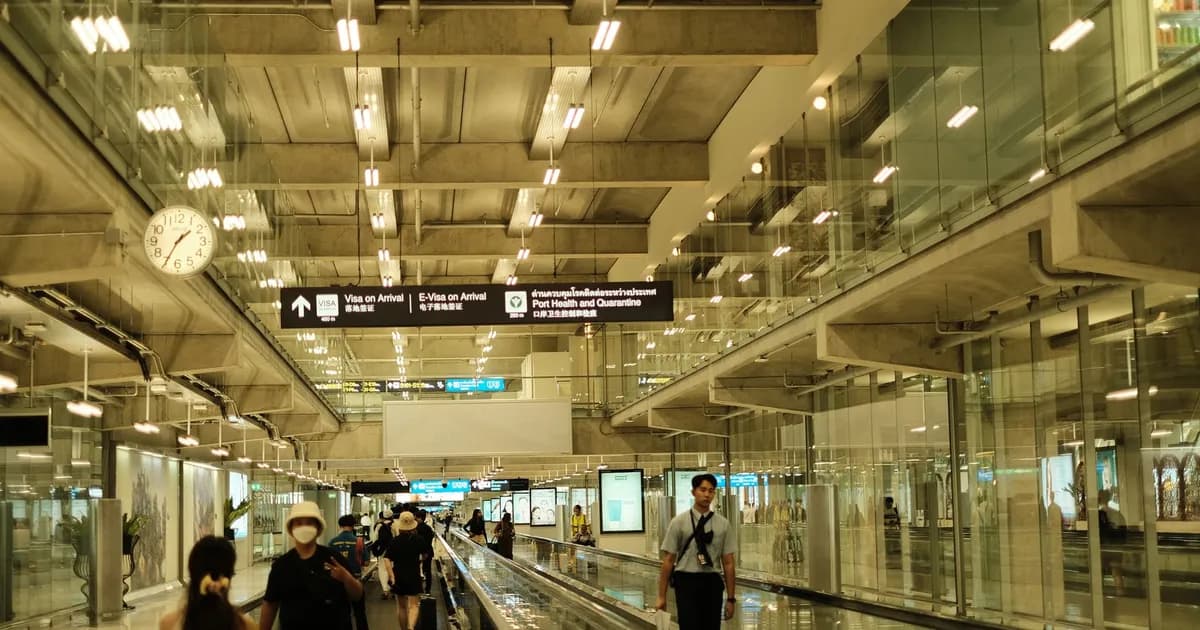
Visa on Arrival — once a common option at Vietnamese airports — was discontinued in 2022. Arriving without a pre-approved e-visa, a qualifying visa exemption, or an embassy-issued visa is not a viable strategy. Airlines will generally deny boarding to passengers who cannot demonstrate valid entry authorization.
One request. Up to five tailored proposals.
Skip contacting agencies one by one — share your trip once and let up to five trusted Vietnam agencies come to you. Free, with no obligation.
Get my free quotesVisa-Free Entry: A Nationality-Specific Breakdown
Vietnam's visa-free arrangements are governed by a mix of bilateral treaties, ASEAN agreements, and unilateral waivers. The durations vary significantly, and conflating them is one of the most common planning errors.
45-Day Visa-Free Stays
Through Resolution 44/NQ-CP, signed in March 2025, Vietnam extended unilateral 45-day visa waivers for 12 countries to 14 March 2028. Nationals of Germany, France, Italy, Spain, the United Kingdom, Russia, Japan, South Korea, Denmark, Sweden, Norway, and Finland may enter without a visa for up to 45 days per stay. These stays can be repeated, provided each individual stay does not exceed 45 days.
A separate temporary arrangement — valid only from 1 March to 31 December 2025 — grants nationals of Poland, the Czech Republic, and Switzerland up to 45 days visa-free, but exclusively through tour packages arranged by registered Vietnamese operators. Independent travelers from these countries do not qualify under this temporary waiver.
ASEAN Nationals
Citizens of most ASEAN member states — including Thailand, Singapore, Malaysia, Indonesia, Laos, and Cambodia — enter visa-free for between 14 and 30 days, depending on the specific bilateral agreement in place. The exact duration varies by country and is not always clearly published in a single location. Travelers should verify their allowance directly with Vietnam's embassy or a current official source before departure.
Phu Quoc Island Arrangement
Travelers arriving directly into Phu Quoc via an international flight may stay on the island for up to 30 days without a visa. This applies to any nationality. The condition is strict: you must remain on Phu Quoc. Traveling to mainland Vietnam requires a valid visa or exemption. This arrangement is useful for island-focused itineraries but is not a substitute for broader Vietnam access.
No Visa Exemption
Nationals of the United States, Canada, Australia, New Zealand, and most countries in Africa, South Asia, and Latin America receive no visa-free allowance. Entry requires a pre-approved e-visa (up to 90 days) or an embassy-issued visa. For these travelers, the e-visa is the standard and most practical route.
Overstay Rules and Enforcement
Vietnam applies a strict validity model. Your visa or exemption specifies an exit date. Remaining in the country past that date — by even one day — constitutes an overstay and is treated as a formal violation.
The Vietnam Briefing's 2025 policy summary and multiple immigration consultancy guides describe the current penalty structure as follows. Minor overstays typically result in a daily fine of 500,000 VND (approximately US$20), payable at an immigration office or upon departure. Overstays exceeding 30 days carry significantly higher risk: detention, formal deportation, and entry bans of one to three years are all documented outcomes.
Practitioners who work with travelers in Vietnam are consistent on one point: enforcement has become less flexible since the pandemic. The informal arrangements that once allowed quiet in-country fixes are largely gone. Formal records of overstay violations can affect future visa applications, not just to Vietnam but in contexts where immigration history is reviewed.
One practical risk worth noting: late-night departures. If your exit date is a given calendar day and your flight departs after midnight, you are technically in Vietnam on the following day. Build a buffer of at least one day into your ticketing when traveling close to your visa expiry.
Get matched with up to 5 trusted Vietnam agencies
- Free
- No obligation
- Up to 5 agencies
Strategies for Longer Itineraries
For travelers wanting 60 to 120 days in Vietnam, the current framework requires planning around legal exit points rather than continuous stays. Several approaches work within the rules.
Travelers from the 45-day visa-free countries have the most flexibility. A first stay of up to 45 days on the visa exemption, followed by an exit to Thailand, Laos, or Cambodia, then re-entry on a 90-day multiple-entry e-visa, produces a total of up to 135 days across two legal stays. There is no published minimum gap required between entries under different regimes, though immigration officers retain discretion.
For nationalities without a visa exemption, two sequential 90-day e-visas — with a regional exit between them — allow up to 180 days across two stays. This requires applying for the second e-visa before or during the exit trip. There is no explicit rule against multiple sequential e-visas, provided each application is legitimate and each stay complies with its terms.
Border exits for this purpose — commonly called visa runs — are legal and routine. Exits via Bangkok, Phnom Penh, and Vientiane are the most common. Immigration officers at Vietnamese airports and land crossings are familiar with the pattern. Clean paperwork and compliance with each entry's terms are what matter.
Travelers with genuine long-term ties — employment, investment, study, or qualifying family connections — should explore Temporary Residence Cards or long-term visas rather than stacking tourist entries. Vietnam's Ministry of Public Security is also reviewing proposals for a five-year visa-waiver card for certain professionals and a golden visa scheme for high-value investors, though these remain policy discussions rather than available products as of mid-2026.

Frequently Asked Questions
Is Vietnam's tourist e-visa still capped at 30 days?
No. The 30-day cap applied to an earlier version of the e-visa system and was in place until August 2023. Current policy allows up to 90 days per e-visa, for all nationalities, on both single and multiple-entry terms. References to a 30-day e-visa in travel forums or older blog posts describe the pre-reform era and are no longer accurate.
Can I extend my e-visa while inside Vietnam?
No. Vietnam's e-visa system does not permit in-country extensions. Once your e-visa is issued, the exit date is fixed. If you want to stay longer, you must depart Vietnam before that date and apply for a new e-visa from outside the country. Agencies or individuals offering in-country e-visa extensions are not operating within the official system.
What happens if I overstay by a few days?
A daily fine of 500,000 VND (approximately US$20) is the standard penalty for short overstays, payable at immigration or on departure. Overstays beyond 30 days risk detention, deportation, and a formal entry ban of one to three years. Enforcement has tightened since 2022. Relying on airport staff to resolve an overstay informally is not a sound strategy under current conditions.
Can I enter on a visa exemption and then apply for an e-visa without leaving?
No. Switching from visa-free status to an e-visa requires leaving Vietnam and re-entering. There is no in-country mechanism to convert a visa exemption into a longer authorized stay. This is one of the most persistent misunderstandings among travelers planning extended trips, and acting on it risks an overstay violation.
Are visa runs — exiting and re-entering — legal?
Yes, provided each entry complies with the applicable rules. Exiting to a neighboring country and re-entering Vietnam on a new e-visa or under a fresh visa exemption is a legitimate and widely used approach. Immigration officers are accustomed to this pattern. What matters is that your paperwork is in order and that each stay remains within its authorized duration.
If I qualify for both visa-free entry and an e-visa, which should I use?
For stays of 45 days or fewer, visa-free entry is simpler and costs nothing. For stays longer than your visa-free allowance, or if you want multiple-entry flexibility within a single authorized period, a 90-day multiple-entry e-visa is the better tool. Some travelers use their visa-free allowance first, then re-enter on an e-visa — a legal sequence that extends total time in the country.
Does Visa on Arrival still exist at Vietnamese airports?
No. Tourist Visa on Arrival was discontinued in 2022 and has not been reinstated. Travelers who relied on VOA before the pandemic should not expect to obtain a visa upon arrival. Airlines will typically deny boarding to passengers without pre-approved entry authorization. An e-visa, a qualifying visa exemption, or an embassy-issued visa must be in place before you travel.