

Vietnam's Wellness Travel Grows Up: From Spa Days to Mental Reset Journeys
There is a moment in most resort stays when the spa menu arrives — laminated, extensive, priced by the hour — and the guest realizes they are still making decisions. That moment is precisely what a growing segment of wellness travelers is trying to escape. Vietnam's wellness sector has begun to understand this, and the response is reshaping what the country offers, and to whom.
For years, Vietnam's wellness identity rested on two pillars: affordable urban day spas and beach resorts with treatment rooms. Both remain. But something more considered is emerging alongside them — structured, multi-day programs designed around mental recovery, digital withdrawal, and what operators are now calling 'no-think' travel, where guests deliberately hand planning control to the host. Vietnam's national tourism authority has named holistic wellness one of five forces defining the country's 2026 travel landscape. The gap between genuine programming and marketing language, however, remains wide enough to matter.

The Shift That Is Actually Happening
The clearest signal of change came at Vietnam's 2025 tourism roadshows in Melbourne and Sydney, where officials unveiled what they called a 2026 Wellness Portfolio — a curated set of journeys spanning Quang Ninh, Hoi An, Phu Quoc, and Nha Trang. The framing was deliberate: not spa treatments, but multi-dimensional programs combining accommodation, nature immersion, cultural engagement, and structured mindfulness. The audience was the high-spend, long-haul traveler. The message was that Vietnam was done competing on price alone.
This is a meaningful pivot. Vietnam's domestic wellness tourism demand has grown roughly 25% over five years, according to figures from the Vietnam National Administration of Tourism. Globally, the wellness tourism sector reached USD 639 billion in 2023. The competitive pressure from Bali, Phuket, and Sri Lanka is real, and Vietnam's tourism planners appear to have concluded that differentiation requires depth, not just geography.
What depth looks like in practice varies considerably. At the more developed end, properties like Fusion Maia Da Nang have built week-long structured programs — consultations, daily treatments, mindfulness sessions, nutrition guidance — that reduce guest decision fatigue by design. The logic is simple: if you have to choose between the hot stone massage and the sound bath every morning, you are still working. The better programs remove that friction entirely.
One request. Up to five tailored proposals.
Skip contacting agencies one by one — share your trip once and let up to five trusted Vietnam agencies come to you. Free, with no obligation.
Get my free quotesGeography as Competitive Advantage
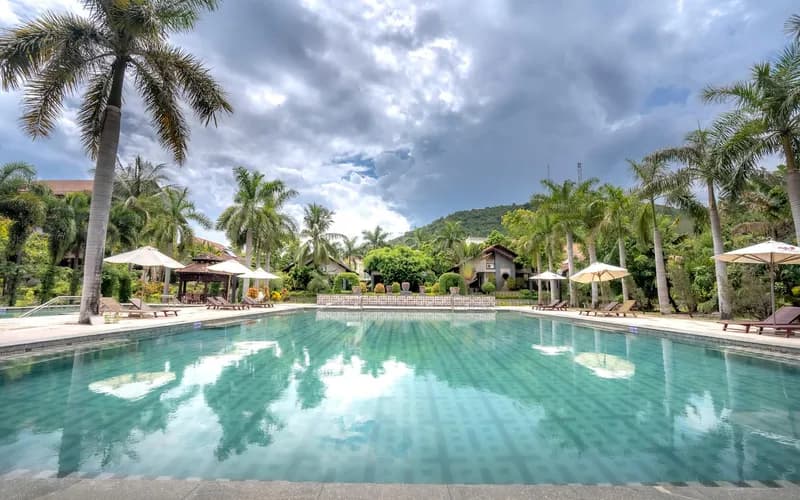
Vietnam's physical landscape gives it an unusual range of wellness environments within a single country. The central coast offers beach-adjacent yoga and breathwork. The northern highlands — Sa Pa, Ha Giang, Da Lat — provide cooler temperatures and pine forest for what retreat operators are positioning as forest bathing and long-stay mental reset. The thermal spring belts running through Quang Binh, Quang Ninh, Thanh Hoa, and Thua Thien Hue are being repackaged into onsen-style multi-day immersion programs, a format that has proven commercially durable in Japan and South Korea.
This geographic diversity is not incidental. It allows Vietnam to serve different recovery needs within a single itinerary — or to position distinct regions for distinct traveler profiles. A burnout-recovery program in the mountains reads differently from a coastal detox, even if the underlying logic is similar. The country's official tourism portal now frames wellness as a core experience category, recommending detox retreats in Da Lat, meditation in Hoi An, and thermal programs along the central coast — a deliberate attempt to distribute the category across the map rather than concentrate it in one resort corridor.
The 'No-Think' Model and What It Requires
The phrase 'no-think travel' is operator language rather than regulatory category, but it describes something real. Travelers arriving at a structured retreat are increasingly asking to surrender logistics entirely — transport, meals, daily schedule, even the sequence of treatments. The appeal is obvious to anyone who has spent a week in a beautiful place still managing a calendar.
Executing this well is harder than marketing it. Genuine no-think programming requires a published daily structure, qualified facilitators, and a coherent therapeutic logic connecting each element. It also requires honesty about what 'digital detox' means at a given property. At some higher-end retreats, Wi-Fi is intentionally restricted in rooms and devices are locked away during program blocks. At many others, it is a self-imposed aspiration rather than a facility policy — which can disappoint travelers who arrived expecting an off-grid environment and found a strong signal.
The credentialing question is equally unresolved. Vietnam has no dedicated wellness tourism law. Providers operate under general regulations covering tourism services, medical practices, and traditional medicine, administered across two ministries. For programs making claims around burnout recovery, trauma-informed practice, or medically supervised detox, the absence of a specific regulatory framework places the burden of due diligence squarely on the traveler. Word-of-mouth, facilitator bios, and international therapeutic affiliations are currently the most reliable proxies for quality.
Get matched with up to 5 trusted Vietnam agencies
- Free
- No obligation
- Up to 5 agencies
Where the Marketing Outruns the Product
The honest assessment of Vietnam's wellness sector in 2025 is that it contains both serious programming and considerable noise. Local industry commentary acknowledges the gap directly: standard resorts adding 'wellness' to their branding without substantive program changes are a recognized problem, not a fringe concern. The growth in retreat tourism has attracted operators who understand the demand signal without necessarily understanding what the demand is actually for.
This matters because the travelers now seeking structured wellness in Vietnam are not the same travelers who booked a beach holiday and added a massage. They are arriving with specific recovery goals — sleep restoration, nervous system regulation, sustained disconnection from work — and they are increasingly influenced by evidence-based modalities rather than spa aesthetics. A property that cannot articulate the therapeutic logic of its program, or that cannot name its facilitators' qualifications, is unlikely to retain this cohort.
The operators who are adapting understand that the product is not the treatment. It is the design of the entire stay — the sequence, the pacing, the quality of silence, the food, the degree to which the guest is genuinely relieved of choice. Vietnam's cultural context supports this: Buddhist practice, herbal medicine traditions, and a food culture built around fresh, vegetable-forward ingredients give serious programs authentic material to work with. The question is whether enough operators are building from that foundation rather than borrowing its language.
What This Means for the Traveler Making the Decision Now
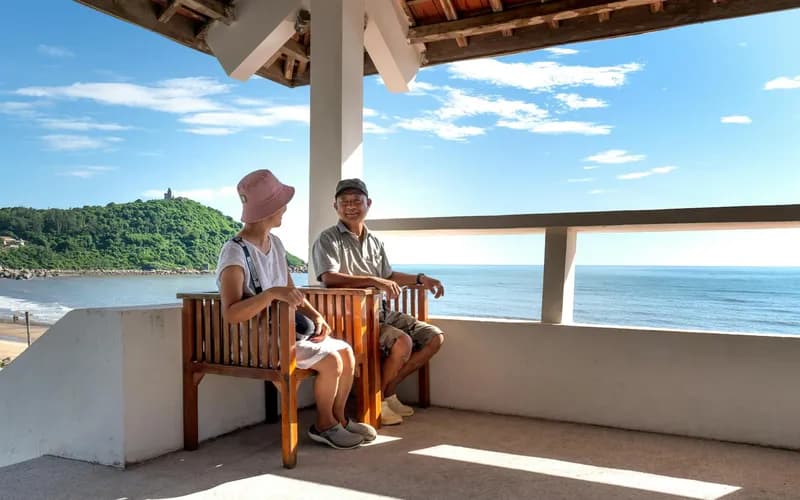
Vietnam's wellness evolution is real, but it is uneven. The country can deliver a genuinely considered, program-led recovery journey — at a price point that remains competitive with Bali or Koh Samui, and in environments that are less saturated. Mid-range eco-retreats offering all-inclusive yoga, meditation, and vegetarian cuisine can fall under USD 100–150 per night. Week-long structured programs at villa-based properties start around USD 2,800. The range is wide, and the quality within each tier varies.
For travelers whose goal is genuine mental reset rather than a pleasant holiday with spa access, the research burden is higher than the marketing suggests. The right questions are specific: Does the program have a named daily structure? Who are the facilitators and what are their qualifications? What does digital detox mean, operationally, at this property? Is there medical support on site or nearby? These are not difficult questions, but they are rarely answered in the headline copy.
Vietnam's wellness sector is growing up. It has not finished the process.
Frequently Asked Questions
What distinguishes a genuine wellness retreat in Vietnam from a resort that uses wellness as a marketing label?
The clearest indicator is whether the property offers a named, structured program with a published daily schedule, defined inclusions, and identifiable facilitators — rather than a menu of optional treatments. Genuine programs have a therapeutic logic connecting each element: the sequence of activities, the food, the degree of digital restriction. Resorts using wellness as a label typically offer the same open-ended stay with a spa attached. Asking for a sample daily itinerary before booking is the most efficient filter.
Is 'no-think' or fully curated travel actually available in Vietnam, or is it mostly a concept?
It exists, but it is concentrated. A handful of properties on the central coast and in mountain regions have built genuinely host-led programs where transport, meals, daily schedule, and treatment sequence are pre-determined. Specialist DMCs also offer bundled itineraries that remove logistical decisions entirely. Outside these operators, most stays still require the guest to self-direct. The gap between the concept and its execution is one of the defining tensions in Vietnam's wellness market right now.
How does Vietnam compare with Bali or Thailand for serious wellness travel?
Vietnam's retreat scene is less saturated and, at comparable quality levels, generally less expensive. The cultural and geographic range — mountains, coast, thermal springs, karst landscapes — is broader than most single-island destinations. The trade-off is that the sector is less mature: fewer properties have the depth of programming that the best operators in Bali or Chiang Mai have developed over a longer period. For travelers willing to research carefully, Vietnam offers real value. For those who want a well-worn, easily navigable wellness infrastructure, it requires more patience.
What should travelers ask about digital detox before booking?
The key questions are operational rather than philosophical: Is Wi-Fi available in guest rooms, or only in communal areas? Are there scheduled phone-free periods built into the program, or is disconnection self-managed? Are devices stored during specific sessions? Properties that have thought seriously about digital detox will answer these questions precisely. Those that have not will offer reassuring generalities. The distinction matters most for travelers who know their own habits and need structural support to disconnect.