
Vietnam's food scene in 2026 is operating at a level the world is only beginning to fully appreciate. Vietnamese cuisine has been ranked 4th in Taste Atlas's Top 15 World Cuisines, with five Vietnamese dishes making the global Top 100 Best Dishes list. Vietnam was named Asia's Best Culinary Destination at the World Culinary Awards, Hanoi honored as Asia's Best Emerging Culinary City, and Ho Chi Minh City ranked 4th among the world's top 20 culinary capitals by Time Out magazine.
This isn't a trend. It's a transformation. Whether you're planning your first trip or returning to a country you already love, food should be the lens through which you see Vietnam — and slow travel through Vietnam is the only way to truly eat it well. This guide covers everything from iconic street dishes to Michelin-starred dining rooms, regional flavor profiles, coffee culture, sustainability, fusion cooking, and exactly where to eat city by city.
Why Vietnam is one of the world's top food destinations in 2026
The numbers tell part of the story. Food and beverage spending accounts for 34.1% of all Vietnamese retail sales — the single largest consumer category — and food service spending is growing at 12–14% annually, the fastest rate of any consumer category in the country.
Internationally, Vietnam's culinary diplomacy is making headlines. In April 2026, South Korean President Lee Jae Myung and his wife chose to dine on beef pho at a Hanoi restaurant during a state visit — a quietly powerful signal of how Vietnamese cuisine is now perceived on the world stage. In May 2026, Vietnam's national culinary team won silver at the Global Chefs Challenge Finals, placing 8th globally with a menu titled Vietnam Essence – Tinh Hoa Việt Nam — a four-course journey across the country's regional cooking traditions.
The era of Vietnamese food being perceived as "cheap and cheerful" is definitively over. What has replaced it is a sophisticated, high-value culinary economy built on quality, cultural pride, and a new generation of chefs who know exactly what they're doing.
One request. Up to five tailored proposals.
Skip contacting agencies one by one — share your trip once and let up to five trusted Vietnam agencies come to you. Free, with no obligation.
Get my free quotesThe Michelin Guide Vietnam 2026: fine dining comes of age
The Michelin Guide is now in its fourth year in Vietnam, covering Hanoi, Ho Chi Minh City, and Da Nang — with the 2026 official ceremony set for June 4. In 2025, nine restaurants held one Michelin Star, and 181 establishments were recognized across the full guide.
Michelin-starred restaurants to visit
| Restaurant | City | Style |
|---|---|---|
| Anan Saigon | Ho Chi Minh City | Vietnamese |
| Gia | Hanoi | Vietnamese |
| Tầm Vị | Hanoi | Vietnamese |
| CieL | Ho Chi Minh City | Innovative |
| Coco Dining | Ho Chi Minh City | Innovative / Fermentation |
| La Maison 1888 | Da Nang | French |
| Hibana by Koki | Hanoi | Japanese |
| Long Trieu | Ho Chi Minh City | Cantonese |
| Akuna | Ho Chi Minh City | Contemporary |
The Michelin Green Star — the guide's sustainability award — has also arrived in Vietnam. Lamai Garden in Hanoi became the first in the capital to earn it, recognized for its farm-to-table, zero-waste approach. Experts are now speculating about Vietnam's first Two Michelin Star restaurant, and the guide's potential expansion to Huế, Nha Trang, and Phú Quốc.
The next generation of Vietnamese chefs
Driving much of this momentum is what insiders call the "third generation" of Vietnamese chefs — young talents born into culinary families, trained in Michelin-starred kitchens abroad, and now returning to redefine Vietnamese cuisine with international technique and Vietnamese soul. This generation is largely responsible for elevating the country's fine dining to a standard the global food press now takes seriously.
The best Vietnamese street food dishes to try in 2026
Even as fine dining flourishes, street food remains the unshakeable cornerstone of Vietnamese culinary identity. In 2026, the street food scene is evolving into something more curated — experience-driven tours that help visitors understand the culture behind each dish, not just taste it.
Top-ranked dishes by Taste Atlas
Phở Bò (Beef Pho) — The national icon. A deeply aromatic bone broth built on star anise and cinnamon, with rice noodles and tender sliced beef. Best at dawn in Hanoi at Phở Gia Truyền Bát Đàn or Phở Thìn Lò Đúc.
Bánh Mì — The legendary crispy baguette filled with pâté, grilled pork, pickled daikon, and fresh herbs. The subject of its own annual festival in Ho Chi Minh City.
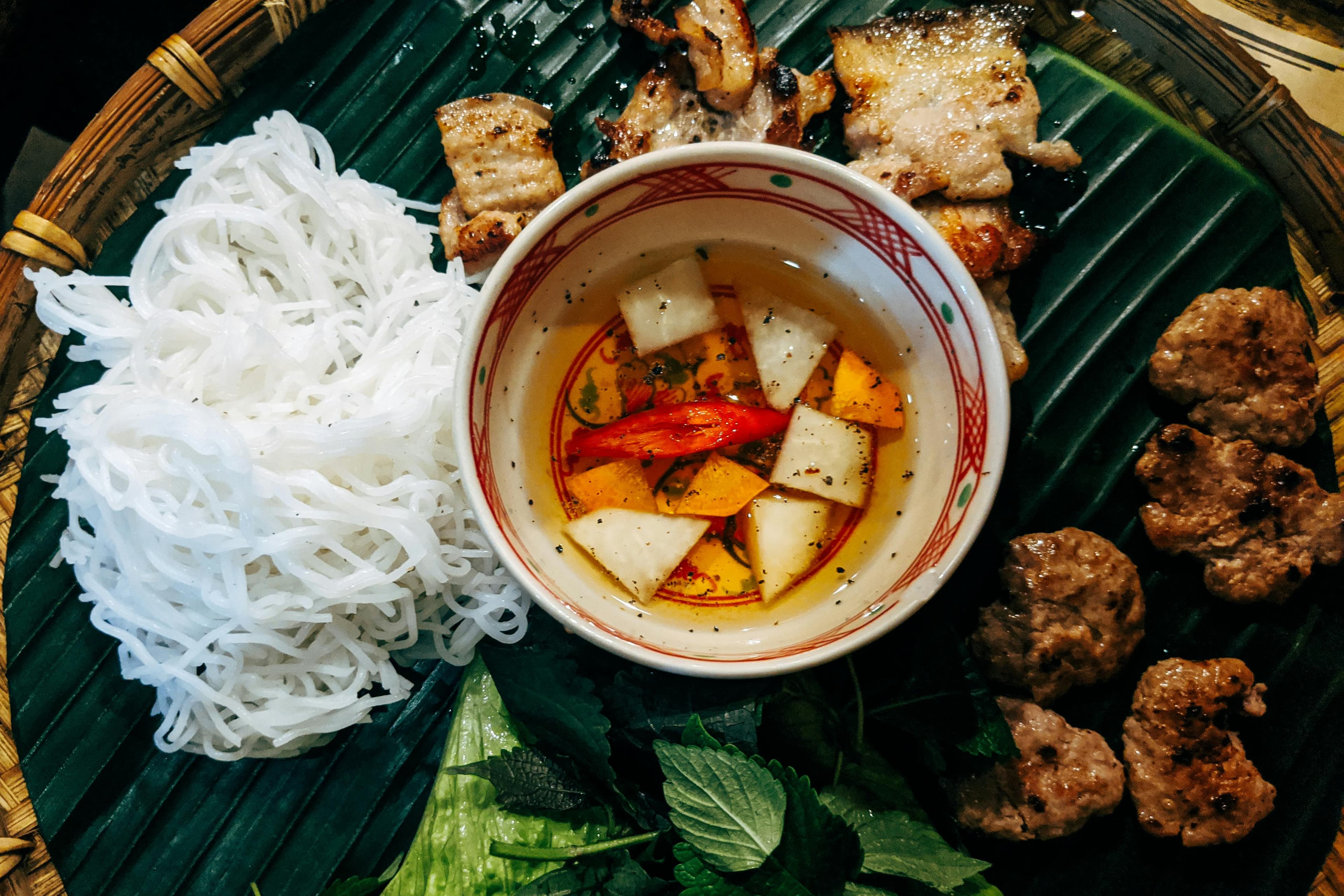
Bún Chả — Smoky grilled pork in a sweet fish sauce broth with rice noodles. Made globally famous by Obama and Bourdain; a Taste Atlas Top 100 entry for 2026.
Mì Quảng (Quảng Noodles) — Wide turmeric noodles with shrimp, pork, peanuts, and crispy crackers in a concentrated broth. A central Vietnam signature recognized by Taste Atlas 2026.
Cao Lầu — A Hoi An exclusive made with chewy noodles, braised pork, and crispy crackers, using water drawn from local wells. The recipe — and the taste — cannot be replicated anywhere else.
Cơm Tấm (Broken Rice) — Saigon's beloved street classic: broken rice with grilled pork chop, egg meatloaf, and fish sauce. Eaten at any hour, by anyone.
Bánh Xèo (Sizzling Pancake) — A crispy rice flour crepe filled with shrimp, pork, and bean sprouts, wrapped in lettuce and fresh herbs before eating.
Bánh Canh Ghẹ (Crab Noodle Soup) — 2026's trending must-try in Ho Chi Minh City: thick tapioca noodles in a rich, sweet crab broth.
Vietnamese street food by region
Vietnam's food varies dramatically as you move from north to south — understanding this makes every meal more meaningful.
| Region | Signature dishes | Flavor profile |
|---|---|---|
| North | Phở, Bún Chả, Bánh Cuốn | Light, balanced, subtle — freshwater fish prominent |
| Central | Mì Quảng, Bún Bò Huế, Bánh Xèo, Cao Lầu | Bold, spicy, complex — strong royal and Cham influence |
| South | Cơm Tấm, Bánh Mì, Hủ Tiếu, Chè | Sweet, tropical, coconut milk — abundant seafood |
Get matched with up to 5 trusted Vietnam agencies
- Free
- No obligation
- Up to 5 agencies
Fine-casual and heritage dining: Vietnam's evolving restaurant scene
One of the most significant shifts in Vietnam's dining landscape in 2026 is the emergence of "fine-casual" — a hybrid model offering the quality and storytelling of fine dining in a more relaxed, accessible, technology-integrated environment. As Vietnam's middle class reaches record spending power, diners no longer just seek taste. They want traceability, storytelling, and an experience that means something.
Heritage restaurants are rising alongside this trend, featuring reimagined interpretations of classics like Chả Cá (Hanoi's turmeric fish with dill) and Bún Thang (a delicate northern noodle soup) — presented with the precision and intention of fine dining. The Gourmet Vietnam Awards 2026 recognized this maturation with new categories: Best Fusion Restaurant, Best Restaurant Storytelling, Best Food Presentation, and a Rising Star Chefs award that puts tomorrow's names on the radar today.
Farm-to-table and sustainability in Vietnamese cuisine
Sustainability has moved from niche concern to mainstream expectation — and it connects directly to the sustainable and responsible travel principles that define the most meaningful experiences in Vietnam. Three hubs are leading the culinary movement: Đà Lạt, Vietnam's cool-climate agricultural heartland where restaurants build entire seasonal menus around its exceptional produce; Phú Quốc, emerging as a model for sustainable seafood dining; and Hanoi, where Lamai Garden — Vietnam's first Michelin Green Star recipient in the capital — champions zero-waste dining from on-site ingredients.
Blockchain traceability is entering the premium dining space, allowing restaurants to verify that organic or premium labels are authentic. According to Marriott International's Future of Food 2026 report, 85% of hotels in Asia-Pacific have introduced local ingredients or dishes to their menus. Chefs are also rediscovering wild vegetables, sea salt, indigenous grains, and wild seafood — bringing forgotten ingredients to fine-dining tables with modern technique.
Vietnamese fusion cuisine: where tradition meets global technique
Fusion in Vietnam's 2026 culinary conversation isn't fusion as novelty — it's cultural storytelling through food. The most interesting examples don't feel like experiments. They feel inevitable. Phở consommé with French truffles. Bánh mì reinterpreted with Mediterranean fillings. Vietnamese coffee desserts fused with Japanese matcha techniques.
At NÚC Kitchen and Bar in Ho Chi Minh City, contemporary European-Vietnamese fusion is guided by the concept of bếp núc — the traditional Vietnamese kitchen — interpreted through European techniques and seasonal ingredients. In Europe, Vietnamese cuisine is experiencing remarkable growth, with Berlin and London becoming hubs for Vietnamese-European fusion. Marriott's Future of Food 2026 identifies Vietnam as poised for "an explosion of fusion-style restaurants combining the best of Japan, Europe, and local ingredients — reflecting the spirit of globalization with Vietnamese identity."
Vietnamese coffee culture in 2026: a global phenomenon
Coffee in Vietnam is not just a drink. It is a daily ritual, a social institution, and in 2026, one of the hottest topics in the global specialty coffee world. Vietnam's coffee industry is projected to grow from USD 4.3 billion in 2025 to USD 8.5 billion by 2035.
Key coffee trends to know
Premiumization is reshaping the supply chain — a move away from commodity Robusta toward specialty-grade beans with traceable origin stories and better post-harvest processing. Specialty café culture has turned Ho Chi Minh City and Hanoi into vibrant hubs for coffee innovation, from the traditional cà phê phin (drip filter) to modern espresso bars and cold brew. Among Saigonese aged 18–35, 78% own a personal phin filter — a genuine revival of heritage brewing running in parallel with modern café culture.
Egg Coffee (Cà Phê Trứng) — a Hanoi classic of whisked egg yolk and condensed milk poured over strong Vietnamese coffee — has become both a global social media phenomenon and a traveler pilgrimage. If you visit Hanoi and skip it, you've left something important on the table.
Vegetarian and plant-based dining in Vietnam 2026
Vietnam has one of the oldest vegetarian traditions in Asia, rooted in Buddhist practice — and in 2026 that tradition is undergoing a modern secular rebirth. The Vietnamese vegan food market was valued at USD 111.6 million in 2025 and is projected to reach USD 223.4 million by 2034. Plant-based fine dining in Ho Chi Minh City has reached a tipping point, with leading restaurants using aging, fermenting, and wood-firing techniques to extract deep umami from vegetables and roots.
For vegetarian travelers: look for "CHAY" signs (vegetarian restaurants, especially around lunar new moon and full moon dates); say "Tôi ăn chay" (I eat vegetarian) and "Không nước mắm" (no fish sauce) when ordering; and on the 1st and 15th of the lunar month, hundreds of normally meat-based street stalls switch entirely to plant-based menus — a uniquely Vietnamese experience worth planning around.
The best food festivals and culinary events in Vietnam 2026
Food tourism is now a primary travel motivation — 35% of Vietnamese travelers cite cuisine as their main reason for travel. Ho Chi Minh City's Saigontourist Culinary Culture & Delicacies Festival 2026 drew nearly 80,000 visitors, winning the title of World's Best Culinary Festival for three consecutive years, with 500 dishes across 10 themed flavor journeys. The brand-new Da Nang Food Tour 2026, launched May 21, marks Da Nang's first large-scale culinary tourism festival, including a Da Nang Culinary Digital Map in partnership with ShopeeFood.
Other events worth building a trip around: the Vietnam Bánh Mì Festival (4th edition), the Hanoi Culinary Culture Festival, the Vietnamese Rice Noodle Festival (100 varieties on record), the Hue Vegetarian Food Festival, and the Nam Dinh Pho Festival. Plan your Vietnam journey around these culinary events and give yourself enough time in each city to eat your way through it properly.
Where to eat in Vietnam: a city-by-city food guide
Hanoi: the home of pho and egg coffee
Hanoi is where Vietnamese food is at its most refined and restrained. Dawn pho at a decades-old shop in the Old Quarter, egg coffee at a narrow stall on Đinh Tiên Hoàng, Bún Chả for lunch — this is the template. Michelin-starred restaurants Gia, Tầm Vị, and Hibana by Koki represent the city's fine dining peak. Don't miss the Old Quarter spice market walks and cooking demonstrations that have become a staple of the Hanoi food experience.
Ho Chi Minh City (Saigon): street food capital
Saigon moves faster and tastes bolder. Scooter night food tours, Bến Thành night market, rooftop dining, and a fine-casual heritage scene drawing serious international attention. Anan Saigon, CieL, Coco Dining, and Akuna hold Michelin Stars. Cơm Tấm at dawn, Hủ Tiếu for lunch, and Bánh Canh Ghẹ trending hard in 2026 as the city's must-try newcomer.
Da Nang and Hoi An: central Vietnam's culinary heart
Da Nang launched its first large-scale culinary festival in 2026. Hoi An offers riverside lantern-lit night food bazaars, Cao Lầu that can only be made here, and La Maison 1888 holding a Michelin Star. Together they make a compelling case for central Vietnam as the country's most culinarily distinct region.
Hue: imperial cuisine and bold flavors
Hue is the historical heavyweight. Imperial court-style dining, the fiery Bún Bò Huế (Vietnam's spicier, more complex alternative to pho), Bánh Bèo, and UNESCO culinary heritage tours make it essential for serious food travelers. The city's royal cuisine tradition is unlike anything else in Vietnam.
Phu Quoc: fresh seafood and sustainable dining
Vietnam's largest island is gaining momentum as a premium food destination with sustainable marine dining, night market seafood barbecue, and the country's finest Nước Mắm (fish sauce) produced locally. Phu Quoc is also on the shortlist for future Michelin Guide expansion — a sign of where the island is headed. Working with certified local agencies in Vietnam is the most reliable way to access the island's best off-menu experiences.
How to eat like a local in Vietnam: practical tips for 2026
Essential Vietnamese food phrases
- Em ơi! — "Excuse me!" to call a server
- Ngon quá — "Very delicious!"
- Tính tiền — "Check please"
- Tôi ăn chay / Không thịt — "I'm vegetarian / No meat"
- Không nước mắm — "No fish sauce"
- Trà đá — Iced tea, complimentary at most street stalls
When to eat and how to choose the right stall
Breakfast (6–9am) is the golden window for pho, bún bò, and bánh mì — many of the best stalls sell out well before mid-morning. Lunch (11:30am–1pm) is when street stalls are at their freshest and most vibrant. Evening (6–8pm) is prime time for grilled seafood, hotpot, and barbecue.
To pick the right stall: look for a clean, organized setup with vibrant farm-fresh ingredients — and a crowd of locals eating or waiting. That last detail is the only review that matters.
The golden rule of Vietnamese street dining: eat first, pay later. Place your order, find a stool, enjoy your meal, then settle the bill.
Frequently asked questions about Vietnamese food
What Vietnamese dishes are ranked in the global Top 100 for 2026?
Five dishes made the Taste Atlas Top 100 Best Dishes in the World: Phở Bò, Bánh Mì, Bún Chả, Mì Quảng, Cao Lầu, and Bún Bò Nam Bộ. Vietnamese cuisine also ranked 4th in Taste Atlas's Top 15 World Cuisines for 2026.
How many Michelin-starred restaurants are in Vietnam?
As of the 2025 guide, nine restaurants hold one Michelin Star across Hanoi, Ho Chi Minh City, and Da Nang. The 2026 ceremony is set for June 4. Experts are speculating about Vietnam's first two-star restaurant and expansion of the guide to Huế, Nha Trang, and Phú Quốc.
Is Vietnam a good destination for vegetarians?
Yes — exceptionally so. Vietnam has one of Asia's oldest vegetarian traditions. Look for "CHAY" signs, especially around lunar new moon and full moon dates when hundreds of street stalls switch to plant-based menus. Say "Tôi ăn chay" when ordering and "Không nước mắm" to avoid fish sauce.
What is Vietnamese egg coffee?
Cà Phê Trứng is a Hanoi specialty: egg yolk and condensed milk whisked into a thick, creamy foam, then poured over strong Vietnamese coffee. It has become a global social media phenomenon and is considered an essential experience in Hanoi.
What is the best city for street food in Vietnam?
Ho Chi Minh City is the street food capital for sheer variety and energy. Hanoi has the more refined, historically rooted dishes. Hoi An offers unique preparations — like Cao Lầu — that simply cannot be found anywhere else. Each city rewards a different kind of eater.
What is Vietnam's coffee culture like in 2026?
Vietnam is one of the world's largest coffee producers and its café culture is thriving. Traditional phin-filter coffee remains a daily ritual, while specialty coffee shops in Hanoi and Saigon offer single-origin beans, cold brew, and modern espresso. The industry is projected to grow to USD 8.5 billion by 2035.
When is the best time to visit Vietnam for food events?
Key events include the Saigontourist Culinary Festival (Ho Chi Minh City), the Da Nang Food Tour (May), the Vietnam Bánh Mì Festival, the Hanoi Culinary Culture Festival, and the Nam Dinh Pho Festival. Around Tet (Lunar New Year, Feb 14–22 in 2026) street food culture intensifies across the whole country.
Explore more of our Vietnam travel guides for regional deep dives, cultural insights, and everything you need to experience the country at its best.