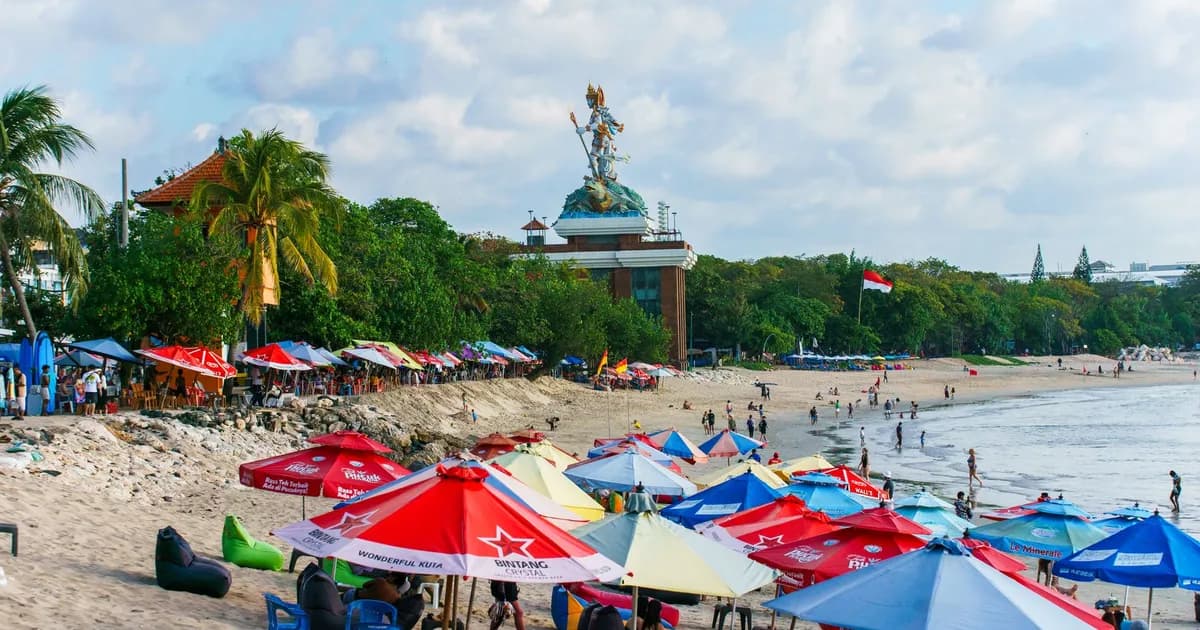
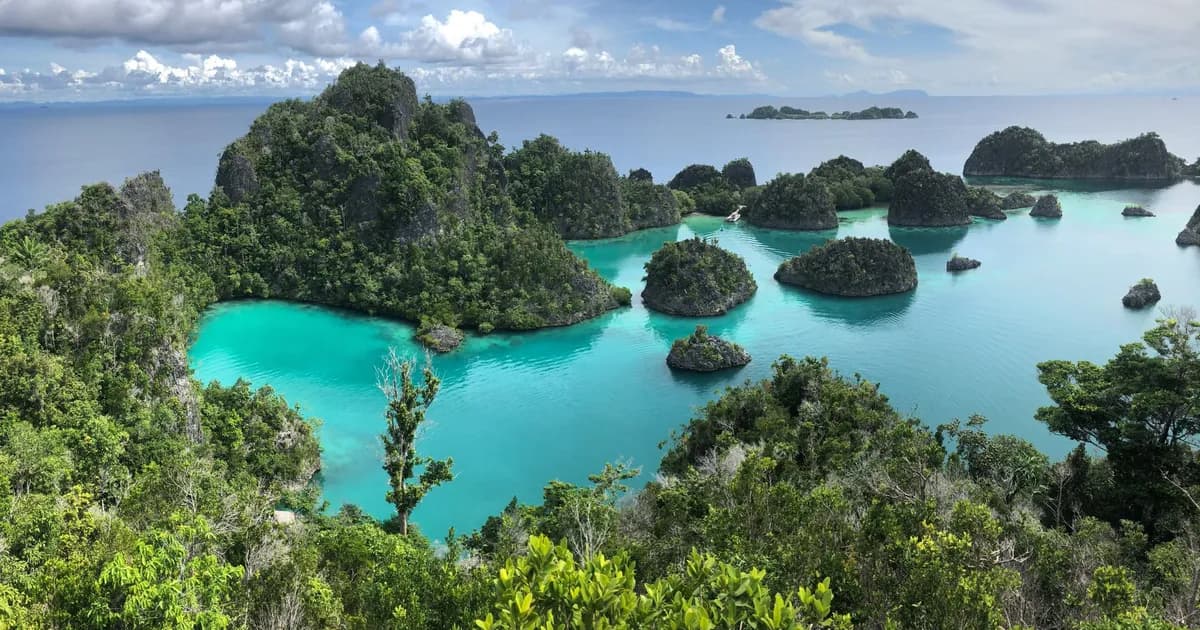

Something has changed in how Indonesia sells the sea. Five years ago, a traveller could turn up in Sorong, find a boat, and be diving in Raja Ampat by the afternoon. In 2026 that same traveller needs two separate permits bought online, a registration number, and increasingly a booking made weeks in advance. The archipelago's most photographed waters are being priced, counted and rationed — and the direction of travel is only going one way.
This is not a story about greed, though it is sometimes told that way. It is a story about a country with 17,000 islands trying to work out how many visitors its reefs can carry, and choosing, for the first time at scale, to answer that question with policy rather than hope.
The Numbers Behind the Shift
Indonesia's tourism recovery has been genuinely strong. The first quarter of 2026 brought roughly 3.44 million international arrivals, and the government's stated target for the full year sits near 17.6 million foreign visitors alongside more than a billion domestic trips. Those are large numbers for infrastructure that, outside Bali and Java, is thin.
The pressure is not evenly distributed. Bali still absorbs a disproportionate share, which is exactly why the "10 New Balis" programme has spent years pushing traffic toward Lombok, Labuan Bajo, Lake Toba and Raja Ampat. That policy has worked — arrivals to eastern marine destinations have climbed sharply, with Raja Ampat and Bunaken both reporting growth concentrated in diving and conservation-oriented stays.
The problem is that the places absorbing the overflow are, ecologically, the least able to absorb it. A coral reef does not scale like a beach resort. This is the tension our analysis of how Indonesia is rewriting its tourism map identified, and the marine sector is where it is now being resolved in real time.
One request. Up to five tailored proposals.
Skip contacting agencies one by one — share your trip once and let up to five trusted Indonesia agencies come to you. Free, with no obligation.
Get my free quotesRaja Ampat: The Clearest Test Case
Raja Ampat has become the country's laboratory for paid access. As of 2026, visitors face two distinct official charges.
- The Marine Park Entry Permit, at IDR 700,000, functions as a conservation fee funding patrols, reef protection and environmental education. It is valid for twelve months, which quietly rewards return visitors and long stays.
- The Visitor Entry Ticket, at IDR 300,000, is closer to an infrastructure levy, covering jetties, ports and waste management. Unlike the permit, it is single-entry: leave the regency and come back, and you buy it again.
Both are bought online — the permit through the marine conservation authority's own portal, the entry ticket through the regency's registration system — and both are checked. Children under twelve are exempt from the marine park permit. Verify current amounts before you travel, because this structure has been revised repeatedly since it was introduced.
Roughly a million rupiah in fixed fees before a single boat transfer is not a trivial sum for a budget traveller. But note what it does structurally: it makes a three-day visit expensive per day and a three-week visit cheap per day. Whether by design or accident, Raja Ampat's fee model is now an argument for staying longer.
Komodo's Quiet Move to Quotas
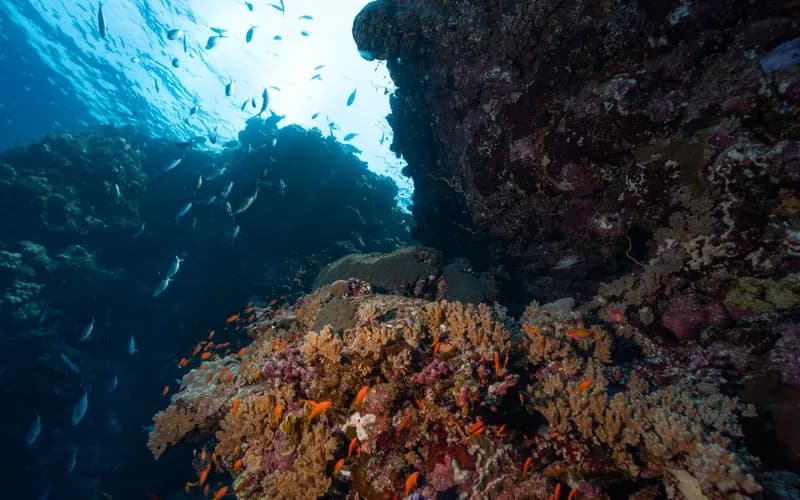
Komodo National Park has taken a different route to the same destination. After an abandoned attempt in 2022 to impose a headline-grabbing conservation fee of several million rupiah, the park settled on a consolidated ticket structure — approximately IDR 650,000 per person for the Komodo Island route and IDR 900,000 for Rinca, bundling entry, ranger services and conservation contributions.
The more consequential change is administrative rather than financial. From April 2026, visitors are required to pre-book through the park's official booking application or a licensed operator. You can no longer simply walk onto a boat in Labuan Bajo harbour and negotiate.
That single requirement does three things at once. It creates a hard record of how many people are on each island on each day, which is the precondition for any real capacity limit. It pushes bookings toward licensed operators and away from the informal market. And it shifts the point of decision from the dock to the internet, weeks earlier — which favours travellers who plan and disadvantages those who improvise.
Slow travellers should read this as a signal. The era of showing up and sorting it out on arrival is closing across Indonesia's flagship protected areas.
Get matched with up to 5 trusted Indonesia agencies
- Free
- No obligation
- Up to 5 agencies
What the Conservation Economy Actually Buys
The honest answer is: it varies, and the evidence is uneven.
In Raja Ampat, the fee system has a genuine track record. Revenue has funded ranger patrols in a regency where illegal fishing was once routine, and the network of locally managed marine protected areas is regularly cited as one of the more successful examples in Southeast Asia. Community homestays — village-owned, low-capacity, spread across dozens of islands — capture a meaningful share of visitor spend, which is unusual.
In Bali, the picture is murkier. The IDR 150,000 tourist levy has been in place for over two years, with proposals circulating to double it to IDR 300,000. Compliance, by the provincial government's own reporting, has hovered around a third of eligible visitors, and hotels and operators may now collect it on travellers' behalf while retaining a small administrative share. A levy that most people do not pay is not a conservation instrument; it is an aspiration.
The pattern that emerges is that fees work where they are attached to a specific, bounded place with an identifiable manager — a marine park, an island, a crater rim — and struggle where they are attached to a whole province.
The Uncomfortable Part: Fees Are Not Protection
It is worth saying plainly that a permit system can coexist with serious environmental harm. The most significant threats to Indonesia's marine environments are not divers. They are destructive fishing, coastal development, plastic waste flows and extractive industry — and no visitor fee touches any of those.
There is a version of conservation tourism that becomes a form of accounting: the reef is monetised, the revenue is booked, and the underlying pressures continue. Travellers should hold two ideas at once. Paying the permit is right and the money largely does useful work. It also does not make anyone's trip carbon-neutral, reef-neutral or ethically settled.
The more meaningful variables remain the boring ones: how long you stay, who you give your money to, how many domestic flights you take, and whether your operator employs and trains people from the islands you visit. Our slow travel charter sets out how we weigh those factors when assessing agencies.
Who This Changes Things For
Three groups feel this differently.
Short-trip divers are the most affected. A four-night Raja Ampat run now carries close to IDR 1,000,000 in fixed fees before transport, and Komodo day-trippers must plan ahead rather than negotiate at the harbour. For this group, marginal costs have risen sharply.
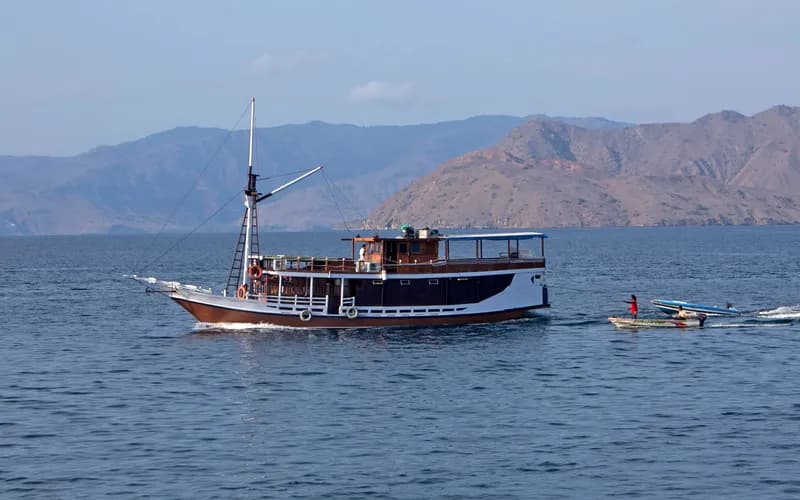
Liveaboard passengers are largely insulated, because operators fold permits into the package price. The risk here is invisibility: travellers pay without ever seeing the fee, and therefore never ask what it funds.
Long-stay independent travellers are, oddly, the winners. A twelve-month Raja Ampat permit amortised across three weeks of homestays costs very little per day, and the shift toward licensed operators tends to raise baseline standards. If you were already inclined to move slowly, the economics have quietly moved in your favour — a point our guide to Indonesia off the beaten path makes about the archipelago's quieter corners more generally.
What to Do Next
- Budget the fees as a separate line. For an itinerary including Raja Ampat and Komodo, set aside IDR 1,600,000 to 2,000,000 per person in park and permit charges alone, and confirm figures close to departure.
- Register before you fly. Marine park permits and park bookings are online processes with occasional payment friction. Complete them from home, not from a guesthouse with intermittent signal.
- Extend rather than add. Given how the permit structure works, three weeks in one marine region will usually cost less and impact less than a week each in three.
- Ask your operator where the money goes. A good operator can tell you which permits are included, which authority receives them, and how much of your accommodation spend stays in the village.
- Check the paperwork side too. Entry requirements changed alongside the fees; our summary of entering Indonesia in 2026 covers the arrival card, the Bali levy and how they interact.
- Choose homestays where they exist. In Raja Ampat especially, village-owned accommodation is the single most direct route for visitor money to reach the communities managing the reefs.
Frequently Asked Questions
How much do Raja Ampat fees cost in 2026?
Two charges apply: a Marine Park Entry Permit of IDR 700,000, valid twelve months, and a Visitor Entry Ticket of IDR 300,000, valid for a single entry. Both are purchased online in advance through the official portals, and both are checked on arrival. Children under twelve are exempt from the marine park permit. Amounts have been revised several times, so reconfirm before booking.
Do I need to book Komodo National Park in advance now?
Yes. From April 2026, entry requires pre-booking through the park's official system or a licensed tour operator. Turning up in Labuan Bajo and arranging a boat on the day is no longer a reliable plan, particularly during the July and August peak.
Is the Bali tourist levy actually enforced?
Increasingly, though imperfectly. The levy is IDR 150,000 per foreign visitor, and compliance has historically been low — around a third of eligible arrivals by official accounts. Enforcement at tourist sites has tightened, and hotels and operators can now collect it. Pay it: the amount is small and the alternative is being stopped at a site entrance.
Will these fees keep rising?
The direction is upward. A proposal to double Bali's levy to IDR 300,000 has been discussed at government level without confirmation, and park fee structures have been revised repeatedly. Plan on the assumption that costs in 2027 will be higher than today's.
Does paying conservation fees make my trip sustainable?
No, and it is worth being clear about that. Fees fund patrols, waste management and park staff, which is genuinely useful. They do not address the larger pressures on Indonesia's reefs, and they do not offset flights. Trip length, operator choice and where you sleep matter more.
Are liveaboards better or worse than land-based stays?
It depends on the operator, but land-based homestays generally distribute money more widely into island communities, while liveaboards concentrate spend with the boat owner. Well-run liveaboards with local crews and strict mooring practices are defensible; the format itself is not the problem.
Where should I go if I want reefs without the permit stack?
Consider Bunaken in North Sulawesi, the Togean Islands, Alor, or the Banda Islands in Maluku, where visitor numbers remain low and fee structures simpler. These take longer to reach, which is precisely why they are quieter — start with our Indonesia trip planning page to see how they fit an itinerary.