

For most of the last thirty years, Thailand was the default answer to the question of where to go in Southeast Asia. In 2026 it is still the biggest arrivals number in the region by a wide margin, but for the first time in a long while it is no longer the automatic one. Vietnam is growing at double digits while Thailand's numbers slip, and the gap is narrowing faster than most people outside the industry realise. This matters less as a horse race than as a description of what you will actually encounter on the ground.
The Numbers Behind the Story
Thailand closed 2025 with roughly 33 million foreign visitors, a fall of about 7.2 percent on the previous year. That was the first meaningful post-pandemic reversal, and it set the tone for what followed. The Tourism Authority of Thailand went into 2026 with a headline campaign target of 36.7 million arrivals and revenue approaching three trillion baht, which would have meant growth of well over ten percent.
It has not gone that way. By the start of August 2026, Thailand had recorded around 18.5 million international arrivals for the year, down roughly three percent on the same period in 2025, with receipts near 896 billion baht. Earlier in the year the pattern was already visible: something like 11.7 million visitors by the end of April, and first-five-month receipts around 679 billion baht, down about 2.5 percent year on year. Most independent projections now land somewhere between 30 and 34 million for the full year, which is a long way short of the target.
Vietnam, meanwhile, welcomed roughly 13.9 million international visitors in the first seven months of 2026, up close to 14 percent, having already set a record of over 21 million in 2025. Its own 2026 ambition is 25 million. In absolute terms Thailand is still comfortably ahead. In direction of travel, it is not.
None of this is a crisis. It is a plateau after an exceptional run, and a plateau has texture worth understanding. We have written elsewhere about what Thailand's quiet year feels like from the ground, and the regional picture is the missing half of that story.
One request. Up to five tailored proposals.
Skip contacting agencies one by one — share your trip once and let up to five trusted Thailand agencies come to you. Free, with no obligation.
Get my free quotesWhy Vietnam Is Gaining
Thailand
Still the region's biggest destination by a wide margin, but arrivals are slipping and a strong baht has turned it into a mid-priced country rather than the budget bargain it once was.
Vietnam
Winning on newness, lower prices and a visa policy that has loosened rather than tightened, backed by a rapidly improving domestic flight and rail network.
Vietnam is not winning on beaches. It is winning on newness, on price, and on a certain kind of organisational momentum. A traveller who went to Thailand in 2015 and is planning a 2026 trip is being offered a country they have not seen, with visa policy that has loosened rather than tightened, a rapidly improving domestic flight and rail network, and prices that still feel like Southeast Asia used to feel.
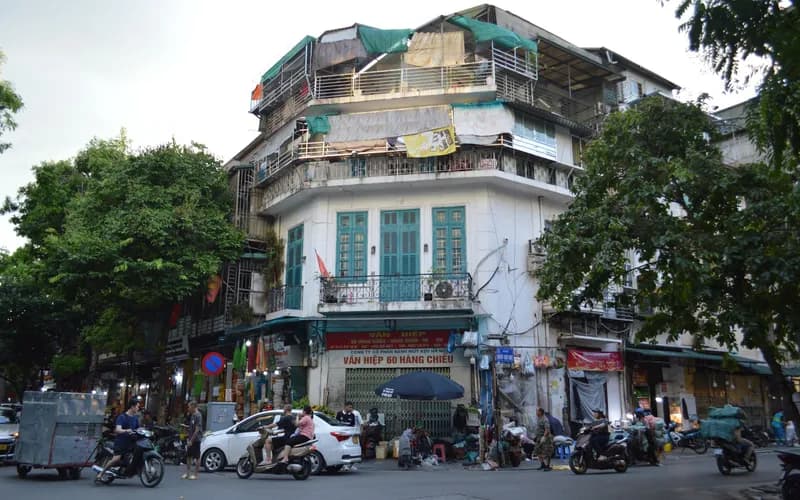
There is also a demographic factor. A large share of Thailand's recent growth came from Chinese arrivals, and that market has been the slowest and most volatile to return. Safety perception has played a real role here, amplified by widely shared incidents and by regional coverage that Thai authorities have struggled to counter. Vietnam has picked up a meaningful part of that flow.
Add the practical constraints. The armed clashes along the Thai-Cambodian border have made overland regional loops harder to plan and have coloured perceptions of the whole northeast and east. Air connectivity into Thailand has not fully recovered to pre-2020 seat capacity on several long-haul routes. Regional carriers have redeployed aircraft toward routes that are filling.
The Baht Problem
The least discussed factor is currency. The baht has been relatively strong through 2025 and 2026, and that strength is doing quiet damage to Thailand's reputation as good value. A traveller does not read exchange-rate commentary; they notice that a bowl of noodles that cost the equivalent of two euros now costs three, that guesthouse rates in the islands have converged with the Mediterranean shoulder season, and that Vietnam, Laos and the Philippines all feel cheaper for the same week.
Thailand has genuinely become more expensive in domestic terms too. Labour costs, energy, imported goods and property have all moved. But currency amplifies it for the visitor, and it lands hardest on exactly the budget and mid-range travellers who used to make up the bulk of arrivals. If you are budgeting a trip this year, our complete 2026 Thailand cost and budgeting guide is worth reading before you convert anything into a daily allowance in your head.
The flip side is worth stating plainly. A strong baht does not make Thailand a bad destination. It makes Thailand a mid-priced one, and mid-priced countries reward people who plan properly rather than people who wing it.
Get matched with up to 5 trusted Thailand agencies
- Free
- No obligation
- Up to 5 agencies
What a Softer Market Actually Changes on the Ground
Here is the part that gets lost in the trade press. A market running a few percent below last year does not empty the beaches. Thailand at 32 million visitors is still Thailand at 32 million visitors. What softness changes is the margin, and the margin is where a slow traveller lives.
- Availability improves. Rooms that were gone by October for a February stay are now findable in December.
- Shoulder seasons genuinely soften. May, June, September and October are quieter than they were in 2023 and 2024, and the difference is visible in Chiang Mai, on Ko Lanta and in Krabi.
- Discretionary rates move. Published high-season prices have mostly held, but the willingness to discount for longer stays has increased noticeably.
- Guides and drivers have more open days, which means it is easier to get the good ones rather than whoever is left.
What does not change: Bangkok in December, Songkran anywhere, the Similan and Surin islands in the weeks after they reopen, and any island with a single daily ferry. Concentration effects are strong. A national decline of three percent can coexist with a specific beach being more crowded than ever.
Where the Bargaining Power Sits, and Where It Does Not
Softer demand does give you leverage, but only in particular places. It sits with independently owned guesthouses and small resorts in secondary destinations, with drivers and guides working direct, with long-stay and monthly rates, and with anything booked outside the December to February window.

It does not sit with international hotel chains, with anything on a fixed government tariff such as national park entry, with airlines on thin routes, or with the handful of genuinely famous properties. Pushing hard in those places just wastes goodwill.
The most reliable form of leverage is duration. A week is a transaction; a month is a relationship. Rates for stays of two weeks or more in places like the quiet Gulf coast of Prachuap Khiri Khan can fall thirty to forty percent below the nightly rate, and that gap has widened this year.
Operator Consolidation and Why Cheap Is Not Good
A soft market is not neutral for the businesses in it. Two years of flat or declining arrivals produce consolidation: small operators close, mid-sized ones get bought, and the survivors cut costs. Some of those cuts are invisible and harmless. Others are not.
The ones that matter to you are staffing ratios on boats, maintenance on vehicles, insurance that lapses quietly, guide wages that fall below the level that retains experienced people, and the substitution of genuinely local suppliers with whoever quotes lowest. When a market tightens, the operators who compete purely on price are the ones under the most pressure, and price is the easiest thing for them to keep cutting.
This is the practical argument against treating a soft market as a bargain hunt. The 800-baht island day trip in a year when the 1,600-baht one is struggling to fill is not a deal; it is a warning. The same logic applies to trekking, diving and any activity where somebody else is responsible for your safety.
If you want a shortcut through this, our directory of vetted Thailand travel agencies exists precisely because judging an operator from a listing page is close to impossible, and the incentives to look better than you are get stronger in a downturn.
Thailand's Own Answer: Value Over Volume
Thai tourism policy has responded by pivoting rhetoric away from headline arrivals and toward yield: longer stays, higher spend per head, more secondary provinces, more wellness, sport, gastronomy and film-driven travel. The stated ambition is visitors staying two to three weeks and spending in the region of 65,000 to 80,000 baht per trip.
Whether the policy works is an open question, and there is a gap between the strategy documents and what a provincial tourism office can actually deliver. But the direction is real, and it happens to align unusually well with how a slow traveller already behaves. Longer stays in fewer places, more money going to smaller and more local businesses, less time in the airport queue. The traveller Thailand says it wants in 2026 is, more or less, the traveller this site has always argued for.
What This Means for Your 2026 or 2027 Trip
Practically, three things follow.
First, the case for Thailand has not weakened; the case for the obvious version of Thailand has. Phuket, Ko Phi Phi and Bangkok's Sukhumvit are more expensive and no less busy. The provinces are better value than they have been in years.
Second, comparing Thailand and Vietnam on price alone will lead you wrong. Vietnam is cheaper today and its costs are rising fast. Thailand has better road and rail infrastructure, deeper accommodation stock outside the main cities, more mature small-operator ecosystems, and far better English in the service economy. Those things matter more over a month than over a week.
Third, the softness is temporary in a way the structural shift is not. Arrivals will recover. Regional competition will not go away, and it will keep pushing Thailand toward the quieter, longer, more locally rooted kind of travel. If that is what you were coming for, this is a good year to come. Our slow travel charter sets out what we think that actually requires of a trip.
Choose Thailand if
- You want depth in one place over a long, slow trip.
- You value better rail and road links and a wider spread of good small accommodation outside the cities.
- Easier independent travel and better English in the service economy matter to you.
Choose Vietnam if
- You want lower daily costs right now.
- You want a destination that feels newer and less travelled.
- Looser visa rules and a fast-improving transport network appeal to you.
What to Do Next
- Stop comparing headline daily budgets between countries. Price a specific two-week itinerary in each, including transport, and compare that.
- Target May, June, September and October if you can. That is where the softness is concentrated and where the quality of attention you get is highest.
- Ask for a long-stay rate directly by email rather than booking nightly through a platform. Two weeks or more is where the real discount lives.
- Treat unusually cheap boat trips, treks and dive packages as a red flag rather than a win, and check insurance and staffing rather than reviews.
- Book the fixed-capacity things early anyway. Ferries, sleeper trains and park quotas do not care about the national arrivals figure.
- Pick two or three provinces rather than eight destinations. It is the single change that most improves a Thailand trip in any market condition.
Frequently Asked Questions
Is Thailand actually losing tourists to Vietnam?
Partly, but the picture is more complicated than a straight transfer. Thailand's decline is driven heavily by the slow return of the Chinese market and by safety perception, while Vietnam's growth comes from a broad mix of markets discovering a destination that feels new. Some travellers are choosing one over the other, but Vietnam is also growing the regional pie.
Does a softer market mean Thailand is cheaper right now?
Not in headline terms. Published prices have largely held and the strong baht makes everything feel more expensive in euros, pounds or dollars. What has changed is negotiability at the margins: long-stay rates, shoulder-season availability and the willingness of small operators to make a deal for a fortnight.
Should I go to Thailand or Vietnam in 2026?
If you want lower daily costs and a destination that feels less travelled, Vietnam has the edge. If you want depth in one place, better rail and road links, a wider spread of good small accommodation outside the cities and easier independent travel, Thailand is still the stronger choice for a long, slow trip.
Are the Thai islands less crowded this year?
Some are, some emphatically are not. Demand has concentrated on the best-known destinations even as national numbers fell. Ko Lanta, Ko Yao Noi, the Trang islands and much of the Gulf coast are noticeably quieter. Ko Phi Phi, Ko Samui in high season and Phuket's west coast are not.
Is the Thailand-Cambodia border situation a reason to change plans?
It is a reason to check current advice and to avoid planning overland crossings on that frontier, not a reason to avoid Thailand. The affected areas are specific and remote from the main travel regions. Route around rather than cancel, and confirm with your operator rather than relying on older itineraries.
Will prices fall if arrivals keep dropping?
Unlikely in any dramatic way. Thai operators have generally chosen to hold rates and accept lower occupancy rather than start a price war, and rising domestic costs push the other way. Expect better availability and better negotiation rather than lower advertised prices.
How does a slow traveller benefit from all this?
Directly. Softness shows up in exactly the things that matter for long stays: availability, flexibility, discounts for duration, and access to the better guides and drivers. It shows up far less in the crowded, short-stay, high-season version of Thailand that a slow traveller was avoiding anyway.