
For most of the past decade, Vietnam's inbound tourism story was written in Seoul, Beijing, and Taipei. In 2026, a new chapter is being written in Moscow, Berlin, and Warsaw — and it is changing who you are likely to meet on a slow trip through the country, and why that matters for how you plan one.
The Numbers Behind the Surge
International arrivals to Vietnam reached roughly 12.3 million in the first half of 2026, up nearly 15 percent year on year, keeping the country on pace toward a full-year target of around 26 million visitors. Asia still supplies the largest share of arrivals by volume, with markets like South Korea, China, and Taiwan continuing to anchor the numbers. But the standout statistic sits elsewhere: European arrivals grew by more than 50 percent in the same period, making Europe the fastest-growing source region in Vietnam's entire inbound mix, ahead of any single Asian market's growth rate.
Russia is the headline within that headline. Russian arrivals climbed by roughly 185 to 194 percent depending on the month measured, pushing Russia into the top three source markets for the country — a position it did not hold five years ago, and one that puts it ahead of long-established markets like Japan in some monthly counts. But the growth is not a single-market story, and that distinction matters more than the Russia figure alone. Germany, France, the United Kingdom, Denmark, Norway, Sweden, Poland, Switzerland, and Czechia all posted positive growth over the same window, broadening the European base rather than concentrating it in one country's travel patterns.
One request. Up to five tailored proposals.
Skip contacting agencies one by one — share your trip once and let up to five trusted Vietnam agencies come to you. Free, with no obligation.
Get my free quotesWhy Russia, Specifically
Three forces are compounding here. New direct flight routes now connect major Russian cities to Hanoi, Ho Chi Minh City, and Phu Quoc, removing a layover through a third country that used to add a full day to the journey each way. Visa-exemption and e-visa simplification, already in place for several years, has removed most of the paperwork friction that once made Vietnam feel like a more complicated booking than closer alternatives. And with several traditional long-haul winter destinations for Russian travelers becoming politically or logistically complicated to reach in recent years, Vietnam has positioned itself as a stable, warm-weather alternative with an increasingly mature tourism infrastructure — direct charter routes, package deals, and now a growing base of independent travelers following the same well-worn path.
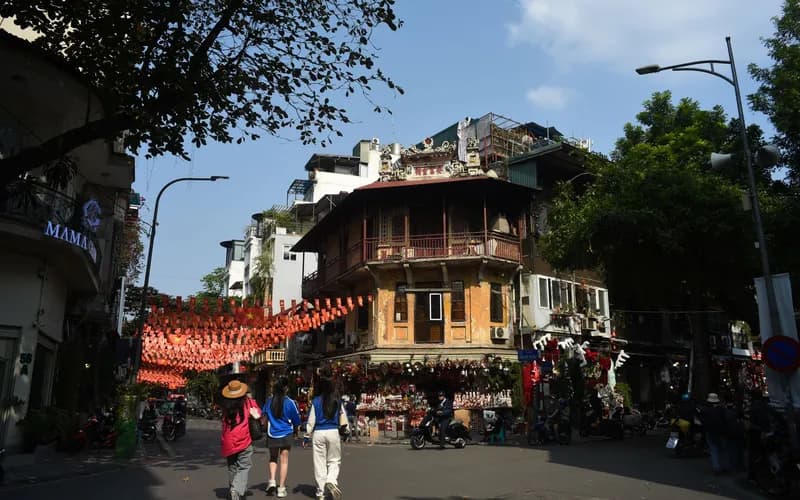
The practical effect for a slow traveler is subtle but real. Destinations that once ran almost entirely on English-language signage and service are adapting quickly, particularly in Nha Trang, Phu Quoc, and Da Nang, where Russian-language menus, signage, and even dedicated flight schedules are becoming standard rather than novel. This is worth knowing before you book, since a coastal resort town's atmosphere can shift meaningfully depending on which nationalities dominate its high season, and a town that felt quiet and locally-run three years ago may now run on a very different rhythm during winter months.
Beyond Russia: A Broader European Diversification
The wider European growth story matters more for long-term travel planning than any single market's spike. Vietnam's tourism authorities have been explicit about wanting to reduce dependence on any one source market — a lesson learned the hard way when Chinese arrivals collapsed during the pandemic years and took several years to rebuild toward pre-pandemic levels. Diversifying toward Western, Northern, and Central Europe, alongside the newer Eastern European growth, gives the country's tourism economy a more even keel, and it changes the seasonal rhythm of certain regions, since European travelers tend to arrive in different months and stay measurably longer per trip than many intra-Asian visitors, who more often travel on shorter regional breaks.
For travelers planning a budget, this diversification is also starting to show up in pricing patterns. UNRUSH's guide to Vietnam trip costs in 2026 is worth revisiting each season rather than treating it as a one-time reference, since demand-driven price movement in popular coastal towns is becoming less predictable than it was even two years ago, particularly around the winter months that now draw heavier European interest.
Get matched with up to 5 trusted Vietnam agencies
- Free
- No obligation
- Up to 5 agencies
What This Means for the Pace and Feel of a Trip
A more diversified visitor base is, on balance, good news for slow travelers. Concentration risk — the phenomenon where one nationality's peak season defines an entire town's character for months at a time — becomes less pronounced as arrivals spread across more countries and more calendar months rather than clustering around a single national holiday calendar. It also means tour operators, homestays, and small hotels increasingly cater to travelers who want a different pace and depth of experience than the volume tourism model that dominated the 2010s, when a handful of package-tour markets defined the shape of the entire industry.
That said, growth of this scale is not without friction. Popular beach towns along the south-central coast have seen faster occupancy growth than infrastructure growth in places, and travelers who prize quiet should book earlier than they might have three years ago, particularly for the increasingly popular shoulder-season windows that used to be reliably calm and are now filling up with travelers chasing exactly the same off-peak logic.
It also means the old rule of thumb — that Lunar New Year and the summer school holidays were the only periods worth avoiding — no longer holds everywhere. European winter breaks, Russian New Year travel, and school holiday calendars across a dozen countries now overlap with what used to be considered a safely quiet stretch on the Vietnamese coast. The fix is not to avoid these regions altogether, but to treat every booking window as worth checking freshly rather than assuming last year's calm month is still calm this year.
New Routes, New Gateways
The direct flight expansion driving much of this growth is not limited to charter routes into Cam Ranh or Phu Quoc. Regional airports across the country are quietly picking up new international connections as airlines chase the diversifying demand, which is gradually reducing the historic bottleneck at Hanoi and Ho Chi Minh City's main international gateways. For slow travelers, this is arguably the most useful practical outcome of the whole trend: it is becoming easier to fly into a secondary hub and skip the big-city arrival entirely, heading straight for a quieter first stop rather than spending a night acclimatizing in a capital that was never the point of the trip.
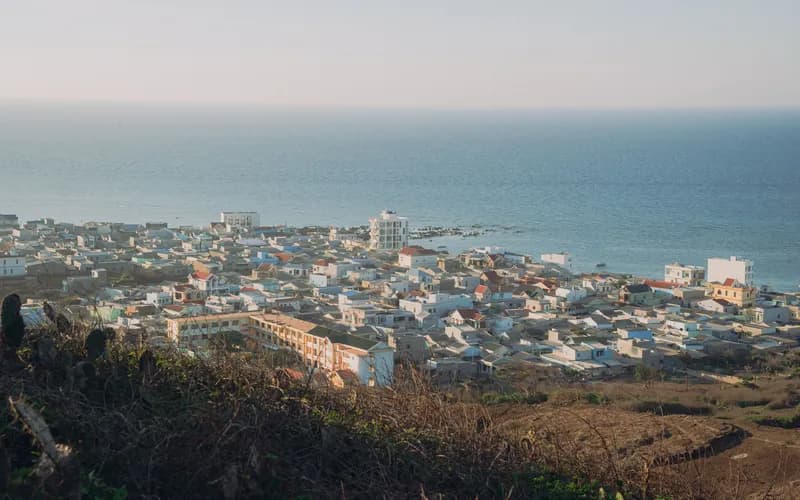
Travelers who want to test this approach might look at the alternative routes UNRUSH outlines in its guide to quieter alternatives to Ha Long Bay and Hoi An, several of which are now easier to reach directly than they were two years ago thanks to exactly this kind of route expansion. The pattern is likely to continue: as more European carriers add Vietnam routes to compete for the growing demand, expect more of these secondary connections rather than fewer.
Air connectivity is also compounding with the country's own domestic infrastructure push. Newer expressway sections and expanding regional airports both make it more realistic to build an itinerary around two or three slower regional bases rather than a single fast-paced loop through the two biggest cities, which was for years the default template pushed by mainstream package tours.
The Quality-Over-Volume Recalibration
Perhaps the most significant shift, and the one least visible in headline arrival numbers, is a change in how Vietnam's tourism authorities define success. Officials have begun speaking openly about moving past the raw visitor-count benchmark toward metrics tied to spending, length of stay, and sustainability — a recalibration that Da Nang has led particularly visibly with its own 2026 quality-first strategy, detailed in UNRUSH's coverage of Da Nang's tourism revolution. If that shift holds nationally rather than remaining a Da Nang-specific experiment, it should reinforce exactly the kind of travel UNRUSH exists to support: fewer, longer, more considered visits rather than a race to log the most stamps in a passport.
What to Do Next
- If you are drawn to Vietnam's classic coastal towns during peak season, book accommodation earlier than you would have three years ago — occupancy is rising faster than in past growth cycles.
- Check whether a new direct route now serves a regional airport closer to your actual destination before defaulting to Hanoi or Ho Chi Minh City as your entry point.
- Revisit your budget assumptions each season rather than relying on older price benchmarks, since demand-driven pricing is shifting faster than before.
- Consider shoulder-season travel deliberately — the windows just before and after traditional peaks are still calmer, even as overall arrivals climb.
- Use UNRUSH's plan your journey tool to sketch a route that favors quieter regional gateways over the busiest arrival hubs.
- Keep an eye on how coastal towns evolve linguistically and culturally as new source markets grow; it can meaningfully affect the atmosphere of a stay booked a year in advance.
Frequently Asked Questions
Is Vietnam getting more crowded because of this European growth?
Overall arrivals are rising, but the growth is more diversified across nationalities and calendar months than in past boom cycles, which tends to spread out rather than concentrate crowding. Certain coastal towns during specific peak windows are the exception worth planning around.
Why has Russian tourism to Vietnam grown so quickly?
A combination of new direct flights to Hanoi, Ho Chi Minh City, and Phu Quoc, simplified visa and e-visa processes, and Vietnam positioning itself as a stable warm-weather alternative as other long-haul destinations became more difficult for Russian travelers to reach.
Which parts of Vietnam are most affected by the European surge?
Nha Trang, Phu Quoc, and Da Nang have seen the most visible shifts in signage, flight schedules, and services catering to European and Russian arrivals, though the growth is broad enough that most coastal regions are feeling some effect.
Does this affect prices for independent travelers?
Yes, gradually. Demand-driven pricing in popular coastal towns is becoming less predictable, particularly around peak season, so it is worth checking current rates each season rather than relying on prior-year benchmarks.
Is Vietnam still a good destination for slow, independent travel despite the growth?
Yes. A more diversified visitor base and the tourism sector's own pivot toward quality-focused metrics both work in favor of slower, more considered travel, provided you plan around the specific towns and seasons where growth is most concentrated.
Are new flight routes making regional destinations easier to reach?
Yes. Airlines are adding international connections to regional airports beyond Hanoi and Ho Chi Minh City, which is gradually making it easier to skip the big-city arrival and head directly to quieter first stops.
Should I change my planned itinerary because of this trend?
Not necessarily, but it is worth checking whether your preferred towns and travel months now attract heavier seasonal demand than they did a few years ago, and adjusting booking timelines accordingly rather than assuming older availability patterns still hold.