
Vietnam remains one of the best-value destinations in the world — but "cheap" and "good value" are not the same thing. This guide breaks down exactly what a trip to Vietnam costs in 2026, tier by tier, and shows you how to spend in a way that buys depth rather than just distance.
The Honest Answer: What Vietnam Costs in 2026
Vietnam is affordable, but it is no longer the rock-bottom backpacker bargain it was a decade ago. Tourism revenue reached roughly $39 billion in 2025, the middle class is expanding fast, and prices in the most popular destinations have risen accordingly. What has not changed is the country's extraordinary value proposition: for what you would spend on a mid-range week in Western Europe, you can travel comfortably in Vietnam for a month.
Here is the realistic daily spend per person in 2026, excluding international flights:
| Travel style | Daily budget (per person) | What it buys |
|---|---|---|
| Shoestring / backpacker | $30–50 | Hostel dorm or basic guesthouse, street food, public transport, occasional paid activity |
| Mid-range / slow travel | $60–120 | Private room in a boutique guesthouse or family hotel, a mix of street food and restaurants, some guided experiences, comfortable regional transport |
| Premium | $200–500+ | Boutique and luxury hotels, private transfers and guides, fine dining, signature experiences like overnight cruises and cave expeditions |
These bands are deliberately wide because Vietnam's costs vary by a factor of two to three across the country. Central Da Nang, Phu Quoc, and Con Dao sit at the expensive end; Hue, the Mekong Delta towns, and most of the rural north sit at the cheaper end. A dollar simply goes further in a Ninh Binh homestay than in a beachfront Da Nang resort.
A useful rule of thumb: most independent travelers who want comfort without extravagance — private rooms, a daily guided experience or two, the occasional splurge — land between $70 and $100 a day, all in. That figure is the spine of this guide.
One request. Up to five tailored proposals.
Skip contacting agencies one by one — share your trip once and let up to five trusted Vietnam agencies come to you. Free, with no obligation.
Get my free quotesA Note on Currency and Cash
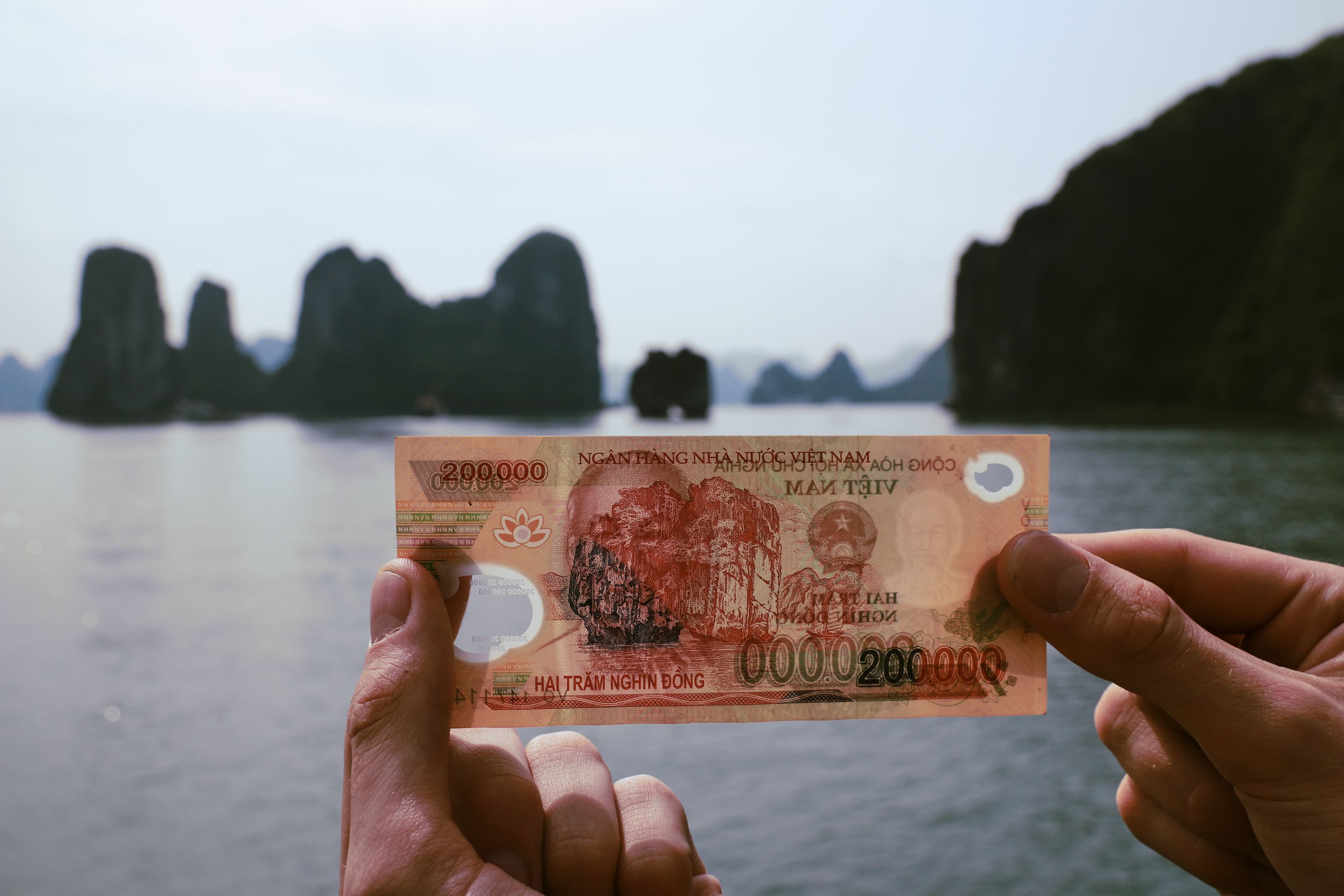
The Vietnamese Dong (VND) trades at roughly 25,000–26,000 to the US dollar in mid-2026. The large numbers can be disorienting at first — a casual lunch might be "120,000," a cruise "5,000,000" — so a quick mental shortcut helps: drop three zeros and divide by twenty-five to get a rough dollar figure.
Vietnam is modernising quickly, but it remains a dual-economy for payments. In cities — Hanoi, Ho Chi Minh City, Da Nang, Hoi An — cards (Visa, Mastercard) are widely accepted in hotels, established restaurants, and modern shops, and mobile apps like MoMo, ZaloPay, and VNPay are everywhere. In rural areas, village markets, and street stalls, cash is still king. Carry a mix, keep smaller denominations for street food and transport, and exchange money at banks or official counters rather than at airport kiosks, where rates are poorer. ATMs are plentiful but often charge withdrawal fees of 22,000–55,000 VND per transaction, so withdraw larger amounts less frequently.
Getting In: Visas and Entry Costs
Entry to Vietnam has rarely been simpler, and it is inexpensive. The e-visa is now open to citizens of every country, valid for up to 90 days on single or multiple-entry terms. Government fees are $25 for single entry and $50 for multiple entry, paid online at the official portal. Processing usually takes three to five working days — apply at least a week ahead, and longer around the Tet holiday when offices slow down.
Citizens of 13 countries — including Germany, France, Italy, Spain, the UK, Japan, and South Korea — enter visa-free for 45 days, which costs nothing at all. For the full breakdown of who qualifies for what, our complete guide to Vietnam's 2026 visa and immigration rules and our 90-day e-visa explainer cover every category and edge case.
One small but real cost to factor in if you fly into Ho Chi Minh City: the new Digital Pre-Arrival Form, mandatory at Tan Son Nhat Airport since April 2026, is free — but it is also a magnet for unofficial third-party sites charging $20–30 for a service the government provides at no cost. Use only the official portal and you will pay nothing.
International airfare is the single largest variable and sits outside any daily budget. As a rough guide, return long-haul flights from Western Europe run €600–1,000 depending on season and how far ahead you book; from the US West Coast, $700–1,200. Booking three to five months out, and avoiding the Tet window, makes the biggest difference.
Get matched with up to 5 trusted Vietnam agencies
- Free
- No obligation
- Up to 5 agencies
Where to Sleep: Accommodation by Tier
Accommodation is where Vietnam's value is most visible, and where the slow-travel approach pays off most directly. Choosing locally owned guesthouses and homestays over international chains is not a budget compromise — it is frequently the better experience, with home-cooked breakfasts, owners who become informal guides, and money that stays in the community.
- Hostel dorm bed: $8–15 per night. Clean, social, widely available in every tourist hub.
- Basic guesthouse or family-run hotel, private room: $20–50 per night. Often the sweet spot for slow travelers — private, comfortable, and locally owned.
- Mid-range hotel with air conditioning and reliable service: $50–120 per night.
- Rural homestay (community-based tourism): $10–20 per person, frequently including breakfast and sometimes a shared dinner. In places like Ninh Binh, Pu Luong, and the Ha Giang valleys, this is both the cheapest and the most rewarding option.
- Boutique ecolodges: $40–120 per night, common in Pu Luong, Sapa's quieter valleys, and Tan Hoa.
- Luxury resorts and 5-star hotels: $110–500+ per night, rising well above that for signature properties such as Six Senses Con Dao.
A practical insight: the jump from a $30 guesthouse to a $70 boutique hotel buys a genuinely different experience in Vietnam, but the jump from $70 to $200 often buys diminishing returns outside the true luxury tier. For most travelers, the mid-range bracket is where comfort and value intersect.
Eating Well for Almost Nothing
Food is the area where Vietnam's value borders on the absurd, and it is also the area where spending more rarely means eating better. The country was ranked 4th in Taste Atlas's Top 15 World Cuisines, yet its greatest dishes are still served from carts and plastic stools.
- Street food meal: 25,000–70,000 VND ($1–3). A bowl of pho runs 30,000–60,000 VND ($1.20–2.50); a banh mi often less.
- Casual local restaurant (com tam, bun cha, seafood): $3–6 per dish.
- Mid-range restaurant with table service: $8–15 per main.
- Fine dining / Michelin-recognised tasting menu: $40–150+ per person — still modest by international standards.
- Vietnamese coffee: 25,000–50,000 VND ($1–2); the famous egg coffee in Hanoi, similar.
- Local beer (bia hoi or bottled): 15,000–40,000 VND, among the cheapest in the world.
A traveler eating predominantly at street stalls and local restaurants can eat extremely well on $10–18 a day. The "golden rule" of Vietnamese street dining is eat first, pay later — order, find a stool, enjoy, then settle the bill. For the full picture, our ultimate guide to Vietnamese food in 2026 maps the dishes, regions, and cities in detail.
The counterintuitive truth: the more you spend trying to "upgrade" your eating in Vietnam, the further you often move from the best of it. The most memorable meals are usually the cheapest.
Getting Around: The Real Cost of Movement
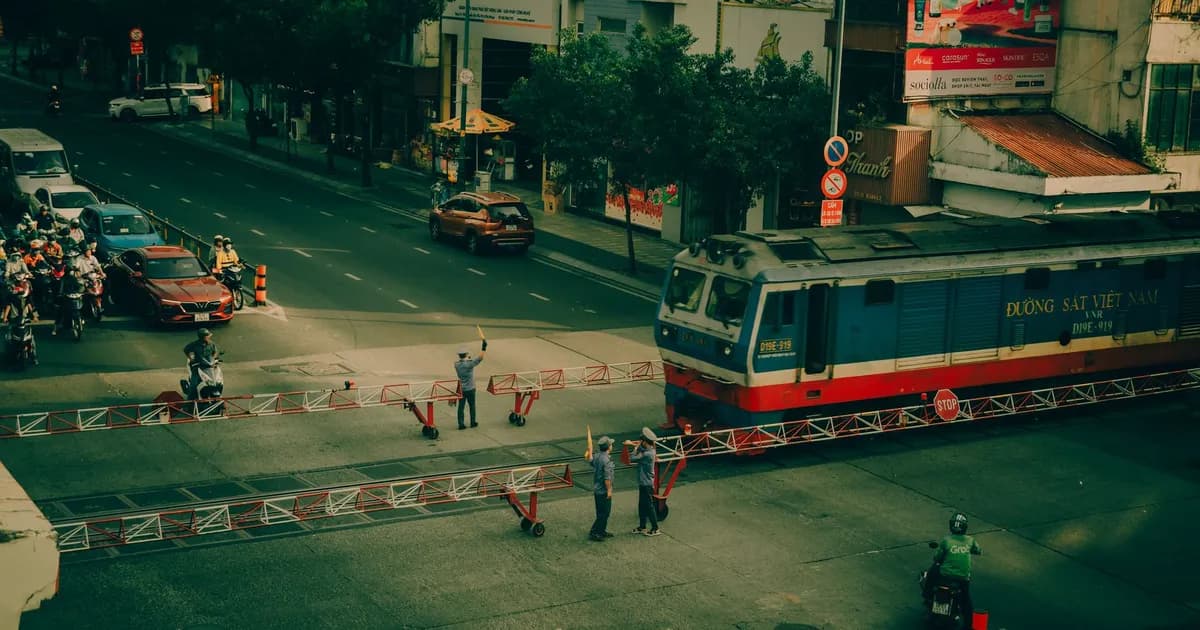
Vietnam stretches over 1,600 kilometres from north to south, and how you cover that distance shapes both your budget and the texture of your trip. There is a genuine trade-off here between speed and experience — and it is one of the places where slow travel and good value happen to align.
Domestic flights
The fastest and, for long hops, often the cheapest option. Hanoi to Ho Chi Minh City starts around $34 one way and typically runs $50–80 booked in advance, on VietJet, Bamboo Airways, or Vietnam Airlines. Flights skip everything in between, which is exactly their weakness for a slow traveler.
The Reunification Express train
The north-south railway is one of Southeast Asia's great journeys. A soft-sleeper berth for the full 33–35 hour Hanoi–Ho Chi Minh City run costs roughly $65–85. You rarely ride it end to end, though — the rewarding segments are shorter, like the coastal stretch over the Hai Van Pass between Hue and Da Nang. The train arrives in city centres, not distant airports, and the journey itself is part of the trip. With domestic aviation under occasional pressure in 2026, more travelers are rediscovering it — a shift we covered in our piece on Vietnam's slow rail revival.
Buses and limousine vans
The budget backbone. Overnight sleeper buses cover long distances for $10–20. Modern "limousine" vans — nine-seat minibuses — connect regional hubs comfortably; Hanoi to Ninh Binh, for example, runs around $6–12.
Grab and ride-hailing
In cities, Grab (and local rivals Be and Xanh SM) is the standard, removing fare negotiation entirely. Short rides under 5 km cost 30,000–70,000 VND ($1.25–3); cross-city trips run 80,000–150,000 VND ($3.50–6). GrabBike, on the back of a motorbike, is roughly half the price.
Motorbike and scooter rental
$8–14 per day for a semi-automatic, less by the week. For the Ha Giang Loop and rural exploration this is the iconic choice — but ride only with a valid licence and real experience, as enforcement has tightened and mountain roads are unforgiving. When in doubt, the "easy-rider" model (you ride pillion with a local driver) is safer and not much more expensive.
For most two-to-three-week itineraries, a sensible mix is one or two domestic flights for the big jumps, trains or limousine vans for scenic medium legs, and Grab within cities. Our guide to what's changed for travelers in 2026 covers the transport landscape in full.
Tours, Activities, and Entrance Fees
This is the most variable line in any Vietnam budget, because it spans free temple wanders and four-figure cave expeditions. Some representative 2026 prices:
- Heritage site entries: Hue Imperial City 200,000 VND (
$8.50); Hoi An old town ticket 120,000 VND ($4.70); Trang An boat tour in Ninh Binh ~250,000 VND per person. - Ha Long / Lan Ha Bay overnight cruise: $110–250 per person for a mid-range 2-day/1-night trip, including meals and kayaking.
- Ha Giang Loop guided tour: $70–120 per person per day, including bike, fuel, accommodation, and most meals.
- Cooking class (half-day, with market visit): $25–45.
- Tu Lan cave expedition (multi-day, Oxalis): $300–600 per person — all meals, guides, porters, safety gear, and transfers included.
- Sea turtle and diving experiences in Con Dao: premium-priced, reflecting strict conservation caps.
A theme worth noticing: in Vietnam, the experiences that cost more are usually the ones with built-in conservation, safety, or community infrastructure — not the ones with the most polish. A $400 cave expedition funds porters, guides, and a village that lifted itself from 85% poverty to under 3% through tourism. That is value of a different kind, and it is worth understanding before you judge a price tag.
Three Costed Itineraries: What Two Weeks Actually Looks Like
Numbers are easier to trust when they add up to a real trip. Here are three 14-day itineraries, costed per person and excluding international flights.
The shoestring slow traveler — ~$650–750 for two weeks
Hostels and homestays ($12/night average = $168), street food and local restaurants ($12/day = $168), buses and trains for transport ($120 total), a handful of paid activities and entries ($120), SIM and incidentals ($60). Total around $636–720, or roughly $45–50 a day. Entirely achievable for a traveler comfortable with dorms, public transport, and DIY planning.
The mid-range slow traveler — ~$1,150–1,500 for two weeks
This is the sweet spot for most Unrush travelers. Boutique guesthouses and family hotels ($45/night = $630), a mix of street food and restaurants ($25/day = $350), one domestic flight plus trains and private transfers ($180), guided experiences including a Lan Ha cruise and a cooking class ($250), SIM and incidentals ($90). Total around $1,500, or roughly $90–100 a day — comfortable, immersive, and still a fraction of equivalent travel elsewhere.
The premium traveler — $4,000+ for two weeks
Boutique and luxury hotels ($180/night = $2,520), fine dining and curated meals ($60/day = $840), private transfers and guides throughout ($1,200+), signature experiences such as an overnight cruise, a multi-day cave expedition, and a Con Dao stay ($1,500+). Total $6,000+, or $300–400+ a day, depending on how far the luxury tier is pushed.
The striking thing about these three trips is not the gap between them — it is how good the middle one is. The mid-range slow traveler sees, eats, and understands more of Vietnam than the premium traveler racing between resorts, at roughly a quarter of the cost.
Where Your Money Goes Furthest
Costs vary across Vietnam by a factor of two to three, and routing accordingly is one of the simplest ways to stretch a budget without sacrificing anything.
The cheapest regions are rural and inland: the Mekong Delta towns, Ninh Binh, Hue, Pu Luong, and the Ha Giang highlands. Here a homestay, three local meals, and a day of exploring can cost under $30 all in. The most expensive are the developed coastal and island destinations: Phu Quoc, central Da Nang, Con Dao, and Nha Trang's resort strip, where accommodation and dining can run two to three times higher.
This maps neatly onto the slow-travel philosophy. The places that reward staying longer — the quieter valleys, the secondary coasts, the working towns off the tour-bus circuit — are also, conveniently, the places where your money goes furthest. Choosing Quy Nhon over Nha Trang, or a Lan Ha cruise over the busiest Ha Long routes, often means paying the same or less for a better experience. We mapped this shift in detail in our piece on how travelers are rewriting Vietnam's map.
Hidden Costs and Money Traps to Avoid
A realistic budget accounts not just for what things cost, but for where travelers reliably overpay.
Forced-shopping tours. The cheapest group tours — the $20–30 Ha Long day trips, the budget Sapa packages — often recover their margins through commission-driven stops at jewelry, pearl, and handicraft warehouses. The headline price is low; the real cost is your time and a diluted experience. A growing number of Vietnamese travelers now pay more specifically to avoid this, a trend we explored in Vietnam's no-shopping turn. Read what an itinerary actually includes before booking on price alone.
Tet surcharges. During the Lunar New Year window (16–24 February in 2026, with disruption stretching wider), expect surcharges of 50–100% on taxis and some private services, plus hotel rate increases, sold-out transport, and widespread closures. Budget as if Vietnam is a mid-range destination during this period — because it is.
ATM and exchange fees. Per-withdrawal charges add up. Withdraw larger amounts less often, and avoid airport exchange kiosks.
Third-party "visa" and "arrival card" sites. Both the e-visa portal and the new digital arrival form are official government services. Unofficial lookalike sites charge a premium for nothing. Always verify the URL.
Over-tipping ambiguity. Tipping is not deeply embedded in Vietnamese culture, but it is appreciated in tourism contexts. Roughly $5–10 per day for a private guide, and a small envelope for homestay hosts, is generous and appropriate — no more is expected.
How to Get More Value Without Going Cheap
The most important idea in this guide is also the simplest: in Vietnam, value and cost are not the same axis. The cheapest trip and the best-value trip are rarely the same trip — and neither is the most expensive one.
Getting more from your money here is less about spending less and more about spending well:
Stay longer in fewer places. Every relocation costs money — transport, a night of transit, the friction of arriving somewhere new. Three or four nights in one base lowers your per-day cost and deepens the experience. Speed is expensive in every sense. Our guide to the 10 mistakes slow travelers make makes this case in full.
Travel in shoulder seasons. Prices, crowds, and surcharges all drop outside peak periods and holidays. Timing also dictates where to go — our region-by-region climate guide shows how to follow good weather and good value at once.
Eat where locals eat. The single highest-value habit in Vietnam. It costs less and tastes better.
Choose locally owned accommodation. Cheaper than international chains, and your money stays in the community.
Spend on a few things that genuinely matter. A cave expedition, a quiet cruise, a multi-day stay in a working village — the experiences with real infrastructure behind them are worth their price. Skip the filler; fund the things that change how you remember the trip.
This is the heart of the slow-travel argument: it is not a more expensive way to see Vietnam, nor a cheaper one. It is a better-value one. For the full philosophy, see our ultimate slow travel guide to Vietnam and the principles behind our slow travel charter.
The Value of a Good Local Partner
There is a point in planning a Vietnam trip where doing everything yourself stops saving money and starts costing it — in time, in mistakes, in overpriced bookings, and in missed experiences you never knew to ask for. Distances are long, regional differences are significant, and the quality of local operators varies enormously.
A knowledgeable local agency does not simply add a markup. The best ones save you money by routing intelligently, booking at local rates, steering you away from commission-driven traps, and concentrating your budget on the experiences that actually matter. They turn a good-value trip into an exceptional one. The agencies in our certified network are selected precisely for this: a slow-travel philosophy, genuine community relationships, and quality over volume.
When you are ready to translate a budget into an actual itinerary, our plan-your-journey page is the place to start.
Frequently Asked Questions
How much does a two-week trip to Vietnam cost in 2026?
Excluding international flights, expect around $640–750 for a shoestring trip, $1,200–1,500 for a comfortable mid-range slow-travel trip, and $4,000–6,000+ for a premium trip. Most independent travelers seeking comfort without extravagance spend roughly $70–100 a day.
Is Vietnam still cheap to travel in 2026?
Yes — it remains one of the best-value destinations in the world, though prices have risen in popular areas as the country's tourism economy matures. Street food, local transport, and rural accommodation are still remarkably inexpensive. The key distinction is between "cheap" and "good value": Vietnam excels at the second.
What is the cheapest way to travel Vietnam?
Stay in homestays and hostels, eat at street stalls and local restaurants, use buses and trains rather than flights, rent a scooter where it's safe, and travel outside holiday periods. A careful backpacker can travel well on $30–50 a day.
How much should I budget for food per day?
A traveler eating mainly street food and local restaurants can eat very well on $10–18 a day. Adding mid-range restaurant meals brings it to $25–35. Fine dining is available but optional, and rarely better than the street food it sits above.
Should I use cash or card in Vietnam?
Both. Cards and mobile payment apps work in cities and established businesses, but cash is essential for street food, rural areas, markets, and small guesthouses. Carry a mix, keep small denominations handy, and withdraw larger amounts less often to minimise ATM fees.
When is Vietnam most expensive to visit?
Around Tet (Lunar New Year — 16–24 February in 2026), when surcharges of 50–100% apply to many services, transport sells out, and businesses close. The April 30–May 1 and early-September national holiday clusters also bring elevated domestic demand and prices.
Does a local travel agency save money or add cost?
A good one saves money on balance — through local rates, intelligent routing, and by steering you away from overpriced or commission-driven options — while also improving the quality of the trip. The value lies in expertise and access, not just booking convenience.
Ready to turn a budget into a real journey? Explore our Vietnam travel guides, our practical 2026 travel overview, and our network of certified local agencies who build slow-travel itineraries that respect both your time and your budget.