

On 22 August 2026, Vietnam's Politburo issued Resolution 26-NQ/TW on developing tourism into a spearhead economic sector. It is a policy document rather than a law, which means nothing at the immigration counter changed on the day it was signed. But it sets the direction for the next four years of Vietnamese visa policy, and it contains three things that will eventually reach travellers directly: wider visa waivers, a new preferential visa category aimed at high-spending and long-staying visitors, and language pointing toward compulsory travel insurance for inbound tourists. Here is what has actually been decided, what has not, and what applies at the border right now.
What was actually signed
Resolution 26-NQ/TW was signed by General Secretary and President To Lam. In the Vietnamese system, a Politburo resolution sets binding political direction; the National Assembly, the government and individual ministries then translate it into laws, decrees and circulars. The gap between the two stages is typically twelve to thirty-six months.
That distinction matters enormously for trip planning. A resolution is a reliable indicator of where policy is heading. It is not a rule you can cite to a border officer, and it does not change the documents in your bag for a trip this autumn.
The resolution's stated objective is to develop Vietnamese tourism into a high-quality, smart, green and creative industry with high added value, competitive at regional and international level. The operative word throughout the text is value rather than volume.
One request. Up to five tailored proposals.
Skip contacting agencies one by one — share your trip once and let up to five trusted Vietnam agencies come to you. Free, with no obligation.
Get my free quotesThe targets, and why they matter to you
The numbers are unusually specific for a document of this kind. By 2030, Vietnam intends tourism to contribute 10 to 12 per cent of GDP directly, to receive 45 to 50 million international visitors and 160 million domestic trips, and to generate total tourism revenue of 80 to 90 billion US dollars. It plans around 1.5 million hotel rooms, 2.3 million direct jobs, three growth poles in Hanoi, Ho Chi Minh City and Da Nang, ten key tourism hubs, twenty national tourism zones and fifteen globally competitive tourism enterprises.
For context, Vietnam received about 12.3 million international visitors in the first six months of 2026, up nearly 15 per cent year on year, with China and South Korea the largest source markets. Reaching 45 to 50 million by 2030 implies roughly doubling current annual arrivals within four years.
Targets of that scale have consequences for the traveller: more flights and more direct routes, more hotel supply, better transport infrastructure, and considerably more pressure on the places that already carry the most visitors. If you want to understand where that pressure is currently being applied, our reporting on the Phu Quoc build-out ahead of APEC 2027 shows the policy taking physical shape.
Visas: wider waivers and a new preferential category
The resolution directs the government to ease entry and exit policy in favour of key markets, applying flexible visa arrangements market by market, subject to defence and national security considerations. Two concrete strands emerge.
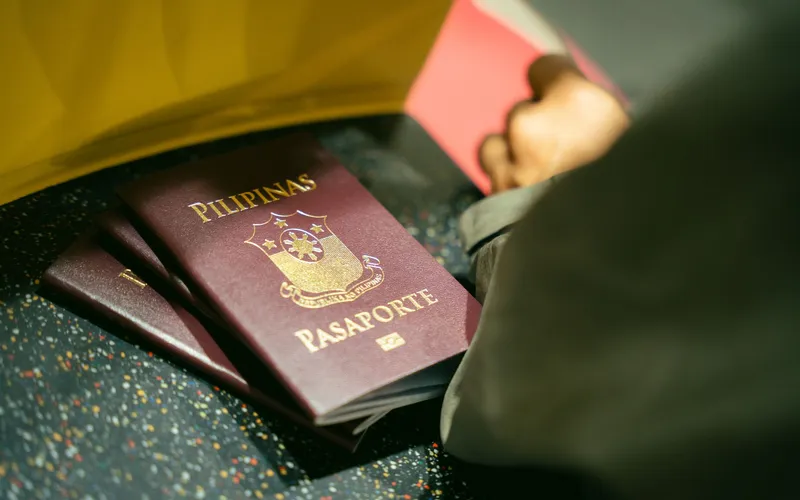
The first is a broader unilateral visa waiver list. As of August 2026, citizens of up to 38 countries and territories can enter Vietnam without a visa, with permitted stays ranging from 14 to 90 days depending on nationality and on whether the exemption is unilateral or bilateral. The resolution signals further expansion, likely targeted at European, Indian, Middle Eastern and North American markets.
The second is genuinely new: a preferential visa category for visitors judged to contribute most to tourism development, meaning higher spenders and longer stayers. No implementing decree has been published, so the eligibility criteria, the length of stay and the application mechanism are all unknown. Expect something resembling the long-stay and investor-adjacent visas that Thailand and Malaysia have introduced, rather than a simple extension of the e-visa.
Until those decrees appear, the practical position is unchanged. If you are not on the waiver list, you still apply for an e-visa or a sponsored visa, and the distinction between the two routes is worth understanding before you book, which we set out in our guide to e-visa versus visa exemption in Vietnam.
Get matched with up to 5 trusted Vietnam agencies
- Free
- No obligation
- Up to 5 agencies
Travel insurance: the change most likely to affect you
The most consequential line for ordinary travellers is the direction toward mandatory travel insurance for inbound visitors. Reporting on the resolution indicates it mandates compulsory travel insurance as part of the wider overhaul.
Take that seriously but not literally yet. No decree currently requires a foreign tourist to hold insurance to enter Vietnam, and no airline check-in desk is asking for a policy. What is likely, based on how comparable requirements have been implemented elsewhere in the region, is a future rule requiring proof of a policy with a stated minimum medical cover, presented either at the e-visa application stage or at the border.
The sensible response is to hold adequate travel insurance anyway, and to check three things in your policy: medical and repatriation cover limits, whether motorbike riding is covered and under what licence conditions, and whether trekking above a stated altitude is excluded. Motorbike exclusions catch out a large number of visitors to Vietnam every year, and Vietnam's tightened traffic enforcement means an uninsured incident is now expensive on two fronts.
What has not changed yet
To be unambiguous about the current state of play:
- The e-visa system, its validity periods and its application process are unchanged by the resolution.
- The visa waiver list is unchanged until a new government decree amends it.
- There is no insurance requirement at the border today.
- There is no preferential visa you can apply for today.
- Overstay penalties, which have tightened considerably, are unaffected. Our summary of Vietnam's current overstay penalties remains the operative guidance.
Anyone telling you otherwise, particularly a visa agency offering a new preferential category for a fee, is selling something that does not exist.
The 2026 baseline: what applies today
Alongside the resolution, several rules introduced earlier in 2026 are already in force and matter far more to a trip this year.
The digital arrival card now covers five major international airports, one land border gate and a network of seaports. It applies to e-visa holders, visa-on-arrival travellers and visa-exempt nationals alike, and it is a separate step from your visa. Complete it in the window your carrier or the immigration portal specifies, keep the confirmation offline, and do not leave it until you are in the queue. Our practical walkthrough of the digital arrival card and what happens at the gate covers the process step by step.
Health declarations for inbound, outbound and transit travellers were introduced from 1 July 2026 and are usually completed alongside the arrival card.
Passport validity of at least six months beyond your intended stay remains the standard requirement, and airlines enforce it at check-in even when immigration might not.
Who this helps, and who it does not
The resolution is explicitly designed to favour travellers who stay longer and spend more. If you are a slow traveller planning three or four weeks in one or two regions, you are close to the profile Vietnam says it wants, and the coming visa changes are likely to work in your favour: longer permitted stays, easier extensions, and possibly a dedicated long-stay route.
If you are a short-haul weekend visitor from within Asia, the policy is broadly neutral. Volume from those markets is already high and the infrastructure investment will improve the experience.
The travellers who should watch most carefully are those on the edge of the rules: anyone stitching together back-to-back exemptions, anyone planning to work remotely on a tourist entry, and anyone who habitually travels uninsured. The direction of policy is toward more documentation, more verification and more digital cross-checking, not less.
How to read Vietnamese policy news without being misled
Three practical habits will save you trouble.
First, distinguish the instrument. A Politburo resolution is direction. A National Assembly law is binding legislation. A government decree implements it. A ministry circular sets the detail. Only the last two change what happens at a counter.
Second, prefer primary sources. The Vietnam National Authority of Tourism, the Immigration Department portal and your own country's foreign ministry advisory are the places to verify a rule. Aggregator sites and visa agencies frequently publish future policy as current fact.
Third, re-check close to departure. Vietnamese entry rules have changed four or five times in the past two years, including the arrival card, the health declaration and the provincial reorganisation. Information that was correct when you booked may not be correct when you fly.
What to Do Next
- Check whether your nationality currently appears on Vietnam's visa waiver list and, if so, for how many days. Do not assume last year's number still applies.
- If you need an e-visa, apply through the official government portal only, and allow a working week rather than the advertised minimum.
- Buy travel insurance with explicit medical and repatriation cover, and read the motorbike and trekking clauses before you travel.
- Complete the digital arrival card and health declaration in the required window, and save the confirmations to your phone offline.
- Confirm your passport has at least six months of validity beyond your planned departure date.
- If you are planning a stay longer than your permitted period, arrange the correct visa category before arrival rather than planning to extend on the ground.
- Re-verify all of the above two weeks before departure using official sources, and sketch your route with our Vietnam planning resources once the paperwork is settled.
Frequently Asked Questions
Do I need travel insurance to enter Vietnam right now?
No. As of the end of August 2026, no rule requires foreign tourists to show proof of travel insurance at the border or during an e-visa application. The Politburo resolution points toward a future compulsory requirement, but no implementing decree has been issued. You should hold insurance regardless, and check that it covers motorbike use and any trekking on your itinerary.
What is the preferential visa mentioned in the resolution?
A proposed new category for visitors judged to contribute most to tourism, meaning higher spending and longer stays. It does not exist yet. No criteria, duration or application process has been published, and there is nothing you can apply for today. Treat any agency offering it as a warning sign.
Has the visa waiver list changed?
Not because of the resolution itself. As of August 2026, citizens of up to 38 countries and territories may enter without a visa, with stays of 14 to 90 days depending on nationality. The resolution directs the government to widen that list further, market by market, but each change requires a separate decree.
Does this affect the digital arrival card?
No. The arrival card is a separate, already-operating requirement covering five major international airports, one land border gate and a network of seaports. It applies whether you hold an e-visa, a visa on arrival or a waiver, and it must be completed before you reach immigration.
Will Vietnam get more expensive as a result?
Probably, gradually. A strategy built on higher-value visitors implies rising accommodation standards and prices at the top of the market, and heavy investment in the flagship destinations. Street food, local transport and family-run accommodation are unlikely to change quickly. The practical effect for a slow traveller is that the gap between headline destinations and quieter regions widens, which is an argument for spending more nights in the latter.
Is 45 to 50 million visitors by 2030 realistic?
It is ambitious. Vietnam received roughly 12.3 million international visitors in the first half of 2026, growing around 15 per cent year on year. Sustaining that rate would bring the country close to the lower end of the target. The binding constraints are airport capacity, hotel supply and, in several destinations, water and waste infrastructure rather than demand.
Should I change my trip plans because of this resolution?
No. Nothing in it changes what you need for a trip in the next few months. What it should change is your assumption that Vietnamese entry requirements are stable. Build a habit of re-checking official sources shortly before departure, and hold insurance that would satisfy a future requirement in any case.