

Vietnam's largest island is currently one of the biggest construction sites in Southeast Asia. Phu Quoc will host the APEC summit in November 2027, and the run-up has produced twenty-one government-assigned projects worth roughly 137 trillion dong, around 5.25 billion US dollars: a convention centre complex, a light rail corridor, an airport expansion, a widened ten-lane arterial road and new resettlement districts. For a destination that markets itself on white sand and slowness, that is an extraordinary amount of concrete arriving at once. Understanding what it means, and when, is now part of planning any trip to the island.
The scale of what is being built
The headline project is the APEC conference complex in the south of the island, taking shape on a site that was scrub and plantation two years ago. Around it, the 18-kilometre DT.975 provincial road is being widened to 62 metres and ten lanes, with a 15-metre central reservation held back for a future light rail line linking the summit venue to Phu Quoc International Airport. The airport itself is being expanded to handle a step change in capacity.
None of this is speculative. Ground was broken on the first tranche in mid-2025 and the works have run on an accelerated schedule ever since, with the island elevated to Class-I city status and reorganised administratively as a special zone. Local authorities have set a target of more than nine million visitors in 2026, of which at least two million international, and fifteen million arrivals by 2030.
Those are not slow-travel numbers. They are the numbers of a destination being deliberately scaled, and they deserve to be read alongside our analysis of how mass arrivals are already redrawing Vietnam's travel map.
One request. Up to five tailored proposals.
Skip contacting agencies one by one — share your trip once and let up to five trusted Vietnam agencies come to you. Free, with no obligation.
Get my free quotesWhy Phu Quoc, and why now
Vietnam has hosted APEC twice before, in Hanoi in 2006 and Da Nang in 2017. Both cities received an infrastructure dividend that outlasted the summit by decades: Da Nang's beach road, bridges and airport terminal are still the backbone of central Vietnam's tourism. Choosing an island for the third edition is a bolder proposition, because an island has no hinterland to absorb the surge.
The strategic logic is straightforward. Phu Quoc is the one place in Vietnam with a genuinely unrestricted visa regime, an international airport, a large existing resort inventory and enough undeveloped land in the south to build a summit campus from scratch. It is also the flagship of a national policy shift: the Politburo's tourism resolution signed in August 2026 sets a target of 45 to 50 million international visitors by 2030 and directs the sector toward higher-spending, longer-staying markets. Phu Quoc is where that ambition is most visible in physical form. We unpack the policy itself in our piece on Vietnam's new tourism resolution and what it changes at the border.
What the build-out actually feels like on the ground
The honest report from 2026 is that Phu Quoc is a two-speed island.
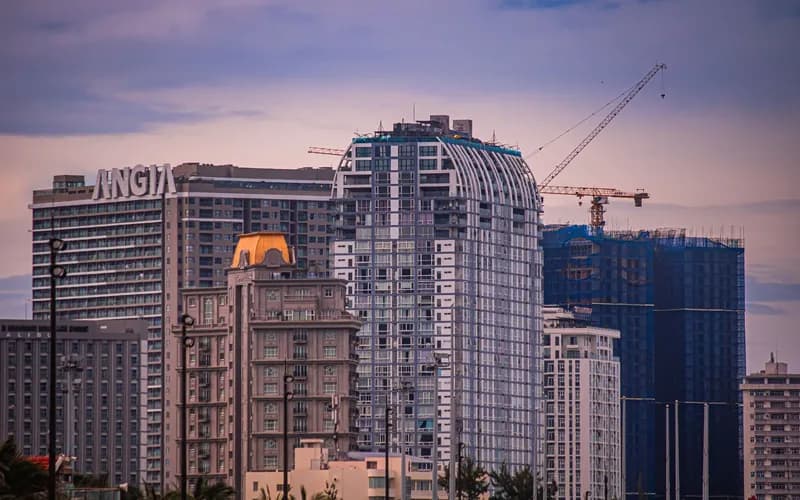
The north and centre, around Ong Lang, Cua Can and the older parts of Duong Dong, still behave largely as they did: pepper farms, fish sauce warehouses, small guesthouses and long stretches of quiet coast. The south, from An Thoi toward the APEC site and the cable car, is heavy plant, dust, detour signage and night working. The main road spine linking the two is being rebuilt in sections, which means journey times are unpredictable and the ride from the airport to a northern beach can double without warning.
Practical consequences worth planning around:
- Transfer times from the airport are volatile. Add an hour of margin to any departure, and do not book a same-day connection from a northern beach to an early flight.
- Noise is site-specific rather than island-wide. Ask a property directly what is being built within 500 metres, and ask when work starts in the morning.
- Some beaches in the south are fenced or access-restricted for works. Confirm beach access before booking a southern resort rather than assuming the photographs are current.
- Accommodation supply is rising fast, which has kept mid-range prices flatter than you might expect. Bargains exist, especially midweek and outside the December to March high season.
Get matched with up to 5 trusted Vietnam agencies
- Free
- No obligation
- Up to 5 agencies
The visa quirk that shapes who arrives
Phu Quoc remains the only place in Vietnam offering visa-free entry of up to 30 days to travellers of any nationality, provided they arrive directly by international flight or cruise without clearing immigration on the mainland. Transiting airside through Hanoi or Ho Chi Minh City is acceptable; leaving the airport is not.
The restriction cuts the other way too. You cannot use the Phu Quoc exemption to continue to the mainland. A domestic flight from Phu Quoc to Ho Chi Minh City without a valid visa will simply be refused at check-in, and overstaying carries daily fines of roughly 1,250,000 dong along with deportation and entry-ban risk.
This single rule explains a great deal about the island's visitor mix. It funnels in resort travellers on direct charters from Korea, China, India and Eastern Europe who never intend to see the mainland, and it filters out precisely the overland, multi-region traveller Phu Quoc would otherwise attract. As the national visa regime widens under the new resolution, the island's comparative advantage narrows, which is one reason the local authorities are building so hard on experience and infrastructure instead.
What still works on Phu Quoc
It would be wrong to write the island off. Several things remain genuinely good, and some are better than they were.
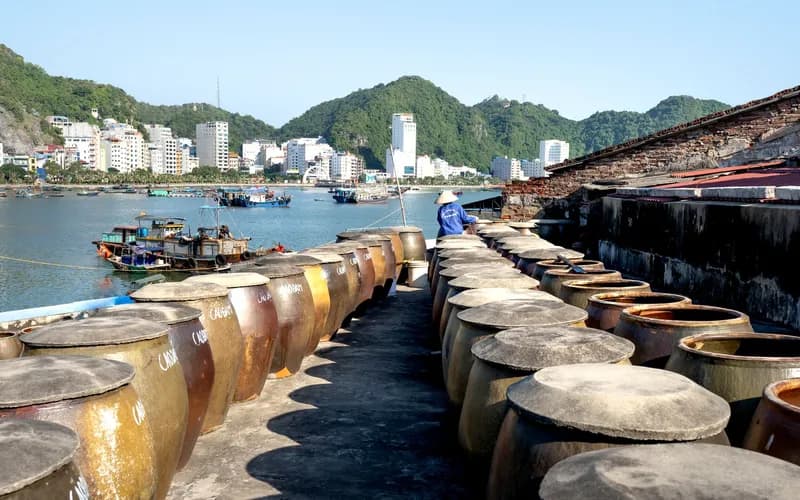
The northeast coast around Rach Vem and Ganh Dau still has fishing hamlets, floating houses and empty beaches reachable on a scooter in an afternoon. The fish sauce distilleries in Duong Dong are working industrial heritage, pungent and unglamorous and completely real. Phu Quoc National Park covers over half the island and its interior tracks see almost no visitors. Ham Ninh on the east coast keeps a morning crab market. Pepper farms in Khu Tuong sell direct.
The southern archipelago of An Thoi islands is the other genuine asset. Day boats run to Hon Mong Tay, Hon Dam Ngang and Hon Thom for snorkelling, and the water clarity from November to April is the best in Vietnam's south. Choose an operator with small groups rather than the large multi-boat outfits, and go on a weekday.
If you want that experience without the construction, the comparison worth making is with Con Dao, which we cover in detail in our look at Vietnam's other, quieter island archipelago.
The 2030 arithmetic, and the risk in it
Fifteen million arrivals by 2030 on an island of roughly 590 square kilometres is a density that few destinations manage well. Freshwater supply, solid waste, wastewater treatment and reef health are the constraints that decide whether a tropical island absorbs growth or degrades under it, and none of them are solved by a conference centre.
There are encouraging signs. The elevation to special-zone status gives the local administration more direct authority over planning. The national resolution's language emphasises green, high-value tourism rather than volume alone. The light rail corridor, if it is actually built out rather than merely reserved, would be the first serious attempt at mass transit on a Vietnamese island.
There are also familiar warning signs: land speculation in the south, resort inventory growing faster than utilities, and a visitor target set before the carrying-capacity study rather than after it. The honest position for a traveller in 2026 is that Phu Quoc's trajectory is genuinely undecided, and that the two years before the summit are the last window in which the island can be seen mid-transformation.
How to decide whether to go before 2027
Go now if you want to see a place in the middle of becoming something else, if you are happy to base yourself in the north and treat the south as an excursion, and if you value the visa-free 30-day window for a long, low-cost island stay with reliable connectivity.
Wait until after 2027 if your priority is a finished, quiet beach holiday. The construction will have stopped, the road will be complete, and the airport will be larger. It will also be busier, and prices will have adjusted upward.
Skip it entirely if what you actually want is Vietnamese island life at village pace. Con Dao, Nam Du, Phu Quy and the Cham Islands all deliver that more honestly, and a good local operator can build a route around them. Our directory of vetted Vietnamese travel agencies is a reasonable place to start that conversation.
The wider signal
Phu Quoc matters beyond Phu Quoc. It is the clearest physical expression of Vietnam's decision to compete with Thailand and Malaysia at the top of the regional market rather than the middle. If it works, expect the same playbook applied to Van Don, Con Dao and the central coast: special-zone status, an anchor event, transport infrastructure, then volume.
For travellers who care about depth rather than throughput, the practical response is not to boycott. It is to arrive with clear eyes, to spend money with businesses rooted in the place rather than in the development cycle, and to give the quieter half of every destination the majority of your nights. That principle sits at the centre of our charter for slow travel, and Phu Quoc in 2026 is a useful test of it.
What to Do Next
- Decide your base before your dates. North or centre for quiet, south only if you actively want to see the build-out.
- Check flight routing carefully if you plan to use the 30-day visa exemption: your arrival must be a direct international service, and you cannot continue to the mainland without a visa.
- Email any prospective property and ask two specific questions: what is under construction within 500 metres, and is the nearest beach currently open.
- Book island boat trips midweek and with small-group operators; weekends bring domestic crowds to the An Thoi islands.
- Add an hour of buffer to every airport transfer while the main road is being rebuilt.
- If quiet is the priority, price a Con Dao or Nam Du leg alongside Phu Quoc before committing, and adjust the split of nights accordingly.
- Revisit your plan three months before departure. On an island changing this fast, information older than a season is unreliable.
Frequently Asked Questions
Is Phu Quoc worth visiting during the APEC construction period?
Yes, with conditions. The north and centre of the island remain pleasant and the sea is unaffected. The south is a working construction zone through 2027. If you base yourself around Ong Lang or Cua Can, treat the south as a day trip and build slack into transfers, the trip works. If you want a finished, silent beach resort, this is not the right window.
Will APEC 2027 close the island to tourists?
No blanket closure has been announced, but summits of this scale bring localised security cordons, road closures and airspace restrictions for roughly a week around the event in November 2027. Independent travellers should avoid that window unless they have a specific reason to be there, and should expect elevated hotel rates across the island.
Does the 30-day visa-free rule still apply to Phu Quoc in 2026?
Yes. Phu Quoc continues to allow visa-free stays of up to 30 days for all nationalities arriving directly by international flight or cruise, subject to a passport valid for at least six months. The exemption does not permit onward travel to the Vietnamese mainland, and there is no mechanism to extend it while remaining on the island.
Are prices rising because of the build-out?
Unevenly. Land and premium resort prices in the south have risen sharply on speculation. Mid-range and budget accommodation has stayed relatively flat because new supply is arriving at the same time, and midweek rates outside the December to March peak can be very good. Food and transport costs remain broadly in line with the rest of southern Vietnam.
Which parts of Phu Quoc are still quiet?
The northeast coast around Rach Vem and Ganh Dau, the interior tracks of Phu Quoc National Park, the Ham Ninh side of the east coast, and the pepper-farming villages inland. All are reachable by scooter in under an hour from the centre and see a fraction of the visitors of the main beach strip.
Is Con Dao a better choice than Phu Quoc right now?
For a traveller prioritising quiet, conservation and low visitor numbers, probably yes. Con Dao has no comparable construction programme, stricter development limits and a much smaller footprint. The trade-offs are fewer flights, higher accommodation costs relative to facilities, and no visa exemption. Many travellers do both, giving Con Dao the longer stay.
How long should I stay on Phu Quoc?
Four to six nights is a sensible range in 2026. That allows two beach days, one boat day to the An Thoi islands, one day exploring the north and interior, and a buffer for weather or traffic. Longer stays make sense mainly if you are using the visa-free window to settle in one place and work, in which case a month is genuinely comfortable.