
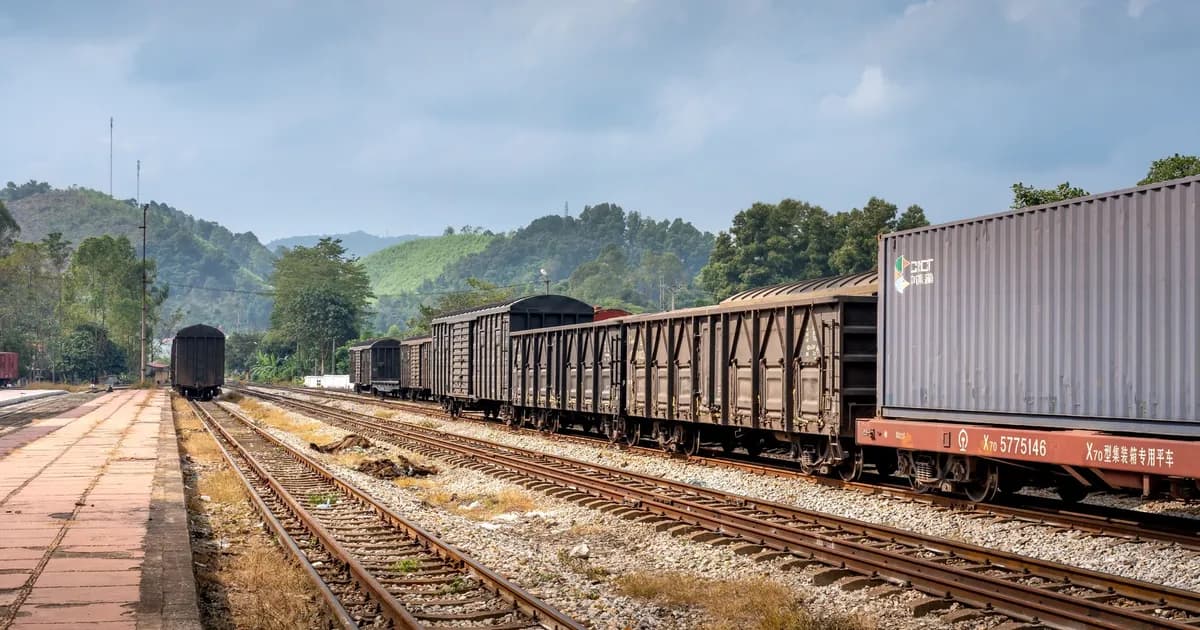
Cambodia by Train in 2026: Royal Railway Routes, Times and Fares
Cambodia has a railway, which surprises a lot of visitors, and it is one of the more pleasant ways to cross the country if you understand what you are buying. It is not fast. It does not run every day. Parts of the network that appeared on maps a few years ago are not operating at all. But on the right route on the right day, for a handful of dollars, it is a calm, wide-windowed, entirely un-hurried way to watch rice country go past. Here is the honest state of the system in 2026.
What actually runs in 2026
Royal Railway is the sole operator of passenger services on Cambodia's metre-gauge network, and there are two lines, both radiating from Phnom Penh.
The Southern Line runs from Phnom Penh to Sihanoukville, calling at Takeo, Touk Meas, Damnak Chang'aeur, which is the station for Kep, Kampot and Veal Renh. This is the line most travellers use and the one in the best condition.
The Northern Line runs from Phnom Penh towards the Thai border, calling at Romeas, Bamnak, Pursat, Moung Russey and Battambang. In practice, services currently terminate at Battambang, which is itself a rewarding destination and one we write about in our piece on Battambang, Cambodia's slow river city.
Two structural facts shape everything else. Services are concentrated at weekends, typically Friday through Sunday with occasional extra departures, and there is generally only one departure per direction per day on each line. Trains are diesel-hauled and run at a top speed in the region of 60 kilometres an hour, which in practice means an average well below that.
The timetable changes without much notice. Anything you read, including this article, should be checked against the operator's current schedule before you build a day around it.
One request. Up to five tailored proposals.
Skip contacting agencies one by one — share your trip once and let up to five trusted Cambodia agencies come to you. Free, with no obligation.
Get my free quotesThe southern line: Phnom Penh to the coast
This is the line worth taking. It leaves Phnom Penh's colonial-era station on Preah Monivong Boulevard, crosses the southern rice plain, skirts the limestone karsts around Touk Meas, and arrives at Kampot's small restored station before continuing to Veal Renh and Sihanoukville.
As a rough guide, Phnom Penh to Kampot takes around three and a half hours, with fares starting near 11 US dollars. The full run through to Sihanoukville is a longer proposition, typically somewhere in the seven to eight hour range depending on the service and any delays.
Departure patterns matter here. On this route there are no morning departures in either direction at the time of writing, with services leaving in the late afternoon, around 17:00 from Phnom Penh. That makes the Kampot leg a pleasant early-evening journey and the Sihanoukville leg a late arrival, which is worth planning around if you have onward transport or a boat to catch.
The Damnak Chang'aeur station serves Kep, but it is not in Kep. Expect a tuk-tuk transfer of roughly twenty to thirty minutes at the other end, and arrange it in advance if you are arriving after dark.
The northern line, and the Poipet question
The northern line is the more complicated story. The route was rehabilitated over the last decade and, in 2019, reconnected to the Thai network at Poipet, briefly creating the possibility of a Bangkok to Phnom Penh rail journey with a change at the border.
That link is not currently usable. Since the 2025 conflict on the Thai-Cambodian frontier, the land border has been subject to closures and restrictions, and passenger trains on the northern line terminate at Battambang rather than continuing to Serei Saophoan and Poipet. The status has changed more than once, and it may change again.
The practical instruction is simple: do not build an itinerary that depends on a rail crossing into Thailand without confirming current conditions within days of travel. We track the wider situation in our piece on the Thailand-Cambodia land border in 2026, including how to route around it.
Within Cambodia, the Phnom Penh to Battambang service does run on its scheduled days, and it is a long, slow, genuinely scenic ride through Pursat and the rice country west of the Tonle Sap.
Get matched with up to 5 trusted Cambodia agencies
- Free
- No obligation
- Up to 5 agencies
Fares, classes and what the carriages are like
Fares are low by any standard. Expect roughly 6 to 12 US dollars for most single journeys on either line, with the longer runs at the upper end.
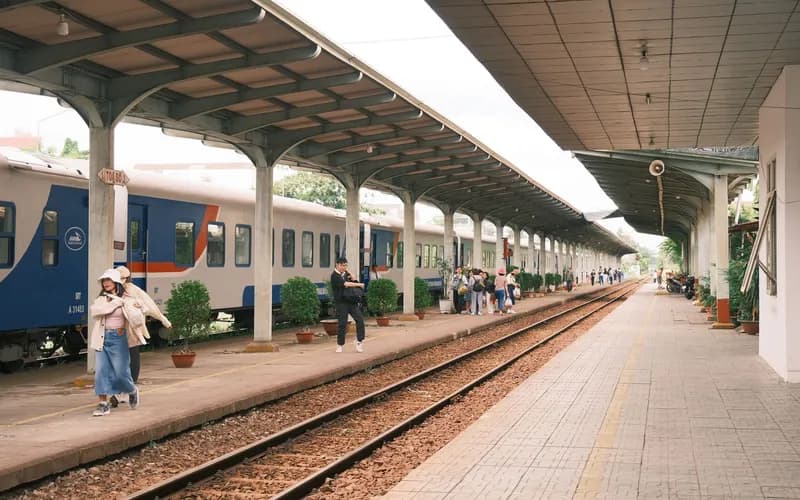
There are two rolling stock types in service and the difference matters more than the price does. The older standard carriages offer a single class of soft seat, with fans, opening windows and a relaxed, slightly rattling character. The refurbished Japanese railcars, known as KiHa units, offer a first and second class seat, air conditioning and sealed windows, and are noticeably more comfortable and noticeably less atmospheric.
Neither has a restaurant car worth the name. There is usually a trolley or a vendor, and platform vendors at intermediate stops, but you should board with your own water and food for anything over two hours. Toilets exist and are basic. Luggage travels with you in the carriage; there is no separate van and no weight limit enforced in any meaningful way.
How to book, and the traps
You can buy tickets at the station on the day or, more sensibly, a few days ahead. Online booking is available through the operator's own portal and through the regional agents most travellers already use, including Baolau, Bookaway and Omio.
Three traps are worth knowing. First, third-party sites sometimes display a schedule that no longer runs, so cross-check the date against the operator before paying. Second, weekend services sell out during Cambodian public holidays and around Khmer New Year, when domestic demand is heavy. Third, if a service is cancelled, refunds and rebooking are handled at the station and can be slow, which is another argument for not connecting a train directly to a flight.
Take a screenshot of your booking. Station wifi is not something to rely on.
Getting to and from the stations
Phnom Penh's station is central and walkable from much of the riverside and Boeung Keng Kang. Kampot's station is a short ride from the town centre. Sihanoukville's station is some way out of town, and Battambang's is around a fifteen-minute ride from the centre.
At most stations, tuk-tuks wait for the train, but the supply thins quickly once the arriving passengers have dispersed, and late arrivals in smaller towns can leave you negotiating in the dark. It is worth knowing how these arrangements normally work, which we cover in our guide to hiring a driver, guide or tuk-tuk in Cambodia.
One important point for arrivals into the capital: there is no rail link to Cambodia's new Techo International Airport. The old airport shuttle train that once served Phnom Penh International is no longer operating. Plan a road transfer.
When the train is the right choice, and when it is not
Take the train when the journey is part of the trip, when you are travelling on a weekend, when you have a flexible arrival time, and when you would rather sit by an open window for four hours than sit in a minivan for two and a half.
Do not take the train when you have a flight, a boat or a booked tour on the other end, when you are travelling midweek, or when speed is the priority. On the Phnom Penh to Sihanoukville corridor in particular, the expressway has changed the calculation considerably and a bus or car now covers that ground far faster than rail does, as we explain in our piece on Cambodia's expressways and what they change.
There is also a straightforward accessibility caveat. Stations have steps, platforms are low, and there is no assistance service. Travellers with limited mobility will find road transport considerably easier.
What is coming
Cambodia has announced an ambitious rail expansion programme, with a first phase running to 2027 covering several projects at a reported cost in the region of 3.8 billion US dollars, and a second phase to the early 2030s valued at several billion more. Studies are under way with Chinese partners on modernising the Phnom Penh to Poipet corridor, and among the proposed new lines is a connection to Techo International Airport.
The honest assessment is that announced Cambodian rail projects have a long history of slipping, and none of this changes anything for a traveller in 2026. Treat the current two-line, weekend-weighted network as what you have to work with, and plan your route around it rather than around announcements. If you are shaping an itinerary now, our Cambodia trip planning page is the better place to start.
What to Do Next
- Check the current Royal Railway timetable directly before fixing any date, because published schedules change and weekday services are limited.
- Plan train days for Friday, Saturday or Sunday, and check for extra services around public holidays.
- Book two to five days ahead in high season, and screenshot the confirmation.
- Do not schedule a flight, ferry or paid tour on the same day as an arrival by train.
- Board with your own water, food and a warm layer if you are in an air-conditioned KiHa car.
- Arrange your onward transfer in advance for Damnak Chang'aeur, Sihanoukville and any late arrival.
- Confirm the northern line's terminus before travelling west, and assume no through service to Thailand unless you have verified otherwise.
Frequently Asked Questions
Do Cambodian trains run every day?
Generally no. Services are concentrated on Fridays, Saturdays and Sundays, with occasional additional departures, and there is usually only one train per direction per day on each line. Midweek travel by rail is not reliably possible on most routes.
How long does the train take from Phnom Penh to Kampot?
Around three and a half hours in normal conditions, with departures in the late afternoon rather than the morning. Allow for delays, because single-track operation means a late train stays late for the rest of its run.
Can I take a train from Cambodia into Thailand?
Not at present. The cross-border link at Poipet, restored in 2019, is not operating amid the closures and restrictions that have applied to the Thai-Cambodian land border since the 2025 conflict. Check current status shortly before travel and have a road alternative in mind.
Is there a train to Siem Reap or Angkor?
No. Siem Reap has never been connected to the national rail network and there is no passenger service there. Travel from Phnom Penh or Battambang to Siem Reap is by road, or by boat from Battambang in the wet season.
Is there a train to the new Techo International Airport?
No. There is currently no rail connection to Techo, and the former Phnom Penh airport shuttle train no longer runs. A rail link to Techo is among the proposed future projects, but nothing is in service. Plan a road transfer.
How much does a ticket cost?
Most single journeys fall roughly between 6 and 12 US dollars, with the Phnom Penh to Kampot fare starting near 11 dollars and shorter hops costing less. Fares are low enough that the choice between classes is about comfort rather than budget.
Are the trains comfortable?
It depends on the rolling stock. The refurbished Japanese KiHa railcars are air-conditioned with two seating classes and are comfortable by any standard. The older standard carriages have fans and opening windows, are perfectly bearable, and are considerably more enjoyable if you like railways.