
Almost everything that makes a Cambodian trip good or bad comes down to one decision most travellers make in about ninety seconds: who drives you, and who explains what you are looking at. Get it right and the country opens up, because a good driver knows which road is flooded and a good guide knows which family still makes palm sugar the old way. Get it wrong and you spend two weeks being delivered to commission-paying shops. This is a practical guide to hiring well, written for people who intend to stay in one place long enough for the relationship to matter.
The three things you can actually hire
Travellers often use one word for three quite different arrangements, and the confusion causes most of the friction.
A tuk-tuk driver, properly a remork driver, provides local transport. In practice many are excellent informal companions who will suggest a market or wait three hours while you wander, but they are not licensed to guide inside the Angkor Archaeological Park and most will say so.
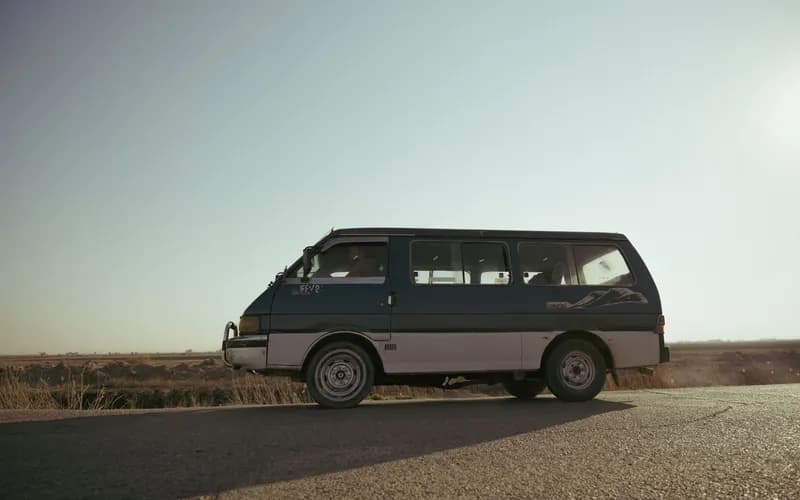
A car or van driver provides intercity and full-day transport with air conditioning, usually with a fixed daily or route-based price. Again, not a guide.
A licensed guide holds a Ministry of Tourism licence, carries a numbered badge and is legally entitled to interpret sites. At Angkor this is enforced. Licensed guides are examined by language, so the badge also tells you which language they were certified in.
You can hire all three separately, or hire a guide who brings their own vehicle, which is common and often better value than assembling the pieces yourself.
One request. Up to five tailored proposals.
Skip contacting agencies one by one — share your trip once and let up to five trusted Cambodia agencies come to you. Free, with no obligation.
Get my free quotesWhat it costs in 2026
Prices vary by city, season and vehicle, and anything quoted online should be checked locally. As a realistic 2026 range:
- Tuk-tuk, half day in town: 10 to 15 US dollars
- Tuk-tuk, full day around Angkor's small circuit: 18 to 25 dollars
- Tuk-tuk, full day with a sunrise start or the outer temples: 25 to 35 dollars
- Licensed English-speaking guide at Angkor, guiding only: roughly 45 to 55 dollars a day
- Licensed guide in French, Spanish, Japanese or Korean: often 60 to 80 dollars a day
- Car with driver, within a province: 45 to 70 dollars a day
- Car with driver, long distance such as Siem Reap to Phnom Penh: 90 to 130 dollars one way
- Minivan with driver for a group: 110 to 160 dollars a day
Two notes on these numbers. They are for the vehicle or the person, not per passenger, except where stated. And the cheapest quote is almost never the best value once you factor in an air-conditioning failure at two in the afternoon in April. For how this fits into overall trip spending, our Cambodia budget guide for 2026 puts transport alongside accommodation and food.

Licensed guides, and why the badge matters
Inside the Angkor Archaeological Park, guiding is a regulated profession. Guides pass an examination, are licensed by language, and wear a badge with a visible number. The rule exists partly to protect the monuments and partly to protect guides' livelihoods from unregulated competition, and enforcement inside the park is real.
This has three practical consequences. Your tuk-tuk driver will drop you at the temple and wait outside, which is normal and not a sign of disinterest. If someone offers to guide you inside the temples without a badge, they are risking a fine and you are undermining a profession. And if you want a guide in a language other than English, book further ahead, because the pool is smaller and the good ones are taken during high season.
Outside Angkor the rules are looser, but the principle holds. A licensed guide in Phnom Penh at Tuol Sleng or Choeung Ek will give you a different visit than an unaccompanied one, and at those particular sites the difference is substantial.
Get matched with up to 5 trusted Cambodia agencies
- Free
- No obligation
- Up to 5 agencies
Tuk-tuks, apps and the day rate
In Phnom Penh and Siem Reap, ride-hailing apps such as Grab and PassApp cover most short journeys, and using them removes the negotiation entirely. For single hops, they are the easy answer and usually the cheaper one.
The day rate is a different product. When you hire a tuk-tuk for a day, you are buying someone's whole working day, including waiting time, and that is where the informal relationship starts. If you find a driver you like on day one, ask whether they are free for the rest of your stay. Regular multi-day work is worth a great deal to a driver, and you will find the service changes accordingly: they start suggesting stops, warning you about the heat, and picking better routes.
At Angkor in particular, the shape of your day matters more than the price. Working out the route with your driver the evening before, rather than at 05:00 in the dark, is the difference between a good day and a queue, and our piece on planning your days at Angkor covers the circuits and the crowd patterns in detail.
How to agree terms without an argument
Almost every dispute in Cambodia over a hire comes from an unstated assumption rather than bad faith. Settle these five points before you set off, out loud, in simple language:
- The total price, in which currency, and whether it is for the vehicle or per person.
- The exact start and finish times, and what happens if you run late.
- The full list of stops, including anything outside the standard circuit.
- Who pays for fuel, tolls, parking and any boat or park entrance for the driver.
- Whether lunch is included, and whether the driver eats with you or separately.
Write the agreed figure down and show it, or type it into a phone. Cambodian drivers are generally straightforward, but numbers spoken across a language gap are the easiest thing in the world to hear wrongly.
One more point of etiquette. If a driver suggests a gem shop, a silk factory or a jewellery showroom that was not on your list, a polite and final no is entirely acceptable. Commission stops are the oldest revenue model in the business and declining them changes nothing about your relationship.
Fuel, food, tolls and the hidden line items
On a one-day town hire, the price is usually all-in and nothing else arises. On longer arrangements there are line items worth clarifying.
Fuel and tolls are normally included in a quoted long-distance price, but confirm it, particularly now that the expressways charge. The driver's meals are conventionally the driver's own cost on a day trip, but on multi-day trips outside their home town, most travellers cover the driver's accommodation and food, and agencies build it into the rate. Park and site entrance fees for the driver, where they exist, fall to you. And if your plan involves a boat, a ferry or a river crossing, ask who is buying the driver's ticket.
None of these are large amounts. Every one of them has caused an awkward conversation at the end of a trip because nobody raised it at the beginning.
Long-distance hires and multi-day trips
For point-to-point travel between cities, a private car is not always the right answer. Buses are cheap and mostly comfortable, the expressway has cut the Phnom Penh to Sihanoukville run substantially, and the train exists on certain days for certain routes, with its own particular pleasures and limitations, which we set out in our piece on travelling Cambodia by train in 2026.
Where a private car earns its cost is when the journey is the point: stopping at a pre-Angkorian temple, a roadside market and a bamboo train, rather than simply arriving. If that is what you want, say so explicitly when you book, because a driver given a destination and no brief will optimise for speed.
For multi-day hires, agree the daily rate, the expected daily distance, and what happens on a day when you decide to stay put. A good arrangement builds in a rest day at a lower rate rather than paying full price for a parked car.
Tipping, ethics and the power balance
Tipping is not obligatory in Cambodia but it is customary in the tourism trade, and the amounts are meaningful to the recipient. Around 5 to 10 dollars a day for a guide and 3 to 5 dollars a day for a driver is a common and well-received range, more for exceptional work or a difficult day.
Beyond the tip, the ethical questions are simpler than they look. Pay the agreed price without haggling it down at the end. Do not book a guide and then walk them round for nine hours in forty-degree heat without a break. Be careful about the orphanage visits and village tours some drivers still offer, as the concerns around those are well documented. And if a driver is good, recommend them by name and phone number to the next traveller, which is worth more to them than any tip. We go through this ground more fully in our guide to travelling Cambodia ethically.
When to use an agency instead
Direct hiring works well in the places set up for it: Siem Reap, Phnom Penh, Kampot, Battambang. It works less well where logistics are genuinely complicated, where protected-area permissions are involved, where you need a specialist, or where you simply do not have the time to vet people yourself.
An agency also gives you recourse. If a driver fails to show at 05:00, an individual arrangement leaves you standing in the dark, whereas an operator sends a replacement. You are paying a margin for that, and whether it is worth it depends on how much risk you want to carry. The Cambodian operators we have assessed are listed in our Cambodia travel agencies directory.
What to Do Next
- Decide what you actually need for each leg: transport, interpretation, or both.
- Ask your guesthouse for a driver recommendation before you take one from the street. Guesthouses depend on repeat reputation and filter accordingly.
- Meet the driver or guide, briefly, the day before a long hire. Five minutes tells you a great deal.
- Agree the five points above out loud and write the number down.
- For Angkor, book a licensed guide in your language at least a week ahead in high season.
- Save your driver's phone number and use one messaging app consistently; most drivers use Telegram or Messenger rather than email.
- Pay in small US dollar notes where you can, and keep riel for small change, since drivers frequently cannot break a 100.
Frequently Asked Questions
Do I need to book a guide in advance for Angkor?
In the high season from November to February, yes, particularly for languages other than English. Outside those months you can usually arrange one a day or two ahead through your accommodation or a guide association, though the strongest guides are booked earliest regardless of season.
Can my tuk-tuk driver guide me inside the temples?
No. Guiding inside the Angkor Archaeological Park requires a Ministry of Tourism licence and a badge, and the rule is enforced. Your driver will wait outside, which is the normal arrangement and not a lack of interest in your day.
Is it rude to negotiate the price?
No, negotiating is expected, but do it once, at the start, and then honour the result. What is genuinely rude is agreeing a figure and trying to reduce it afterwards, or comparing your driver unfavourably to a cheaper quote you did not take.
Should I use Grab or hire a driver directly?
Use the apps for short hops in Phnom Penh and Siem Reap, where they are fast and remove any negotiation. Hire directly for full days, out-of-town trips and anywhere the apps have thin coverage, which is most of the country outside the two main cities.
How much should I tip?
Roughly 5 to 10 dollars a day for a guide and 3 to 5 dollars a day for a driver is customary and well received. Tipping is not compulsory, and nobody will be rude about its absence, but it matters materially to people working in a seasonal trade.
What if my driver does not show up?
Call once, then arrange an alternative through your accommodation rather than waiting. Breakdowns and family emergencies happen, and drivers are often reachable on a messaging app when a call fails. If you booked through an agency, that is their problem to solve, which is part of what you paid for.
Do I need to pay for the driver's meals and room on a multi-day trip?
On a single day trip, no. On a multi-day trip away from the driver's home town, covering accommodation and meals is the normal expectation, and most agency rates already include it. Clarify which arrangement applies before you leave, not on the final evening.