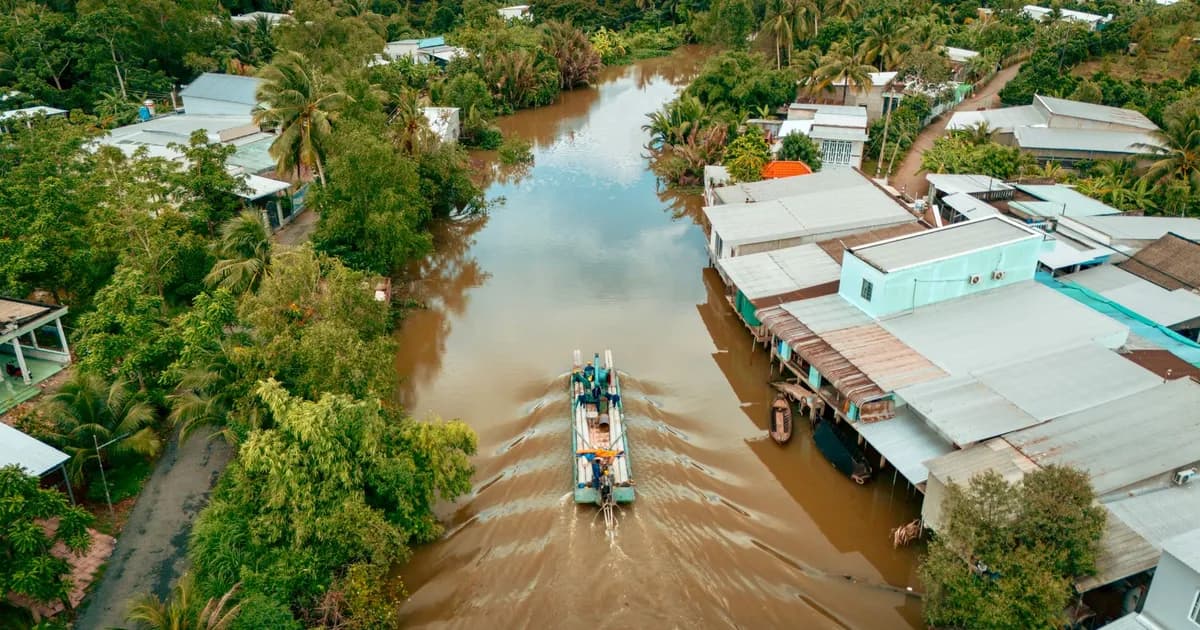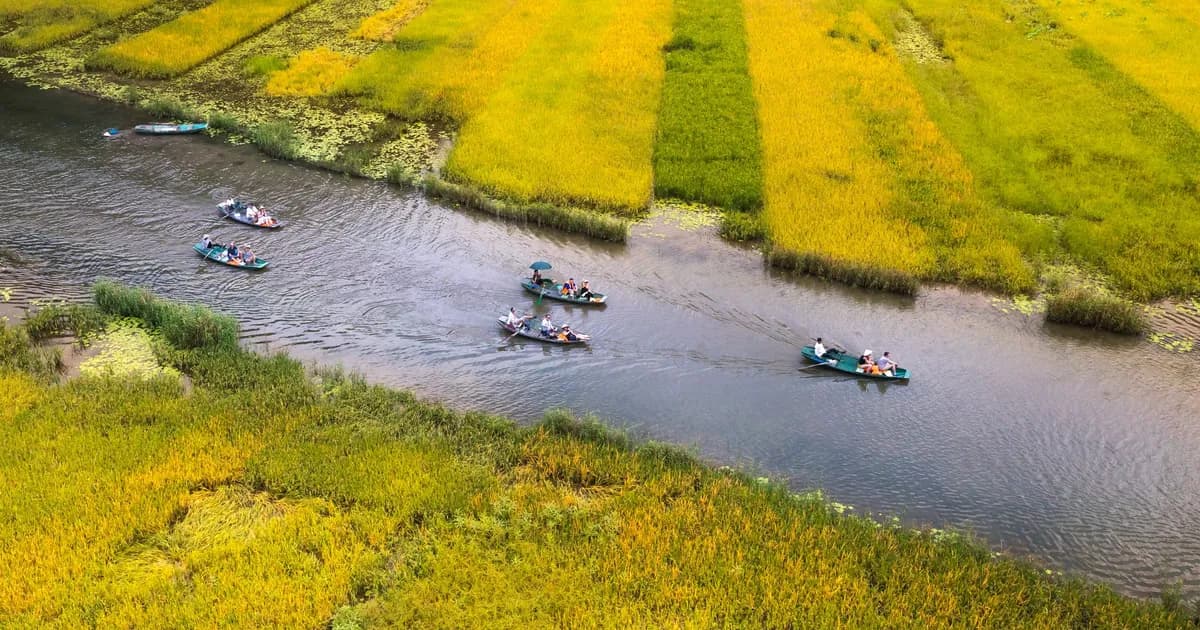

Battambang does not try to impress you. Cambodia's second city sits on a slow brown river in the middle of the country's rice bowl, and it has neither Siem Reap's temple gravity nor Phnom Penh's noise. What it has instead is time. Streets of peeling French shophouses you can walk end to end in an afternoon. Paddy fields that begin ten minutes past the last hotel. An arts school that trains some of the best circus performers in Southeast Asia. If you measure a place by how long it takes to stop feeling like a visitor, Battambang is one of the most rewarding stops in the country.
Why Battambang Rewards a Slower Clock
Most itineraries treat Battambang as a half-day pause between Siem Reap and Phnom Penh, or a lunch stop on the way to the Thai border. That is exactly the wrong way to use it. Battambang has almost no headline sight. There is no single monument that justifies the detour on its own, and travellers who arrive hunting for one usually leave disappointed within four hours.
The city works differently. Its pleasures accumulate: the same coffee stall on the third morning, the woman who sells num banh chok noodles from a cart at the corner of Street 2, the way the light comes off the Sangker River at six in the evening. Two nights is the practical minimum. Three or four is where the place actually opens up, and travellers who cycle, cook or draw regularly stay a week.
That rhythm makes Battambang a natural anchor for the kind of trip described in our slow traveller's guide to Cambodia, where fewer stops and longer stays consistently beat the four-city dash.
One request. Up to five tailored proposals.
Skip contacting agencies one by one — share your trip once and let up to five trusted Cambodia agencies come to you. Free, with no obligation.
Get my free quotesGetting There: The Train, the Road and the River
Battambang is one of the few Cambodian cities you can reach by passenger train. Royal Railway's Northern Line runs from Phnom Penh to Battambang, a journey of roughly six and a half hours for around eight US dollars. It is slower than the bus and the schedule has historically been limited rather than daily, so confirm departures close to your travel date rather than building a tight plan around them. The carriages are basic, the windows open, and the line crosses long stretches of paddy that road travellers never see.
By road, Battambang sits about five hours from Phnom Penh and three from Siem Reap on decent sealed highway. Minibuses and full-size coaches run frequently on both routes.
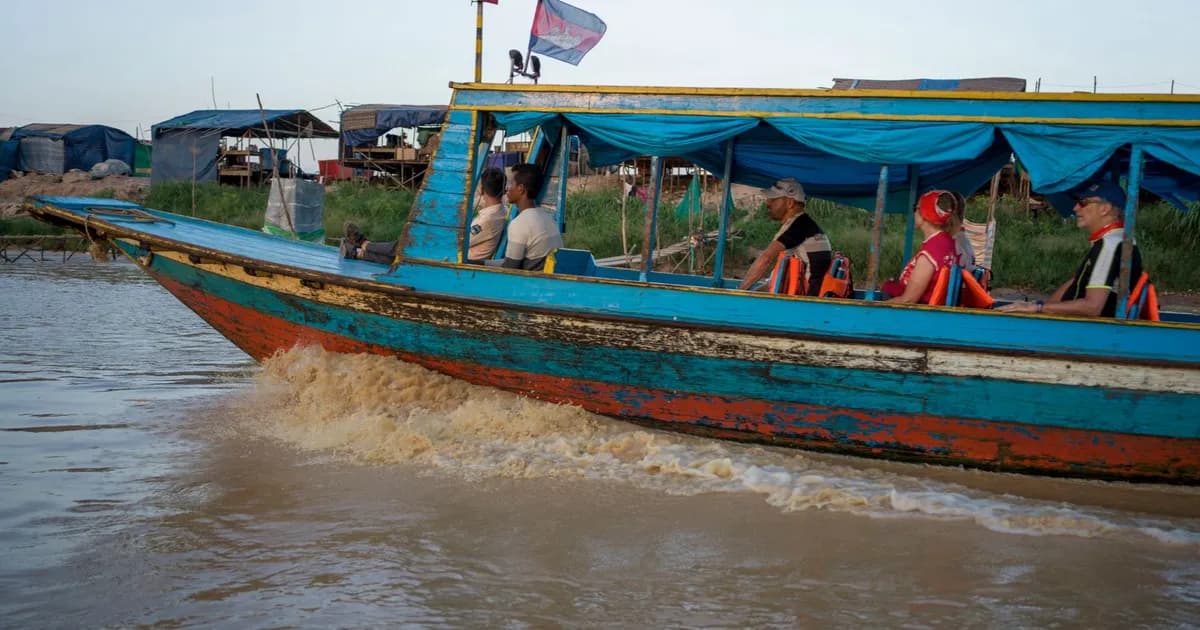
The most interesting approach is the boat from Siem Reap down the Tonle Sap and up the Sangker River. It is a long day, typically seven to nine hours in high water and considerably longer or cancelled outright in the dry months from roughly February to June, when water levels drop. Boats are small, seating is hard, and there is no shade on the roof where most travellers end up sitting. It is not a comfortable journey. It is, however, the single best way to understand how much of Cambodian life is still organised around water, passing floating villages, fish traps and stilt houses for hours at a stretch. Treat it as the experience rather than the transfer, and only attempt it in the wet season.
If you are working out how these pieces connect across a wider route, see our companion piece on travelling Cambodia overland.
The Colonial Core on Foot
Battambang's old commercial quarter runs along the west bank of the river, a compact grid of two- and three-storey shophouses built during the French protectorate and the decades that followed. Many are shuttered. Some are collapsing. A growing number have been taken over by cafés, galleries and small hotels, and the tension between decay and restoration is a large part of the city's texture.
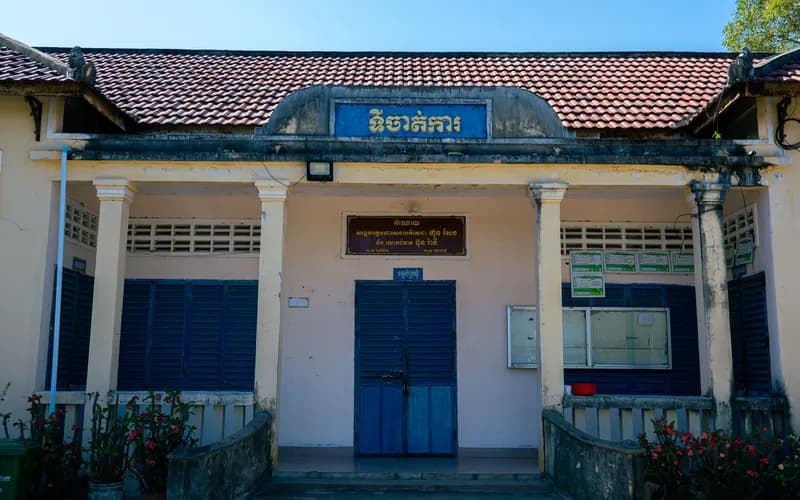
Start at Psar Nath, the mustard-yellow art deco central market, which opens before dawn and is at its best between five and seven in the morning. Walk south along Street 2 and Street 2.5, where the best-preserved facades are, then cut back along the riverfront. The whole loop takes about ninety minutes at a genuinely slow pace, and it is worth doing twice, once early and once at dusk.
A few specific stops reward a detour. The Battambang Provincial Museum holds a small but excellent collection of Angkorian-era stone sculpture recovered from the surrounding temples, and it takes about forty minutes. The Governor's Residence, a 1907 colonial villa on the east bank, is usually viewed only from the outside. Wat Damrey Sar and Wat Piphithearam, both central, are working pagodas where monks study rather than tourist sites, and a quiet visit outside chanting hours is welcome.
Get matched with up to 5 trusted Cambodia agencies
- Free
- No obligation
- Up to 5 agencies
The Countryside Circuit: Bamboo Train, Wat Banan and Ek Phnom
The standard day trip loops through the countryside by tuk-tuk, usually for around twenty to twenty-five US dollars for the vehicle rather than per person. It can be done far better by bicycle if you have the legs and the weather is kind, though distances add up quickly and midday heat is punishing from March onwards.
The bamboo train, or norry, is the famous stop. The original village line was largely dismantled when the national railway was rebuilt, and what most visitors ride today is a purpose-built replacement track near Banan, costing roughly five US dollars per person for a short run of about fifteen minutes each way. Be clear-eyed about this: it is now a fairground ride rather than a working local transport system. It is fun, it is brief, and it is not the reason to come to Battambang.
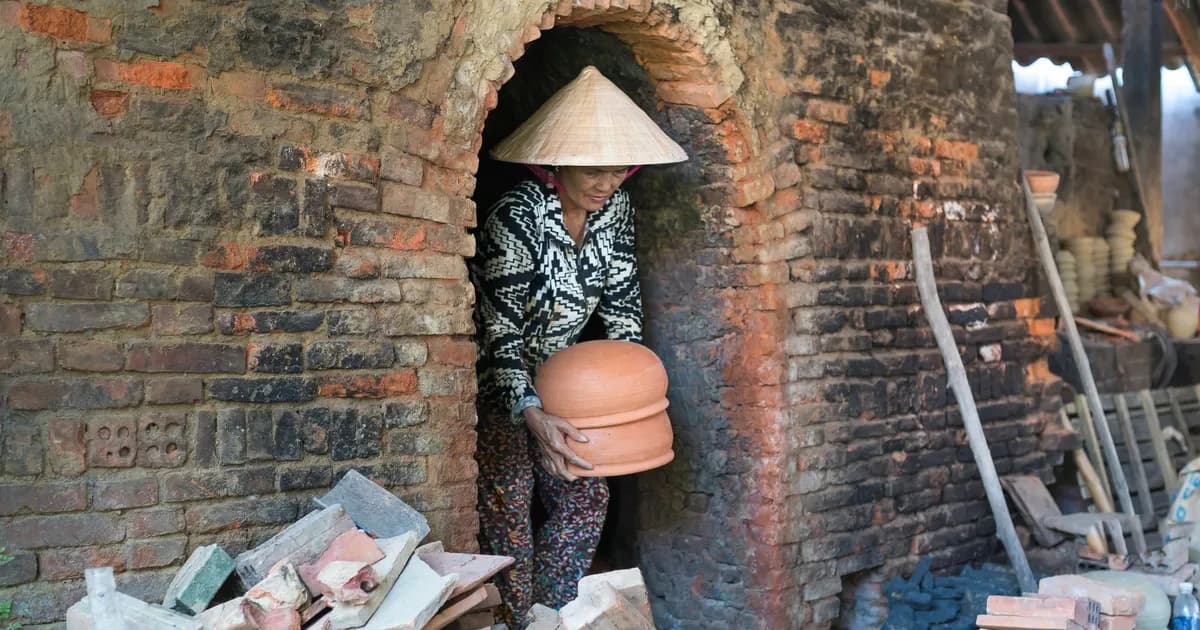
Wat Banan is the better half of the day. A hilltop Angkorian temple reached by a steep staircase of well over three hundred steps, it has five towers and a view across the paddy that repays the climb. Ek Phnom, an eleventh-century temple north of the city, is partly ruined and often nearly empty, which is precisely its appeal. Between them are villages producing rice paper, dried bananas, fish paste and rice wine, and most drivers will stop at these workshops without being asked. If you want more of this kind of travel, our guide to Cambodia off the beaten path covers similar territory across the country.
Phnom Sampeau: Killing Caves and a Million Bats
Twelve kilometres southwest of the city, Phnom Sampeau is a limestone outcrop that carries two very different experiences on the same hill, and travellers should be prepared for both.
The Killing Caves are a Khmer Rouge execution site. Victims were thrown through a skylight in the cave roof; a glass memorial holds skulls and bones recovered from the floor. It is not presented as a museum and there is little interpretation. Visit quietly, dress as you would for a temple, and do not photograph the remains. Cambodia's recent history is not background colour, and Battambang province was among the last areas under Khmer Rouge control.
At the base of the same hill, between roughly 17:30 and 18:00 every evening, several million wrinkle-lipped bats pour out of a cliff cave in an unbroken ribbon that lasts around fifteen to twenty minutes. It is genuinely one of the great natural spectacles in mainland Southeast Asia and costs nothing to watch. Arrive by 17:00, bring water, and expect a row of plastic chairs and drink sellers along the road. The timing shifts slightly with the season, so ask locally the day before.
Phare Ponleu Selpak and Battambang's Art Scene
Phare Ponleu Selpak is the reason a certain kind of traveller comes to Battambang at all. Founded in 1994 by young Cambodians who had learned to draw in a refugee camp on the Thai border, it is now a full arts campus with schools of circus, visual art, music and animation, funded partly by ticket sales.
The circus shows run several evenings a week, typically Monday, Wednesday, Thursday and Saturday, at roughly fourteen US dollars for adults and seven for children, with tickets available online or at the gate. Performances are by current students, and the material is Cambodian storytelling rather than generic acrobatics, often drawing on the war years, migration and village life. Schedules change with the school calendar, so book ahead in high season and check the campus site before planning your evening around it.
The wider art scene is small but real. Sangker Gallery, Romcheik 5 and Make Maek show contemporary Cambodian work, and several are run by Phare graduates. Opening hours are erratic; a message ahead saves a wasted walk.
Eating in Battambang
Battambang province grows much of Cambodia's rice, and the food reflects an agricultural rather than a coastal larder: freshwater fish, pork, river weed, huge quantities of herbs. The morning specialty is num banh chok, fermented rice noodles under a green fish-and-lemongrass gravy, sold from carts and gone by nine. Kralan, sticky rice with beans and coconut roasted in a bamboo tube, is a roadside staple on the countryside circuit.
For a sit-down meal, the riverfront and Street 2.5 hold a cluster of Khmer restaurants and a handful of training establishments where students learn hospitality trades. Several cooking schools run half-day classes that begin with a market walk. Our guide to Cambodian food explains what to order and how the regional differences work.
Where to Stay and How Long
Accommodation is inexpensive and skewed towards small independent properties: restored shophouses in the old town, riverside guesthouses, and a few boutique hotels in converted colonial buildings on the east bank. Budget rooms sit in the ten to twenty dollar range, mid-range comfort around thirty to sixty.
Staying in the colonial core puts you within walking distance of the market, the river and most restaurants, which matters more than it sounds when the afternoon heat makes tuk-tuk hopping tiresome. East-bank properties are quieter and greener but commit you to a bridge crossing for every meal.
On duration: two nights covers the city and one countryside day. Three lets you split the countryside into a temple day and a bicycle day. Four or more suits anyone taking a cooking or art course, or using Battambang as a base for the Cardamom foothills to the southwest.
What to Do Next
- Fix your dates around the Phare circus schedule first, since it runs only on set evenings and everything else in Battambang is flexible.
- Decide your arrival mode. Book the boat from Siem Reap only between roughly July and January, and check water levels within a week of departure.
- Book two to four nights in the colonial core rather than one, and choose walkability over pool access.
- Reserve one full day for the countryside loop and negotiate a tuk-tuk for the whole day rather than per stop.
- Plan Phnom Sampeau for late afternoon so the caves and the bat exodus fall in the same trip.
- Confirm train departures directly with Royal Railway if you intend to travel by rail, and keep a bus as a fallback.
- If you would rather have the logistics handled, compare the vetted operators on our Cambodia travel agencies page and ask specifically for a slow Battambang extension.
Frequently Asked Questions
How many days should I spend in Battambang?
Two nights is the working minimum and three is better. One day covers the colonial core, the museum and the riverfront on foot; a second covers the countryside circuit including Wat Banan, Ek Phnom and Phnom Sampeau. Add a third or fourth night if you want a cooking class, a cycling day or simply an unstructured day, which is what most people who like Battambang actually come for.
Is the bamboo train still worth doing?
Honestly, only as a light diversion. The original village norry line was removed during the national railway rebuild, and the current ride is a purpose-built tourist track near Banan, about fifteen minutes each way for roughly five dollars per person. It is pleasant and it is over quickly. Do not plan a day around it, and do not skip Wat Banan for it.
When is the best time to visit Battambang?
November to February is the most comfortable window, with daytime temperatures generally in the high twenties to low thirties Celsius and dry roads for cycling. March to May is very hot. The wet season from June to October brings green paddy, dramatic skies and the only reliable window for the Siem Reap boat, at the cost of afternoon downpours and occasional flooded rural tracks.
Can I get from Siem Reap to Battambang by boat?
Yes, in the wet season. The service runs down the Tonle Sap and up the Sangker River and takes roughly seven to nine hours in good conditions, longer when water is low. It is frequently suspended between about February and June. Boats are small, hot and uncomfortable, and the appeal is the floating villages rather than the transfer itself. Take the bus if you simply need to move between the two cities.
Is Battambang safe for travellers?
Battambang is generally calm, with low levels of tourist-directed crime by regional standards. Normal precautions apply: watch your bag on a tuk-tuk, avoid poorly lit riverside stretches late at night, and take standard care on rural roads. As in the rest of Cambodia, never leave marked paths in remote countryside because unexploded ordnance remains a real hazard in some western provinces.
Do I need a guide for the countryside circuit?
Not strictly. Tuk-tuk drivers know the loop well and most speak enough English to explain the workshops. A licensed guide adds real value at Wat Banan, Ek Phnom and especially the Killing Caves, where the historical context is not written anywhere on site. If you are visiting the Khmer Rouge sites, a guide is worth the additional cost.
How does Battambang compare with Kampot for a slow stop?
They complement each other rather than compete. Kampot is riverside, coastal-adjacent and more developed for foreign residents; Battambang is agricultural, larger and less polished, with a stronger arts scene and a heavier historical weight. Many travellers with three weeks in Cambodia include both, one in the west and one on the south coast.