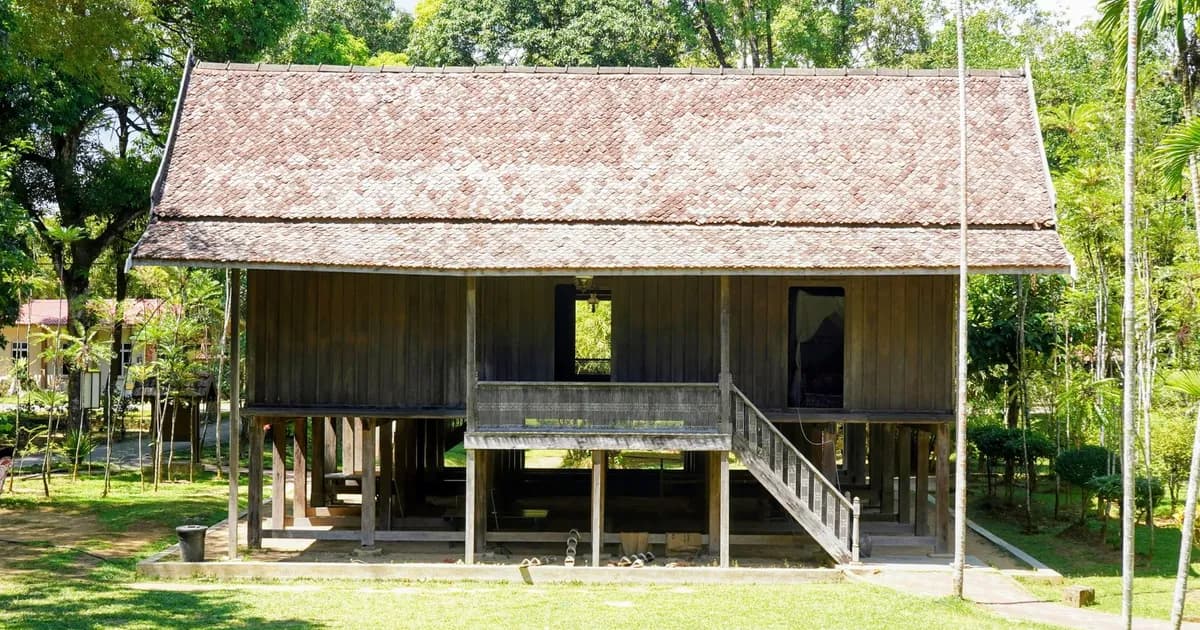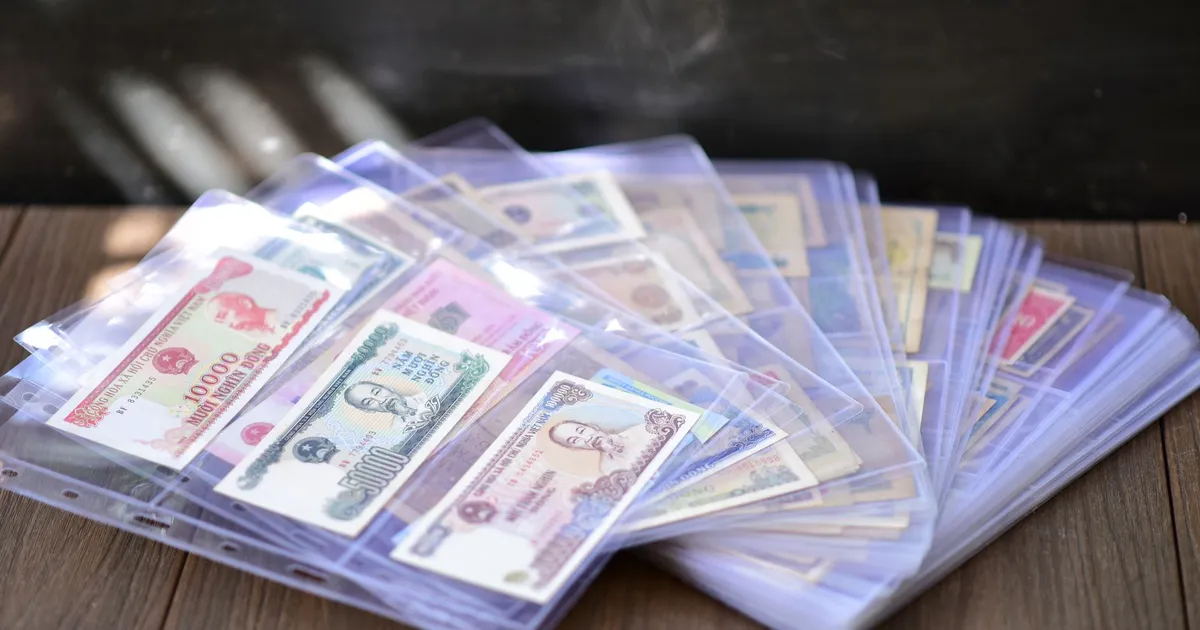


Malaysia spent 2026 chasing a headline number. The Visit Malaysia 2026 campaign is targeting 47 million international arrivals and RM147.1 billion in tourism receipts, and after 42 million arrivals in 2025 and 10.65 million in the first quarter of 2026 alone, that target no longer looks fanciful. But underneath the arrivals race, a slower and more interesting shift is underway. Malaysia has spent the past few years rebuilding the legal architecture for people who want to stay for months rather than days, and the result is a country that is unusually well set up for the kind of travel that does not fit into a fortnight.
The Numbers Behind a Quiet Shift
Volume growth in Malaysian tourism has been driven by air access and visa facilitation. Twenty-six new international routes launched in the first quarter of 2026 alone, including a direct Frankfurt to Kuala Lumpur link, and visa-free entry has been extended to several large source markets. That is the arrivals story, and it is the one the ministry tells.
The long-stay story is quieter and rarely told alongside it. Two instruments matter: the reformed Malaysia My Second Home programme, now split into three tiers, and the DE Rantau Nomad Pass administered by the Malaysia Digital Economy Corporation. They point in opposite directions. MM2H has moved decisively upmarket. DE Rantau has moved decisively down. Between them, they have opened a gap that the ordinary traveller can now walk through, because both sit on top of a social visit pass regime that already gives many nationalities up to 90 days on arrival, no application required.
Understanding all three tiers of this system, and which one applies to you, is the difference between a trip that ends when your patience with airports does and one that ends when you decide it should.
One request. Up to five tailored proposals.
Skip contacting agencies one by one — share your trip once and let up to five trusted Malaysia agencies come to you. Free, with no obligation.
Get my free quotesMM2H in 2026: Higher Bars, Longer Horizons
Malaysia My Second Home began life in 2002 as one of the most accessible long-stay visas in Asia. It is not that any more. The programme now operates on three tiers, and the financial thresholds are serious.
- Silver: a fixed deposit in a Malaysian bank of around USD 150,000, a minimum property purchase of RM 600,000, and a five-year renewable pass.
- Gold: a fixed deposit of around USD 500,000, a minimum property purchase of RM 1,000,000, and a fifteen-year renewable pass.
- Platinum: a fixed deposit of around USD 1,000,000, a minimum property purchase of RM 2,000,000, and a twenty-year renewable pass, with the right to work or run a business in Malaysia.
Two details reshape how the programme feels in practice. The first is that pass holders must spend a minimum of 90 days a year in Malaysia, a presence requirement that did not always exist and that quietly rules out treating the pass as a dormant insurance policy. The second is that once the pass is issued and the property purchase completes, up to half the fixed deposit can be withdrawn for approved purposes such as the property itself, medical costs or school fees, with the remainder locked for the life of the pass.
The minimum age has also come down to 30, which reframes MM2H from a retirement product into something a mid-career household might consider, and a separate category tied to the Johor-Singapore special economic zone runs on different criteria again. Be careful here: the published requirements have been revised more than once since the relaunch, and secondary sources disagree on the income thresholds. Treat any figure you read, including these, as a starting point and verify against the official programme portal and a licensed agent before committing money.

DE Rantau: The Pass Most Slow Travellers Should Look At First
The DE Rantau Nomad Pass, launched by MDEC in October 2022, is the more relevant instrument for anyone who is not buying property. It is a Professional Visit Pass valid for three to twelve months, renewable once for a maximum of twenty-four months, with multiple entries and the option to include a spouse and children.
The financial bar is comparatively modest. Digital and IT professionals need to demonstrate annual income of around USD 24,000, roughly USD 2,000 a month, from foreign clients or a foreign employer. Applicants outside the digital sector face a substantially higher threshold, reported at around USD 60,000. The application fee is RM 1,080 for the main applicant and RM 540 per dependant, paid online and non-refundable.
The important thing to understand about DE Rantau is that it is not simply a visa. It is a programme with a physical footprint. MDEC has certified a network of hubs and partner accommodation across Kuala Lumpur, Penang and Langkawi, offering discounted long-term rates and coworking access to pass holders. In practice that means the administrative decision and the where-to-live decision are bundled, which is convenient if the hubs suit you and constraining if they do not.
Get matched with up to 5 trusted Malaysia agencies
- Free
- No obligation
- Up to 5 agencies
The Ninety-Day Default Nobody Talks About
Here is the part that most travellers miss entirely. Before either of these programmes applies, Malaysia already grants many nationalities, including most European, North American and Commonwealth passport holders, a social visit pass of up to 90 days on arrival, free and with no application beyond the digital arrival card. That is one of the most generous default allowances in Southeast Asia, where 30 days is the regional norm and 15 is not unusual.
Ninety days is enough to live somewhere rather than visit it. It is enough to learn a neighbourhood, follow a rainy season through, and take a language class that lasts more than a week. The catch is that the stamp is set by the officer at the counter, not guaranteed by nationality, and that it is in principle not extendable, so the practical pattern is to leave and re-enter. Frequent, obvious visa runs invite scrutiny; a genuine trip to Thailand or Indonesia in the middle of a stay does not. The mechanics of entry, the arrival card and the visa-free list are covered in detail in our guide to entering Malaysia and the MDAC rules.
What This Costs, and Why Malaysia Wins on Value
The long-stay case for Malaysia is not really about visas. It is about what a month costs once you are in. Kuala Lumpur rents for a furnished one-bedroom in a serviced building with a pool and a gym sit well below equivalents in Bangkok or Singapore. Hawker meals remain in the RM 5 to RM 12 range across most of the country. Domestic flights are cheap and frequent, English is functionally universal in cities, healthcare is good and inexpensive by Western standards, and mobile data is fast and almost free.
The friction points are real too. Public transport outside Kuala Lumpur and Penang is thin, so long stays in most of the country assume a car or a lot of ride-hailing. Air quality during the haze season, typically between June and September in bad years, can be genuinely unpleasant. And a monthly rental market that works well for expatriates works less well for the two-month visitor, who will often pay short-stay platform rates rather than local ones. Our breakdown of what a Malaysia trip actually costs puts real numbers against these categories.
Where the Long-Stayers Are Going
Three places dominate, for different reasons.
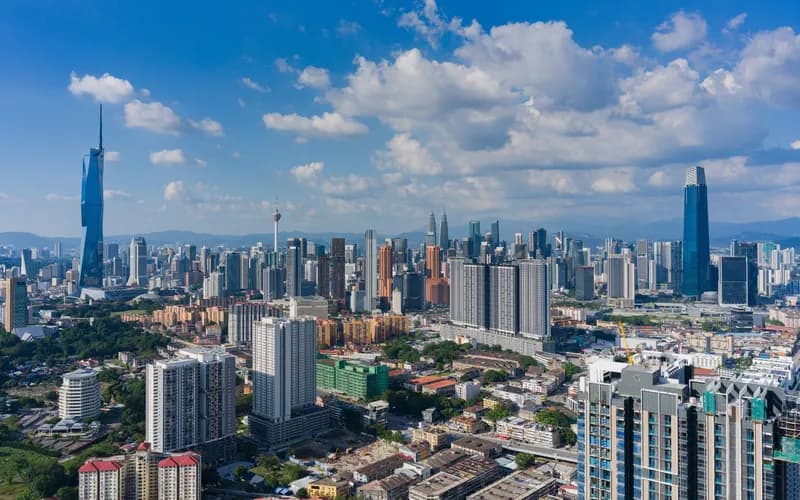
Kuala Lumpur has the infrastructure: an actual rail network, international hospitals, the widest housing stock and the country's only genuinely deep job and client market. It is the default and the least interesting choice.
Penang has become the quiet consensus pick. George Town is walkable in a way almost no other Malaysian city is, the food is the best argument for the country that exists, rents are lower than the capital's, and the island holds a hill, a national park and enough beach to matter. It is also the place where the tension between long-stay demand and local housing costs is most visible, which is worth knowing before you add to it. Our profile of slow travel in Penang and George Town is the best starting point.
Langkawi is the outlier: duty-free, low-tax, beautiful, and structurally seasonal, with a monsoon that empties the island and a small community that thins out with it. It works for six months better than it works for twelve.
Beyond the three, Ipoh, Melaka, Kota Kinabalu and Kuching all attract long-stayers in smaller numbers, and all of them cost less.
The Honest Caveat: Staying Long Is Not the Same as Travelling Slowly
It is worth separating two things that the marketing collapses together. Slow travel is a relationship with a place: fewer moves, more depth, money that lands locally, a willingness to be inconvenienced. A long-stay visa is a legal permission. The two are not the same, and it is entirely possible to spend twelve months in a serviced apartment tower and know less about Malaysia than someone who spent three careful weeks there.
There is also a structural question that Malaysia has not fully answered. Long-stay foreigners with foreign incomes exert upward pressure on rents in exactly the walkable, characterful neighbourhoods that attracted them, and the tax treatment of foreign-sourced income means that pressure is not always matched by contribution. Penang's heritage core and parts of Kuala Lumpur are already having that conversation. Anyone planning months in the country should think about renting from local landlords rather than international platforms, eating where the neighbourhood eats, and paying for local services at local rates without haggling them down. Those principles sit at the centre of our charter for slow travel.
What to Do Next
- Check your nationality's default entitlement first. If you get 90 days visa-free, you may not need a programme at all for a first long stay.
- If you work remotely in a digital field and earn above roughly USD 24,000 a year from foreign sources, price out DE Rantau before you consider anything else. Read MDEC's current criteria directly.
- If you are weighing MM2H, verify the tier thresholds on the official portal, budget for a licensed agent, and factor in the 90-day annual presence requirement before you assume the pass fits your life.
- Do a trial run. Spend eight to ten weeks in one city on a standard social visit pass before committing capital to a five-year decision.
- Choose your base for the season, not the brochure. Langkawi in November and Penang in April are different countries.
- Shape the wider trip from plan your journey, and treat any visa figure more than a few months old as provisional.
Frequently Asked Questions
How long can I stay in Malaysia without a special visa?
Many nationalities, including most European, North American and Commonwealth passport holders, receive a social visit pass of up to 90 days on arrival at no cost. The exact period is decided by the immigration officer and varies by nationality, so check your own entitlement rather than assuming the maximum.
Is DE Rantau worth it if I already get 90 days visa-free?
It depends on how long you intend to stay and how much border-crossing you want to do. DE Rantau gives you up to twelve months at a stretch, renewable once, plus access to certified hubs and discounted long-term accommodation. If you plan on six months or more, it removes a lot of friction. For a single three-month stay, the visa-free pass is usually sufficient.
Has MM2H become harder to get?
Substantially. The programme now runs on three tiers with fixed deposits starting around USD 150,000 and mandatory property purchases starting at RM 600,000, alongside a minimum annual presence of 90 days. It has shifted from an accessible long-stay visa to something closer to a residency-by-investment framework.
Can I work in Malaysia on these passes?
Not for Malaysian employers or clients, with narrow exceptions. DE Rantau covers remote work for foreign clients or employers. Among the MM2H tiers, only Platinum carries the right to work or run a business locally. Taking local work on any other basis is a breach of your pass conditions.
Which Malaysian city is best for a long stay?
Kuala Lumpur for infrastructure and connections, Penang for walkability and food, Langkawi for a seasonal coastal base. Penang is the most common recommendation for people who want a city they can live in without a car, but it is also the place where long-stay demand is putting the most pressure on local rents.
What about the haze season?
Between roughly June and September in some years, smoke from regional land clearance can push air quality in Peninsular Malaysia to unhealthy levels for days or weeks. It does not happen every year and severity varies widely, but if you are sensitive to air quality it is worth building flexibility into a long stay rather than committing to a fixed twelve months in one place.
Do I pay Malaysian tax on a long stay?
Tax residency generally begins after 182 days in a calendar year, and the treatment of foreign-sourced income has changed in recent years. This is a question for a qualified Malaysian tax adviser rather than a travel article, and it should be settled before, not after, you cross the six-month line.