
Malaysia is one of the great value destinations in Southeast Asia, and it rarely shouts about it. You can eat like royalty at a plastic table for the price of a coffee back home, sleep well for very little, and travel between rainforest, coast, tea hills and old trading cities without ever feeling rushed or squeezed. And yet Malaysia also hides a few genuinely expensive experiences — the ones people fly across the world for — that can quietly double a budget if you do not see them coming.
This guide is our honest answer to a question we hear constantly: what does a trip to Malaysia actually cost in 2026? Not the fantasy number, and not the scare number, but the real one. We will walk through daily budgets, the currency, entry costs, where your money goes, and the single biggest thing that surprises people — the Borneo premium. Because at UNRUSH we believe slow travel is not about spending the least; it is about spending well, on the things that matter, and wasting nothing on the things that do not.
The honest answer: daily budget tiers
Let us start with the number you came for. Here is what a single traveller realistically spends per day in 2026, covering accommodation, all meals, local transport and everyday activities — but excluding international flights and the big-ticket Borneo experiences we will cover separately.
| Travel style | Per day (MYR) | Per day (approx. USD) | What it looks like |
|---|---|---|---|
| Shoestring | RM 100–180 | USD 25–45 | Hostel dorm, three hawker meals, buses and trains, the odd temple or park |
| Mid-range | RM 250–450 | USD 60–110 | Private room in a guesthouse or 3-star hotel, mix of hawker and restaurant meals, occasional flight, paid activities |
| Premium | RM 500–1,000+ | USD 120–250+ | Boutique or resort stays, restaurant dining, private transfers and guides, a dive day or a proper trek |
Two things to notice. First, the gap between shoestring and mid-range in Malaysia is small compared with almost anywhere in Europe or Australia — the country is simply excellent value across the board. Second, the ceiling is high: Malaysia can absorb a luxury budget beautifully if you want it to, through five-star KL hotels, island resorts and private-guided Borneo wildlife. Most slow travellers land happily in the mid-range, where an extra ten or twenty ringgit rarely changes the day but often changes the experience.
For a couple, the per-person figure drops a little because rooms are shared. For a family, hawker eating and public transport keep things remarkably affordable — Malaysia is one of the easier Asian countries to travel well on a modest budget.
One request. Up to five tailored proposals.
Skip contacting agencies one by one — share your trip once and let up to five trusted Malaysia agencies come to you. Free, with no obligation.
Get my free quotesThe ringgit, cash and cards
At a glance
- Shoestring day
- RM 100–180
- Mid-range day
- RM 250–450
- Currency
- Malaysian ringgit (MYR)
- Cards
- widely accepted in cities
- Tourism tax
- RM 10 per room, per night
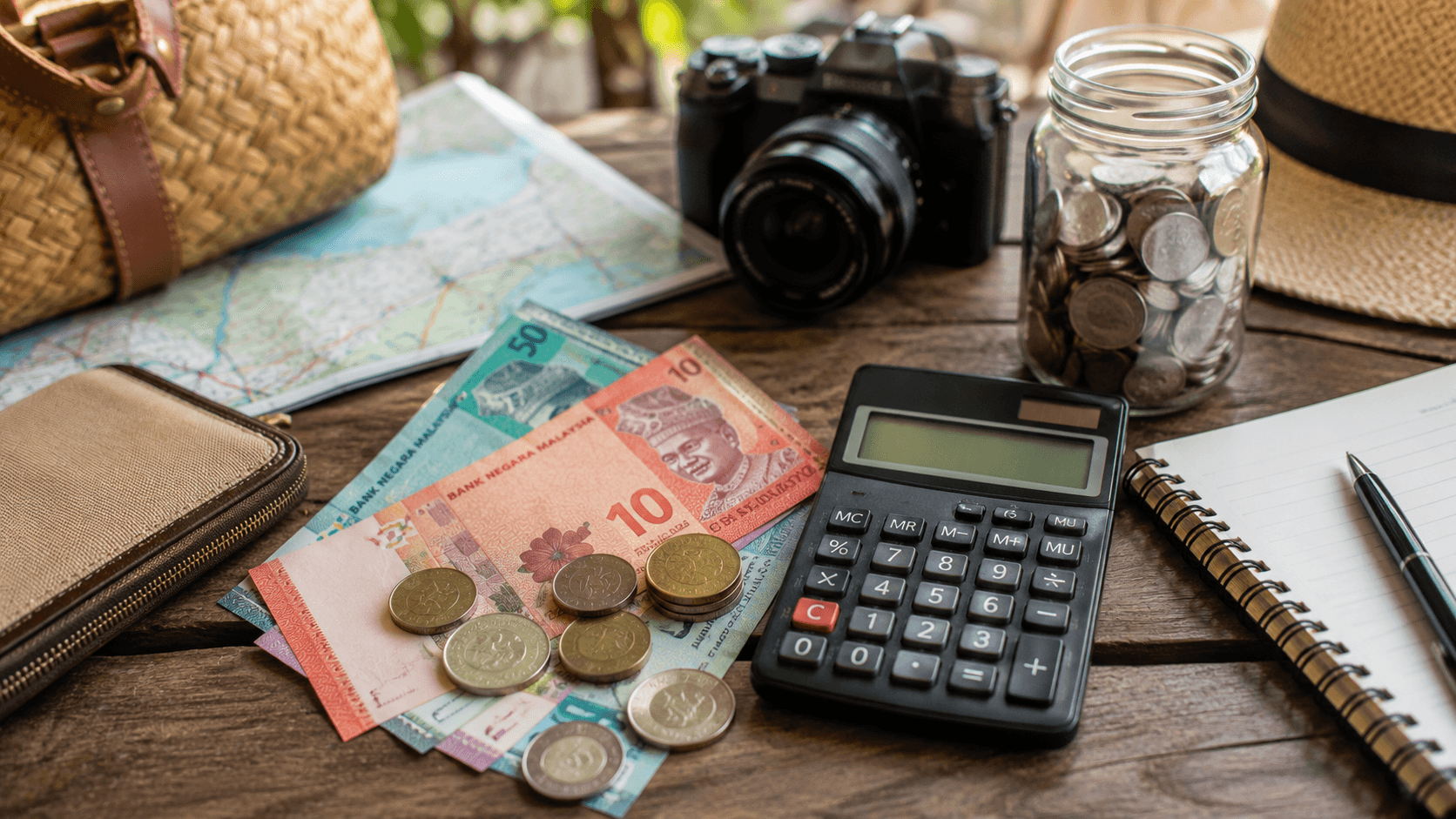
Malaysia's currency is the ringgit, written RM or MYR. In mid-2026 the rate sits at roughly RM 4.08 to the US dollar, RM 5.44 to the pound, and around RM 4.85 to the euro. In plain terms: RM 10 is a little over two dollars, and RM 100 is around twenty-four to twenty-five dollars. Prices in this guide are in ringgit first, because that is what you will actually see on the menu and the meter.
Malaysia is comfortably card-friendly in cities. Hotels, malls, supermarkets, chain cafes and mid-to-upper restaurants take Visa and Mastercard without fuss, and contactless works widely. But the best of Malaysia — the hawker stall, the kopitiam (the traditional coffee shop), the night market, the rural guesthouse, the island ferry counter, the small-town bus — runs on cash. Carry ringgit for these, and never assume a wonderful little food stall will take plastic.
Withdraw from bank ATMs (Maybank, CIMB, Public Bank) rather than the standalone machines in tourist zones, which charge more. Use a travel card or a debit card that refunds foreign fees, tell your bank you are travelling, and take out larger amounts less often to reduce per-withdrawal charges. E-wallets like Touch n Go and GrabPay are everywhere for locals, and some now onboard tourists, but a stack of cash plus one good card remains the simplest, most reliable setup.
Entry costs and the MDAC
Here is the good news: for most visitors, entering Malaysia is free. Citizens of the US, UK, EU, Australia, New Zealand, Canada and many other countries get 90 days visa-free for tourism; Indian passport holders currently have 30 days visa-free through the end of 2026. Check your own nationality before you fly, but for a large share of our readers there is no visa fee at all.
There is, however, one small but non-negotiable step: the Malaysia Digital Arrival Card, or MDAC. This is a free online form that almost every foreign visitor must complete within three days of arrival. It replaced the old paper arrival card and is now firmly enforced at air, land and sea borders. It costs nothing — but beware the copycat websites that charge a fee to fill it in for you. Use only the official Malaysian Immigration portal, do it yourself, and keep the confirmation. A few nationalities and pass-holders (Singapore citizens among them) are exempt, but if you are reading this as a typical tourist, assume you need it.
The one recurring entry-style cost to budget for is the tourism tax: RM 10 per room, per night, charged to foreign guests at hotels and licensed accommodation. On top of that you will often see 8% SST (sales and service tax) on rooms and services. These are separate charges, so a room advertised at RM 200 can arrive at checkout closer to RM 226. It is not a large sum, but over two weeks it adds up, and it is exactly the kind of quiet line item that makes people feel a budget slipped when it did not.
Get matched with up to 5 trusted Malaysia agencies
- Free
- No obligation
- Up to 5 agencies
Accommodation by tier
Accommodation is where Malaysia rewards flexibility. The range is enormous, and the value is consistently strong.
At the shoestring end, a hostel dorm bed runs RM 30–60 a night in most cities, a touch more in KL and on popular islands. Malaysia has a mature, friendly hostel scene, and many are genuinely lovely — think restored shophouses in George Town or Melaka with good coffee and better conversation.
In the mid-range, a private room in a guesthouse, boutique shophouse or clean 3-star hotel typically costs RM 120–300. This is the sweet spot for most slow travellers: your own bathroom, air-conditioning, often a pool, and frequently a location you would happily linger in. In smaller towns you will pay less; in KL and beach resorts, a little more.
At the premium end, 4- and 5-star city hotels, design boutiques and island resorts range from RM 400 to well over RM 1,000 a night. Malaysia does high-end genuinely well, and — crucially — at prices that undercut equivalent quality in most of the world. A room that would be a splurge in Europe can be an easy treat here.
Two location notes. Kuala Lumpur and the islands (Langkawi, the Perhentians, Redang, Tioman) sit at the top of the range; George Town, Ipoh, Melaka and the Cameron Highlands offer better value for comparable comfort. And in Borneo, remote eco-lodges near wildlife charge a premium for their location and their all-inclusive nature — more on that below. To decide where to base yourself and when to go, our companion guide to where to go and when in Malaysia is the place to start.
Eating well cheaply: hawker culture is the great value
If Malaysia has a single superpower, it is food — and food is where your money goes furthest. This is a country where eating cheaply and eating brilliantly are the same act. The hawker centre and the kopitiam are not the budget compromise; they are the destination.
A plate of char kway teow, a bowl of laksa, a nasi lemak wrapped in banana leaf, a plate of Hainanese chicken rice — most of these cost RM 6–12 at a hawker stall or coffee shop. A kopitiam breakfast of kaya toast, soft-boiled eggs and kopi comes in around RM 6–10. In Penang, still the country's food capital, a large share of iconic dishes remain under RM 10 in 2026. You can eat three superb meals a day for RM 25–40 and never once feel you are economising.
Step up to a proper sit-down restaurant — a mid-range Malay, Chinese or Indian place, or a nice cafe — and a main runs RM 20–45, with a full meal around RM 40–70 per person once you add a drink and share a few dishes. Western food, craft coffee and cocktail bars in KL and the islands cost close to Western prices; a good coffee is RM 12–18, a cocktail RM 35–55. The lesson is simple: eat local and you eat like a king for pocket change; drift toward imported tastes and the bill climbs fast.
Our advice, and our genuine preference, is to lean into the hawker culture — it is the most delicious and most affordable window into how Malaysians actually live and eat. For the dishes to seek out region by region, see our guide to Malaysian food and what to eat.
Getting around: the peninsula versus Borneo
Transport is where Malaysia splits into two very different cost stories: the well-connected, cheap-to-cross peninsula, and Borneo, which is a different financial animal entirely.
On the peninsula, you are spoiled. The KTM ETS train is a comfortable, scenic way to travel the west coast; KL to Penang (Butterworth) costs around RM 59 in ETS Gold and RM 79 in the faster ETS Platinum, taking roughly four hours. Long-distance buses are even cheaper and cover the whole country — KL to Melaka or Ipoh runs RM 15–35, KL to Penang around RM 40–60. Within cities, Grab (the region's ride-hailing app) is cheap and stress-free: a typical KL ride is RM 10–20, with a base fare near RM 1 plus about RM 1.30 per kilometre. KL's own trains and monorail cost a few ringgit a ride. You can cross the entire peninsula for the price of one Borneo flight.
Ferries to the peninsular islands are modest: a return boat to the Perhentians or to Tioman is around RM 70, with Langkawi ferries in a similar range. These are add-ons to budget, not budget-breakers.
Borneo is the exception, and it deserves its own honest accounting. Sabah and Sarawak are across the South China Sea, so reaching them means a flight. AirAsia, Batik Air and Malaysia Airlines fly KL to Kota Kinabalu or Kuching frequently; one-way fares run roughly RM 150–350 (about USD 35–85) if booked ahead, more last-minute. Budget carriers charge separately for checked bags, so add RM 40–100 per bag. Once in Borneo, distances are large and public transport thin, so you will spend more on transfers, domestic hops (Kota Kinabalu to Sandakan or Tawau, or the small plane to Mulu) and organised logistics than you ever would on the peninsula. Factor Borneo transport as its own line, not an afterthought.
The Borneo premium: Kinabalu, Sipadan, orangutans, parks
This is the section that changes budgets, so we will be blunt. The experiences people dream about in Borneo are world-class — and priced accordingly. None of this is a rip-off; it is the real cost of access, conservation and expert guiding in some of the planet's most extraordinary places. But you must plan for it.
Climbing Mount Kinabalu is the classic shock. Because Sabah Parks caps climber numbers and requires a licensed guide and a night in mountain huts, you cannot do it cheaply or independently. A standard 2D1N climb package for a non-Malaysian runs around RM 2,890 for a small group, and 3D2N packages reach RM 3,000–3,300 per person. That figure includes permits, guide, hut accommodation and meals — but it is still, for many, the single most expensive thing they do in Malaysia. Book months ahead; slots sell out.
Sipadan, one of the finest dive sites on Earth, is protected by a daily permit cap. In 2026 the Sabah Parks permit is RM 350 per day for non-Malaysians plus a RM 100 daily conservation fee, on top of your dive package and Mabul or Kapalai accommodation. A few days of Sipadan diving runs into serious money — and note that Sipadan closes for the whole of November 2026 for environmental recovery, so time your trip.
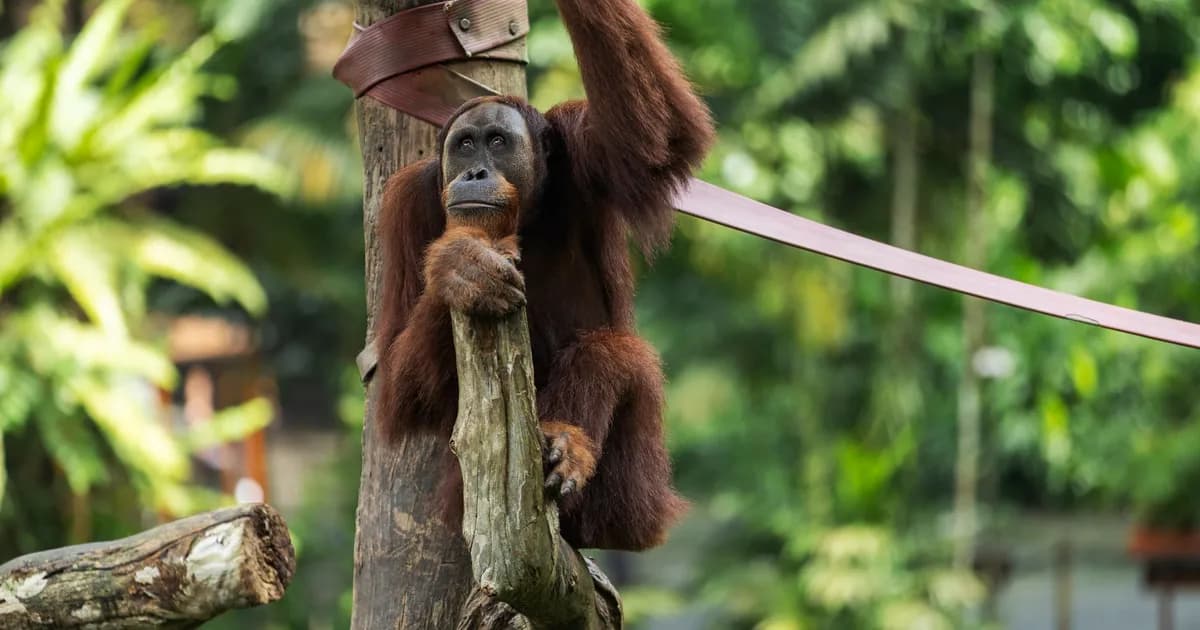
The gentler icons are far kinder to a budget. The Sepilok Orangutan Rehabilitation Centre near Sandakan charges around RM 30 entry for foreign adults, plus RM 10 for a camera — a small price for one of the most moving wildlife encounters anywhere. A Kinabatangan River wildlife cruise can be done as a single 2–3 hour trip from around RM 55, or as an all-inclusive 3D2N lodge safari for roughly RM 1,200 (about USD 300) covering transfers, cruises, lodge and meals. In Sarawak, Bako National Park costs RM 20 entry for foreigners plus about RM 47–97 for the boat; Gunung Mulu charges RM 10 per day entry with guided cave-and-Pinnacles tours from around RM 980 for a few days; and an Iban or Bidayuh longhouse visit runs from a modest day-trip fee (Annah Rais is about RM 8 entry) to RM 200 and up for multi-day stays.
The pattern is clear: Borneo's wildlife and cultural experiences are affordable; its two marquee adventures — Kinabalu and Sipadan — are not. Decide early which of those you truly want, and build the budget around that choice rather than being ambushed by it.
Tours and marine-park conservation fees
Beyond the headline Borneo costs, Malaysia levies a scatter of small conservation and park fees that are easy to overlook and important to respect — they fund the protection of the very places you came to see.
Every marine park on the peninsula charges a conservation fee: around RM 30 per foreign adult (RM 15 for children) at the Perhentians, Redang, Tioman and Pulau Payar, usually paid in cash at the jetty before you board. National parks on the peninsula, like Taman Negara, and the many Sarawak and Sabah parks, charge modest daily entry fees, typically RM 10–20 for foreigners. Snorkelling and dive trips, island-hopping, cave tours and guided treks are add-ons on top — a half-day snorkel trip might be RM 80–150, a full-day island-hopping tour RM 100–200.
None of these individually is large, but a two-week trip touching a couple of islands and a national park can quietly accumulate a few hundred ringgit in fees and small tours. Budget a cushion for them, carry cash, and treat them as part of the deal — this is money going to reefs and rainforest, not to a middleman.
Regional cost differences
Malaysia is not one price. Where you spend your days changes what you spend.
Kuala Lumpur is the most expensive base for accommodation, drinks and international dining, though its hawker food and public transport stay cheap. Langkawi and the east-coast islands sit at the top for rooms and activities, especially in resort season. George Town, Ipoh, Melaka and the Cameron Highlands are noticeably better value — comparable comfort for less, with the added pleasure of slower, more human-scaled towns. Small towns and rural areas are cheapest of all, and often the most rewarding for travellers willing to leave the highlight reel behind — our off-the-beaten-path Malaysia guide maps out where.
Borneo, as covered, is its own category: everyday costs (hawker food, town guesthouses) are similar to the peninsula, but the flights, transfers and marquee experiences push overall spending well above a peninsula-only trip. A rule of thumb: a peninsula-focused fortnight is Southeast Asia at its most affordable; adding a serious Borneo leg can add 50% or more to the total.
Three costed two-week itineraries
Here are three realistic fortnights, priced per person, excluding international flights but including entry costs, the MDAC (free) and tourism tax. Figures are 2026 estimates and assume sensible advance booking.
Shoestring — roughly RM 3,000–3,800 (USD 730–930). Peninsula only: KL, the Cameron Highlands, Penang and a stretch on the Perhentians. Hostel dorms and the odd cheap private room, hawker meals throughout, ETS trains and buses, one snorkel trip and a couple of park fees. No Borneo, little alcohol. This is Malaysia at its brilliant, unhurried best for very little money.
Mid-range — roughly RM 7,500–9,500 (USD 1,840–2,330). Peninsula plus a short Borneo taste: private guesthouse and 3-star rooms, a mix of hawker and restaurant meals, ETS and buses on the peninsula, one return flight to Kota Kinabalu, a Sepilok-and-Kinabatangan wildlife couple of days, and a beach finish. A few guided tours, the occasional nice dinner, and comfort without extravagance. This is where most of our travellers land, and it buys a genuinely rich trip.
Premium — roughly RM 18,000–28,000+ (USD 4,400–6,900+). The full spread: boutique and resort stays, restaurant dining and a private guide or driver at times, domestic flights, and one of Borneo's marquee experiences — a Mount Kinabalu climb or a few days diving Sipadan — plus a proper Kinabatangan lodge safari. Unhurried, deeply comfortable, and still, dish for dish and night for night, better value than a comparable trip almost anywhere else.
Hidden costs and money traps
A few things quietly inflate Malaysia budgets, and all are avoidable.
The MDAC copycat sites, first: the form is free on the official portal, so never pay a third party. Airport taxis over Grab: always cheaper and cleaner to book Grab from the app than to take a fixed-price airport counter cab. Budget-airline baggage: AirAsia and Batik fares look tiny until you add bags, seats and meals — read the fare before you celebrate. The tourism tax and SST: real, small and cumulative, so build them in. ATM and currency fees: use bank machines, avoid airport exchange counters and the dreaded "dynamic currency conversion" that offers to charge you in your home currency at a poor rate — always choose to be charged in ringgit. And alcohol: Malaysia taxes it heavily, so beer and wine cost near-Western prices; if drinks matter to you, budget for it honestly rather than being surprised nightly.
The biggest trap of all is under-planning Borneo. Travellers price a cheap peninsula trip, then bolt on Kinabalu or Sipadan at the last minute and find the flights full and the permits gone. Decide on Borneo early, or leave it for a dedicated future trip.
How to get more value without going cheap
Slow travel and good value are natural allies. Moving less means spending less — on transport, yes, but also on the friction and fatigue of constant packing. Staying three or four nights in a place instead of one unlocks weekly accommodation rates, lets you find the RM 8 breakfast the locals love, and turns a stall owner into someone who remembers you.
Eat where Malaysians eat and you save money while eating better — the correlation runs the right way here. Travel the peninsula by train and bus rather than flying, and enjoy the scenery you would otherwise miss. Book the big-ticket Borneo items months ahead for the best fares and guaranteed permits. Travel in the shoulder seasons for lower island prices and thinner crowds. And spend on the few things that are genuinely once-in-a-lifetime — the guide who reads the rainforest, the dive that shows you a wall of barracuda — while saving on the many that are not. Value, done well, is not about the cheapest option; it is about the right one. For the practical scaffolding of dates, routes and season, our plan your journey page pulls it together.
The value of a good local partner
There is a point in planning Malaysia — usually around the Borneo logistics, the permit calendars, the ferry-and-lodge choreography — where a good local partner stops being a luxury and becomes the best value in the whole budget. Not because you cannot do it yourself, but because someone who lives it can save you money and prevent the expensive mistakes: the sold-out Kinabalu slot, the wrong-season Sipadan trip, the lodge that photographs better than it hosts.
A thoughtful local operator books at rates you often cannot access alone, sequences your route so you are not paying to backtrack, and steers you toward the experiences that reward the spend and away from the tourist traps that do not. That is exactly the kind of honest, value-over-volume partnership we care about at UNRUSH. You can meet our vetted Malaysia travel agencies, or, if you would rather shape the whole thing around your own pace and priorities, explore our approach to tailor-made slow travel. Either way, the goal is the same: a trip that is calm, well spent, and genuinely yours.
Frequently Asked Questions
Is Malaysia expensive to travel in 2026?
No — Malaysia is one of the best-value destinations in Southeast Asia. A comfortable mid-range day costs RM 250–450 (about USD 60–110), and shoestring travellers manage on RM 100–180. The exceptions are alcohol, imported Western food, and Borneo's marquee adventures like climbing Mount Kinabalu or diving Sipadan, which cost far more than everyday travel.
How much money do I need for two weeks in Malaysia?
For a peninsula-only fortnight, budget roughly RM 3,000–3,800 per person on a shoestring or RM 7,500–9,500 mid-range, excluding international flights but including entry costs and tourism tax. Adding a serious Borneo leg — flights, transfers and a big experience — can push a premium trip to RM 18,000–28,000 or more per person.
Do I need a visa or the MDAC to enter Malaysia?
Most nationalities, including US, UK, EU, Australian and Canadian passport holders, get 90 days visa-free for tourism, and there is no visa fee. However, almost every foreign visitor must complete the Malaysia Digital Arrival Card (MDAC) within three days of arrival. It is free on the official immigration portal — avoid copycat sites that charge for it.
What is the tourism tax and will I have to pay it?
Foreign guests pay a tourism tax of RM 10 per room, per night at hotels and licensed accommodation, and you will often also see 8% SST on rooms and services. Malaysian citizens and residents are exempt. It is a small charge, but over a two-week trip it adds up, so build it into your accommodation budget.
How much does it cost to visit Borneo compared with the peninsula?
Everyday costs in Borneo — hawker food, town guesthouses, local transport — are similar to the peninsula. What raises the total is getting there and the signature experiences: return flights from KL of RM 150–350, larger transfer distances, and headline activities like Mount Kinabalu (around RM 2,890 and up) or Sipadan diving (RM 350 per day in permits alone). A Borneo leg can add 50% or more to a peninsula budget.
Can I use credit cards, or do I need cash in Malaysia?
Both. Cards work smoothly in hotels, malls, chain cafes and mid-to-upper restaurants in cities. But the best of Malaysia — hawker stalls, kopitiams, night markets, ferry counters, rural guesthouses and small-town buses — runs on cash. Carry ringgit for daily life, withdraw from bank ATMs rather than tourist-zone machines, and always choose to be charged in ringgit, not your home currency.
When should I book Borneo experiences to keep costs down?
As early as you can — months ahead for anything major. Mount Kinabalu climbing slots are capped and sell out; Sipadan dive permits are limited daily and Sipadan closes entirely in November 2026; and the cheapest flights and best lodges go first. Booking peninsula transport a few weeks ahead is usually enough, but Borneo's marquee items reward planning and punish last-minute decisions.