Penang and George Town: Slow Travel Through Malaysia's Heritage and Food Capital
Some places are made for ticking off sights; Penang is made for lingering. The heart of the island, the UNESCO-listed city of George Town, rewards slow walking and repeat meals far more than a frantic sightseeing dash. This is Malaysia's heritage and food capital, a layered blend of Malay, Chinese, Indian and colonial cultures where a single street can offer a Chinese clan house, an Indian temple, a mosque, a British-era shophouse and the best noodles of your life. For the slow traveller, few places in Southeast Asia reward staying put as richly as Penang.
Malaysia's most rewarding city to slow down in
George Town is a rare thing: a historic city that is genuinely lived in, not preserved behind glass. Its UNESCO World Heritage core is a dense weave of colonial architecture, Chinese shophouses, temples, mosques and crumbling arcades, all still in daily use. The pleasure here is not rushing between monuments but wandering the narrow lanes, following the smell of frying noodles, ducking into a kopitiam for coffee, and letting the city reveal itself layer by layer. This is exactly the ethos of our slow traveller's guide to Malaysia: fewer sights, more depth.
One request. Up to five tailored proposals.
Skip contacting agencies one by one — share your trip once and let up to five trusted Malaysia agencies come to you. Free, with no obligation.
Get my free quotesThe food, which is the whole point
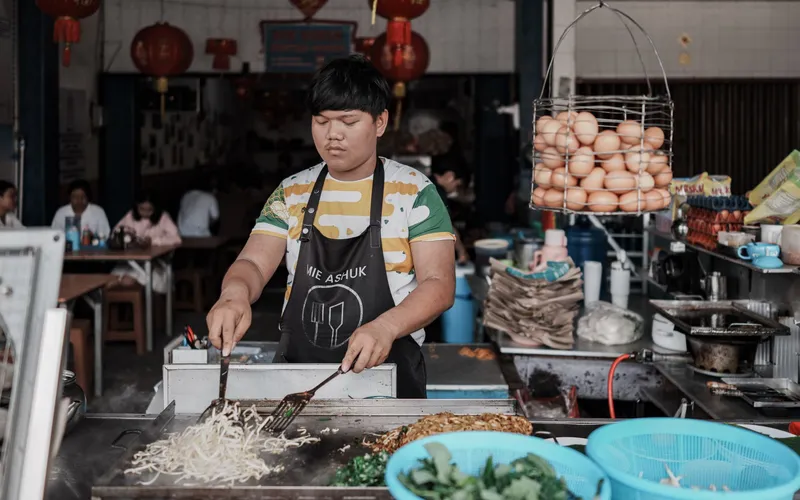
It is no exaggeration to say many people come to Penang purely to eat, and they are right to. The island is one of the great street-food destinations on earth, its hawker centres and roadside stalls serving dishes refined over generations by its mixed communities. Char kway teow, the smoky stir-fried noodles; asam laksa, the sour, fishy, herbaceous noodle soup that regularly tops global food lists; lor bak, curry mee, char siew, Nyonya specialities and Indian banana-leaf feasts, all are here and all are cheap. The way to do it is slowly: several small meals a day, following local recommendations, and eating where the queues are. Our guide to Malaysian food maps the essential dishes.
Heritage streets and mansions
Between meals, George Town's built heritage is a joy to explore on foot. Fort Cornwallis, the island's largest and best-preserved colonial fort, anchors the waterfront. The Cheong Fatt Tze Mansion, the famous indigo-blue mansion, and the Pinang Peranakan Mansion open windows onto the wealth and hybrid culture of old Penang, the Peranakan or Baba-Nyonya world of Chinese-Malay heritage. Clan houses, temples and churches sit cheek by jowl, a physical record of the communities who built the city. Walking a self-guided heritage trail, pausing wherever something catches your eye, is one of the finest slow days the city offers.
Get matched with up to 5 trusted Malaysia agencies
- Free
- No obligation
- Up to 5 agencies
The clan jetties and the waterfront
On the harbour edge, the clan jetties are among Penang's most atmospheric corners: historic waterfront settlements of wooden houses on stilts, built by Chinese clan communities and still lived in today. Walking their creaking planks over the water, especially in the softer light of early morning or late afternoon, gives a vivid sense of a working immigrant heritage that persists in the modern city. Treat them with the respect due to a living neighbourhood rather than a museum, keep to the public walkways, and you will find one of the most photogenic and human places in George Town.
Street art and the creative city
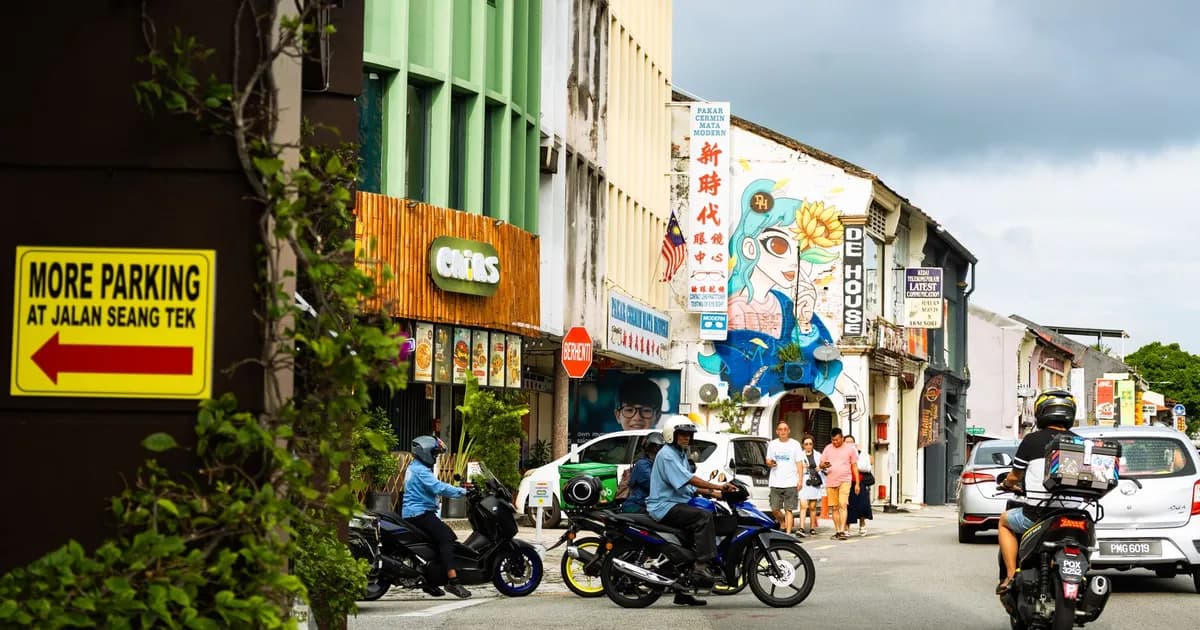
Penang reinvented its image in part through art, and George Town is now famous for the murals and wrought-iron sculptures scattered through its heritage streets. What began as a single artist's project has grown into a city-wide open-air gallery, with painted walls that play with real objects, a child on a bicycle, a boy on a motorbike, and witty metal caricatures that tell the story of the streets they sit on. Hunting them down is a playful way to explore neighbourhoods you might otherwise miss, and it draws you into the small shops, cafes and workshops that have grown up around the creative revival.
Beyond the city: hills, temples and beaches
Penang is not only George Town. Rising above the city, Penang Hill offers cool air and long views, reached by a funicular railway, and the vast Kek Lok Si temple complex is one of the most impressive in the country. The Penang Botanic Gardens give a green escape, and the beaches of Batu Ferringhi on the north coast offer sand and sea for those who want it, though Penang's beaches are a supporting act to its food and heritage rather than the main draw. A half-day out to the hill or the temple balances the intensity of the city nicely.
When to go and how long to stay
Penang is a year-round destination, though it is wettest during the later-year monsoon months and most pleasant in the drier stretches; the heat and humidity are constant, so pace your days around it, sightseeing in the cooler mornings and evenings and resting in the midday heat. As for duration, three to four nights is the sweet spot: time for a slow street-art wander, several food-focused evenings, a day around Penang Hill and Kek Lok Si, and a half-day to the beach or gardens. Stay longer and Penang becomes a place you live in rather than visit, which is when it is at its best. For more hidden corners of the country, our off-the-beaten-path Malaysia guide points the way onward.
Getting there and around
Penang is easy to reach and easy to explore slowly. It has its own international airport, and it is a highlight of Peninsular Malaysia's excellent rail network, reached via the ferry or bridge from the mainland railhead at Butterworth, as our guide on how to travel Peninsular Malaysia by train describes. Within George Town, the historic core is compact and made for walking, with ride-hailing and a free central shuttle for longer hops. Arriving overland by train, rather than flying, is very much in the slow-travel spirit and a fine way to approach the island.
Where to stay in George Town
Penang suits slow travellers with its range of places to sleep. Staying within or right beside the George Town heritage core is the obvious choice, putting the food, the street art and the sights on your doorstep and letting you walk everywhere. The city has a wonderful stock of restored heritage shophouses turned boutique hotels and guesthouses, where you sleep inside the very architecture you came to see, alongside cheaper hostels and simple lodgings for every budget. For beach-focused travellers, the resorts of Batu Ferringhi offer sand and sea, but they trade the heart of the experience for a coastline that is not Penang's real strength. Base yourself in the old town and the whole island opens up on foot and by short ride.
The rhythm of a Penang day
The secret to Penang is timing your day around heat and hunger rather than a sightseeing checklist. Locals eat early, and the best way to travel here is to rise for a morning bowl of noodles before the heat builds, wander the cool early streets among the murals and shophouses, retreat from the fierce midday sun into a kopitiam or a mansion or a long lunch, and emerge again in the softer late afternoon for the jetties, the temples and the evening food. Nights bring night markets and more eating. This is a city that punishes rushing and rewards surrender to its rhythm, which is precisely why it is such a natural fit for slow travel.
A living multicultural city
What ultimately makes Penang special is that its layers are not a museum exhibit but a living reality. Malay, Chinese and Indian communities, along with the distinctive Peranakan culture born of their mingling, share the island and shape its festivals, temples, mosques, languages and, above all, its food. Travelling here with curiosity and respect, joining the crowds at a Chinese temple festival or a Hindu celebration, eating across all the communities, chatting with shopkeepers, gives you a window onto one of Southeast Asia's most successful cultural blends. Penang is not a backdrop but a community, and meeting it as one is the richest reward the island offers.
What to do next
- Give Penang at least three or four nights so you can walk, eat and rest at the island's pace.
- Base yourself in or near the George Town heritage core, within walking distance of the food and the sights.
- Build your days around food: several small hawker meals, following local queues and recommendations.
- Walk a heritage trail, hunt the street art, visit the clan jetties, and take a half-day to Penang Hill or Kek Lok Si.
- Consider arriving by train via Butterworth, and plan the wider route with our plan your journey page.
Frequently Asked Questions
How many days should I spend in Penang?
Three to four nights is ideal: enough for a slow street-art and heritage wander, several food-focused evenings, a day around Penang Hill and Kek Lok Si temple, and a half-day to the beach or botanic gardens. Penang rewards a slow pace, so if food and atmosphere draw you, staying a week is easily justified.
What food should I try in Penang?
Penang is one of the world's great street-food cities. Start with char kway teow, asam laksa, lor bak and curry mee, explore Nyonya (Peranakan) specialities and Indian banana-leaf meals, and eat at hawker centres and kopitiams where the queues are longest. Several small meals a day, following local recommendations, is the way to experience it.
Is George Town worth visiting?
Very much so. George Town is a UNESCO World Heritage city and Malaysia's heritage and food capital, with colonial and Chinese architecture, temples, mosques, clan jetties and a celebrated street-art scene, all still part of a living city. For travellers who value culture, history and food over beaches, it is one of the most rewarding places in Malaysia.
What are the clan jetties in Penang?
The clan jetties are historic waterfront settlements of stilted wooden houses built by Chinese clan communities on the George Town harbour, and still lived in today. Walking their public boardwalks over the water offers an atmospheric glimpse of Penang's immigrant heritage. Treat them as a living neighbourhood, keep to the public paths, and be respectful of residents.
How do I get to Penang?
Penang has its own international airport and is a key stop on Peninsular Malaysia's rail network, reached from the mainland railhead at Butterworth by ferry or bridge. Arriving by the electric ETS train from Kuala Lumpur is a comfortable, scenic and very slow-travel way to reach the island. Within George Town, the heritage core is best explored on foot. Penang also connects easily by bus and ferry to the rest of the peninsula, making it a natural anchor for a longer overland trip through the region.