

For years the Philippines was the Southeast Asian country you stayed in the longest and had the least formal reason to be in. Visa-free entry, cheap extensions and a bureaucracy that tolerated repeat renewals meant remote workers simply extended their way through a year. That has now changed on paper. Executive Order No. 86, signed on 24 April 2025, created a Digital Nomad Visa, and it has been processed through the Department of Foreign Affairs e-Visa system since the second half of that year. In 2026 it is real, it is being issued, and it is still narrower than most of the headlines suggest.
If you are considering a long, slow stay in the Philippines, this is what the visa does, who it actually covers, and why the extension route remains the better option for a large share of travellers.
What Executive Order 86 Actually Created
The order authorises a visa for foreign nationals who work remotely, using digital technology, for employers or clients located outside the Philippines. The headline terms are consistent across official summaries: a stay of up to one year, renewable once, with multiple-entry privileges during the validity period.
Two institutions share the work. The Department of Foreign Affairs issues the visa, through its e-Visa platform or a Philippine Foreign Service Post abroad. The Bureau of Immigration handles security vetting and, once you are in the country, enforcement. Holders may not take local employment or work for Philippine clients; the entire premise is income earned abroad and spent here.
That last point is the policy logic. The Philippines is not trying to import workers. It is trying to attract long-stay residents who bring foreign income into provincial economies, which is a different proposition from the two-week arrival figures the tourism department chases.
One request. Up to five tailored proposals.
Skip contacting agencies one by one — share your trip once and let up to five trusted Philippines agencies come to you. Free, with no obligation.
Get my free quotesThe Reciprocity Rule, and Why It Decides Everything
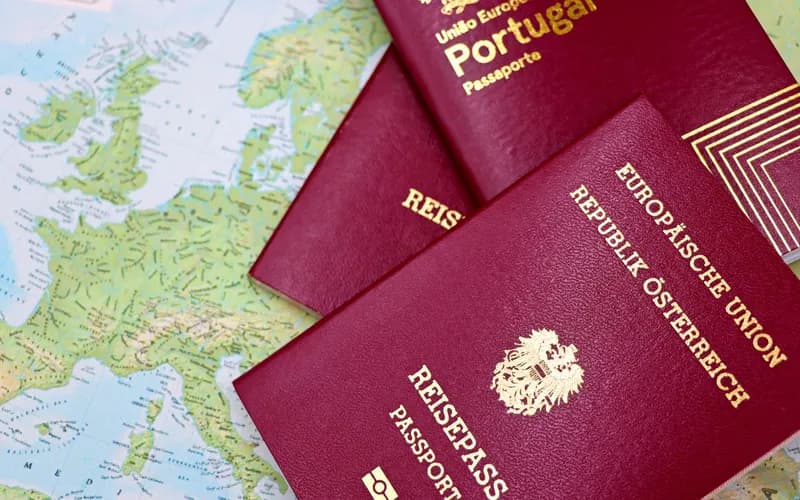
Here is the clause that catches people out. The visa is limited to nationals of countries that offer a comparable digital nomad visa to Filipino citizens, and where the Philippines maintains a Foreign Service Post able to process the application.
That is a much smaller universe than it sounds. Plenty of countries have digital nomad or remote-work visas; not all of them are open to Filipino nationals on comparable terms, and the government has not published a clean, definitive list of qualifying nationalities. Applicants have therefore had to establish their own eligibility through the embassy or consulate handling their case.
The practical consequence is that nationality, not income, is the first filter. Before you assemble documents, contact the Philippine embassy or consulate with jurisdiction over your residence and ask two questions: does my nationality currently qualify under the reciprocity requirement, and can this post process the application. Everything else follows from those answers.
Who Qualifies: The Requirements in Practice
Beyond nationality, the published criteria are consistent and unsurprising:
- You must be at least 18 years old.
- Your work must be performed remotely using digital technologies.
- Your income must come exclusively from foreign employers or clients, with no Philippine source.
- You must hold valid health insurance covering the whole period of stay in the Philippines.
- You must provide a police or criminal record clearance showing no convictions.
- Your passport must remain valid well beyond the intended stay.
The income threshold most widely reported is in the region of USD 24,000 a year, roughly USD 2,000 a month, evidenced by bank statements and contracts. Because the implementing details have been settling since the visa launched, treat that as an indicative figure and confirm the current requirement with the post handling your case rather than with a blog. The same applies to fees, which are set by the DFA and are not consistently published across sources.
Get matched with up to 5 trusted Philippines agencies
- Free
- No obligation
- Up to 5 agencies
How to Apply
Applications are made online through the DFA e-Visa system or, in some cases, directly at a Philippine Foreign Service Post. You apply from outside the Philippines; this is not a status you can switch into after arriving as a tourist.
Expect to submit proof of remote work, such as an employment contract, client agreements or business registration; several months of bank statements; an insurance certificate valid for the requested period; a police clearance from your country of residence; passport bio-page and photographs. Processing times vary by post and have not settled into a published standard, so allow considerably more time than a tourist visa would need.
Once issued, ordinary entry procedures still apply on arrival, including the online arrival registration that all travellers must complete. If you have not used it before, our guide to the eTravel registration system explains what is required and when to file it.
What It Is Not: Visa-Free Entry and the Alternatives
This visa does not replace the route most long-stay visitors already use, and for many people it is not an improvement on it.
Citizens of a large number of countries still enter the Philippines visa-free for an initial short stay and can extend in stages at Bureau of Immigration offices, up to a substantial cumulative total. That process is well established, can be done from inside the country, requires no income proof and no police clearance, and costs a manageable amount each time. Its drawbacks are the paperwork rhythm, the queues and the lack of any guarantee. Our article on visa-free entry and extending your stay covers the mechanics in full.
The digital nomad visa is better if you want legal certainty for a full year, multiple entries without recalculating your allowance, and a document that satisfies a landlord or a bank. It is worse if your nationality is not covered, if your income is irregular or partly local, or if you simply want to stay four months and leave. Retirement-based long-stay options remain a separate track with their own deposit requirements.
Where People Actually Base Themselves
The visa is only as good as the place you use it in. The established remote-work bases are Cebu City for infrastructure, Siargao for surf and a well-developed but crowded scene, Dumaguete for cost and calm, La Union for weekend access to Manila, and increasingly Iloilo and Bacolod for cities that work without being overwhelming.
A year changes what is possible. Instead of touring, you can live in one province and travel out of it slowly, which is where the Philippines rewards patience most. It also opens up the smaller inland and provincial towns as bases rather than day trips, including the restored old towns we looked at in the country's heritage-town revival, where rents are lower and the sense of place is stronger than in any beach enclave.
Tax, Insurance and the Grey Areas
Be careful here, and take professional advice rather than internet consensus.
Staying in a country for most of a year raises tax residency questions in both directions: whether the Philippines considers you resident, and whether your home country stops considering you so. The visa itself does not answer this, and Executive Order 86 was designed to attract foreign income rather than to tax it. Rules on foreign-sourced income, the length of stay that triggers local obligations and the effect of any double taxation treaty depend on your specific nationality and circumstances.
Insurance is the other item to treat seriously rather than as a checkbox. The policy must cover the full stay, and in an archipelago it should also cover medical evacuation, because serious care means a flight to Manila or Cebu from most of the country.
The Practical Reality: Internet, Power and Money
Connectivity has improved substantially in the cities and in the main tourism towns, where fibre is now common and mobile data is fast. It remains inconsistent elsewhere, and power interruptions are a routine feature of provincial life. Anyone who takes scheduled calls should have a mobile data backup and a battery, and should test a location before committing to a lease.
The financial mechanics of a long stay are their own subject. Local rent is usually paid in cash or by local bank transfer, foreign card withdrawals carry a fixed fee at every ATM, and a local e-wallet becomes worth the setup effort once you are here for months rather than weeks. We set out the options in our guide to handling money in the Philippines.
Typhoon season is the other planning constraint a one-year stay has to absorb. Between roughly June and November, expect disruption, and choose a base with that in mind rather than purely on the strength of a dry-season visit.
What to Do Next
- Contact the Philippine embassy or consulate for your place of residence and confirm in writing whether your nationality currently qualifies under the reciprocity rule.
- Ask the same post for the current income threshold, document list, fee and processing time, since these have moved since launch.
- Compare honestly against the visa-free extension route for your intended length of stay.
- Assemble contracts, bank statements, insurance and police clearance before starting the online application, and check validity dates.
- Apply from outside the Philippines and allow generous lead time.
- If you want help arranging the ground side of a long stay, the vetted operators in our Philippines travel agencies directory can handle regional logistics that are difficult to organise remotely.
Frequently Asked Questions
How long can you stay in the Philippines on the digital nomad visa?
Up to one year, renewable once, giving a maximum of about two years. The visa carries multiple-entry privileges during its validity, so you can leave and return without losing the remainder of your stay.
Who is eligible for the Philippine digital nomad visa?
Adults who work remotely using digital technology for employers or clients outside the Philippines, who can prove sufficient foreign income, hold valid health insurance for the full stay, have no criminal record, and who are nationals of a country that offers Filipinos a comparable visa and where the Philippines has a Foreign Service Post to process the application.
What income do you need for the Philippine digital nomad visa?
The figure most consistently reported is around USD 24,000 a year, roughly USD 2,000 a month, from foreign sources only. Because implementing details have been evolving since the visa launched in 2025, confirm the current threshold with the embassy or consulate handling your application.
Can you apply from inside the Philippines?
No. The visa is issued by the Department of Foreign Affairs through its e-Visa system or a Foreign Service Post abroad, and it is intended to be obtained before travel. Arriving as a tourist and converting to this status is not the designed pathway.
Is the digital nomad visa better than extending a tourist stay?
It depends on your nationality and your plans. Extensions remain simpler, need no income proof and suit stays of a few months. The digital nomad visa suits a committed year or two, gives legal certainty and produces a document that helps with rentals and services, but only if your nationality clears the reciprocity requirement.
Can digital nomad visa holders work for Philippine companies?
No. The visa expressly excludes local employment and Philippine-sourced income. All work must be for foreign employers or clients. Taking local work would breach the conditions of stay and is an immigration matter rather than a technicality.
Do you still need to register on arrival with this visa?
Yes. The visa governs your permission to stay; it does not exempt you from standard arrival procedures, including the online traveller registration that applies to everyone entering the country. Complete it within the required window before each arrival.