

For most of the past thirty years, the Philippine heritage house was a liability. Roofs cost more than the family could raise, developers offered more for the lot than anyone would pay for the building, and the local government had no framework for saying no. Hundreds of them came down quietly. In 2026 the arithmetic is shifting. Ancestral houses are reopening as small inns, coffee roasteries, archives and museums; a provincial capital has just written heritage protection into public policy rather than into a beautification budget; and the national tourism strategy has begun to treat old towns as a product rather than a photo stop. This is one of the most interesting things happening in Philippine travel, and it is also the easiest to get wrong.
The Numbers Behind the Shift
The Philippines has spent the post-pandemic years chasing arrival figures it has not reached. The Department of Tourism ended 2025 with roughly 5.6 million international arrivals against a target of 8.4 million, and set a more sober 6.7 million goal for 2026. That gap matters, because it has pushed the conversation away from volume and towards yield: longer stays, higher spend per visitor, and destinations that are not already at capacity.
The composition of arrivals is changing too. Chinese arrivals rose around 63 percent year on year between January and May 2026, helped by visa-free entry and the return of direct flights, and the Indian market has grown quickly since visa-free access was introduced in mid-2025. These are largely first-time visitors to the country, and first-time visitors historically go to Boracay, Cebu and Palawan. The heritage towns are the government's answer to the question of where everyone else should go, and they sit alongside the broader dispersal effort we examined in the shift away from the headline islands.
One request. Up to five tailored proposals.
Skip contacting agencies one by one — share your trip once and let up to five trusted Philippines agencies come to you. Free, with no obligation.
Get my free quotesFrom Beautification to Policy
The clearest sign that something has changed is Iloilo. On 4 May 2026, the city signed a memorandum of agreement formalising a programme called Heritage as Public Policy, developed with the University of the Philippines Visayas, covering the 21 heritage buildings along Calle Real, the commercial spine built during the American colonial period.
The detail that matters is not the restoration money. It is the governance framework: who is responsible for a facade when a tenant changes, what happens when an owner wants to alter a protected structure, how the city closes the gaps that let buildings decay until demolition becomes the only economic answer. Iloilo has effectively moved heritage out of the tourism office and into urban planning. If the model holds, it is far more consequential than any single restored building, because most Philippine heritage loss happens through neglect and quiet permits rather than through dramatic demolition.
The national legal backbone already existed. The National Cultural Heritage Act of 2009 gives presumed importance to structures more than fifty years old and assigns oversight to the National Museum, the National Historical Commission and the National Commission for Culture and the Arts. What has been missing at city level is enforcement capacity. Iloilo is the test case.
Vigan, and the Limits of a Label
Vigan in Ilocos Sur has been on the UNESCO World Heritage list since 1999, and it remains the country's most complete surviving Spanish colonial town. It is also a cautionary tale about what a label does and does not do.
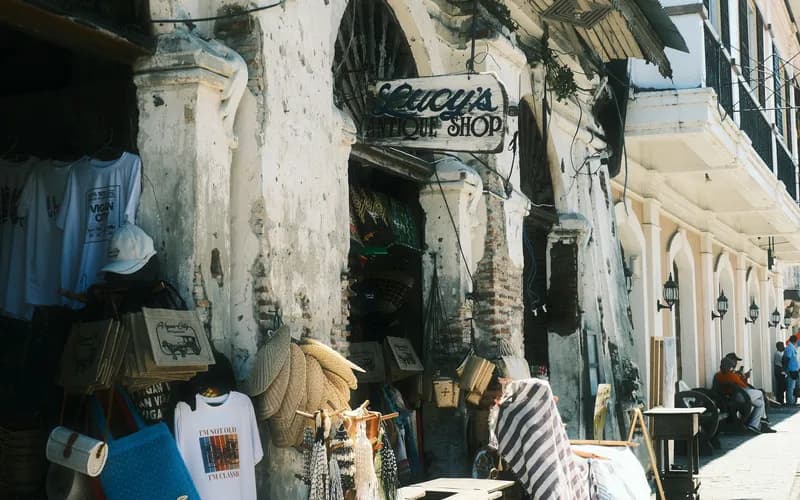
The magnitude 7.0 earthquake that struck northern Luzon in July 2022 damaged the cathedral and a number of the ancestral houses along Calle Crisologo, and the restoration work that followed, carried out with UNESCO and ICOMOS Philippines involvement, has been slow, technical and expensive. Meanwhile Crisologo itself has the opposite problem: on weekends it can feel like a single crowded corridor of souvenir stalls and calesa traffic, with the rest of the town's heritage zone almost empty.
The lesson for travellers is simple and applies everywhere in this article. The interesting parts of a heritage town are rarely the photographed street. In Vigan, that means the pottery kilns in Pagburnayan, the weaving looms on the edge of town, and the streets two blocks off the main axis, which still function as a town rather than a set.
Get matched with up to 5 trusted Philippines agencies
- Free
- No obligation
- Up to 5 agencies
Negros: Silay and the Houses the Sugar Barons Built
Silay, twenty minutes north of Bacolod and a short drive from the airport, is the most concentrated heritage townscape in the Visayas. More than two dozen officially recognised ancestral houses stand within a few walkable blocks, built by sugar families in the decades either side of 1900, when Negros money was among the largest private fortunes in the archipelago.
Two are essential. Balay Negrense, the Victor Gaston house, is a full museum and the best introduction to how these households actually lived. The Hofilena Ancestral House is stranger and better: a private home whose family opens it for guided visits and whose walls hold a serious art collection, shown by a member of the family rather than a guide reading a script.
Silay also demonstrates the fragility of all this. These houses survive because individual families chose to keep them and could afford to, not because a system protected them. Where a family fails or splits, the house usually follows. If you are building an itinerary around this kind of place, our guide to where to go in the Philippines and when will help you fit Negros into a wider route.
Taal, Sariaya and the Inland Towns
Two hours south of Manila, Taal in Batangas offers something Vigan cannot: a heritage town that has not yet organised itself around visitors. The Basilica of Saint Martin of Tours dominates the ridge, ancestral houses line the streets below it, and the local economy still runs on embroidery workshops producing barong fabric and on the balisong knife-making trade. Weekday mornings here are close to what heritage tourism ought to feel like.
Sariaya in Quezon is the other direction entirely: not Spanish colonial but American-era, a cluster of confident 1930s mansions built on coconut money, several carrying national heritage markers. It is a reminder that Philippine heritage did not stop in 1898, and that the twentieth-century layer is the one currently most at risk, because it is not old enough to be obviously precious.
The Adaptive-Reuse Economy
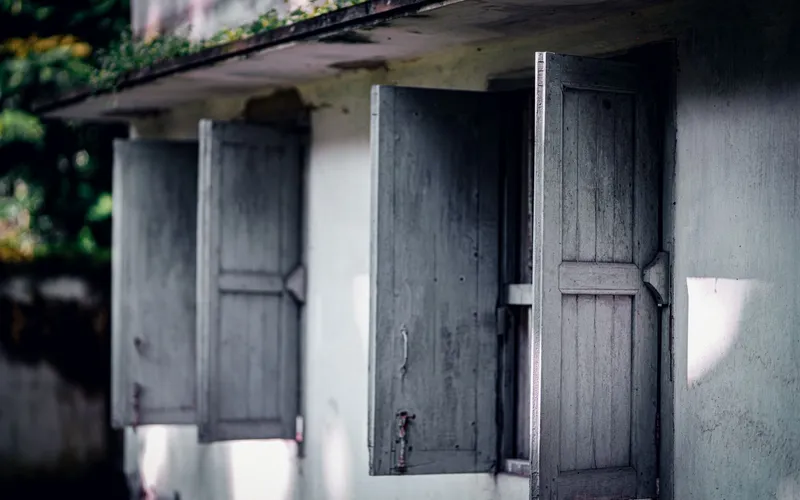
The mechanism actually saving these buildings is adaptive reuse: turning a house that no family can afford to maintain into something that generates income. Across the country that now means small hotels and inns in Vigan, cafes and galleries along Calle Real, restaurants in Taal, and co-working and event spaces in Manila's older districts.
A booking platform launched in 2026, Our Heritage Homes, has taken the logic further by listing ancestral houses and heritage-led properties and channelling part of each booking towards maintenance and restoration. Whether the model scales is an open question, but it identifies the right problem: conservation in the Philippines fails on recurring maintenance costs, not on the initial restoration grant.
Reuse also changes what a visit is worth. Sleeping in a heritage town for two nights instead of stopping for two hours puts money into the building that houses you, the kitchen that feeds you and the guide who walks you around. Much of that spending lands in food, which is its own reason to slow down here, as our guide to Filipino cooking sets out in more detail.
What Can Go Wrong
Three failure modes are already visible, and honest travellers should know them.
- Facadism. Keeping a street frontage while gutting everything behind it satisfies the photograph and destroys the building. It is cheaper than real conservation and increasingly common.
- Single-street tourism. When all the visitors, and therefore all the businesses, concentrate on one photogenic block, rents rise on that block and the rest of the heritage zone continues to decay. Vigan shows this clearly.
- Monoculture funding. A house that depends entirely on visitor income is one bad typhoon season away from closing. The buildings that survive tend to have mixed uses and local customers, not just tourists.
There is also a physical risk that no policy can eliminate. These are timber-and-stone structures in an earthquake and typhoon zone, and the 2022 Luzon earthquake showed how quickly a century of survival can be undone.
How to Travel the Revival Well
Go midweek. Weekend day-tripping from Manila, Bacolod or Iloilo is what creates the crowding-plus-emptiness pattern, and midweek visitors are worth several times more to a small town.
Stay overnight, ideally in a restored house. Pay the entrance fees at private homes without haggling; they are the maintenance budget. Hire a local guide rather than reading a plaque, because the interesting material in these towns is family history and it is not written down. Buy from the workshops still operating, whether that is Vigan pottery, Taal embroidery or Silay pastry. Ask before photographing interiors of houses where people still live, and accept a no.
Finally, extend the same instinct beyond the famous names. There are heritage towns with no marketing budget at all in Bohol, Cebu, Ilocos Norte and Camarines Sur, and the same logic that makes places like the Romblon islands rewarding applies to them.
What to Do Next
- Pick one heritage cluster rather than three: Ilocos and Vigan, Negros and Silay, Iloilo and Calle Real, or Taal and Sariaya from Manila.
- Build the visit around two or three nights in the town itself, and avoid Saturday.
- Book a house museum tour in advance where the property is a private family home, as several only open by arrangement.
- Check whether restoration works are underway before you travel; scaffolding is common and rarely announced.
- Set aside cash for entrance fees and guides, as card acceptance in these towns is limited.
- If you want the route assembled around heritage rather than beaches, start with our Philippines trip planning page.
Frequently Asked Questions
Which Philippine heritage town should a first-time visitor choose?
Vigan if you want the most complete colonial townscape and do not mind crowds on the main street. Silay if you want interiors and art rather than streetscape. Taal if you are based in Manila and have two days. Iloilo if you want to see the policy experiment that may shape the next decade of Philippine conservation.
Is Vigan worth visiting after the 2022 earthquake?
Yes. The town is open and functioning, and most of the heritage zone was not structurally compromised. Some individual buildings, including parts of the cathedral, have been under repair, so expect scaffolding and occasional closures and check locally before you build a day around one specific site.
Are heritage houses in the Philippines free to visit?
Rarely. Most charge a modest entrance fee, typically in the low hundreds of pesos, and several private houses admit visitors only on a guided tour arranged in advance. The fees are what pays for roof repairs, so treat them as the point rather than an obstacle.
How many days do you need for a heritage-town trip?
Two nights per town is the sensible minimum, which gives you one full day plus a morning. A week lets you combine two towns in the same region with a slow transfer between them. Day-tripping from a city works logistically but returns very little to the place you visited.
Is heritage tourism actually helping conservation?
Partly. It generates the recurring income that maintenance requires, which grants alone never covered. It also concentrates pressure on a small number of photogenic streets and can push out ordinary businesses. The healthiest heritage towns are those where visitor income is one revenue stream among several.
When is the best time to visit Philippine heritage towns?
The dry months from December to May are the most comfortable, and the inland towns are noticeably cooler in December and January. Avoid major fiesta weekends unless the fiesta is the reason you are going, and avoid the September to November peak of the typhoon season for anything involving northern Luzon.
Can you stay inside a heritage building?
In several towns, yes. Vigan has a number of ancestral houses operating as inns, and restored properties are available in Silay, Taal and Iloilo. Standards vary widely and rooms are often small and warm by modern hotel standards, which is part of the deal when the building is two centuries older than air conditioning.