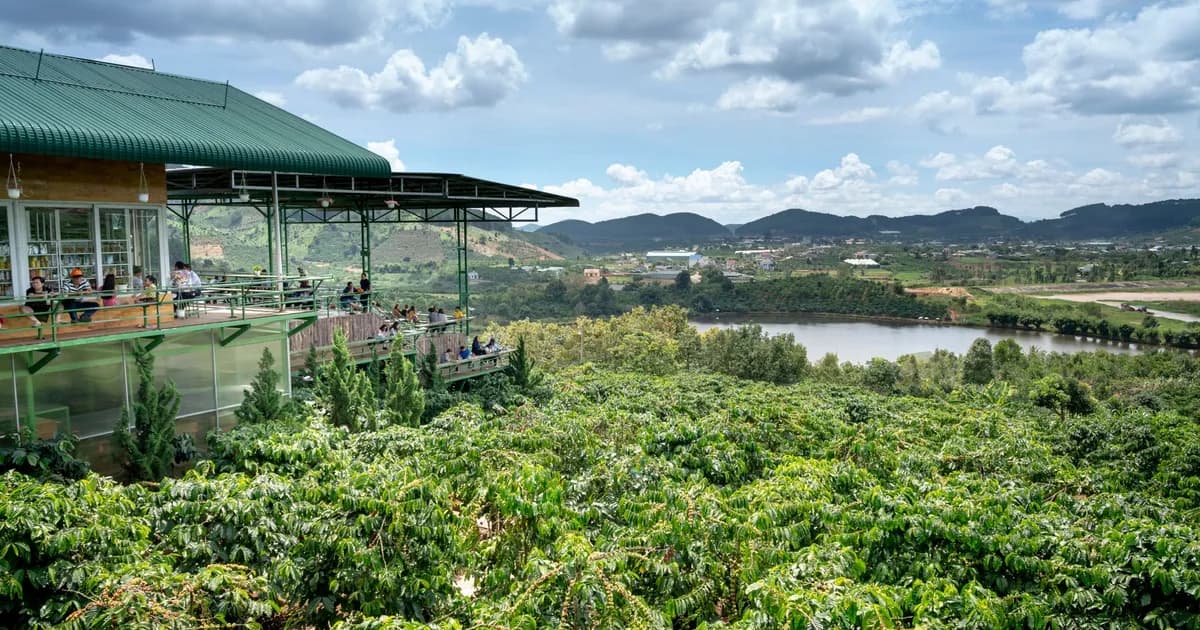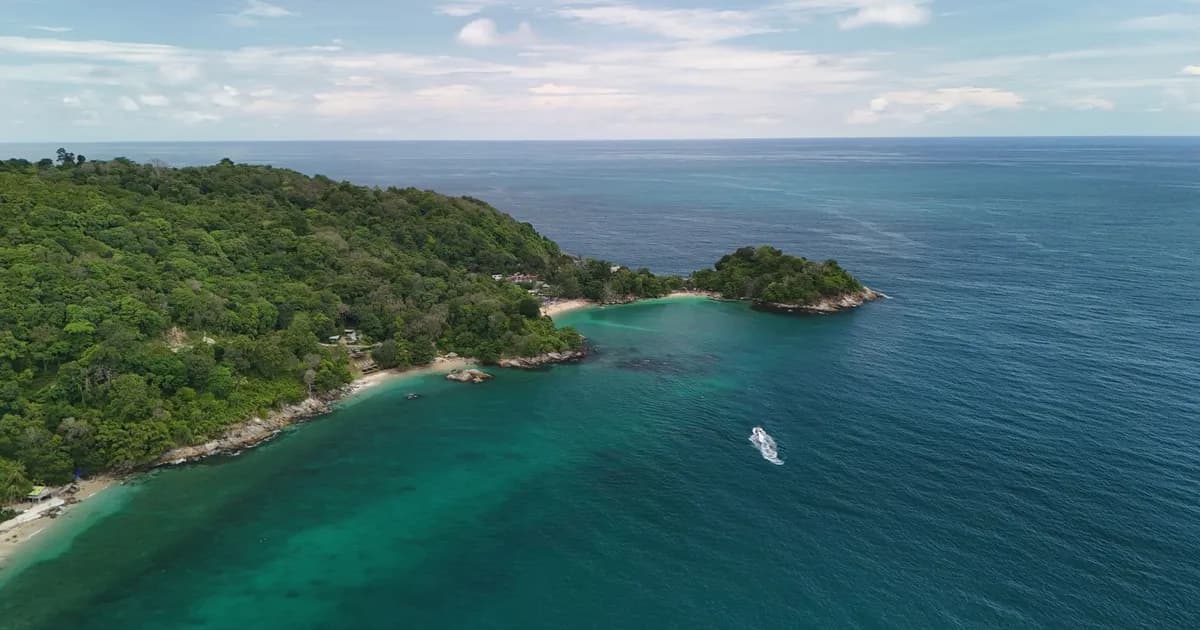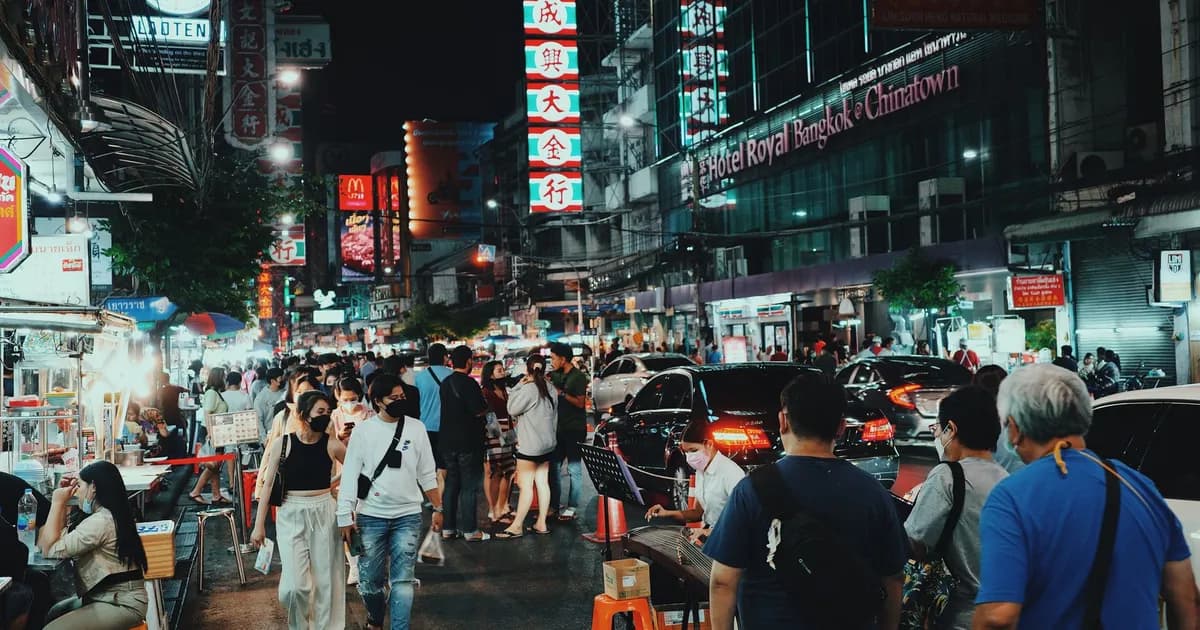


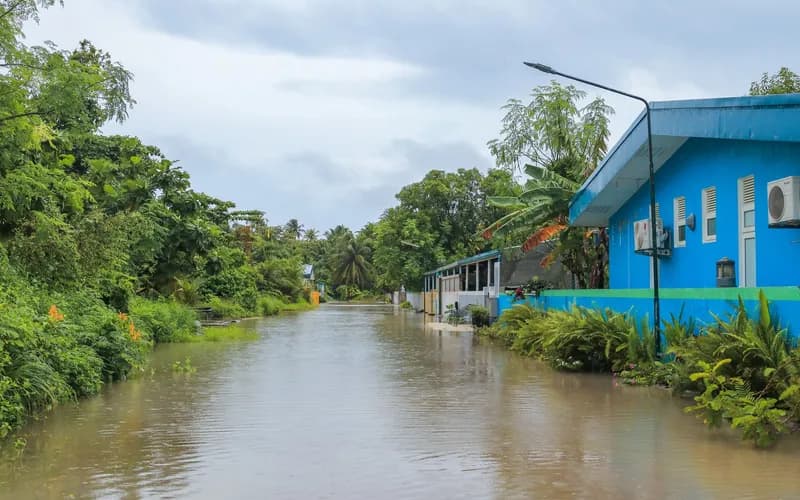
On 21 November 2025, Hat Yai recorded around 335 millimetres of rain in a single day. Thailand's Royal Irrigation Department described it as the heaviest rainfall the area had seen in three hundred years. Water rose to two and a half metres in parts of a district of more than four hundred thousand people, a maternity ward was left stranded, and by the time the flooding across the south had run its course, at least 162 people had died in eight provinces, with Songkhla alone accounting for the great majority. More than a million households and several million people were affected across a dozen southern provinces. Nine months on, the water is long gone and the story it left behind is still shaping where travellers go in Thailand.
What actually happened in the south
The November 2025 floods were not an ordinary monsoon event. Southern Thailand floods most years, and Hat Yai in particular has a long history of it, including serious inundations in 2000 and 2010. What made this different was the sheer intensity of rainfall in a short window, falling on a catchment that has been progressively hardened by concrete, and draining through a canal system that could not move water fast enough. Analysts writing afterwards described Hat Yai as a city built against its own hydrology rather than with it.
The economic figure most often quoted for total damage and loss across the affected area is upwards of seven hundred million US dollars, with some estimates pushing past seven hundred and eighty million. A state of emergency was declared in Songkhla and Hat Yai was designated a disaster zone. More than a thousand foreign tourists needed assistance getting out. These are the numbers that made international news for about a fortnight and then stopped being reported, which is roughly the normal life cycle of a disaster story.
One request. Up to five tailored proposals.
Skip contacting agencies one by one — share your trip once and let up to five trusted Thailand agencies come to you. Free, with no obligation.
Get my free quotesThe recovery is real, and it is uneven
The honest summary in 2026 is this: the infrastructure came back quickly, the businesses did not come back evenly. Airports, trains, buses and roads across the south returned to normal service. Phuket and Krabi, which were far less affected than Songkhla in the first place, were operating fully within weeks. Nearly all hotels in Hat Yai have reopened.
But hotels are the strong end of the market. Most of them restored their own premises using their own capital, because a hotel typically has a balance sheet that can absorb it. The small and medium enterprises that make a place worth visiting, the family restaurants, the market stalls, the tour operators running two vans, the dive shops, the guesthouses, have had a much harder recovery. Local chamber of commerce voices have been openly anxious about the pace, and the reason they give is not lack of will but lack of confidence: nobody wants to sink savings into rebuilding a shopfront when the probability of another large flood feels high. That psychological damage lasts longer than the physical kind and is much less visible to a visitor walking down a repainted street.
The tourism numbers tell two stories at once
Thailand as a whole opened 2026 strongly, with record arrival figures in the first weeks of January and a national target of around 36.7 million foreign visitors for the year. Read that headline alone and you would conclude the south was fine.
The regional picture is different. Hotel and tourism associations in Songkhla have estimated losses in the order of seven billion baht in tourism revenue attributable to the floods and their aftermath. That figure combines direct flood damage, months of cancelled bookings, the sharp fall in Malaysian weekend visitors who are Hat Yai's core market, and the loss of the SEA Games hosting that the city had been building towards. Hat Yai's economy is unusually dependent on a single short-haul market driving over the border for two or three nights of eating and shopping, and when that market hesitates, the whole town feels it immediately.
By early 2026 Malaysians were crossing the southern border again in meaningful numbers and some were returning to Hat Yai rather than continuing to Phuket or Bangkok. That is a genuine recovery signal. It is also fragile, and it depends heavily on there not being a second bad rainy season.
Get matched with up to 5 trusted Thailand agencies
- Free
- No obligation
- Up to 5 agencies
Where the visitors went instead
Displacement is the part of this story that travellers should pay most attention to, because it is already changing the shape of southern itineraries. When Hat Yai went offline, the Malaysian market did not stop travelling. It redistributed. Betong in the far south, Sungai Kolok on the eastern border, Phatthalung between the lake and the mountains, and the established Andaman coast destinations of Krabi and Phuket all picked up traffic.
Some of that traffic will go back. Some will not, because people discovered places they liked. Phatthalung in particular has quietly benefited: it is a province of lake, limestone and rice fields that had almost no international profile and is now on more radars than it was two years ago. This is exactly the kind of unplanned diversification that Thailand's tourism authorities have been trying to engineer deliberately, as we covered in our piece on Thailand's push into secondary cities. It took a catastrophe to accelerate it in the south, which is not a model anyone would choose.
This is a climate story, not a freak story
It is tempting to file a three-hundred-year rainfall event under bad luck. That framing is becoming untenable. Rainfall intensity in the region has been trending upward, urban expansion in Hat Yai and elsewhere has reduced the ground's capacity to absorb anything, and drainage infrastructure designed for twentieth-century rainfall patterns is being asked to handle twenty-first-century storms. Governance is fragmented across irrigation, municipal, provincial and disaster-management bodies, and the November response exposed how badly that fragmentation performs under pressure. The prime minister publicly acknowledged failures in the response.
For travellers, the practical consequence is straightforward and unglamorous: the southern wet season deserves more respect than it usually gets in trip planning. The Gulf coast and the deep south run their heaviest rain from October to December, out of phase with the Andaman coast, and that seasonal split is the single most useful fact about travelling in southern Thailand. Our guide to choosing which Thai island suits your season explains the mechanics of the two-monsoon system in detail. What 2025 added was a reminder that the tail risk in those months is not just a spoiled beach day.
What the tourism authority is doing, and what it cannot do
The Tourism Authority of Thailand moved fairly quickly with a marketing response, launching a southern recovery campaign under the banner of bringing smiles back to the south, and moving national-scale events into the affected area. The Amazing Thailand Chinese New Year celebration was held in Hat Yai in February 2026, running across four days with performances brought in from Fujian, with officials projecting several hundred million baht of circulation into the local economy from the event and its associated activity.
Event-led recovery works, up to a point. It fills hotels for a weekend and puts images of a functioning city back into circulation, which matters when perception is the main barrier. What it does not do is recapitalise a noodle shop that lost its equipment, or reduce the flood risk that is deterring reinvestment, or bring back the SEA Games. A marketing campaign is a demand-side instrument applied to what is substantially a supply-side and infrastructure problem. The useful thing a visitor can do is engage with the part of the economy that the campaign cannot reach, which means spending at street level rather than only inside a hotel.
What this changes about planning a southern trip
Three things follow for anyone planning southern Thailand in the next year or two.
- Season selection matters more than it did. If your dates fall between October and December and your route runs down the Gulf side or into the deep south, build genuine flexibility into the itinerary, keep a day or two of slack, and do not book a chain of non-refundable one-night stops.
- Insurance detail matters more than it did. Check specifically whether your policy covers trip interruption and additional accommodation costs due to natural catastrophe, not just medical events. Many cheap policies do not.
- Where you spend matters more than it did. In a recovering local economy, the marginal baht spent with an independent operator does considerably more work than the same baht spent through an international booking platform that takes a cut and remits little locally. That principle sits at the centre of our slow travel charter, and the post-flood south is about as clear an illustration of it as exists.
The case for going anyway
None of this is an argument for avoiding the south. It is close to the opposite. A destination recovering from a disaster passes through a well-documented cycle: acute crisis, media attention, media departure, and then a long quiet period in which the place is entirely functional but visitor numbers have not caught up with reality. That gap is where the damage compounds, because businesses that survived the flood get killed by the following empty season.
Hat Yai in 2026 is a working city with open hotels, a famous night market, and one of the better street food cultures in Thailand. Songkhla old town, half an hour away, is a genuinely lovely Sino-Portuguese quarter that most foreign visitors have never heard of. Phatthalung, Trang, Nakhon Si Thammarat and Satun form a stretch of the country with lakes, karst, waterfalls and coastline and almost no international crowd. If you have been looking for somewhere in Thailand where your presence has a visible economic effect on the people you meet, this region currently qualifies more than almost anywhere else, and the community-based tourism networks described in our article on Thailand's regenerative tourism turn are active across it.
What to Do Next
- Choose your window. For the deep south and the Gulf side, February to July is the low-risk period. October to December is when you need contingency plans, not just an umbrella.
- Check current conditions before you commit. Thai Meteorological Department warnings and provincial announcements are the primary sources; news coverage lags by days.
- Build a route that includes at least one flood-affected town, such as Hat Yai, Songkhla or Phatthalung, rather than routing around the region entirely.
- Book independent accommodation directly where you can, and eat at markets and family restaurants rather than only in hotels. That is where recovery money is short.
- Buy travel insurance that explicitly names natural catastrophe and trip interruption, and read the exclusions rather than the summary page.
- Keep two flexible days in any southern itinerary between October and December, and avoid non-refundable single-night bookings in a chain.
- Use our Thailand trip planning resources to sequence the south against the rest of your route so you are not fighting two monsoons at once.
Frequently Asked Questions
Is southern Thailand safe to visit in 2026?
Yes, in the ordinary sense. Transport, airports, hotels and attractions across Phuket, Krabi, Hat Yai and the wider south are operating normally. The residual issue is not safety but seasonal risk during the October to December rains and the economic fragility of small businesses, both of which affect planning rather than personal security.
Should I avoid Hat Yai?
No. Hat Yai has reopened and its hotels, markets and restaurants are working. Visiting is materially more useful to the local economy than avoiding it. What is worth doing is checking weather warnings if you are going in the late-year rainy months, and choosing accommodation that is not in the lowest-lying part of the city if that is easy to arrange.
When is the rainy season in southern Thailand?
The south has two patterns. The Andaman coast, including Phuket and Krabi, gets its heaviest rain roughly May to October. The Gulf side and the deep south, including Songkhla, Hat Yai and Koh Samui, peak later, around October to December. The November 2025 event fell squarely in that second window.
Are prices lower in the recovering areas?
Not dramatically. Thai domestic pricing in the south did not collapse, and a stronger baht has actually made Thailand more expensive in foreign-currency terms over the last year. What you get is availability and space rather than discounts: fewer people competing for the same table, room or boat.
Will there be another flood like this?
Nobody can predict a specific event, but the underlying conditions, higher rainfall intensity, hardened urban catchments and drainage built for older rainfall norms, have not been resolved in nine months. Treat serious flooding in the late-year window as a real if low-probability risk in any given trip, and plan flexibility accordingly.
How can I tell whether a business I book with is locally owned?
Ask directly, book by email or phone rather than through an aggregator, and look for operators that name the people who run them. Community-based tourism networks and provincial homestay associations publish member lists, and licensed local agencies are registered with the Department of Tourism, which is verifiable.