
Thailand has decided that more tourists is no longer the goal. After decades of chasing arrival numbers, the country's official strategy for 2026, branded "The New Thailand," puts quality, sustainability and regenerative experiences ahead of raw volume. It is a genuine shift in language and policy, and for the slow traveler it is an invitation. But it is also worth reading with clear eyes, because the gap between a tourism board's vocabulary and what actually happens in a village can be wide. This article lays out what is really changing, what to be skeptical of, and how to travel Thailand in 2026 so that your money and your footprint land where they should.
Regenerative tourism is a step beyond sustainability. Where sustainable travel tries to do less harm, regenerative travel aims to leave a place better than you found it, channeling spending into local hands, supporting conservation, and reinforcing the culture and ecology that made the destination worth visiting. Thailand is now using that word officially. The question for travelers is how to turn the policy into practice.
It helps to understand why the shift is happening now. For years, Thailand measured tourism success almost entirely in arrival numbers, and the costs of that approach became impossible to ignore: overcrowded beaches, strained water and waste systems in island towns, eroded reefs, and local communities that saw the crowds but little of the money. The pivot toward quality and regeneration is partly an environmental response and partly an economic one, an attempt to capture more value per visitor while spreading the benefits more widely. For the traveler, that alignment of interests is good news, because it means the kind of trip that is better for Thailand is increasingly the kind of trip Thailand wants to sell.
What "The New Thailand" actually says
The headline of the 2026 strategy is a deliberate move away from chasing record arrival figures toward prioritizing quality, sustainability and regenerative experiences. The Tourism Authority of Thailand (TAT) is steering visitors toward secondary cities and lesser-known regions, promoting community-based tourism, and setting concrete accreditation targets rather than only arrival targets.
That last point matters because it is measurable. TAT has set a target for 70 percent of tourism businesses to be STAR-accredited by the end of 2026, a sustainability standard meant to push hotels, operators and attractions toward greener practice. The authority is also promoting carbon-neutral tourism across all 77 provinces, with an emphasis on energy-efficient transport, local food sourcing, green accommodation and waste reduction. These are the kinds of goals that, if met, change the texture of a trip rather than just its branding.

One request. Up to five tailored proposals.
Skip contacting agencies one by one — share your trip once and let up to five trusted Thailand agencies come to you. Free, with no obligation.
Get my free quotesThe concrete programs to know
The strategy is not only rhetoric. In July 2025, TAT launched the Thailand Green Tourism Collections, a set of 20 sustainable routes spread across 10 designated Green Cities. The collections are designed to bundle low-impact experiences, local stays and community enterprises into itineraries travelers can actually book and follow.
Specific examples give the idea texture. The Khlong Thom Hot Springs in Krabi, recognized by the Green Destinations program, pair natural bathing with conservation messaging. Traditional weaving in Chiang Mai channels visitor interest and spending into a craft that sustains households and keeps a skill alive. Across the country, the emphasis falls on community-based tourism, or CBT, in which villages host visitors on their own terms and keep the income locally rather than seeing it siphoned off to distant operators.
The momentum is institutional too. In April 2026, Phuket hosted the Global Sustainable Tourism Council conference, a signal that Thailand wants to be seen as a serious player in the sustainability conversation, not merely a beach to be consumed.
The honest gap between marketing and reality
Here is where slow, honest travel earns its keep. Sustainability language is easy to print and hard to deliver. A "green" label on a hotel can mean a genuinely retooled operation or it can mean a sign in the bathroom asking you to reuse your towel. A "community-based" tour can route most of its revenue back to a city-based agency, with the village receiving a thin slice. The existence of a strategy, a target and a launch event does not guarantee that the money reaches the people and places it is meant to.
This is not cynicism, it is diligence. The accreditation targets are aspirations, not current facts, and a 70 percent figure for the end of 2026 tells you that a large share of businesses are not yet there. Treat the official framing as a useful map of intentions, then verify on the ground: ask who owns the guesthouse, who guides the tour, where the food comes from, and where your fee actually goes. The shift Thailand is describing is real, but it becomes real for any given traveler only through the choices that traveler makes. The broader market context, why value is replacing volume as the organizing idea of Thai tourism, is worth understanding before you book, and our piece on value as the new volume sets it out.
Get matched with up to 5 trusted Thailand agencies
- Free
- No obligation
- Up to 5 agencies
How to actually travel regeneratively
The good news is that travelers have real leverage, and the slow-travel approach happens to align almost perfectly with regenerative principles. A few concrete moves do most of the work:
- Stay longer in fewer places. Depth beats distance. A week in one region spreads your spending across the same local economy day after day and cuts the carbon of constant transit.
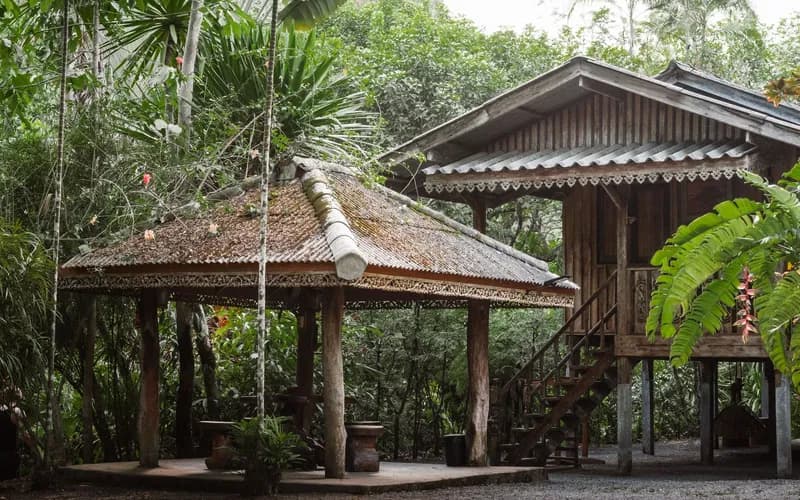
- Choose locally owned stays. A family guesthouse or a village homestay keeps your money in the community in a way an international chain rarely does.
- Book CBT homestays where they exist. Community-based tourism is the clearest mechanism for channeling income to villages, provided it is genuinely village-run.
- Eat local. Local food sourcing is part of the official strategy for a reason; eating at family-run kitchens and markets keeps money circulating nearby.
- Spread your spend to secondary towns. The crowds and the leakage are worst in the marquee destinations. Heading to lesser-known towns both relieves pressure and sends money where it is needed.
If avoiding crowds is part of your motivation, the mechanics overlap heavily with regenerative travel, and our guide to Thailand off the beaten path is a practical starting point for choosing where to go.
Choosing operators and stays that mean it
When you cannot personally verify a place, the booking layer matters. Look for operators who are transparent about ownership and revenue sharing, who employ local guides, and who can tell you specifically how a community benefits. Recognitions like Green Destinations or STAR accreditation are signals, not guarantees, but a place that has pursued them has at least invested effort. Ask direct questions; legitimate community enterprises tend to answer them readily. Be wary of vague claims and glossy language with no specifics behind them. A genuine operator can name the village it works with, explain how earnings are split, and describe the conservation or cultural work your visit supports. A greenwashed one will deflect to abstractions about caring for the environment and respecting local culture without ever telling you where your money goes. The difference usually becomes clear within a couple of pointed questions.
For travelers who want a vetted route into all this, working through a trusted intermediary can shortcut a lot of guesswork. Our overview of Thailand travel agencies explains how to find partners aligned with this kind of travel, and the principles behind UNRUSH's own approach are set out in our slow-travel charter.
Where this is heading
Thailand's pivot is part of a wider regional and global reckoning with what mass tourism costs. The country has the scale, the institutions and now the stated intent to make regenerative travel mainstream rather than niche. Whether it succeeds depends partly on policy follow-through and partly on demand: if travelers reward genuinely regenerative operators and bypass greenwashed ones, the market moves in the right direction. The slow traveler is therefore not a passive beneficiary of this shift but an active participant in it. Every booking is a small vote for the kind of tourism that endures, and the cumulative effect of those choices is what will ultimately decide whether The New Thailand becomes a genuine transformation or merely a well-designed campaign. Travelers who understand this carry more influence than they might assume, simply by being deliberate about where they sleep, eat and spend.
What to do next
- Pick one or two regions rather than a national checklist, and plan to stay long enough in each to slow down.
- Prioritize locally owned guesthouses and, where available, genuine CBT homestays over chains.
- Look at the Thailand Green Tourism Collections and the Green Cities for itinerary ideas, then verify the specifics.
- Ask every operator who owns the business, who guides, and how the community benefits before you book.
- Plan to eat at local kitchens and markets, and to shop from local makers such as Chiang Mai weavers.
- Steer at least part of your trip toward secondary towns to spread your spending and ease pressure on hotspots.
Frequently Asked Questions
What is the difference between sustainable and regenerative tourism?
Sustainable tourism tries to minimize harm. Regenerative tourism goes further, aiming to leave a place better than you found it by channeling money to local people, supporting conservation, and strengthening culture and ecology. Thailand's 2026 strategy uses the regenerative framing explicitly.
What is "The New Thailand" strategy?
It is Thailand's official 2026 tourism direction, prioritizing quality, sustainability and regenerative experiences over record arrival numbers. It promotes secondary cities, community-based tourism, carbon-neutral practices across all 77 provinces, and a target of 70 percent STAR-accredited businesses by the end of 2026.
What is community-based tourism (CBT)?
CBT is tourism in which a village or community hosts visitors on its own terms and retains the income locally, rather than having revenue captured by distant operators. It is the clearest mechanism for making sure tourist spending actually reaches the community.
Are Thailand's green tourism claims trustworthy?
The strategy and programs are real, but labels do not guarantee impact. Accreditation targets are aspirations, not current facts, and some "green" or "community" offerings deliver less than they promise. Verify on the ground by asking about ownership, guiding and where your money goes.
How can I travel Thailand regeneratively as an individual?
Stay longer in fewer places, choose locally owned stays and CBT homestays, eat at local kitchens, buy from local makers, and spread your spending to secondary towns. These slow-travel habits align closely with regenerative principles.
What are the Thailand Green Tourism Collections?
Launched by TAT in July 2025, they are 20 sustainable routes across 10 designated Green Cities, bundling low-impact experiences, local stays and community enterprises into bookable itineraries.
Does regenerative travel cost more?
Not necessarily. Staying longer in one place and choosing family-run guesthouses and local food can be very affordable, often cheaper than fast-paced, chain-heavy travel. The main cost is time and intention rather than money.