
How to Read Vietnam's Climate Before You Book: A Region-by-Region Guide
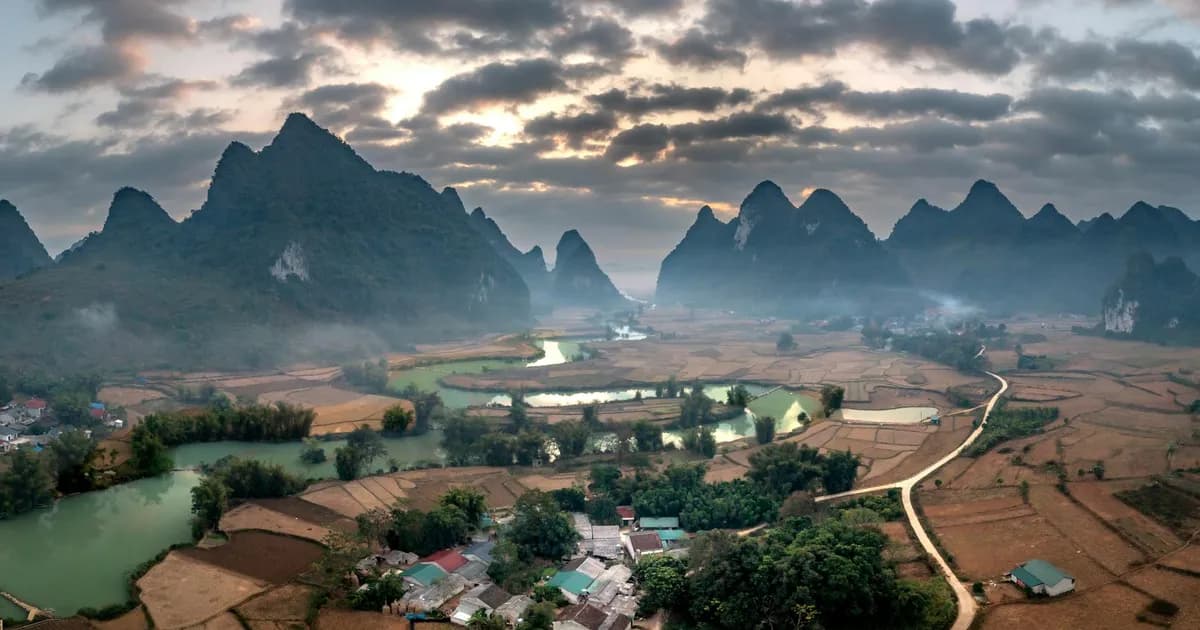
Vietnam's climate does not behave as a single system. The country stretches across more than 1,600 kilometres and 15 degrees of latitude, combining coastline, river deltas, and mountain ranges into three distinct weather regimes that frequently move in opposite directions. A month that delivers clear skies over Hanoi's Old Quarter can be flooding Hoi An's ancient streets. Understanding this before you book is not a minor detail — it is the difference between a journey that flows and one that fights the land at every turn.
This guide breaks Vietnam's climate into its actual components: north, central, and south, with the microclimates that matter within each. It then gives you a month-by-month planning grid and a short list of actions to take before you confirm your dates.
How Vietnam's Monsoon System Works
Two monsoon systems shape the country's weather. The northeast monsoon brings cooler, drier continental air from roughly October through April, with its strongest influence on the north and north-central coast. The southwest monsoon pushes warm, moist air from the Indian Ocean and Gulf of Thailand from approximately April through September, driving the rainy seasons across the south and central highlands.
Because Vietnam's regions sit at different latitudes and elevations, these systems do not arrive or depart everywhere at once. The south transitions into its dry season in December while the central coast is still managing typhoon risk. The north enters its clearest autumn window in October while Hue and Hoi An face their wettest weeks of the year. Altitude compounds this further: mountain towns like Sapa and Da Lat operate on entirely different thermal registers than sea-level Saigon.
The practical implication is simple. There is no single "best month" for Vietnam as a whole. There is always somewhere with good conditions — the skill is knowing where that is, and routing accordingly.
One request. Up to five tailored proposals.
Skip contacting agencies one by one — share your trip once and let up to five trusted Vietnam agencies come to you. Free, with no obligation.
Get my free quotesNorthern Vietnam: Hanoi, Halong Bay, Ninh Binh, Sapa
The north has four genuine seasons, a rarity in Southeast Asia. This gives it a distinct character in each quarter of the year — and distinct risks.
Winter (December–February)
Hanoi and the Red River Delta turn cool, grey, and often drizzly under the northeast monsoon. Daytime temperatures in January average around 17–20°C, but the damp air makes it feel colder. In the mountains, Sapa can drop below freezing at night, with frost in some years. Halong Bay stays relatively dry but low cloud and fog frequently limit visibility on the water — a real consideration if a cruise is central to your plans.
Spring (March–April)
Conditions improve steadily. Hanoi warms and clears by late April. The mountain valleys green up and trekking becomes increasingly pleasant. Some drizzle persists in March, but this is one of the more forgiving windows for a north-to-south itinerary.
Summer (May–August)
The southwest monsoon brings heat, humidity, and heavy rain. July and August are Hanoi's wettest months. In the northern highlands, this period carries genuine landslide and flooding risk — Sapa and Ha Giang are at their least safe and least scenic for trekking. Mean summer temperatures in the north run 25–30°C, with the highest values in May through July.
Autumn (September–November)
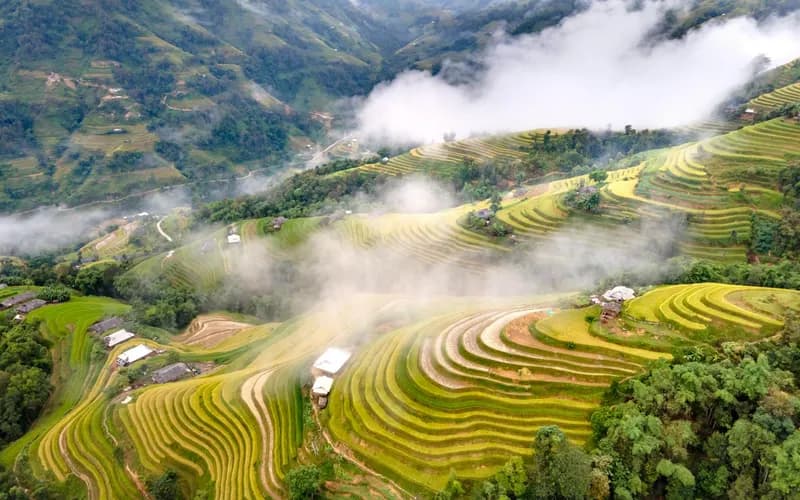
Widely regarded as the north's finest season. Skies clear, humidity drops, and temperatures settle into a comfortable range. The rice terraces at Mu Cang Chai and Sapa reach harvest colour in September and October. October and November in Hanoi offer some of the most pleasant urban conditions in the country.
Best windows: Trekking and terraces — late September to November, or March to April. City and culture — October to November, or March to April. Avoid July and August for mountain routes.
Central Vietnam: Hue, Hoi An, Da Nang, Nha Trang, Da Lat
The central coast has its own rainy season, shifted later in the year than both north and south. This is the region that most often catches travellers off guard.
The Coast (Hue, Da Nang, Hoi An, Nha Trang)
From roughly February through August, the central coast is largely dry, sunny, and warm — often intensely hot between May and August, with temperatures regularly above 30°C. This is the reliable beach window.
From September onward, the picture changes sharply. The rainy season on the north-central coast begins around August to September, peaks in October and November, and eases by December. This period also carries the highest typhoon risk, as tropical storms track into the South China Sea during those same months. Flooding in Hoi An's low-lying old town is not unusual in October and November — it is a recurring seasonal event.
One local nuance worth knowing: Hue sits north of the Hai Van Pass and receives more northeast monsoon rain than Da Nang or Hoi An, making it wetter and cooler in the winter months even when conditions further south are acceptable.
The Central Highlands (Da Lat, Buon Ma Thuot)
The highlands follow a different rhythm. The rainy season runs from April or May through October or November, peaking around August. But altitude keeps temperatures mild year-round — annual averages around 21–23°C — making Da Lat a genuine escape from coastal heat in the mid-year months. December through March is the driest and most comfortable window for hiking and cycling here.
Best windows: Hue to Hoi An — February through August, with February to April slightly cooler and more comfortable. Avoid October and November for the coast. Da Lat and highlands — December through March for dry conditions; May through September still workable but expect afternoon rain.
Get matched with up to 5 trusted Vietnam agencies
- Free
- No obligation
- Up to 5 agencies
Southern Vietnam: Ho Chi Minh City, Mekong Delta, Phu Quoc, Con Dao
The south operates on a straightforward two-season model. Temperatures stay high and relatively stable year-round — Ho Chi Minh City averages around 30°C during the day, with an annual mean near 27°C. The variable is rain, not temperature.
The dry season runs from December through April. Skies are clear, humidity is lower, and this is the most comfortable period for city sightseeing, Mekong boat trips, and island beaches. Phu Quoc and Con Dao are at their best from December through March, with calm seas and good diving visibility.
The wet season runs from May through November. Rain does not mean all-day downpours — the pattern is typically a sharp, heavy shower in the afternoon, often lasting two to three hours, followed by clearing. Travellers who plan outdoor activities in the morning and keep afternoons flexible manage this season well. Flooding can affect low-lying streets in Ho Chi Minh City and rural areas of the Mekong Delta around the September to October peak.
Best windows: December through April for beaches, islands, and Mekong trips. May through November is workable with adjusted daily scheduling — mornings outdoors, afternoons flexible.
Month-by-Month Planning Grid
Use this as a starting framework, not a guarantee. Weather has natural variation year to year.
| Month | North | Central Coast | South | Routing logic |
|---|---|---|---|---|
| Jan | Cool, grey, dry in Hanoi; cold in Sapa | Mostly dry, can be cool and windy in Hue | Dry, hot, sunny | Start south, brief north for city culture |
| Feb | Slightly milder; still cool | Dry, warming; good for Hoi An | Dry, hot, sunny | Three-region trips feasible |
| Mar | Warming, clearer; good nationwide | Dry, warm, sunny beaches | Dry or isolated showers | Classic north–central–south month |
| Apr | Warm, good for mountains; showers rising | Still largely dry, getting hot | Rainy season starts; many dry days | Start south before heavy rain, move north |
| May | Hot, humid; storms increasing | Very hot, mostly dry | Wet season begins; afternoon downpours | Central coast and highlands; mornings outdoors |
| Jun | Hot, rainy; storm risk | Hot, sunny; intense heat | Wet; daily showers | Central beaches and Da Lat; keep north brief |
| Jul | Wettest north; flood risk in mountains | Hot, mostly dry; typhoon risk builds | Wet but predictable | Avoid Sapa and Ha Giang; consider southern islands |
| Aug | Very wet north; storm risk | Late-summer heat; rainy transition starts | Wet; high humidity | Cultural and indoor focus; skip mountain trekking |
| Sep | Cooling; rice harvest colour in mountains | Rainy season ramps up; storms possible | Wet but easing late in month | Excellent for northern landscapes; keep central flexible |
| Oct | Excellent: clear, mild, autumn light | Peak rain and typhoon risk | Wet; some Mekong flooding | Focus north; delay central coast |
| Nov | Very good: cool, clear | Still stormy; floods possible | Transitioning to dry | North and south city; largely skip central coast |
| Dec | Cool to cold; frost in highlands | Rainy but easing; Nha Trang often drier | Dry, hot, sunny | Classic south-first itineraries, then selective central and brief Hanoi |
What to Do Next
Before you confirm dates or book accommodation, work through these steps in order.
-
Identify your priority experiences first. Rice terrace trekking, beach time, city culture, and highland hiking each have different optimal windows. List what matters most — then check which months serve those experiences.
-
Choose a routing direction based on your travel month. December through February generally favours starting in the south and moving north. September through November favours starting in the north and finishing in the south. March and April allow either direction.
-
Build buffer nights into storm-prone regions. If your itinerary includes the central coast between September and November, schedule at least two to three nights in Hue or Hoi An rather than a single day. One washed-out day becomes manageable; a single-day window is a gamble.
-
Check the Vietnam National Administration of Tourism's regional climate guide for the specific months you are considering. It breaks conditions down by region and is regularly updated.
-
Pack for genuine seasonality. A light down layer and a packable rain shell are essential for winter in the north and the mountains. Breathable, sun-protective clothing matters as much in the central and southern heat. Do not assume Vietnam means warm weather everywhere.
-
Leave room for the unexpected. Climate projections for Vietnam point toward more intense rainfall events and greater variability in monsoon timing. Build at least one flexible day per week into a longer itinerary — not as a contingency, but as a feature of slow travel.

Frequently Asked Questions
Is there one month when the weather is good across all of Vietnam?
March and early April come closest. Conditions are generally dry and warm in the north, dry and sunny on the central coast, and still largely dry in the south before the wet season begins. No month is perfect everywhere, but this window has the fewest regional conflicts.
Why do so many travel articles say November is a great time to visit Vietnam?
November is genuinely excellent for northern Vietnam — clear skies, mild temperatures, low humidity. The problem is that the same month is peak flood and typhoon season on the central coast. Articles that treat Vietnam as a single destination compress this distinction into a single recommendation, which misleads travellers planning to visit Hue or Hoi An.
How cold does it actually get in Hanoi and Sapa in winter?
Hanoi's coldest month is January, with typical daytime temperatures around 17–20°C. Nights can feel significantly colder given the damp air. In Sapa and the northern highlands, temperatures can fall below 0°C at night, and frost occurs in some years. Visitors expecting tropical warmth throughout Vietnam are often caught off guard.
Can I visit Halong Bay in winter?
Yes, but with caveats. Winter is relatively dry on the bay, which is a point in its favour. However, low cloud and fog are common under the northeast monsoon and can significantly reduce visibility — affecting both the scenery and photography. Cruise operators can also suspend departures at short notice during high winds or severe weather warnings, even when conditions appear acceptable from Hanoi.
Is the rainy season in the south a reason to avoid it entirely?
No. The southern wet season from May through November follows a predictable pattern of sharp afternoon showers rather than all-day rain. Travellers who structure their days accordingly — outdoor activities in the morning, flexible afternoons — find it entirely manageable. Prices are also lower, and crowds thinner.
What is the best time to see the rice terraces in Sapa and Mu Cang Chai?
Late September through early October is the harvest window, when the terraces turn gold and amber. This is also one of the north's finest weather periods — cooling temperatures, lower humidity, and clearer skies than the summer months. Expect some chance of showers, but conditions are generally far better than the July and August peak of the wet season.
Should I travel north to south or south to north?
It depends on your travel month. December through February generally favours starting in the south, where conditions are dry and sunny, then moving north as the trip progresses. September through November works better in reverse — begin in the north during its excellent autumn window, then move south as the central coast storm season peaks and the south begins to dry out. March and April are flexible enough to work in either direction.