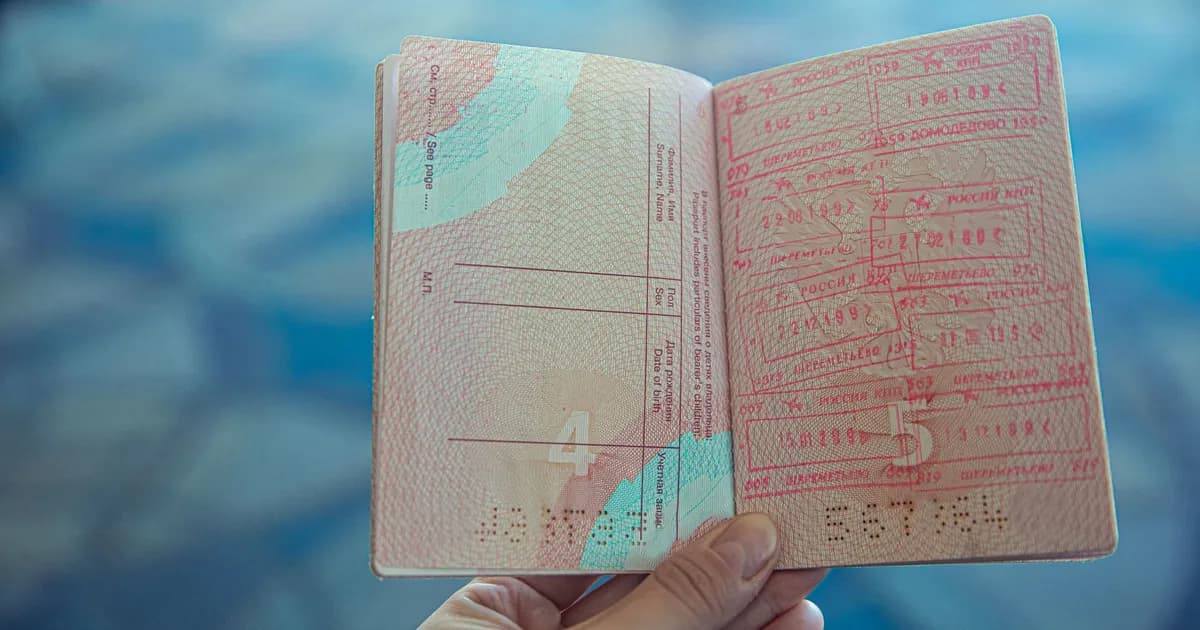


Most travellers will pass through Cambodia in 2026 without ever hearing the word FPCS. A minority will hear it at exactly the wrong moment, standing at an immigration counter being told their visa extension cannot be processed. The difference between those two groups is not luck. It is whether the person who rented them a room typed their passport details into a government app.
What FPCS Is
At a glance
- FPCS
- Foreigners Presence in Cambodia System
- Who registers
- hotels, landlords or hosts
- Needed for
- visa extensions
- Cost to travellers
- none
- Access
- FPCS-GDI app (Android/iOS) and web portal
FPCS stands for the Foreigners Presence in Cambodia System, sometimes rendered in English-language reporting as the Foreigners' Presence Control System. It is an online database, run by the General Department of Immigration together with the Cambodian National Police, that records where every foreign national in the country is staying.
It is not a visa, not a permit and not something you apply for. It is a registry of addresses. The stated purposes are straightforward: to know where foreigners are living and staying, to support policing and emergency response, and to make sure people are resident at the addresses they declare.
Access is through an app published by the General Department of Immigration, listed as FPCS-GDI on Android and iOS, alongside a web portal. Both are built for property owners and accommodation managers rather than for travellers, which is the source of most of the confusion around the system.
One request. Up to five tailored proposals.
Skip contacting agencies one by one — share your trip once and let up to five trusted Cambodia agencies come to you. Free, with no obligation.
Get my free quotesWho It Applies To
The scope is broad. FPCS formally covers all foreign nationals present in Cambodia holding a visa issued by the General Department of Immigration. That includes E-type visas and their extensions for business, employment, retirement and study, and it includes ordinary tourists staying in registered accommodation.
In other words, if you are a foreigner sleeping at an address in Cambodia, that address and your presence at it are supposed to be in the system. Hotels, guesthouses, serviced apartments, condominiums, borey houses, villas and rented rooms are all covered, for short stays as well as long ones.
In practice, the system's visibility varies enormously. If you are on a two-week trip staying in hotels, you will very likely never notice it. If you are extending a stay, renting privately, or moving between informal accommodation, it becomes something you need to manage.

Whose Job Is It
- Step 1Your host creates an FPCS account and registers the property
- Step 2They add you with your passport and visa details
- Step 3They update the record when you arrive, move or leave
- Step 4With your presence on file, a visa extension can be processed
This is the point most travellers get wrong, in both directions. The legal responsibility for FPCS registration sits with the accommodation owner or manager, not with you. Immigration authorities have repeatedly stated this. The landlord, property owner or hotel manager is the one who must create an account, register the property, and add each foreign guest with their passport and visa details, updating the record as people arrive and leave.
You cannot register yourself in the ordinary case. There is no traveller-facing form to fill in, no queue to join and no fee to pay.
But responsibility and consequence are not the same thing. The host bears the legal duty; you bear the practical fallout if they ignore it. That asymmetry is the whole reason this article exists.
Get matched with up to 5 trusted Cambodia agencies
- Free
- No obligation
- Up to 5 agencies
Where It Bites: Visa Extensions
The clearest and most reported consequence is at extension time. Foreigners applying to extend a visa inside Cambodia have been told that their stay must be recorded in FPCS by their host for the application to proceed, with reporting pointing to this becoming firm practice from 1 July. Where a person's presence is absent from the database, extension requests can be refused or held up.
This does not usually affect a standard tourist visit. If you enter on a 30-day tourist visa and leave inside it, you will most likely never touch the system. It affects the people who stay: those extending a tourist visa for a second month, those on business-type visas doing six-month or twelve-month extensions, and long-stay travellers moving between rentals.
If an extension is part of your plan, treat FPCS registration as a prerequisite in the same way you treat a valid passport. Our separate guide to Cambodia visa extensions covers the fees, durations and overstay penalties that sit alongside it.
Hotels, Private Rentals and Homestays
Compliance is uneven, and the pattern is predictable.
- Established hotels and mid-sized guesthouses generally handle FPCS automatically. They already collect passports at check-in and have staff who do this daily. You will not be asked anything unusual.
- Small landlords and private apartment rentals are the main gap. Many owners are unfamiliar with the app, and some are actively reluctant, because registering a foreign tenant creates a documented record of rental income.
- Short-term rentals booked through international platforms are a grey zone. The host is still responsible, but there is no built-in prompt in the booking flow to make them act.
- Village homestays and community projects vary widely. Well-run community tourism operations usually have a process, often via the commune. Informal arrangements may not. Our guide to staying in Cambodian homestays is a good starting point for choosing hosts who work properly.
The practical rule: the more informal and the more private your accommodation, the more you need to check.
What You Should Actually Do
For a short holiday, nothing. Stay in normal accommodation, hand over your passport at check-in as usual, and the system takes care of itself.
For anything longer, or if an extension is on the horizon:
- Ask directly. A simple "are you registering me on FPCS?" is enough, and hosts who work with foreigners will understand the question immediately.
- Provide clean copies of your passport photo page and your current visa or entry stamp, promptly and without being chased.
- Check the details. Names, passport numbers and dates get mistyped, and errors are easier to correct early than at the immigration counter.
- Re-register when you move. A new address means a new entry by the new host, and the old one should be closed off.
- Keep evidence. Screenshots of messages in which a landlord confirms registration are worth having.
If a landlord flatly refuses, you have limited leverage and a decision to make. For a long stay, a host who will not register you is a host who may cost you your extension. That is usually reason enough to rent somewhere else.
How It Fits With Your Other Paperwork
FPCS is one of several digital layers Cambodia has added in recent years, and travellers routinely confuse them.
The e-Arrival card is a pre-departure declaration completed online before you fly, covering immigration, customs and health in a single submission. It is your responsibility, it happens before arrival, and it is unrelated to where you sleep. Our e-Arrival card guide explains the process and timing.
Your visa, whether obtained in advance online or on arrival, governs how long you may legally stay. FPCS does not extend or shorten it.
FPCS is the third layer: a continuous record of your address while you are in the country. Think of it as the modern version of the guest register that hotels have always kept, moved from a paper ledger into a national database and made consequential.
Penalties, and Why Some Hosts Resist
Enforcement falls on property owners. Reported penalty figures vary considerably between sources, from small administrative fines of tens of thousands of riel to figures around 400,000 riel per unregistered guest cited in 2026 coverage. We have not been able to confirm a single authoritative current schedule, and travellers should treat specific numbers with caution.
What is consistent across sources is the direction of travel: enforcement has tightened, and the link to visa extensions gives the system teeth that a fine alone would not.
The resistance from some small landlords is worth understanding rather than resenting. Registering a foreign tenant creates a documented rental relationship, with implications for income declaration. That is a real disincentive for informal landlords, and it is why the gap in compliance sits almost entirely in the private rental market rather than in hotels.
What Remains Unclear
We would rather flag uncertainty than paper over it.
The exact penalty schedule in force is inconsistently reported. The practical treatment of very short stays, single-night stops and guests in private homes rather than rentals is not uniformly applied. Procedures for foreigners who own their accommodation outright, or who stay with family, still appear to require case-by-case guidance from immigration. And because Cambodia is actively developing these digital systems, procedures can change with limited notice.
Where your stay depends on getting this right, the correct move is to confirm current practice with the General Department of Immigration or a reputable local visa agent rather than relying on any article. A trusted local operator is also a good source of current, ground-level information; our vetted list is on the Cambodia travel agencies page.
What to Do Next
- Decide whether this affects you at all. Short trips inside a single visa, staying in hotels, generally do not need action.
- If you plan to extend a visa in Cambodia, confirm with your accommodation in writing that you are registered on FPCS before you apply.
- Ask the question before you book a private rental or long-stay apartment, not after you move in.
- Hand over a clear passport copy and current visa page at check-in and volunteer them rather than waiting to be asked.
- Re-confirm registration every time you change address during a long stay.
- Verify anything time-critical with the General Department of Immigration or a reputable visa agent close to the date, since procedures continue to evolve.
- Read our analysis of Cambodia's quiet year for the wider context in which these controls are being tightened.
Frequently Asked Questions
Do I need to register myself on FPCS?
No. The legal obligation sits with your accommodation provider, who registers the property and each foreign guest. There is no traveller-facing registration process, form or fee. Your role is to supply accurate passport and visa details and to confirm it has been done.
Does FPCS affect a normal two-week holiday?
Almost never. If you stay in hotels or established guesthouses and leave within your visa validity, the registration happens invisibly at check-in and you will not notice it. The system becomes relevant when you extend your stay or rent privately.
Can a missing FPCS entry really block my visa extension?
Yes, that is the main practical risk. Reporting indicates that extension applications require the applicant's presence to be recorded in the system, and that requests can be refused where it is absent. Confirm your registration before applying rather than after.
What if my landlord refuses to register me?
You cannot compel them, and the obligation is legally theirs. For a short stay it may not matter. For a long stay or one involving an extension, a host who will not register you is a practical liability, and the sensible response is to rent elsewhere.
Is FPCS the same as the e-Arrival card?
No. The e-Arrival card is an online declaration you complete yourself before flying, covering immigration, customs and health. FPCS is an address registry maintained by your host while you are in the country. They are separate systems with separate purposes.
What are the penalties, and who pays them?
Penalties fall on property owners and managers rather than on guests. Reported amounts differ substantially between sources, from small administrative fines to figures around 400,000 riel per unregistered guest cited in 2026 reporting, so treat any single number with caution and check current guidance.
Does staying with friends or family count?
The system is written around accommodation providers, and treatment of private-home stays is applied less consistently. If you are staying with friends for a short period this is rarely an issue, but if a visa extension depends on it, seek specific guidance from immigration or a visa agent before you apply.