

On 5 September 2026, Cambodia's Ministry of Tourism published a figure that most travel media reported and few travellers absorbed: 1.99 million international arrivals in the first seven months of the year, down 46 percent on the same period in 2025. That is not a soft patch. That is roughly half the country's foreign visitors gone within a single year. Understanding why matters, because the reasons are specific, uneven, and directly relevant to how and where you travel here.
The Numbers, Plainly Stated
Cambodia received 5.57 million international visitors in 2025, generating about 3.87 billion US dollars in gross tourism revenue. That was already down from roughly 6.7 million in 2024. The 2026 collapse is therefore the second consecutive year of decline, and by far the sharper one.
Angkor tells the same story in miniature. The archaeological park recorded a little over 322,000 international visitors between January and April 2026, a fall of around 32 percent year on year. Note that Angkor's drop is meaningfully smaller than the national one. That gap is the most useful single fact in this whole picture, and we will come back to it.
The government has treated the situation as an economic emergency rather than a tourism inconvenience. In early September 2026 it announced a stimulus package worth roughly 1.24 billion US dollars as broader economic headwinds mounted. Tourism is one of Cambodia's four economic pillars, alongside agriculture, construction and real estate, and garment and footwear manufacturing. When it halves, the effect is not confined to hotels.
One request. Up to five tailored proposals.
Skip contacting agencies one by one — share your trip once and let up to five trusted Cambodia agencies come to you. Free, with no obligation.
Get my free quotesWhy the Fall Happened
Tourism Minister Huot Hak has attributed the downturn to three overlapping causes: negative publicity surrounding online scam networks based in the country, friction along the Cambodia-Thailand border, and geopolitical conflict in the Middle East pushing fuel prices and dampening long-haul travel appetite generally.
Those three do not carry equal weight. Reading them as a single undifferentiated crisis leads travellers to the wrong conclusion, which is usually to cancel. Reading them separately leads to a more accurate one, which is that most of Cambodia is functioning normally and is quieter than it has been in a decade.
The Border Is the Single Biggest Factor
The largest share of the loss is arithmetic rather than sentiment. Thailand was, until 2025, one of Cambodia's top source markets, contributing hundreds of thousands of arrivals a year, most of them crossing by land for short trips. Following armed clashes and the closure of land border crossings between the two countries, that flow effectively stopped. Overland backpackers routing Bangkok to Siem Reap disappeared at the same time, because the route itself disappeared.
This matters for interpretation. A large part of the 46 percent is not travellers deciding Cambodia is unappealing. It is a specific corridor being physically shut. Foreign governments including Australia and the United Kingdom continue to advise against travel within 50 kilometres of the Cambodia-Thailand border, and the situation remains fluid. If your itinerary involves that frontier, check current government advice close to departure rather than relying on any article, including this one. Our standing explainer on the Thailand-Cambodia land border covers the crossings and the alternatives.
Get matched with up to 5 trusted Cambodia agencies
- Free
- No obligation
- Up to 5 agencies
The Reputation Problem
The second cause is harder to quantify and slower to fade. Sustained international coverage of online scam compounds operating in Cambodia, and of the trafficking that staffs them, has attached a reputational cost to the country's name that has nothing to do with the ordinary visitor experience. Travellers who have never heard of Sihanoukville's industrial estates have absorbed a vague sense that Cambodia is somewhere to skip.
It is worth being honest about this rather than defensive. The compounds are real, well documented and a serious human rights issue. They are also, for practical purposes, invisible to a person visiting Angkor, cycling in Battambang or staying on the Kampot river. The overlap between the criminal economy and the tourist economy is close to zero, geographically and socially. The reasonable response is neither to dismiss the reporting nor to let it decide your itinerary.
What an Emptier Cambodia Actually Feels Like
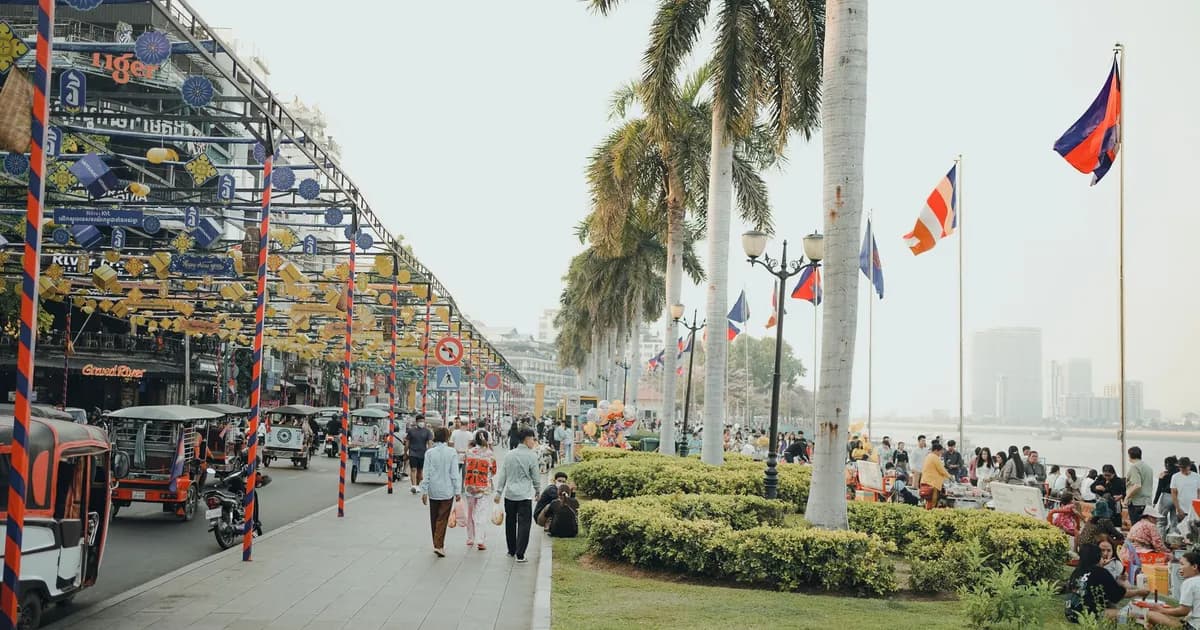
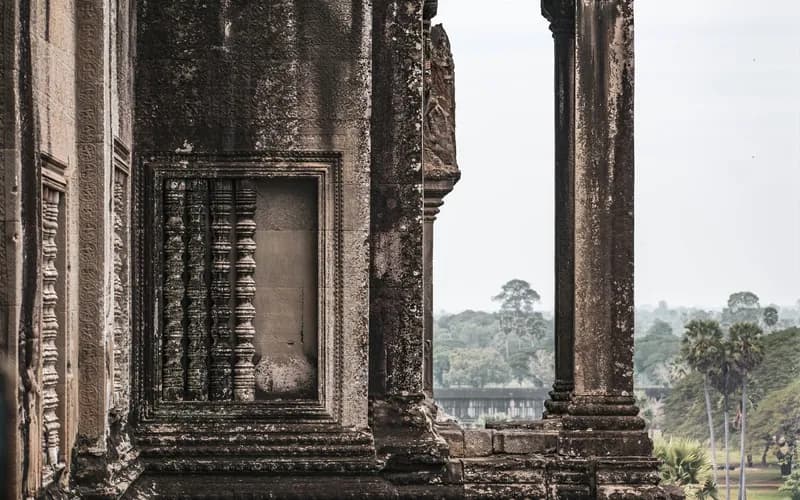
For anyone who values space over spectacle, 2026 has produced conditions that do not come around often. Angkor's outer temples are genuinely quiet on weekday mornings. Sunrise at Angkor Wat, which had become a crowd-management exercise, is manageable again. Guesthouses in Kampot, Kratie and Battambang have rooms available at short notice. Tuk-tuk drivers have time to talk.
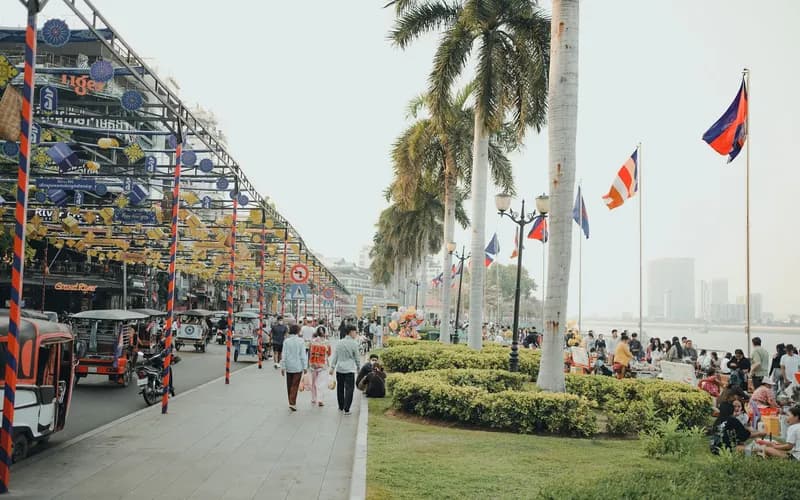
There is a version of this that reads as opportunism, and it deserves naming. Travelling somewhere because its economy is struggling is not automatically virtuous. But the alternative, staying away from a country whose tourism workers depend on visitors and whose ordinary safety situation is unchanged in the places you would actually go, helps nobody. The useful position is to come, spend deliberately, and be clear-eyed about why it is quiet.
Who Is Hurting, and How That Should Shape Your Spending
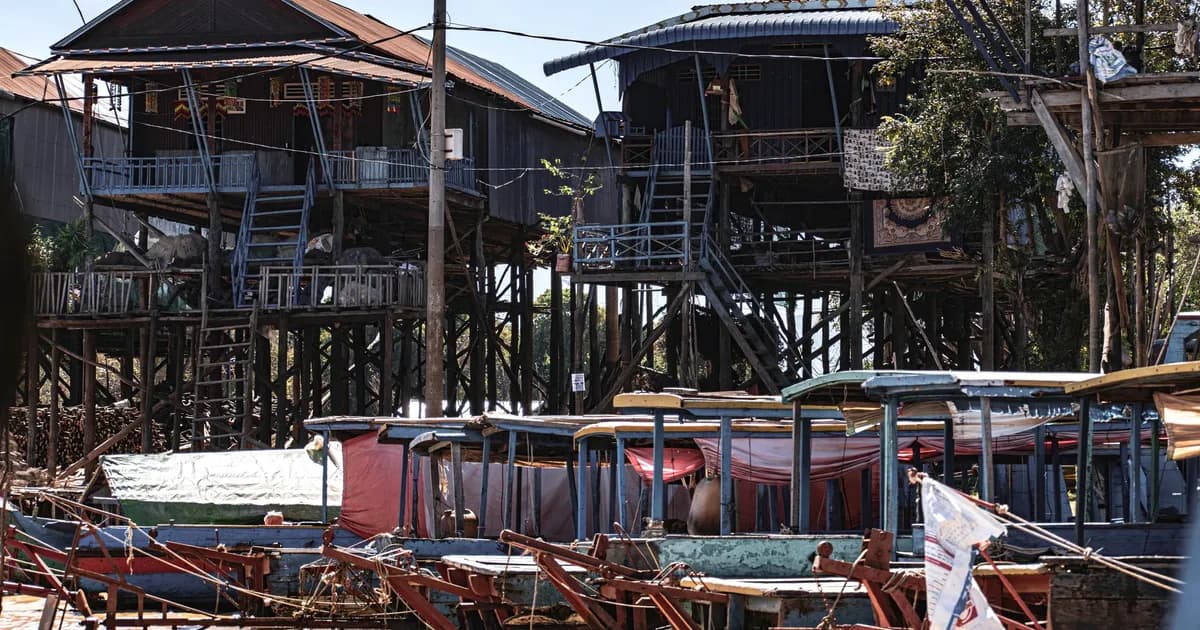
The damage is not evenly distributed. Large hotels can absorb a bad year. Independent guesthouses, family restaurants, freelance guides, community tourism projects and craft cooperatives cannot. Many small operators built capacity for a 2024 recovery that has now reversed twice.
This argues for a few concrete choices. Stay in locally owned accommodation rather than international chains. Hire licensed local guides directly and pay properly for full days rather than half. Book community-based homestays and forest lodges, which sit at the fragile end of the chain and lose their trained staff first when bookings stop. Buy from workshops rather than souvenir wholesalers. Cambodian operators who meet our standards are listed on the Cambodia travel agencies page, and choosing one of them keeps a larger share of your spending in the country.
The Places That Are Not Empty
Cambodia is not uniformly deserted, and expecting solitude everywhere will mislead you. Domestic travel has grown as international arrivals fell, and the Ministry of Tourism has openly framed Khmer travellers as a partial substitute for the missing foreign ones. That has real consequences for planning: coastal towns, Kep, Kampot and the islands fill up on Cambodian public holidays and long weekends, and Angkor is busiest when Khmer families visit.
The result is a country that feels almost private on a Tuesday in June and crowded on a holiday Saturday, with far less of the steady mid-range hum that international tourism used to provide. Our piece on the domestic travel boom explains the pattern and the dates to watch.
What This Means for Prices and Booking
Prices have not collapsed in proportion to demand, and you should not arrive expecting fire-sale rates. Fixed costs are fixed. The Angkor pass has not been discounted. What has changed is availability and flexibility: rooms that once required months of lead time are bookable on a few days' notice, guides can be hired at short notice, and negotiation on multi-night stays is more productive than it was.
Air access has tightened, however. Route networks follow demand, and fewer international flights means less choice, occasionally worse pricing on the remaining seats, and more connections through regional hubs. Budget more time for getting in and out than you would have in 2024, and be wary of very tight connections.
A final caution: some operators have not survived. Check that a company you found in an older guidebook or blog post is actually still trading before sending a deposit, and prefer businesses that will take payment on arrival.
One further consequence is quieter but worth planning around. With fewer visitors, some services now run on reduced schedules: boat departures that once left daily may depend on minimum passenger numbers, a few site and museum opening hours have been trimmed, and certain seasonal routes have simply not restarted. None of this is hard to work around, but it rewards asking rather than assuming, and it argues for building slack into any day that hangs on a single scheduled departure.
What to Do Next
- Separate the border question from the country question. Check current government travel advice for the northwest frontier zone, and plan the rest of your route independently of it.
- Fly into Phnom Penh or Siem Reap rather than planning an overland entry from Thailand, and confirm your routing well ahead.
- Take advantage of the quiet at Angkor by going midweek and outside Cambodian public holidays.
- Direct your spending towards small, locally owned businesses, guides and community projects, which are absorbing most of the damage.
- Verify that operators and guesthouses are still trading before paying deposits, and favour payment on arrival where possible.
- Read our charter for slow travel before you book, and apply it here in particular: this is a year when how you spend matters more than what you see.
- Sort out your paperwork early, including accommodation registration requirements covered in our guide to Cambodia's FPCS system.
Frequently Asked Questions
Is Cambodia safe to visit in 2026?
For the places most travellers go, yes, with normal precautions. The significant exception is the Cambodia-Thailand border region, where several governments advise against travel within 50 kilometres of the frontier because of the risk of armed conflict. Check your own foreign ministry's current advice before you commit, as the situation changes.
Why did arrivals fall so sharply if the country is mostly functioning normally?
Because a large slice of the loss is one specific market. Thai visitors crossing by land were a major share of arrivals, and the land borders are closed. Add weaker Chinese travel, reputational damage from scam-compound reporting, and higher long-haul fuel costs, and you get a 46 percent fall without most destinations inside Cambodia becoming unsafe.
Will prices be cheaper than usual?
Somewhat, but less than you might expect. Accommodation is more available and more negotiable, particularly for longer stays, but headline rates and fixed costs like the Angkor pass have not dropped proportionally. Flights may actually be less convenient and no cheaper, because route capacity has been cut.
Is this a good time to visit Angkor?
It is the best time in roughly a decade in terms of crowding. Visitor numbers to the park were down about 32 percent in early 2026. Weekday mornings at the outer temples are genuinely quiet. Avoid Cambodian public holidays, when domestic visitors fill the site.
Should I avoid Cambodia because of the scam-compound reporting?
The reporting is credible and the underlying crimes are severe, but the operations are geographically and socially separate from the tourist economy. Ordinary visitors do not encounter them. The relevant precautions are the usual ones: never accept unsolicited job or investment offers, and do not follow strangers to unfamiliar premises.
Are tour operators and guesthouses still open?
Many are, but not all. Two consecutive down years have closed businesses, especially small ones. Confirm directly by phone or message that an operator is trading before paying, and be cautious with large advance deposits to companies you cannot verify.
How long will the downturn last?
Nobody credibly knows. Recovery depends largely on the border situation and on how quickly the reputational damage decays, neither of which follows a predictable timetable. Treat any confident forecast, including optimistic ones from the industry, with scepticism.