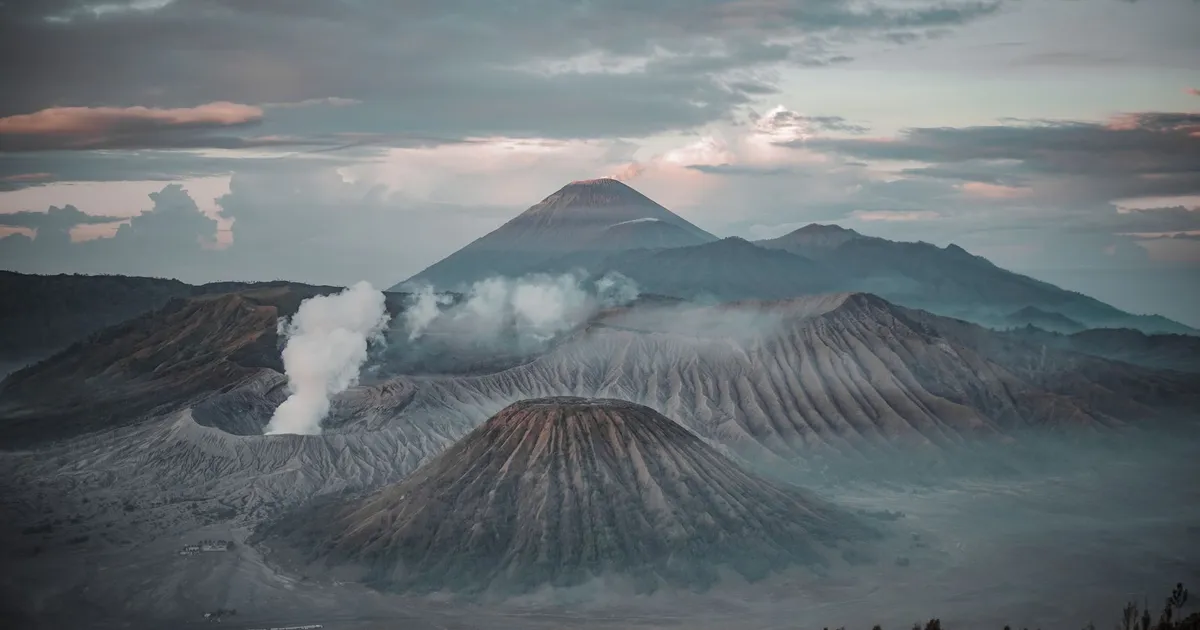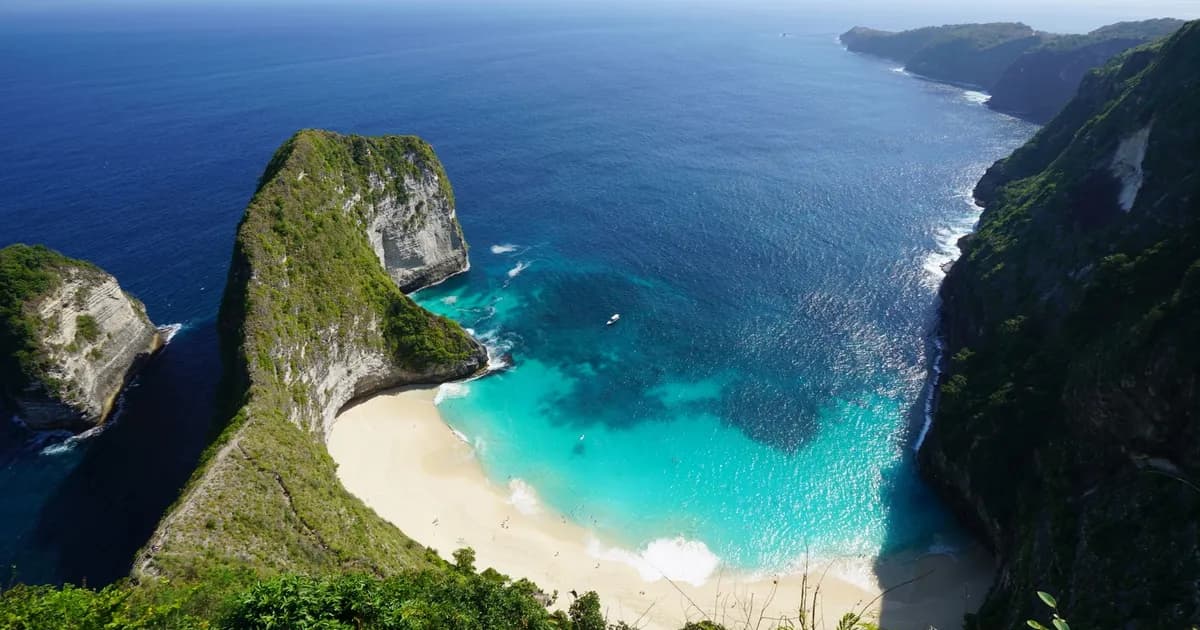


Mount Rinjani has been Indonesia's most-climbed serious volcano for two decades, and until recently it was also one of its most loosely managed. That has changed. Lombok's 3,726-metre giant now runs on an online permit system, enforced daily quotas, compulsory licensed guides and, since the 2026 season, mandatory trekking insurance. If your information about Rinjani comes from a blog post written before 2025, almost none of it is still accurate.
What Changed on Rinjani, and Why
Two pressures converged. The first was volume. Rinjani had grown into a mass-market trek, with thousands of people funnelled up the same two routes in the same short season, camping on the same crater rim, and leaving a quantity of rubbish that repeated volunteer clean-ups could not keep pace with.
The second was safety. Rinjani is not a difficult climb in the technical sense, but it is long, steep, high enough for altitude to matter, and edged in places by loose scree above serious drops. A series of accidents, including a fatal fall in 2025 that drew international attention and a difficult, drawn-out rescue, forced a public reckoning with how the mountain was being run: how quickly rescue teams could reach a casualty, whether guides were properly trained, and whether anyone actually knew who was on the mountain on a given day.
The national park authority, Taman Nasional Gunung Rinjani, responded by tightening the whole system rather than issuing another appeal for good behaviour. The result is more bureaucracy before you start and, by most accounts, a cleaner and better-controlled mountain once you do.
One request. Up to five tailored proposals.
Skip contacting agencies one by one — share your trip once and let up to five trusted Indonesia agencies come to you. Free, with no obligation.
Get my free quotesThe e-Rinjani Permit, Step by Step
Every trekker entering the national park must hold a permit issued through the official e-Rinjani portal. There is no on-the-day ticket window, no informal arrangement at the trailhead, and no legitimate way around it. The permit is issued as a QR code tied to your passport or ID number, your chosen route and your specific entry date, and it is scanned at the gate.
In practice, most foreign visitors never touch the portal themselves. Licensed operators register their clients, and the permit arrives as part of the package. That is convenient and it is also where problems start: if an operator is not licensed, it cannot issue you a valid permit, and you will discover that at the checkpoint rather than at the point of sale. Ask to see your permit and check that your name and passport number are on it before you travel to the trailhead.
Quotas, Routes and When to Book
Rinjani has six official entrances: Sembalun and Senaru, the two classic routes, plus Torean, Aik Berik, Timbanuh and Tetebatu. Each carries its own daily cap, and the system stops selling once a route fills.
Published quota figures vary between sources, and they are revised between seasons. Operators variously cite a combined daily ceiling in the mid-hundreds across all entrances, with the busiest single routes capped well below that. Rather than trusting any specific number you read online, including in this article, check live availability on the e-Rinjani system for your dates. The practical consequence is the same either way: in July and August, and around Indonesian public holidays, popular route-and-date combinations sell out weeks in advance. Book early or accept a less popular entrance.
That last option is worth taking seriously. Torean is the most scenic approach and considerably quieter than Sembalun, and the southern entrances at Aik Berik and Timbanuh see a fraction of the traffic. If your goal is a mountain rather than a summit photograph, the quieter routes are the better trek.
Get matched with up to 5 trusted Indonesia agencies
- Free
- No obligation
- Up to 5 agencies
Mandatory Trekking Insurance
The most significant new requirement for 2026 is insurance. When the e-Rinjani system reopened for the season in early March 2026, the park introduced compulsory coverage as part of every registration. It is no longer an optional extra you can decline.
Two tiers are offered inside the booking flow. A basic policy costs a nominal amount, in the region of IDR 10,000 per person, and provides minimal cover. A premium option, commonly quoted at around IDR 290,000 per person for a single trek valid for up to four days, provides substantially more.
Be clear about what this is and is not. Park insurance is a local accident policy sized for a local system. It is not a substitute for proper travel insurance with mountain rescue and medical evacuation cover, and it will not pay for a helicopter, a hospital in Mataram or a repatriation flight. Check that your own policy covers trekking above 3,500 metres, because a significant number of standard travel policies do not, and read the exclusions rather than the summary page.
Guides, Ratios and the End of Solo Trekking
Foreign trekkers may no longer climb Rinjani independently. A licensed guide is mandatory, and from 2026 the park has moved towards a minimum ratio of roughly one guide to every four trekkers, alongside stricter licensing of guides and porters.
This is not a revenue exercise. On a mountain where the descent from the summit is a long slide down volcanic scree in the dark and where phone signal is patchy, having a trained person who knows the route and can call in a rescue is the difference between an incident and a fatality. The wider case for climbing Indonesian volcanoes with local guides, proper acclimatisation and honest expectations is set out in our guide to trekking Indonesia's volcanoes responsibly, which applies as much to Rinjani as to Bromo or Ijen.
What a Rinjani Trek Costs in 2026
Permit fees rose in 2026 following a decision by the Ministry of Forestry, with increases applied to both domestic and foreign trekkers and earmarked for conservation, trail infrastructure and ranger pay. Foreign visitors on the Class 1 routes, which include Sembalun, Senaru and Torean, pay in the region of IDR 250,000 per person per day, so a two-night trek carries a multi-day fee rather than a single entry charge.
That permit is a small share of the total. Complete operator packages for the standard Sembalun to Senaru crossing are commonly quoted in a broad range depending on group size, equipment quality, porter load and how many people share your tent. Budget group departures sit at the bottom, private treks with better gear, smaller ratios and stronger food at the top, and the gap between them is wide.
For the wider context of what a Lombok trip costs alongside everything else, our Indonesia budget guide breaks down accommodation, transport and daily spending across the archipelago. Be suspicious of any Rinjani quote that undercuts the market sharply. The savings almost always come out of the porters, the food or the gear.
Season, Closures and the Weather Reality
Rinjani closes annually during the heart of the rainy season, typically from around the start of January until the end of March, and the reopening date is announced by the park each year. In 2026 the system reopened for bookings in early March with the trails opening from 1 April. The park can also close the mountain at short notice for volcanic activity, fire risk or extreme weather, and it does.
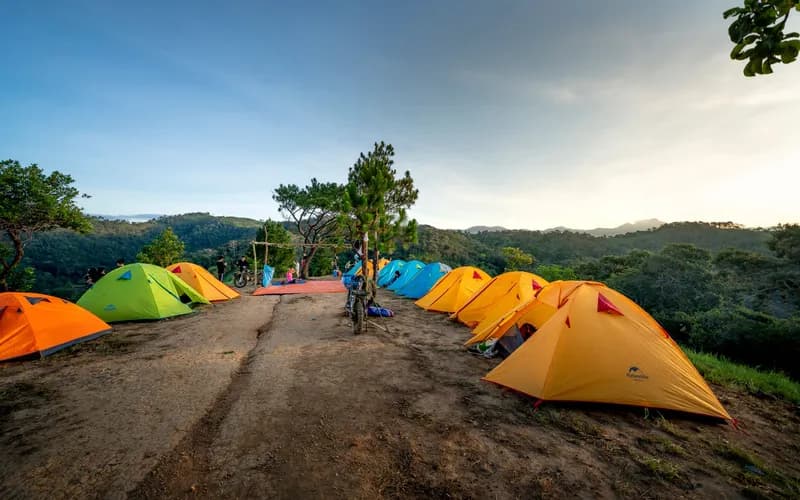
The reliable window runs roughly from April to November, with June to September the driest and also the busiest. April, May and October are the slow traveller's months: fewer people, greener slopes, and a higher chance of cloud. Plan a buffer day either side of your trek. If the mountain closes or your dates get pushed, you want that to cost you a day in Senaru rather than an international flight.
Getting to Lombok and the Trailheads
Lombok International Airport sits in the south of the island, around three hours by road from Sembalun and a little less from Senaru, and most trekkers spend a night at the trailhead village before an early start. Direct services into Lombok have improved as Indonesian carriers spread capacity beyond Bali, part of a broader reshuffle covered in our analysis of how new routes and fares are changing where travellers land. The alternative is the fast boat from Bali to Bangsal or Lembar, which is scenic, weather-dependent and slower than it looks on paper.
Zero Waste and What the Rangers Check
The park operates a strengthened zero-waste policy, and it is enforced at the gate rather than announced on a sign. Expect your packaging to be inspected and logged on the way in, with operators held responsible for bringing the same volume out. Some groups now carry a manifest.
Rangers also check permits against passports, confirm that a licensed guide is present, and increasingly check basic equipment and clothing. Turning up in trainers with a litre of water and a hoodie, which used to be common, no longer gets you past the checkpoint on the summit routes. That is a good development, even if it means buying a head torch in Mataram the day before.
Choosing an Operator Without Getting Burned
The gap between the best and worst Rinjani operators is enormous, and price alone does not reveal it. Ask three questions before booking. What is the guide-to-trekker ratio on your specific departure. What does the porter carry, how much does it weigh, and what is he paid. And is the company licensed to issue e-Rinjani permits in its own name.
A good operator answers all three without hesitating. A poor one changes the subject to how spectacular the sunrise is. If you would rather have that vetting done for you as part of a wider Lombok itinerary, our directory of assessed Indonesian agencies is a reasonable starting point.
What to Do Next
- Fix your dates first, then check live availability for your chosen route on the official e-Rinjani system before booking anything else.
- Read your own travel insurance policy for altitude and trekking exclusions, and upgrade it if it stops below 3,500 metres.
- Choose your route deliberately. If you want a quieter mountain, look at Torean or the southern entrances rather than Sembalun.
- Shortlist two or three licensed operators and ask them the ratio, porter and permit questions in writing.
- Build a buffer day at each end of the trek and a night at the trailhead village before your start, so a closure or a delay does not derail the wider trip.
Frequently Asked Questions
Can I still climb Rinjani without a guide?
No. Independent trekking by foreign visitors is not permitted. A licensed guide is a condition of the permit, and the park has moved to a minimum ratio of around one guide per four trekkers. Attempting to enter without one means being turned back at the checkpoint.
How far in advance should I book?
For June to September, and especially for Sembalun on weekends or around Indonesian holidays, book several weeks ahead and expect popular date-and-route combinations to sell out. In April, May, October and November you have far more flexibility, though the permit still has to be issued before you arrive.
Is the park insurance enough on its own?
No. The compulsory policy sold inside the e-Rinjani booking flow is a basic local accident cover, not a rescue and evacuation policy. Carry your own travel insurance that explicitly covers trekking at Rinjani's altitude, mountain rescue and medical repatriation, and check the exclusions rather than the marketing summary.
When is Rinjani closed?
The mountain closes annually during the peak of the rainy season, generally from around January until late March, with the exact reopening announced by the national park each year. It can also close without warning for volcanic activity, fire risk or severe weather, so keep flexibility in your plans.
Do I have to reach the summit?
Not at all, and many of the best treks do not. The crater rim and Segara Anak, the lake inside the caldera, with its hot springs, are the mountain's real reward. A two-day rim trek is far less punishing than the pre-dawn summit push and delivers most of the scenery. Deciding that in advance, rather than at three in the morning on loose scree, is the sensible approach.
How fit do I need to be?
Fitter than most operators imply. The summit route involves long ascents on volcanic sand where every step slides back, a descent that punishes knees, and two nights of camping at altitude. If you can walk uphill for six to eight hours carrying a daypack, you will manage. If you cannot, choose the rim rather than the summit and enjoy the trek instead of enduring it.