Mount Bromo in 2026: Reopening, Online-Only Tickets and the Daily Quota
Mount Bromo closed for thirteen days this August, and when it reopened the rules had quietly tightened: tickets online only, a hard daily cap, passports checked against names, and a fire-safety briefing that reads like a warning. If you are planning East Java for the coming dry season, the Bromo you will meet is not the one described in last year's blog posts. This is what has changed, what we can confirm, and how to plan a sunrise that does not depend on luck.
What happened in August 2026
In early August 2026 a wildfire spread through the Bromo Tengger Semeru National Park, and tourist access was fully closed from 8 August. The Ministry of Tourism cited the safety of visitors, staff and local communities, and said the closure would last until local authorities declared the area completely safe. Tickets had already been sold for 9 to 15 August: 3,062 of them, of which 2,671 were domestic and 391 international. Anyone booked for 9 to 11 August was offered a free reschedule, valid until 31 December 2026, or a full refund to a bank account or digital wallet through an online form.
The park reopened on 20 August, after thirteen days. The park head, Rudijanta Tjahja Nugraha, said the fire had been extinguished within that period, and the reopening was formalised in an announcement letter dated 19 August 2026. We have not found an official statement on what started the fire, and we will not guess. What matters for you is the practical aftermath: fresh rules, a tighter quota, and a landscape in the caldera that may look scarred in places for some time.
One request. Up to five tailored proposals.
Skip contacting agencies one by one — share your trip once and let up to five trusted Indonesia agencies come to you. Free, with no obligation.
Get my free quotesThe new rules in plain language
These are the points reported at reopening. Rules at national parks change often, so treat this list as a checklist of questions to confirm, not a legal text.
- Online tickets only. There are no gate or walk-up sales. Bookings are made through the park's official portal, reported as bromotenggersemeru.id, and online booking opened the day before the reopening.
- A daily cap. The reported limit is 2,752 visitors per day across all entrances combined. Earlier in 2026 the quota was raised by 1,000 for the Eid holiday, which shows the number is adjusted by the park authority rather than fixed.
- ID must match the booking. Bring the passport or national ID used when booking. The name on the ticket and the name on the document have to agree.
- Fire discipline. No campfires, no discarded cigarette ends or other ignition sources, and any smoke or embers must be reported to officials immediately. Follow rangers' instructions.
- Five open entrances. Cemorolawang in Probolinggo, Wonokitri in Pasuruan, Jemplang and Coban Trisula in Malang, and Senduro in Lumajang.
On price, Kompas reported a foreign-visitor entrance fee of Rp 255,000, with lower rates for Indonesian citizens. That figure comes from a secondary report, so confirm it on the portal before you pay. We would rather give you a number to check than a number to trust.
Reading the quota honestly
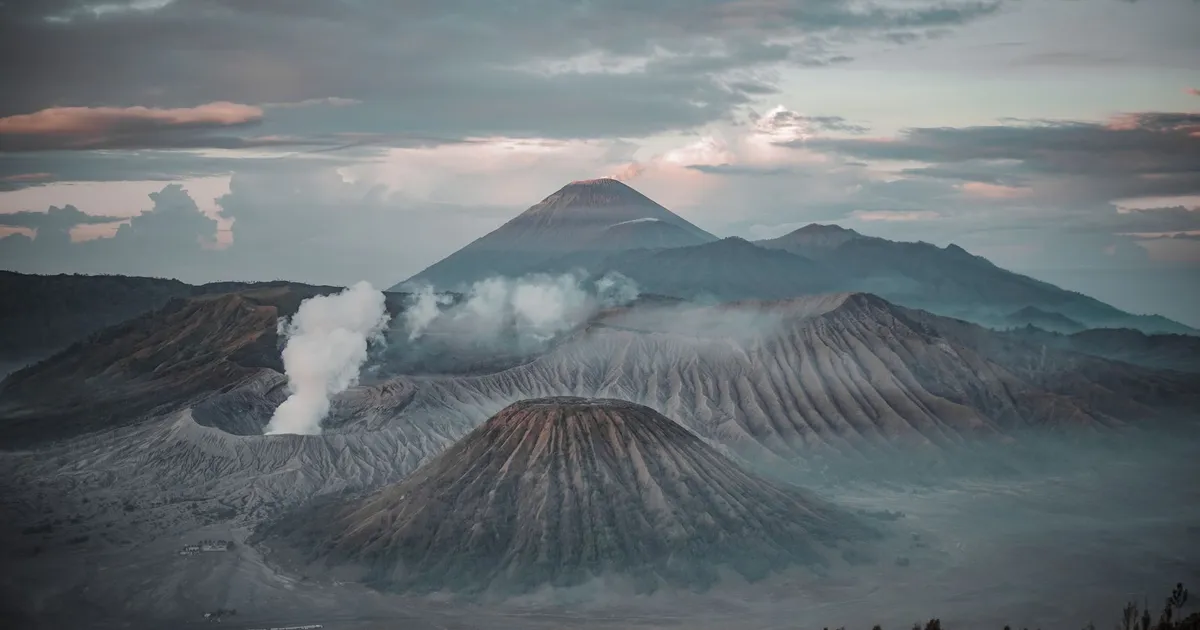
A cap of 2,752 sounds generous until you remember how Bromo is used. Almost everybody wants the same forty minutes: the first light seen from the Penanjakan viewpoint, usually reached before dawn by jeep. On a dry-season weekend or an Indonesian school holiday, a large share of the daily allowance will concentrate in that single window. The cap protects the park from the worst crowding, but it does not make the sunrise quiet.
Two practical consequences follow. First, book as soon as your dates are firm, particularly for Saturdays, Sundays, public holidays and the July to August peak. The park has been known to update availability in batches, so if a date shows as full, check back rather than assuming the answer is final. Second, be flexible by a day. A Tuesday sunrise in September is a very different experience from a Saturday in August, and the cost of shifting your itinerary by 24 hours is usually lower than the cost of standing in a crowd.
The wider context is worth understanding. Indonesia is moving, park by park, toward digital ticketing, caps and identity checks, the same logic you will meet at Komodo, Rinjani and Raja Ampat. We cover those in our guides to Komodo National Park fees and permits and Raja Ampat. The pattern is consistent: fewer people, higher accountability, and a system that rewards those who plan.
Get matched with up to 5 trusted Indonesia agencies
- Free
- No obligation
- Up to 5 agencies
How you actually get there
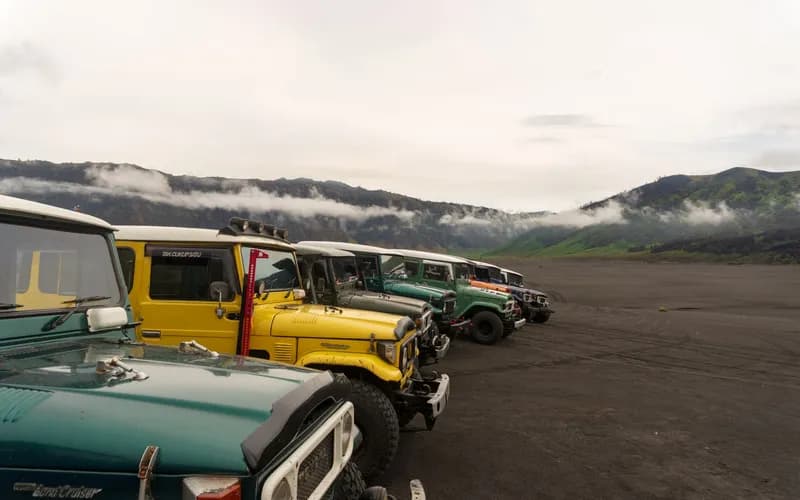
Roads to Bromo are steep and often foggy, and the rules on vehicles are strict. Public or non-four-wheel-drive vehicles can generally go only as far as the villages at the edge of the caldera: Cemorolawang from Probolinggo, Wonokitri from Pasuruan, or Jemplang from Malang. From there you hire a jeep from local residents, unless you arrive on your own motorcycle. Local jeep drivers operate a cooperative system with posted rates, and this is one of the few places where paying the posted price is both normal and fair. It is also a meaningful source of income for Tengger communities.
Which gate suits you depends on where you are sleeping.
- Cemorolawang (Probolinggo side) is the classic base, with the most homestays and the shortest path to the Penanjakan viewpoint. It is also the busiest.
- Wonokitri (Pasuruan side) is a quieter alternative, with a longer drive and fewer beds.
- Jemplang (Malang side) puts you on the southern approach across the Teletubbies-like savannah, a scenic entry that works well if you are coming from Malang.
- Senduro and Coban Trisula are less used and better suited to hikers and independent travellers who have already confirmed access with their host.
If you are building a loop through East Java, our piece on East Java overland from Malang to Bromo and Ijen shows how to link these gates with the rest of the region without rushing.
Sleeping near the crater, and why it matters
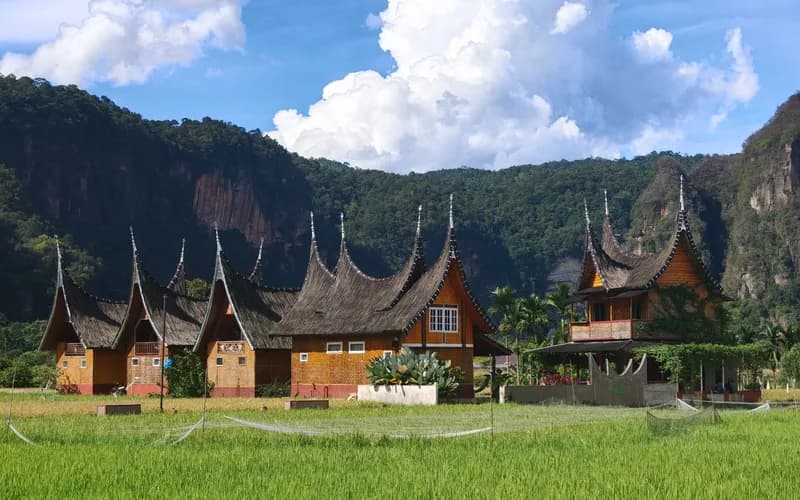
The best decision you can make for Bromo is to sleep close to it. Staying in Cemorolawang, Ngadisari, Wonokitri or one of the villages on the Tengger rim shortens the pre-dawn drive from an hour or more to something closer to fifteen minutes. That buys you sleep, a calmer morning and the ability to be flexible if clouds roll in.
It also buys something less obvious. Tengger people are largely Hindu, an unusual island of the faith in Muslim-majority Java, and their villages keep a distinct calendar and rituals, including the Yadnya Kasada festival at the crater rim. A homestay here lets you eat a home-cooked breakfast, learn about the volcano from the people who live beneath it, and spend your money directly in the community. Our advice on choosing and booking a homestay in Indonesia applies directly.
Temperatures at these altitudes fall sharply before dawn, often into single digits Celsius in the dry season. Bring a real jacket, a hat and gloves, and a light for the pre-dawn walk. Cheap rental coats are sold by villagers, but quality varies.
Fire season, volcano season, and the risks that remain
Bromo is an active volcano inside a dry-season savannah. Those two facts together are the reason the rules now read as they do. The risks you should plan around are:
- Wildfire. The dry months, roughly June to October, are when grass fires are most likely. A repeat closure is possible, so avoid non-refundable bookings you cannot move.
- Volcanic activity. Bromo's status is monitored by Indonesia's volcanology agency, and areas around the crater can be restricted at short notice. Ash can also disrupt flights, which we discuss in our look at volcanic ash and flight disruption.
- Dust and air quality. The caldera sand blows hard in dry weather. A scarf or mask and eye protection make the morning far more comfortable.
- Altitude and cold. At roughly 2,000 to 2,300 metres this is not dangerous for most people, but the combination of cold and a pre-dawn start catches the unprepared.
Our broader guide to trekking Indonesia's volcanoes responsibly covers conduct on the crater rim, and it is worth reading before you go.
What this means for a slow-travel itinerary
For UNRUSH readers, the interesting consequence of the new system is that it makes slowness cheaper. A rushed Bromo visit, arriving by night bus, doing the sunrise, then leaving for Ijen by lunchtime, is exactly what a daily cap and fixed tickets make harder. A two-night stay with a spare morning absorbs a cancelled sunrise, a closed gate or a cloudy day without wasting the trip.
Consider building in these habits:
- Allow two nights near the crater and treat the second morning as insurance.
- Choose a weekday if your schedule allows.
- Walk some of the savannah and sand sea on your own after the jeep crowds have left, rather than only seeing the crater by vehicle.
- Visit a Tengger village market or temple with a local host, and ask permission before photographing ceremonies.
- Keep a day of slack before and after to protect your onward flights and trains.
For the wider seasonal picture, see our guide on where to go in Indonesia and when.
What to Do Next
- Fix your dates, then check the official park portal for availability and the current price before booking anything else.
- Book your ticket as early as your plans allow, using the passport or ID you will carry, spelled exactly the same way.
- Reserve a homestay in a village on the rim, with a cancellation policy you can live with.
- Ask your host to arrange the jeep at the posted rate, or confirm the rate on arrival at your gate.
- Plan a spare morning in the schedule in case of cloud, closure or restrictions.
- Pack cold-weather layers, a face covering for dust, and a headlamp.
- Re-check the park's official announcements 48 hours before you travel, and follow ranger instructions on site.
If you would like help shaping a loop through East Java, our plan your journey page is a good starting point.
Frequently Asked Questions
Is Mount Bromo open to visitors now?
Tourist access reopened on 20 August 2026 after a thirteen-day closure caused by a wildfire. Conditions can change at short notice because of fire risk or volcanic activity, so check the park's official announcements shortly before you travel.
Can I buy a Bromo ticket at the gate?
No. Tickets are sold online only, and gate or walk-up sales are not available. You need to book through the park's official portal and bring the passport or national ID used for the booking.
How much is the Bromo entrance fee for foreigners?
Kompas reported a foreign-visitor price of Rp 255,000 following the August reopening. Prices and weekend rates can change, so confirm the amount on the official portal before paying.
How many people can enter each day?
The reported daily limit is 2,752 visitors across all entrances combined. The park authority has adjusted the quota in the past, for example for the Eid holiday, so the figure can move.
Do I need a jeep?
Non-four-wheel-drive public vehicles can generally reach only the edge villages of Cemorolawang, Wonokitri and Jemplang. From there you hire a jeep from local residents at posted rates, unless you arrive on your own motorcycle.
What if my visit is cancelled by a closure?
During the August closure, ticket holders for the affected dates were offered a free reschedule valid to 31 December 2026 or a full refund. Hotels and homestays applied their own policies, so check the cancellation terms before you book accommodation.
When is the best time to visit Bromo?
The dry season from roughly June to September offers the clearest skies but also the highest crowds and fire risk. Shoulder months with a weekday sunrise often give a quieter and safer experience.
Keep reading
More from the ground · Indonesia