
Laos Tightens Tourism Safety Rules in 2026: Balloons, Paramotors and a New Border Levy
Laos spent the first half of 2026 rewriting parts of its tourism rulebook, and the changes are easy to miss because they arrived piecemeal rather than as a single announcement. An aviation incident in Vang Vieng, a prime ministerial directive on safety, a small new levy at the borders, and a documentation requirement aimed at tour operators have all landed within a few months of each other. None of them makes Laos harder to visit. Taken together, though, they change a few things you should know before you book a flight, a balloon ride or a motorbike.
What changed, and in what order
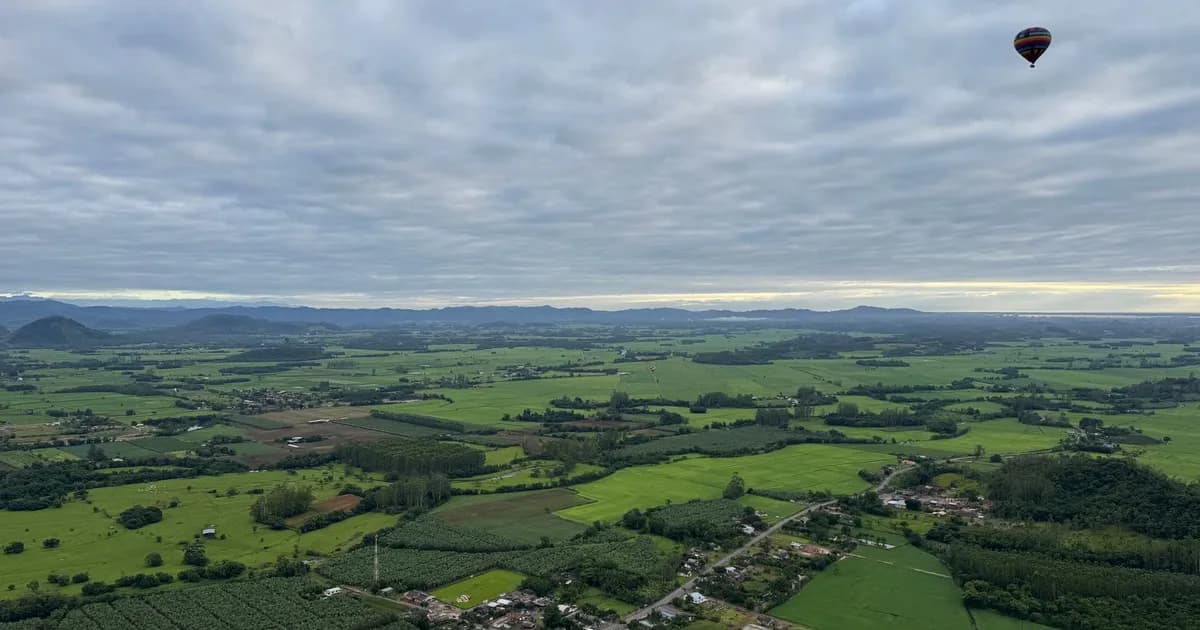
The sequence matters, because much of the reporting around it has been garbled. On 26 March 2026, a hot air balloon carrying tourists on a sunset flight over Vang Vieng struck high-voltage power lines and became entangled in the cables, causing a power outage that affected thousands of homes and businesses. Video of the incident circulated widely.
In early April, Prime Minister Sonexay Siphandone called for stricter safety measures across the tourism sector, singling out gaps in food and beverage services and in high-risk activities such as hot air balloons and paramotors. The directive asked for clear operational guidelines, proper licensing requirements and real-time monitoring systems, and for the legal framework behind them to be fast-tracked.
The Ministry of Public Works and Transport then ordered immediate safety inspections of balloon and paramotor operators in Vang Vieng, with Transport Minister Leklay Sivilay instructing authorities to enforce stricter supervision. Operations were suspended while inspections were carried out by the Civil Aviation Authority of Laos, then resumed. As an additional precaution, evening flights were paused from 29 July to 31 August 2026.
One request. Up to five tailored proposals.
Skip contacting agencies one by one — share your trip once and let up to five trusted Laos agencies come to you. Free, with no obligation.
Get my free quotesWhat this means if you want to fly over Vang Vieng
Balloon and paramotor flights are operating again, under a tighter inspection regime than existed a year ago. That is, on balance, good news: the activity that gives Vang Vieng its most photographed image is now subject to formal licensing and oversight rather than informal practice.

Practical advice if you are considering a flight. Book through your accommodation or an established operator rather than a street tout, and ask directly whether the company has completed the Civil Aviation Authority inspection. Confirm what insurance the operator carries, and confirm separately that your own policy covers ballooning and paragliding, because many standard travel policies exclude them by name. Be prepared for cancellations at short notice: wind, mist and now regulatory pauses all stop flights, and a refund policy you have read in advance saves an argument. The broader story of how the town reinvented itself around these activities is covered in our piece on Vang Vieng's second act.
The methanol warning that has not gone away
The safety push has a longer backdrop. In November 2024, six foreign tourists died in Vang Vieng after drinking spirits contaminated with methanol, an incident that prompted international scrutiny and remains the reason food and beverage oversight appears in the Prime Minister's directive.
Enforcement has improved and the worst-known venues closed, but the underlying risk with counterfeit spirits is regional rather than specifically Lao. The sensible rules have not changed: avoid free-pour shots and unbranded spirits, be wary of cocktail buckets and unlimited-drink promotions, stick to beer or to sealed bottles opened in front of you, and treat unexplained vision problems, severe headache or confusion after drinking as a medical emergency requiring immediate hospital attention.
Get matched with up to 5 trusted Laos agencies
- Free
- No obligation
- Up to 5 agencies
Water activities, tubing and kayaking
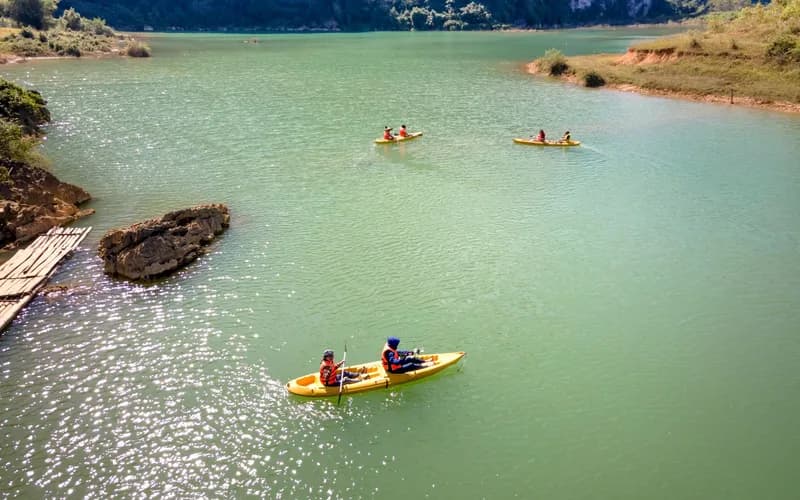
Tubing, kayaking, rafting and swimming in the Mekong and its tributaries account for a steady share of serious accidents involving foreign visitors. Currents are stronger than they appear, water levels change rapidly with dam releases upstream, and warning signage is minimal to non-existent.
- Do not swim in the Mekong or the Nam Song after drinking, and do not assume a calm surface means a slow current.
- Check that life jackets are provided and are actually the right size before you get on the water.
- Avoid river activities in the days after heavy rain, when levels and debris both rise.
- In the wet season, ask the operator about water release schedules from upstream dams.
Motorbikes, the Thakhek Loop and insurance that actually pays
Road traffic remains by a wide margin the most likely thing to hurt you in Laos, and motorbike hire is where travellers most often discover their insurance is void. Many standard policies exclude motorcycling outright, or cover it only if you hold the correct licence category at home and an international driving permit, and only if you wear a helmet.
Before hiring, read the exclusion clauses on your policy rather than the summary page. Photograph the bike from all sides before leaving the shop, refuse to hand over your passport as a deposit where an alternative exists, and wear a helmet that fastens. Medical evacuation from Laos to a hospital in Thailand is the standard response to a serious injury and typically costs somewhere between ten and thirty thousand US dollars, which is the number that should decide your policy for you. If you intend to trek instead, the same insurance logic applies, and our guide to trekking responsibly in Laos covers how to choose a guide and what to check before you set out.
The new tourism fund levy at the border
Since 1 September, all tourists entering or leaving Laos, domestic and international alike, pay a levy of 10,000 kip, currently around 46 US cents, which goes to a national tourism fund. It is collected electronically at international checkpoints through an Easy Pass banking system rather than in cash at a window.
The rollout is phased. Seven international border checkpoints were in the first group, including Boten on the Chinese border, the Friendship Bridge checkpoints in Bokeo, Khammouane and Savannakhet provinces, Na Pao in Khammouane and Dansavanh in Savannakhet. Expect coverage to extend.
In practice this is a rounding error on any travel budget, and the reason to know about it is procedural rather than financial: it is one more electronic step at a land crossing, and it is legitimate. Treat any demand for a larger unofficial payment at a border, or any request for cash "stamping fees", as separate from this levy. The entry paperwork itself, including the Lao Digital Immigration Form, is covered in detail in our guide to the digital immigration form and entry rules.
Proof of accommodation: what actually applies to you
The requirement that has caused the most confusion online concerns hotel bookings. Under revised rules, tourism operators arranging inbound travel for foreign visitors must now attach confirmed hotel reservations, covering the full duration of the stay from arrival to departure, when seeking authorisation to bring those visitors into the country.
Read that carefully, because the distinction matters. This is an obligation on licensed tour operators processing group and package arrivals, not a blanket rule that every independent backpacker must arrive with 21 nights pre-booked. Independent travellers are not routinely asked for a full itinerary of reservations at immigration.
That said, the sensible precaution is unchanged and now slightly more relevant: carry a confirmation for at least your first night, on your phone and on paper, along with an onward ticket if you have one. Border officials at land crossings occasionally ask, and having it removes a conversation.
What this means for independent travellers
Nothing here should change your plans. Laos has not introduced entry quotas, mandatory insurance checks or compulsory guided travel. What it has done is start regulating a set of activities that had grown faster than its oversight, which is the normal and healthy trajectory for a destination adding visitors at roughly ten percent a year, a trend we examine in our analysis of the 2026-2030 Lao tourism plan.
The honest caveat is that enforcement in Laos is uneven and often reactive, concentrated in the months after an incident and in the places where incidents happen. Do not treat a licence sticker as a guarantee. The burden of judgement still sits with you, and the most reliable filter remains the same as ever: book through operators with a traceable local reputation, which is why we maintain a vetted directory of Laos travel agencies.
What to Do Next
- Check your travel insurance for named exclusions covering ballooning, paragliding, motorcycling, kayaking and trekking, and upgrade before you travel rather than on arrival.
- Save a digital and printed copy of your first night's accommodation confirmation and your entry approval.
- Budget a few extra minutes at land borders for the electronic tourism levy, and carry a small amount of kip.
- If you plan a balloon or paramotor flight, ask the operator directly about its Civil Aviation Authority inspection and its cancellation policy.
- Confirm that any river activity provides correctly sized life jackets, and skip it entirely after heavy rain.
- Register your trip with your own foreign ministry's traveller service, and note the nearest embassy in Vientiane.
Frequently Asked Questions
Are hot air balloon flights in Vang Vieng operating in 2026?
Yes. Flights were suspended for inspections following the March 2026 power line incident and have since resumed under Civil Aviation Authority oversight, with an additional pause on evening flights between 29 July and 31 August 2026. Ask your operator to confirm current schedules.
Do I now need to show hotel bookings to enter Laos?
Not as an independent traveller. The new requirement applies to licensed tour operators, who must attach confirmed reservations covering the whole stay when applying to bring visitors in. Carrying proof of your first night remains sensible for land crossings.
How much is the new Laos tourism fee?
It is 10,000 kip per person, roughly 46 US cents, collected electronically at international checkpoints for the national tourism fund. It applies on entry and exit, and it is not a substitute for your visa fee.
Is Laos safe to visit in 2026?
For the vast majority of visitors, yes. The realistic risks are road traffic, water activities and adulterated alcohol rather than crime. Most governments advise normal or increased caution nationally, with stronger warnings for Xaisomboun province, and unexploded ordnance remains a risk off marked paths.
Does my travel insurance cover adventure activities in Laos?
Frequently not by default. Motorcycling, ballooning, paragliding, rafting and even some trekking are common named exclusions, and cover often depends on holding the correct licence. Read the exclusions and buy an adventure add-on if needed.
What happened with methanol poisoning in Vang Vieng?
Six foreign tourists died in November 2024 after consuming spirits contaminated with methanol. Oversight of food and beverage venues has since tightened, but the standing advice is to avoid unbranded spirits, free-pour shots and unlimited-drink offers anywhere in the region.
Will these rules make Laos more expensive?
No meaningfully. The tourism levy is negligible, and licensing costs for adventure operators may raise activity prices marginally. Accommodation, food and transport pricing is driven far more by season and by the exchange rate of the kip.