
For roughly a decade, Vang Vieng was shorthand for everything wrong with backpacker tourism in Southeast Asia. Then the bars came down, the trains arrived, and the town rebuilt itself around the thing it always had and never sold: one of the most extraordinary karst landscapes in Asia. The reinvention is real, and it is more complicated than the tidy redemption story travel media likes to tell. Understanding what actually changed here, and what is changing now, tells you a lot about where Lao tourism as a whole is heading.
What Vang Vieng Was, and Why It Changed
The version most people half-remember ran from the mid-2000s to about 2012. Bars lined the Nam Song river, tubing floated drinkers between them, and rope swings and zip lines were installed over water of uncertain depth. Deaths followed, in numbers that eventually became impossible for the authorities to absorb. In 2012 the government moved decisively: riverside bars were demolished, tubing was heavily regulated, and the operating model that had defined the town for years was dismantled in a matter of weeks.
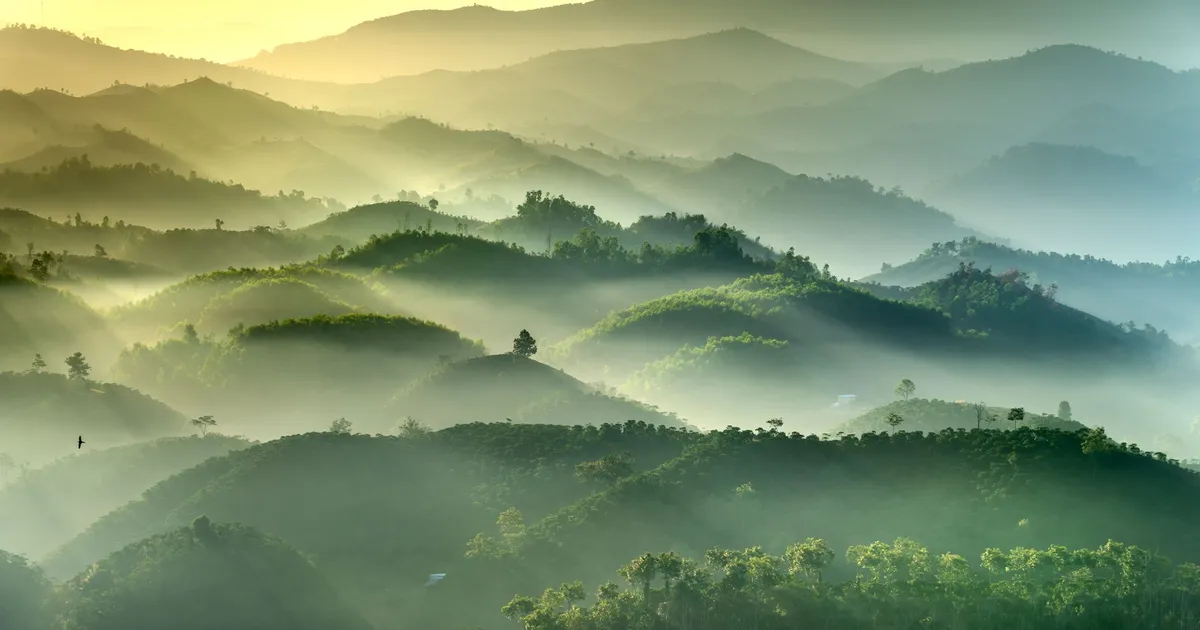
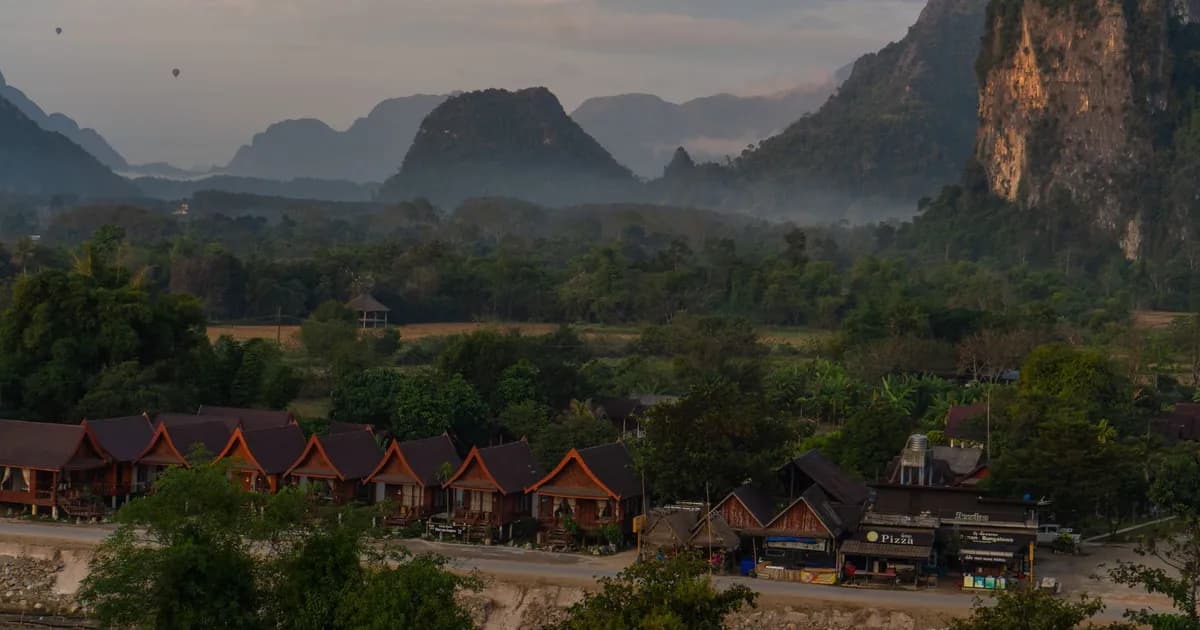
What followed was several quiet years. Visitor numbers fell, businesses closed, and the town had to work out what it was for. The answer, eventually, was the obvious one. Vang Vieng sits in a valley of vertical limestone towers riddled with caves and lagoons, surrounded by trekking country, with a river running through it. That is a world-class outdoor destination in almost any other country. It simply had never been packaged as one.
One request. Up to five tailored proposals.
Skip contacting agencies one by one — share your trip once and let up to five trusted Laos agencies come to you. Free, with no obligation.
Get my free quotesThe Railway Did Most of the Work
The single biggest factor in Vang Vieng's recovery was not marketing. It was the Laos-China Railway, which opened at the end of 2021 and put the town roughly an hour from Vientiane and a similar distance from Luang Prabang. A journey that used to mean three to four hours on a winding, occasionally alarming mountain road became a comfortable air-conditioned hop.
The effect was immediate and structural. Vang Vieng stopped being a place you endured a bus to and became a place you could visit for two nights without sacrificing anything else in your itinerary. It also changed who came. Regional travellers, particularly from Thailand, Korea, China and Japan, arrive in far greater numbers than before, often on short breaks, often as families, and with entirely different expectations from the backpackers who preceded them.
If you are planning to use the train yourself, the mechanics deserve their own read: our guide to riding the Laos-China Railway covers booking windows, station locations and the traps that catch people out.
What the Town Sells Now
Walk the main street today and the offer is legible within five minutes. Hot air balloon flights over the karst at dawn, now the town's signature image. Kayaking and gentler, regulated tubing on the Nam Song. Caving at Tham Chang, Tham Nam and a dozen smaller systems. Hiking up the Nam Xay and Pha Ngern viewpoints, both short, steep and genuinely rewarding. Blue lagoons, of which there are now several numbered variants, some considerably more peaceful than others. Rock climbing on bolted limestone that has quietly built a real reputation.
Accommodation has moved up several rungs. Where there were once dormitories and river-view shacks, there are now boutique properties, riverside resorts and a growing number of mid-range hotels aimed squarely at regional weekend travellers. Food has improved in parallel, though the town remains a place where the best meals are usually the simplest ones.
The party has not vanished entirely. It has been relocated, licensed and put on a curfew, with bars in Vientiane and Luang Prabang as well as Vang Vieng generally closing around midnight. What has genuinely gone is the specific combination of alcohol, water and unsupervised height that made the old model lethal.
Get matched with up to 5 trusted Laos agencies
- Free
- No obligation
- Up to 5 agencies
The Numbers Behind the Boom
Laos as a whole welcomed more than 4.5 million foreign visitors in 2025, an increase of around 11 percent on the previous year and comfortably above the government's own target. For 2026 the stated ambition is somewhere between five and six million, with early-year figures tracking modestly ahead of 2025. Vang Vieng is one of the clearest beneficiaries of that curve, precisely because it is now easy to reach.
Development is following. A large master-planned tourism zone covering several hundred hectares has been proposed for the Vang Vieng area, explicitly framed as a shift away from mass-market tourism toward higher-value, nature-based travel. Whether that framing survives contact with construction is the open question. Projects of that scale rarely produce quiet valleys.

The dynamic will be familiar to anyone who has followed what has happened further north, where a UNESCO-listed town has been absorbing rapid growth with mixed results. We looked at that in detail in our piece on Luang Prabang's tourism surge, and the parallels are instructive: fast connectivity plus limited planning capacity tends to produce the same pressures in different scenery.
What Gets Lost in a Reinvention
It is worth being honest about the costs, because the redemption narrative tends to skip them.
- The lagoons are crowded. Blue Lagoon 1 in particular can feel like a swimming pool with a queue in high season. The numbered alternatives further out are better, but the pattern repeats as each becomes known.
- Balloon flights have multiplied, and safety oversight has not obviously kept pace with volume. Ask operators directly about pilot licensing and maintenance, and be willing to walk away.
- River water quality varies, especially after rain and downstream of construction.
- Land prices in the valley have risen sharply, which changes who owns what. A great deal of new accommodation is externally financed, meaning a smaller share of visitor spending stays local than the visitor numbers suggest.
None of this means avoid Vang Vieng. It means going with clear eyes, and choosing where your money lands. The principles we apply to that choice are set out in our slow travel charter.
How to Visit Vang Vieng Well in 2026
The town rewards a specific approach. Stay three nights rather than one, and treat the valley rather than the main strip as the destination. Base yourself slightly out of the centre, on the west bank or a few kilometres north, where the karst views are better and the noise is not. Get up early: the balloons launch around dawn, the viewpoints are cool and empty before eight, and the lagoons are almost yours before ten.
Go slower than the activity menu suggests. One serious hike, one full day on the river, one cave visit and one long unstructured afternoon will leave you with a better sense of the place than four days of ticking items. Hire a local guide for at least one day, not because the trails are hard to find but because the valley makes far more sense with someone who grew up in it.
Consider Vang Vieng as a stop rather than a base for the north. It sits neatly between Vientiane and Luang Prabang, and the natural rhythm is two or three nights on the way through. For how it fits into a broader route and which months suit which regions, our guide to where to go in Laos and when is the place to start.
Where Vang Vieng Fits in a Longer Route
The town is best understood as a hinge rather than an endpoint. Northbound, it sits between the capital and Luang Prabang, and the natural pattern is two or three nights on the way through rather than a dedicated trip. Southbound, it is the last easy stop before Vientiane, which means it often becomes the place where travellers decompress before a flight.
That position has consequences worth planning around. Weekends are noticeably busier than midweek, because Vientiane residents and Thai visitors come up for two nights on the train. If your dates are flexible, arriving on a Monday or Tuesday changes the feel of the lagoons and viewpoints considerably. High season, from November through February, compounds the effect.
There is also a case for treating Vang Vieng as a base for a few days of genuinely unstructured time. The valley has enough short walks, quiet riverbank and roadside coffee to absorb a week if you let it, and very few travellers give it more than two nights. Renting a bicycle and riding the west bank tracks in the late afternoon, with no particular destination, is the version of this town that almost nobody experiences and that most people would remember longest.
Whatever shape you choose, decide it before you book the trains. Retro-fitting extra nights once the railway seats are gone is difficult in high season.
What to Do Next
- Book train seats as early as your dates allow. Vang Vieng services fill quickly, and the station is several kilometres from town, so arrange a transfer in advance.
- Give the town three nights in your outline. Two is workable; one guarantees you see only the strip.
- Pick accommodation outside the central blocks, ideally with a karst view and river access.
- Vet any balloon or adventure operator on safety specifics before booking, and accept that the cheapest option is rarely the right one.
- Choose one guided day with a local operator rather than four self-driven half days.
- Plan the visit as part of a sequence, not a destination in isolation. Our Laos journey planning page will help you place it.
Frequently Asked Questions
Is Vang Vieng still a party town?
No, not in the sense it was before 2012. Bars exist and some are lively, but riverside drinking establishments were demolished, tubing is regulated, and midnight curfews apply in the main tourist towns. The dominant activity now is outdoor recreation, and a large share of visitors are families and regional weekenders.
Is tubing on the Nam Song safe now?
It is far safer than it was, with licensed operators, life jackets and a limited, monitored route. It is still a river, however, and conditions change with rainfall. Do not tube after heavy rain, do not drink beforehand, and use an operator that provides proper equipment.
How long does the train take from Vientiane to Vang Vieng?
Roughly an hour on the faster services, compared with three to four hours by road. Journey time to Luang Prabang is broadly similar. Note that Vang Vieng station sits outside town, so allow additional time and cost for transfers at both ends.
When is the best time to visit Vang Vieng?
November to February gives the clearest skies, coolest temperatures and the most reliable balloon flights. March to May is hot and often hazy from regional burning. The green season from June to October brings dramatic landscapes and a fuller river, but also cancelled flights and muddy trails.
Is Vang Vieng worth visiting for slow travellers?
Yes, with caveats. The landscape is genuinely exceptional and the valley absorbs a slow pace well. The centre of town does not. If you stay outside the strip, hike, and give it three nights, it earns its place. If you arrive for one night and stay on the main street, you will wonder what the fuss was about.
How does it compare with northern Laos?
Vang Vieng is more developed, easier to reach and busier than the northern river towns. If you want the same karst scenery with a fraction of the infrastructure, the quieter alternatives are covered in our off the beaten path guide to Laos.
Will the new tourism development change the town again?
Almost certainly. A large master-planned zone has been proposed for the area, positioned as high-value and nature-based. Timelines for projects of this type in Laos are typically long and often shift, so treat announced completion dates with caution, but expect the valley to look different within a decade.