
Lao food is one of Southeast Asia's best-kept culinary secrets — fresh, herbaceous, fiery, and built for sharing. It is the cuisine that quietly shaped much of what the world thinks of as "Thai" food, and yet it remains its own thing entirely: earthier, more rustic, and inseparable from the sticky rice eaten by hand at every meal. To travel Laos slowly is to eat well, cheaply, and memorably. This guide is your map to what to order, where to find it, and how to enjoy it the Lao way — from the humblest market stall to a riverside feast at sunset.
The Soul of the Table: Sticky Rice
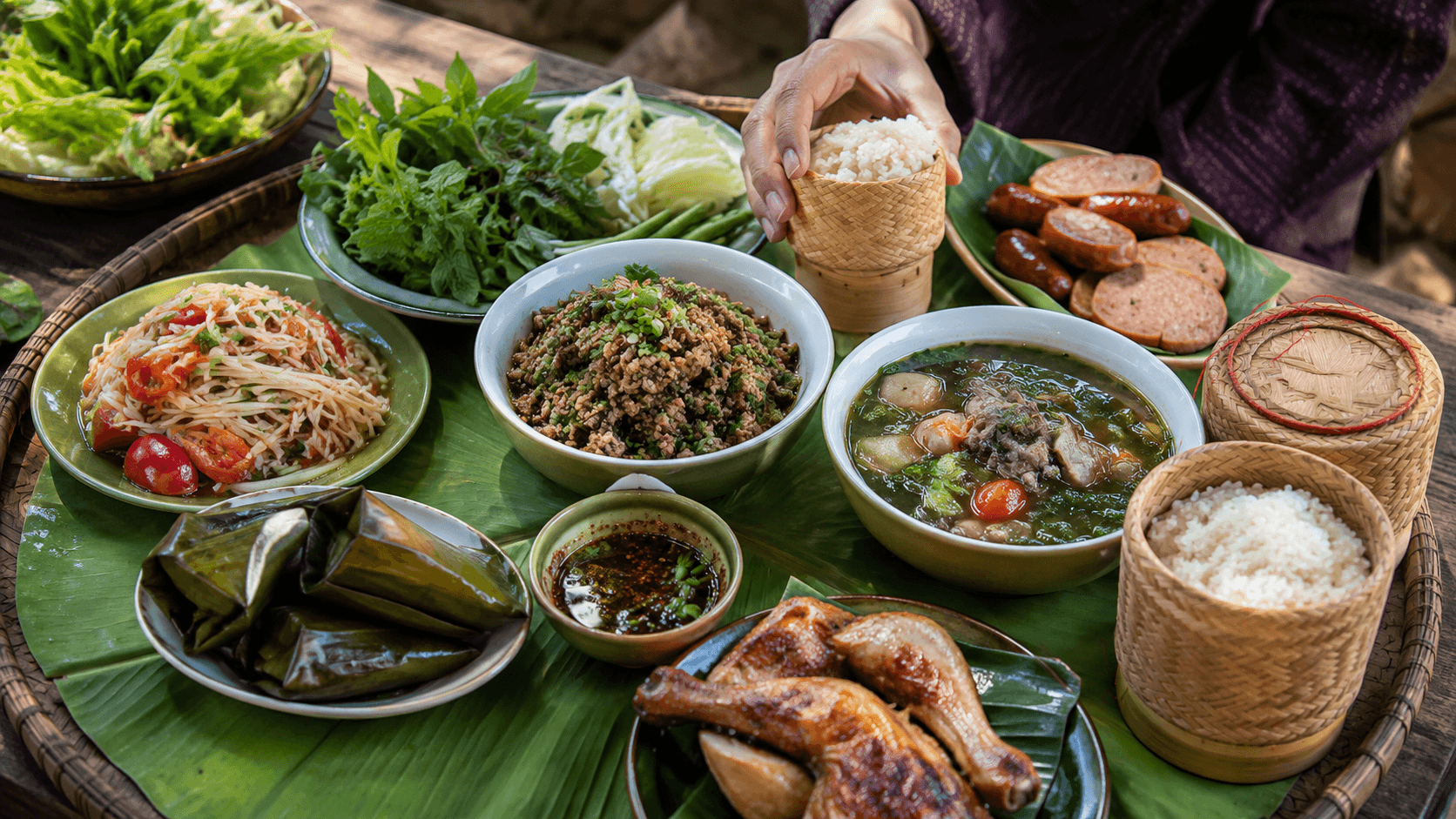
You cannot understand Lao food without understanding sticky rice (khao niaw). Laos has the highest per-capita consumption of glutinous rice in the world, and it is not a side dish here — it is the meal's foundation, its cutlery, and its social glue. Served in a small woven bamboo basket (tip khao), sticky rice is eaten with the hands: you pinch off a small ball, roll it between your fingers, and use it to scoop up salads, dips, and grilled meats.
This single fact shapes the entire cuisine. Because sticky rice is eaten by hand, Lao dishes tend to be dry-ish, intensely flavoured, and built to be picked up rather than spooned — salads, grilled things, and thick dips rather than soupy curries. Lao people even describe themselves as luk khao niaw, "children of sticky rice." Learning to eat it properly, rolling and dipping, is the first and most delightful lesson in Lao dining, and locals are always charmed to see a visitor do it.
One request. Up to five tailored proposals.
Skip contacting agencies one by one — share your trip once and let up to five trusted Laos agencies come to you. Free, with no obligation.
Get my free quotesThe National Dish: Larb
If one dish defines Laos, it is larb (also spelled laap) — a warm, zesty salad of minced meat (chicken, pork, beef, duck, or fish) tossed with lime juice, fish sauce, chilli, shallots, fresh herbs, and, crucially, toasted ground rice (khao khua) that gives it a nutty, savoury crunch. Larb is more than a national dish; it carries cultural weight, its name evoking "luck" and prosperity, which is why it appears at weddings, New Year, and celebrations.
Larb ranges from mild to blistering, and in its most traditional form it can be served dip — with raw meat and blood, a delicacy for the adventurous, though visitors should stick to the cooked (suk) versions to be safe. It is the perfect partner for sticky rice, and no meal in Laos is complete without at least considering it. Order it, roll a ball of khao niaw, scoop, and understand at once why this dish travelled across the border to become famous elsewhere.
The Dishes to Seek Out
Beyond larb, Lao cuisine offers a deep and rewarding repertoire. These are the dishes worth hunting down as you travel.
Tam mak hoong (green papaya salad). The Lao cousin of Thailand's som tam, pounded fresh in a mortar with shredded green papaya, lime, chilli, garlic, fish sauce, and often padaek (fermented fish paste) and preserved crab. It is punchy, funky, and fiercely addictive — the Lao version is typically funkier and less sweet than the Thai one.
Or lam. A Luang Prabang speciality: a thick, hearty herbal stew of meat (often buffalo or chicken) with eggplant, wood ear mushrooms, beans, and the tongue-tingling sakhan (a peppery climbing vine). Rich, aromatic and warming, it is the comfort food of the north.
Ping gai and ping pa (grilled chicken and fish). Lemongrass-marinated chicken flattened and grilled over charcoal, and whole river fish stuffed with herbs and grilled in a salt crust (ping pa). Smoky, simple, and superb — street-grill staples eaten with sticky rice and a chilli dip.
Khao soi (the Lao version). Not to be confused with the northern-Thai coconut-curry noodle dish of the same name, Lao khao soi — a speciality of Luang Prabang and the north — is a rice-noodle soup topped with a savoury minced-pork-and-tomato sauce and fermented soybean. Comforting and distinctive.
Feu (Lao noodle soup). The everyday breakfast and any-time bowl: rice noodles in a clear broth with herbs, bean sprouts, and a plate of fresh greens and condiments to add yourself. The Lao take on the region's beloved noodle soup.
Khai pen and jaew bong. A Luang Prabang snack of choice: crispy sheets of dried Mekong river weed (khai pen), often studded with sesame and tomato, served with jaew bong, a sweet-smoky-spicy chilli paste made with buffalo skin. Utterly moreish, and a great introduction to the flavours of the north.
Mok pa. Fish (or other ingredients) mixed with herbs and steamed in a banana-leaf parcel — delicate, fragrant, and a lovely contrast to the grilled and pounded dishes.
Sai oua (Lao sausage). A herby, lemongrass-and-galangal pork sausage, grilled and sliced, found across the north and a market favourite.
Padaek. Not a dish but the soul of the seasoning — a pungent fermented fish sauce/paste that underpins much of Lao cooking. It is an acquired taste, but it is the umami backbone that makes Lao food taste distinctly Lao rather than Thai.
Get matched with up to 5 trusted Laos agencies
- Free
- No obligation
- Up to 5 agencies
The French Legacy: Baguettes and Coffee
Laos's decades as a French protectorate left a delicious culinary footnote. The baguette (khao jii) is everywhere, sold from street carts as a sandwich stuffed with pâté, Lao sausage, herbs, pickled vegetables, and chilli sauce — the Lao answer to Vietnam's banh mi, and a perfect cheap lunch on the move. Alongside it came a café culture, and to this day Vientiane and Luang Prabang have charming French-style bakeries turning out croissants and pastries beside the sticky rice and larb. It is a small, tasty reminder of the layers of history in every Lao town.
Lao Coffee: One of Asia's Great Undiscovered Brews
Few travelers arrive in Laos expecting a coffee revelation, but the Bolaven Plateau in the south produces some of the finest coffee in Southeast Asia — rich Arabica and robusta grown in cool, high, volcanic soil. Traditional Lao coffee (kafeh) is served strong and dark, often sweetened with condensed milk and poured over ice — intense and delicious in the heat. Increasingly, specialty roasters in Vientiane, Luang Prabang, and Pakse are showcasing single-origin Bolaven beans brewed with care. A coffee-farm visit or a Bolaven loop tour is one of the south's great experiences, and buying beans direct from the growers is a highlight worth room in your luggage. For where the coffee country sits on the map, see our where-to-go-and-when guide.
Beerlao and What Else to Drink
No account of Lao food is complete without Beerlao, the beloved national beer and a genuine source of pride. Brewed since the 1970s and famous throughout the region, it is crisp, cheap (often under a dollar for a large bottle), and the perfect foil to spicy, smoky Lao food. You will find it everywhere, from riverside shacks to fine restaurants, and sharing a cold bottle over grilled fish as the sun sets over the Mekong is one of the quintessential Lao pleasures.
For the adventurous, lao-lao is the local rice whisky — potent, cheap, and often homemade, sometimes infused with herbs or (in tourist versions) unusual creatures. It flows freely at village celebrations, where being offered a shot is a gesture of welcome best accepted graciously. Gentler options include fresh fruit shakes, sugarcane juice, and, in the towns, the coffee-shop culture described above.
Where to Eat: Markets, Stalls, and Riverbanks
In Laos, as across the region, the best food is rarely in the fanciest place. Here is where to find it.
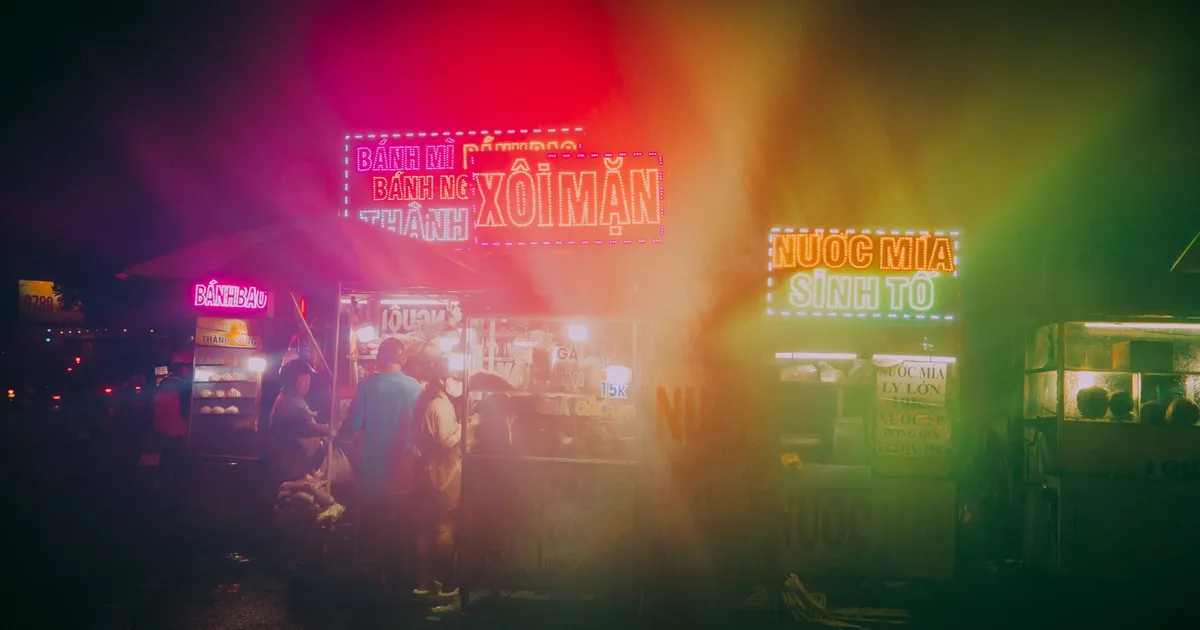
Morning and day markets (talat) are the beating heart of Lao food. Every town has one, and they are where locals buy grilled meats, sticky rice, papaya salad, noodle soups, and jungle produce you will see nowhere else. Grazing through a Lao market is the single best way to eat both cheaply and authentically.
Night markets are the traveler's delight, above all the famous ones in Luang Prabang and Vientiane. Luang Prabang's evening food lane is legendary: a buffet of Lao dishes where you fill a plate for a dollar or two, plus grills, khao soi, and river-weed snacks. It is the best-value feast in the country.
Street grills and roadside stalls turn out ping gai, sai oua, and grilled fish across every town — follow the smoke and the crowds. Local restaurants (look for busy, unpretentious places full of Lao diners) serve the full repertoire, and the riverside restaurants of Luang Prabang, Vientiane, Nong Khiaw, and the 4000 Islands add one of travel's great settings: the Mekong sliding past as you eat. The counterintuitive rule holds everywhere: the more you pay to "upgrade," the further you often drift from the best of it. What all this costs is broken down in our Laos budget guide.
The Ingredients That Define Lao Flavour
What makes Lao food taste unmistakably Lao is its pantry. Fresh herbs arrive by the handful — mint, coriander, dill (unusually prominent here), sawtooth herb, lemongrass, and Thai basil — often served raw alongside the meal to tear in as you go. Padaek, the funky fermented fish paste, is the deep umami base note that distinguishes Lao cooking from its neighbours. Galangal, garlic, shallots, and bird's-eye chillies build the aromatic foundation, while lime and tamarind bring the sourness that balances the heat. Two ingredients in particular signal the north: sakhan, a peppery, numbing woody vine that flavours or lam, and mak khaen, a local relative of Sichuan pepper. Toasted ground rice (khao khua) adds the nutty crunch to larb, and kaffir lime leaves and banana leaves perfume steamed dishes like mok pa. Understanding these building blocks turns a market walk into a revelation — you begin to see, and smell, exactly how a plate of Lao food is constructed. It is a cuisine of fresh, foraged, and fermented flavours rather than heavy sauces, which is precisely what makes it feel so vivid and alive.
Regional Flavours: North to South
Lao food shifts as you travel, and part of the pleasure of a slow trip is noticing how.
The north — Luang Prabang, Nong Khiaw, and the mountains — is the home of or lam, river weed (khai pen), buffalo dishes, and the smoky, herbal flavours of highland cooking, along with distinctive local specialities born of the region's ethnic diversity. Luang Prabang in particular has a refined culinary identity all its own, the legacy of its royal past.
Central Laos and Vientiane offer the broadest range, from classic larb and tam mak hoong to the best of the French-influenced café and bakery scene, and easy access to Mekong fish.
The south — around Pakse, Champasak, and the 4000 Islands — brings the coffee of the Bolaven Plateau, an abundance of Mekong river fish, and a slightly different, laid-back riverine food culture. Eating your way from north to south is its own quiet journey through the country's regions.
Eating Etiquette and How to Order
A few gentle customs will deepen the experience and endear you to your hosts. Lao meals are communal: dishes are placed in the centre and shared, each diner working from their own basket of sticky rice. Take modest amounts at a time rather than piling your plate. Sticky rice is eaten with the right hand; after taking a ball, it is polite to return the lid to the basket to keep the rice warm. Meals are unhurried and social — lingering is the point, not a delay.
When ordering, remember that Lao food can be genuinely spicy; "bor phet" means "not spicy," a useful phrase, though heat is central to the cuisine and a little adventurousness is rewarded. As a visitor, favour cooked (suk) versions of larb and avoid raw-meat and raw-blood preparations, and be a little cautious with the funkiest padaek-heavy dishes until your stomach adjusts. Beyond that, the best advice is simply to say yes — to the market stall, the offered shot of lao-lao, the dish you cannot name. Lao hospitality runs deep, and sharing food is its warmest expression.
Cooking Classes and Food Experiences
For travelers who want to go deeper, a Lao cooking class is one of the most rewarding half-days you can spend, especially in Luang Prabang, where classes often begin with a guided walk through the morning market to learn the herbs and ingredients before you cook larb, or lam, mok pa, and sticky rice yourself. In the south, a Bolaven coffee tour connects you to the farmers and the process behind the brew. A class typically ends with the best part: sitting down to eat everything you have made, often in a garden or riverside setting, with your teacher explaining the stories behind each dish. Many travelers say it becomes the meal they remember most from the whole trip. These experiences — hands-on, local, and unhurried — are slow travel at its best, and the recipes and market knowledge travel home with you, letting you recreate a taste of Laos long after you leave. A good local operator can arrange the most authentic versions; our certified agencies work with the small, community-minded providers who do this well.
Eating Well as a Vegetarian
Lao cuisine is meat- and fish-forward, and padaek (fermented fish) is hidden in many dishes, so vegetarians and vegans need to order thoughtfully — but eating well is very possible. Tam mak hoong can be made without fish sauce and crab (ask for jay, the term for vegetarian), sticky rice is a constant, and stir-fried vegetables, tofu dishes, spring rolls, fresh fruit, and the French-legacy baguettes and bakeries all help. Luang Prabang and Vientiane have the widest choice, including dedicated vegetarian and traveler-facing restaurants. A little clarity when ordering — and a phrasebook or translation app for "no fish sauce" — goes a long way.
Sweets, Snacks, and Market Treats
Lao desserts are simple and satisfying, built around the same sticky rice, coconut, and tropical fruit that define the savoury table. Khao niaw mak muang — sticky rice with ripe mango and sweet coconut cream — is the beloved classic, at its best when mangoes are in season. Look also for nam van, a catch-all for the sweet coconut-milk "dessert soups" ladled from market stalls over jellies, beans, tapioca pearls, and fruit, served warm or over ice. Khao lam is sticky rice and coconut roasted inside bamboo tubes, sold along roadsides and cracked open on the spot. Coconut pancakes (khanom krok), sweet grilled bananas, and the French-legacy pastries round out the sweet options. And then there is the fruit: in season you will find mangoes, mangosteens, rambutan, longan, dragon fruit, tamarind, and the notorious, magnificent durian, all sold for pennies at any market. Grazing on fruit and market sweets between meals is one of the cheapest pleasures of a Lao trip.
Food and Festivals: Eating Through the Calendar
Food and celebration are inseparable in Laos, and travelers who time a trip around a festival get a deeper taste of the culture. At Pi Mai (Lao New Year) in April, families prepare special dishes and share larb — whose name's association with luck makes it essential to the occasion — while communities feast together between the water-throwing and temple visits. During boat-racing festivals on the Mekong around the end of Buddhist Lent, riverbanks fill with food stalls and a carnival atmosphere. That Luang Festival in Vientiane brings a huge religious fair with row upon row of food vendors. Even ordinary temple merit-making mornings and village weddings revolve around communal cooking and sharing. If your dates align with a festival, accept every invitation to eat: it is where Lao warmth and Lao food meet most vividly. Our where-to-go-and-when guide maps the festival calendar.
A Day of Eating in Laos
To picture how it all fits together, imagine a single unhurried day. You wake to a bowl of feu — rice noodles in clear broth, brightened with the plate of fresh herbs and lime you add yourself — or a warm baguette with pâté and a strong Lao coffee sweetened with condensed milk from the corner stall. Mid-morning, you graze the market: a bag of sticky rice, some grilled sai oua sausage, a few khai pen river-weed crisps with jaew bong. For lunch, a plate of tam mak hoong pounded to order, fiery and fresh, with more sticky rice. In the afternoon, a fruit shake or a coconut sweet from a stall, and perhaps a slice of khao lam cracked from its bamboo. Come evening, you settle at a riverside table or dive into the Luang Prabang night market: larb, grilled river fish stuffed with lemongrass, a shared plate of vegetables, and a cold Beerlao as the Mekong turns gold. Total cost for the day: often less than fifteen dollars, and richer than any tasting menu. This is the everyday abundance that makes eating in Laos such a joy.
Why Food Is the Best Way to Understand Laos
Food in Laos is never just fuel. It is the woven basket passed around a family table, the shared plate at a village celebration, the vendor who shows you how to roll your first ball of sticky rice, the cold Beerlao over grilled fish as the Mekong turns gold. To eat slowly and curiously here is to be let into the culture itself. This is exactly what the slow travel philosophy is about: not ticking off sights, but sitting long enough at the table to be part of the place. When you are ready to build a journey around these flavours, our plan-your-journey page and network of local partners are the place to start.
Frequently Asked Questions
What is the national dish of Laos?
Larb (laap) — a zesty warm salad of minced meat with lime, chilli, herbs, and toasted ground rice — is the national dish, eaten with sticky rice. It carries cultural significance associated with luck and prosperity and appears at celebrations. Green papaya salad (tam mak hoong) and grilled river fish are other staples.
What is Lao sticky rice and how do you eat it?
Sticky (glutinous) rice, khao niaw, is the foundation of every Lao meal, served in a woven bamboo basket and eaten with the hands. You pinch off a small ball, roll it, and use it to scoop up salads, dips, and grilled meats. Laos has the world's highest per-capita consumption of it.
Is Lao food the same as Thai food?
They share roots and many dishes (larb, papaya salad, grilled meats), and Lao cuisine heavily influenced the food of northeastern Thailand (Isan). But Lao food is generally earthier, funkier, and less sweet, more reliant on fermented fish (padaek), herbs, and sticky rice, and it is very much its own cuisine.
Is Lao food very spicy?
It can be — chilli is central, and dishes like tam mak hoong and jaew (chilli dips) pack real heat. You can ask for "bor phet" (not spicy), and plenty of dishes such as noodle soups, grilled meats, and baguettes are mild. Sticky rice helps temper the heat.
What should I drink in Laos?
Beerlao, the crisp and inexpensive national beer, is the classic pairing for Lao food. Lao coffee from the Bolaven Plateau is excellent, served strong with condensed milk. The local rice whisky, lao-lao, is potent and often offered at celebrations. Fresh fruit shakes and sugarcane juice are refreshing non-alcoholic options.
Where is the best place to eat in Laos?
Markets and night markets — especially the famous night markets of Luang Prabang and Vientiane — offer the best value and most authentic food, alongside street grills and busy local restaurants. Riverside restaurants add a memorable setting. As a rule, the humble, crowded, local places beat the fancy ones.
Can vegetarians eat well in Laos?
Yes, with some care. Because fish sauce and fermented fish are common, vegetarians should specify "jay" (vegetarian) and ask for no fish sauce. Sticky rice, papaya salad made without fish, stir-fried vegetables, tofu, spring rolls, fruit, and French-legacy bakeries all help. Luang Prabang and Vientiane have the most options.
Is street food safe to eat in Laos?
Generally yes, and it is where the best and best-value food is found. Favour busy stalls with high turnover (fresh, fast-moving ingredients), food cooked to order in front of you, and grilled or steaming-hot dishes. As a visitor, choose cooked versions of larb rather than raw-meat or raw-blood preparations, ease into the funkiest padaek-heavy dishes, drink bottled or filtered water, and carry hand sanitiser for market grazing. With these simple habits, most travelers eat happily and adventurously across the country.
Hungry to explore? Browse all our Laos travel guides, plan around the flavours with our where-to-go-and-when guide, and start building your route on the plan-your-journey page with our network of certified local agencies.