

Most visitors to northern Laos pass through Huay Xai, the Mekong border town, for one reason: the slow boat to Luang Prabang. A short distance away on the same river sits a very different place, a casino-led special economic zone that has featured in sanctions announcements, police raids and a good deal of uncomfortable reporting. It is not a tourist attraction in any real sense. But it shapes how Laos is perceived, it affects the safety of some people who never planned to go there, and a thoughtful traveller should know what it is.
This is an analysis, not an alarm. The facts about the Golden Triangle Special Economic Zone are contested and sometimes murky, and we rely on public reporting and official statements. Where evidence is thin, we say so.
What the zone is
The Golden Triangle Special Economic Zone sits in Bokeo province on the Laotian bank of the Mekong, facing Chiang Rai province in Thailand. It was established in 2007, when Laos granted the Kings Romans Group a 99-year lease on the area. It is the most prominent of the more than 90 special economic zones that have been set up across the Mekong region in recent years.
The zone's founder, the Chinese businessman Zhao Wei, has close ties to the Lao government, which has awarded him medals for development projects. In 2018 the United States Treasury sanctioned him, three associates and three of his companies, citing a range of illicit activities including human, drug and wildlife trafficking. Britain sanctioned him in 2023, saying he was responsible for trafficking people into the zone, where victims were reportedly forced to work as online scammers.
Journalists who visited in 2025 described a strange landscape: a casino with blackjack tables, an Iberian-style plaza with a church tower, tourist spots with names like Little Venice, wide palm-lined boulevards that were quiet by day, many unfinished or mismatched high-rise buildings, Chinese-script signs and goods priced in yuan. A golf-buggy driver told one reporter that the population includes people from India, the Philippines, Russia and Africa, and that most businesses are owned by Chinese nationals. The zone's operators and the government did not respond to requests for comment from the news agency concerned.
One request. Up to five tailored proposals.
Skip contacting agencies one by one — share your trip once and let up to five trusted Laos agencies come to you. Free, with no obligation.
Get my free quotesThe scam economy behind the towers
Analysts say that towers in the zone have been leased to operators who run online finance and romance scams. The United States Institute of Peace estimated in 2024 that criminal syndicates based in the Mekong region were probably stealing more than 43.8 billion US dollars a year. The United Nations Office on Drugs and Crime has said the zone's importance as a trafficking and money-laundering hub is likely to expand.
The people inside these operations are often not willing participants. Reports describe workers recruited with offers of well-paid jobs in customer service, translation or marketing, who arrive and find their passports taken and their freedom restricted. Embassies of several countries, India among them, have reported rescuing and repatriating dozens of nationals from scam compounds in Laos, according to news reports.
What the authorities have done
Lao and Chinese security forces carried out raids in the zone in 2023 and again in August 2024, arresting hundreds of suspects. In 2024 the Lao authorities reportedly ordered scam operations in the zone to shut down, and later reports describe further raids as deadlines passed. In 2025, when Beijing backed crackdowns on scam centres in Myanmar and Cambodia, thousands of mostly Chinese workers were released and sent home, along with hundreds of other foreigners. Lao state media has said the country is committed to decisively addressing and eliminating cyber-scam activity.
How far these actions have changed the situation is difficult to judge from outside. Raids can disperse operations rather than end them, and analysts warn that criminal networks adapt. The honest summary is that the zone has been disrupted, that it remains a place of concern, and that the full picture is not public.
Get matched with up to 5 trusted Laos agencies
- Free
- No obligation
- Up to 5 agencies
Why this matters to a slow traveller
You might ask why a travel site discusses this at all. There are four reasons.
First, geography. The zone lies near the corridor most northbound travellers use. Huay Xai is a gateway to the slow boat and to several treks and lodges. Our guide to the slow boat down the Mekong covers the journey in detail, and nothing in it requires going near the zone.
Second, perception. The zone's reputation colours how outsiders talk about Laos. Most of the country is gentle, rural and unthreatening to visitors. The shadow economy is a matter of organised crime and governance, not of danger to the typical backpacker or family.
Third, ethics. Travel money has consequences. A casino and entertainment complex that markets itself to tourists may be part of a business that others have described as linked to trafficking. Choosing not to spend there is a reasonable position, and one we hold.
Fourth, safety by proxy. Some of the people most at risk from the scam economy are not tourists but jobseekers lured by false offers. If you have friends or relatives who are considering work offers in the Golden Triangle area, this article may matter to them more than to you.
Should you visit the zone
Our view is plain: there is no reason for a slow traveller to go. The attractions there are not distinctive, the surroundings are controversial, and there are better places to spend time and money in Bokeo and elsewhere. If you cross the Mekong at Huay Xai for the slow boat, you will see none of it.
If curiosity pulls you, take the usual precautions, and read our guide to scams and tourist traps in Laos first. Go in daylight, stay in a group, do not gamble or hand your passport to anyone, avoid photographing buildings or security staff, and do not accept offers of work or introductions. Be aware that Chinese-language signage and yuan pricing mean language and payments can be confusing, and that you are in an area where authorities have conducted security operations.
What it tells us about the Mekong frontier
The zone is part of a broader story about Mekong borderlands. Special economic zones were meant to bring investment and jobs; in some places they have become pockets of weak oversight where businesses answer to leaseholders more than to ordinary regulation. For Laos, a country with a small economy and high debt, they are tempting. For travellers, the lesson is a simple one about informed choice.
It also connects to a trend we have written about in Laos: tighter control over visitors and tourism businesses. The government has just added a requirement for operators to attach confirmed hotel bookings for every night to their applications, a change we explain in our piece on hotel booking confirmations for organised trips. It would be wrong to link the two directly, but both reflect a government that wants to be seen managing security and records.
Reading the reporting critically
Stories about the zone mix verified facts, official statements and indirect claims. Sanctions announcements from the United States and Britain are documented. Raids by Lao and Chinese forces were reported by several outlets. Estimates of the size of the scam economy come from research bodies working with incomplete data, so the headline figures should be read as informed approximations across a whole region, not as numbers for one zone.
It is also worth noticing who stays silent. The companies running the zone and the Lao government did not answer press questions in the 2025 coverage cited above, which is why so much of what is written depends on analysts, former workers and visiting journalists. Treat any single dramatic claim with care, including those on social media, and prefer sources that explain how they know what they say.
Bokeo beyond the zone
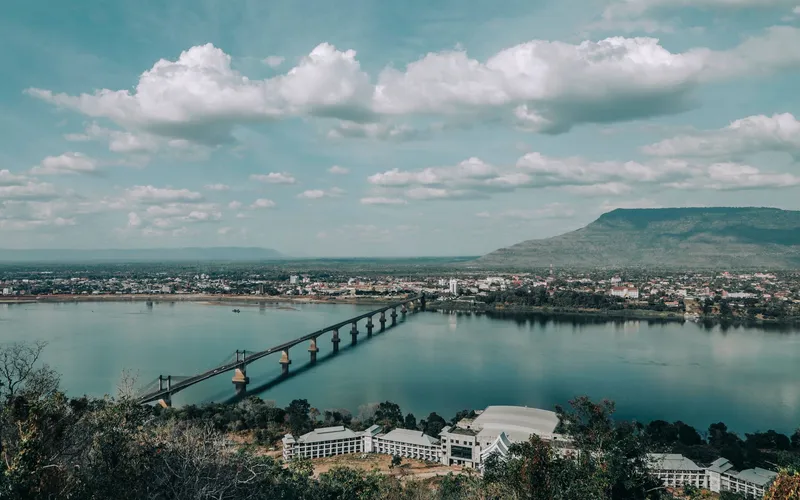
It would be unfair to let one place define a province. Bokeo is a forested, mountainous borderland with Mekong villages, hill communities and a quiet pace that has little to do with casinos. Huay Xai itself is a modest river town with simple guesthouses, a market and a relaxed riverside, and for many travellers it is a place to rest for a night before or after the slow boat.
If you have time, use it well. Spend a night in the town, walk the riverfront, eat at the market, and ask your guesthouse about community-run treks and homestays in the surrounding hills. These bring money directly to villages and keep you far from any grey economy. Our guide to off-the-beaten-path Laos suggests quieter places that deserve the same attention.
How to protect yourself and others
- Treat any unsolicited job offer in the border region as suspect. Verify employers independently and never surrender your passport.
- Keep your embassy's contact details in your phone, and share your itinerary with someone at home.
- Cross borders at established points. Our guide to Laos land border crossings lists the entry points we recommend.
- Be sceptical of online romance or investment pitches from people you have never met, wherever you are.
- If you suspect trafficking, contact local police or your embassy rather than confronting anyone.
What to Do Next
- Decide your route through Bokeo, and keep it simple: Huay Xai, the slow boat, Luang Prabang.
- Read our guides to scams and entry points before you travel.
- Share your plans and embassy details with someone you trust.
- Spend your money with locally owned guesthouses, boats and guides.
- Read the slow travel charter to see how we think about responsible travel.
- Draft a route with the plan your journey page before you book anything.
Frequently Asked Questions
What is the Golden Triangle Special Economic Zone?
A casino-led zone in Bokeo province on the Mekong, opposite Chiang Rai in Thailand, leased to the Kings Romans Group for 99 years from 2007.
Is northern Laos safe for tourists?
For most visitors, yes. The concerns around the zone relate to organised crime and trafficking, not to routine tourism. Normal precautions apply.
Has the zone been sanctioned?
Its founder, Zhao Wei, was sanctioned by the United States in 2018 and by Britain in 2023, both citing trafficking.
Are scam centres still operating?
Raids in 2023, 2024 and 2025 disrupted operations, but analysts say networks can adapt. The current position is not fully public.
Do I pass through the zone on the slow boat?
No. The slow boat departs from Huay Xai and runs to Luang Prabang without any need to enter the zone.
What should I do about suspicious job offers?
Do not accept them. Verify employers independently, keep your passport, and speak to your embassy if you have doubts.
Can I visit the casino?
You can, but we do not recommend it. Take the usual precautions if you go, and think about where your money ends up.