

Malaysia is one of the easiest countries in Southeast Asia to spend money in, and one of the easiest to get wrong. Kuala Lumpur is a contactless city where a foreign card works almost everywhere. Two hours away, a kopitiam owner will look at that same card with polite bafflement and point at a QR sticker taped to the counter. Between those two extremes sits a payments landscape that has changed faster than most guidebooks have kept up with. Getting it right takes about twenty minutes of preparation before you fly and saves you a fortnight of small frustrations, unnecessary conversion fees and awkward moments at food stalls. Here is how money actually works on the ground in Malaysia.
The short version
If you read nothing else: bring one contactless card with low foreign transaction fees, withdraw ringgit from a bank ATM on arrival rather than changing money at the airport, keep between one and two hundred ringgit in small notes at all times, and set up the Touch 'n Go eWallet if your stay is longer than a few days. That combination covers essentially everything from a five-star hotel to a roadside satay stall.
The rest of this article explains why each of those matters, and where the exceptions are.
One request. Up to five tailored proposals.
Skip contacting agencies one by one — share your trip once and let up to five trusted Malaysia agencies come to you. Free, with no obligation.
Get my free quotesUnderstanding the ringgit
The currency is the Malaysian ringgit, written RM in Malaysia and MYR internationally. Notes come in RM1, RM5, RM10, RM20, RM50 and RM100. Coins are 5, 10, 20 and 50 sen, and one hundred sen make a ringgit.
The practical point is denomination management. RM100 notes are common from ATMs and useless at a hawker stall selling a RM6 plate of noodles. Break large notes at supermarkets, petrol stations, convenience stores or when paying a hotel bill, and keep the small ones for food, buses and markets. A traveller carrying only fifties and hundreds will be quietly resented by every small vendor they meet.
Prices are usually clear and fixed. Markets selling crafts and souvenirs are the main place where bargaining is expected, and even there it is gentle. Our guide to what a trip to Malaysia actually costs gives realistic daily figures to budget against.
Cash: where it still rules
Despite the country's digital payments boom, cash has not gone anywhere. You will need it for:
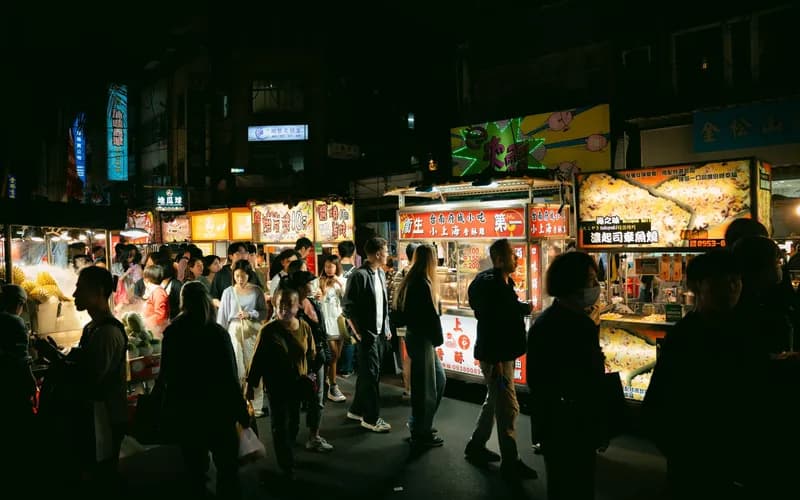
- Hawker centres, night markets and older kopitiams, especially outside the big cities
- Small guesthouses, homestays and rural accommodation
- Local buses, some ferries and jetty fees
- Temple and mosque donation boxes
- Parking attendants, toilets at bus stations and small tips
- Anywhere at all during a power or network outage, which happens
The general rule is that the smaller and older the business, the more likely cash is the only certain option. This is even more true once you leave the west coast corridor. In places like the Kinta Valley around Ipoh, the best food is often in exactly the kind of decades-old shop that has never taken a card in its life.
Get matched with up to 5 trusted Malaysia agencies
- Free
- No obligation
- Up to 5 agencies
Cards: where they work and where they don't
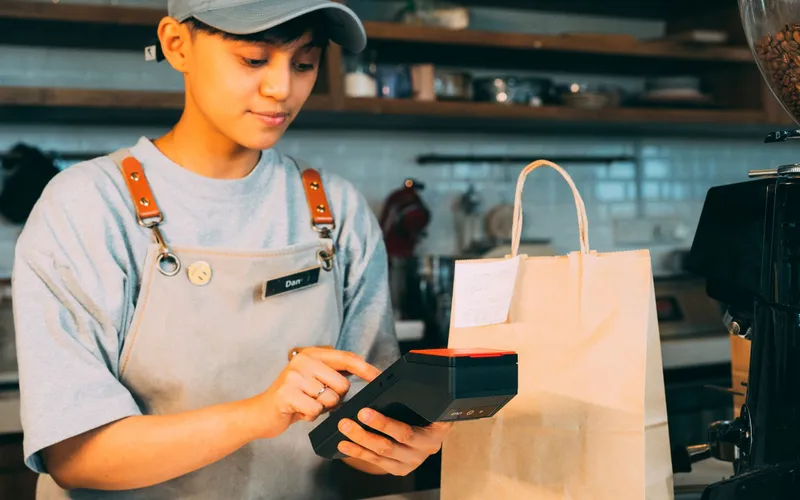
Visa and Mastercard are widely accepted; American Express far less so. Contactless tap payments are standard in supermarkets, chain restaurants, malls, petrol stations, pharmacies, mid-range and upmarket hotels, and most bookable activities.
Three things to watch:
Dynamic currency conversion. If a terminal offers to charge you in your home currency rather than ringgit, decline. Always choose to pay in MYR. The convenience rate applied by the merchant's bank is consistently worse than your own bank's.
Foreign transaction fees. Many cards add two to three per cent on every overseas purchase. A travel-focused card or a multi-currency account eliminates this and pays for itself within a week.
Notify or don't. Most banks no longer require travel notifications, but a card that gets blocked in a foreign country over a RM12 transaction is a genuinely bad afternoon. Carry a second card from a different issuer, stored separately.
DuitNow QR: the system behind everything
The single most important thing to understand about Malaysian payments is DuitNow QR. It is the national QR standard operated by PayNet, and it means one sticker or one screen accepts every major Malaysian wallet and participating bank app. There is no fragmentation between competing QR systems the way there is in some neighbouring countries.
By 2026 that black-and-white square is on virtually every counter in the country, from department stores to a woman selling nasi lemak from a folding table. For consumers, QR payments and DuitNow transfers are free.
There is also a growing cross-border layer. Travellers from Singapore, Thailand and Indonesia, and from several East Asian markets, can already scan a Malaysian DuitNow QR code directly with their home e-wallet, with the transaction settled in their own currency. Services including GCash in the Philippines and Kakao Pay and Naver Pay in South Korea are part of this network. If you are arriving from one of those countries, check your existing wallet app before installing anything new.
For visitors from Europe, the UK, North America and Australia, home wallets are not yet connected, which is where Touch 'n Go comes in.
Setting up Touch 'n Go eWallet as a visitor
Touch 'n Go eWallet is the market leader by a distance, with over 23 million verified users and a strong preference share among Malaysians. It plugs directly into DuitNow QR, giving access to more than two million merchants nationwide.
Crucially, it is now genuinely usable by foreign visitors. Tourists can complete onboarding using passport-based electronic verification, and eligible visitors can register with a foreign mobile number rather than needing a Malaysian SIM card. The app also has a dedicated flow for visitors that differs from the resident onboarding path, so follow the tourist route rather than assuming the standard one will work.
Practical notes:
- Download and start verification before you travel, over a stable connection, and allow a day for approval rather than doing it in the arrivals hall.
- Topping up is the fiddly part. Some foreign cards work directly; others do not. Reloading at a convenience store counter with cash is the reliable fallback.
- The same app covers tolls, some parking, many transport fares and a large share of retail, which is why long-stay travellers end up using it daily.
- Do not load large sums. Treat it as a spending wallet holding a few hundred ringgit, not a bank account.
Grab, transport and the wallet advantage
Grab is the default for ride-hailing and food delivery across Malaysian cities, and it accepts foreign cards directly in the app, which makes it the simplest cashless option for transport from the moment you land. GrabPay, its in-app wallet, also works at some merchants.
For public transport, Kuala Lumpur's MRT, LRT and monorail accept contactless bank cards at the gates on most lines, and Touch 'n Go physical cards remain the standard local option. Intercity train tickets on KTM are bought online or at station counters with a card. Long-distance express buses are usually booked through online platforms that take international cards, though small operators at rural terminals may still want cash.
Getting cash: ATMs, fees and money changers
Bank ATMs are everywhere in towns and cities and generally accept foreign cards. Maybank, CIMB, Public Bank and RHB machines are the most common. Expect a local operator fee on top of whatever your own bank charges, so withdraw larger amounts less often rather than small amounts daily.
Licensed money changers in malls and city centres usually offer better rates than airport counters or hotels, and they are safe and regulated. Bring clean, unmarked notes if you are exchanging cash. Airport exchange desks are fine for a first RM100 to cover a taxi and a meal, but do not change your whole budget there.
Rural and island cash planning deserves a mention. Several popular islands have no ATM at all, or one machine that runs empty in high season. Withdraw on the mainland before boarding a boat, and assume island guesthouses and boat operators are cash-only unless they have told you otherwise.
Tipping, service charges and rounding
Tipping is not part of Malaysian culture and no one will chase you down the street. Mid-range and upmarket restaurants and hotels often add a service charge plus government tax, shown on menus as prices followed by two plus signs. Where that appears, nothing further is expected.
At hawker stalls and casual restaurants, no tip is normal. Rounding up a taxi or Grab fare, or leaving a couple of ringgit for exceptional service, is welcomed but never required. Hotel porters and housekeeping appreciate a few ringgit.
Separately, foreign guests at most hotels pay a per-night tourism tax collected at check-in, and this is not included in booking-site totals. Our breakdown of Malaysia's tourism taxes and fees sets out exactly what gets added and when.
Common mistakes and how to avoid them
Arriving with no cash and assuming cards work everywhere is the classic error, usually discovered at the first food stall. So is accepting dynamic currency conversion out of politeness. A third is relying entirely on one card with no backup.
Two subtler mistakes are worth naming. The first is over-preparing: some travellers spend days trying to set up a local wallet for a five-day trip, when a card and cash would have been fine. Touch 'n Go earns its keep on stays of a week or more. The second is treating QR payments as unsafe. In Malaysia they are the mainstream method, used by everyone, and refusing them mostly means carrying more cash than you need to.
Finally, handle money with the right hand where you can, particularly in Malay and Muslim contexts, and take small change with both hands or the right hand when it is offered. Our guide to travelling Malaysia respectfully covers this and the wider etiquette that makes daily transactions easier.
What to Do Next
- Check the foreign transaction fee on every card in your wallet and travel with the cheapest one, plus a backup from a different bank stored separately.
- Start the Touch 'n Go eWallet tourist registration before you leave home if your trip is longer than about a week, and allow time for passport verification.
- Plan your first withdrawal: use a bank ATM in the arrivals hall for RM300 to RM500 rather than an exchange counter, and break a large note at a convenience store immediately.
- Set a personal rule to always decline home-currency conversion at card terminals and always pay in ringgit.
- Before any island or rural leg, withdraw enough cash on the mainland to cover accommodation, boats and food for the whole stay.
- Read the pricing on your hotel booking carefully so the tourism tax and any service charge are not a surprise at check-in, and keep small notes aside for it.
Frequently Asked Questions
Can I use my foreign credit card everywhere in Malaysia?
Not everywhere, but in more places than you might expect. Malls, supermarkets, chain restaurants, hotels and petrol stations take contactless cards routinely. Hawker stalls, small kopitiams, local buses, rural guesthouses and island operators frequently do not. Carry cash as well and you will never be stuck.
Do I need a Malaysian SIM card to use Touch 'n Go eWallet?
No. Eligible foreign visitors can now register using a foreign mobile number and verify their identity with a passport through the app's electronic verification process. A local SIM or eSIM still makes daily life easier for data, but it is no longer a requirement for the wallet itself.
What is DuitNow QR and do I need it?
DuitNow QR is Malaysia's national QR payment standard, so one code at the counter accepts all major local wallets and bank apps. You do not need it directly, but any Malaysian wallet you use will run on it, and travellers from several Asian countries can scan it with their home wallet.
How much cash should I carry in Malaysia?
Between RM100 and RM200 in small notes for a normal day of eating, transport and incidentals in a city. Increase that substantially before island trips or rural stays where ATMs are scarce or absent. Avoid walking around with more than you would be comfortable losing.
Is it better to exchange money before I arrive or in Malaysia?
Almost always in Malaysia, and preferably not at the airport. Licensed money changers in city centres and shopping malls offer competitive rates, and bank ATM withdrawals with a low-fee card are usually the cheapest route of all. Change a small amount on arrival and the rest later.
Should I tip in Malaysia?
There is no tipping expectation. Restaurants and hotels in the mid and upper range typically add a service charge and government tax to the bill, and nothing more is required. Rounding up a fare or leaving small change for good service is appreciated but entirely optional.
Are QR payments safe for tourists?
Yes. DuitNow QR is a regulated national system and is the everyday payment method for most Malaysians. The usual precautions apply: check the merchant name shown in your app before confirming, verify the amount, and be wary of any sticker that looks tampered with or pasted over another one.