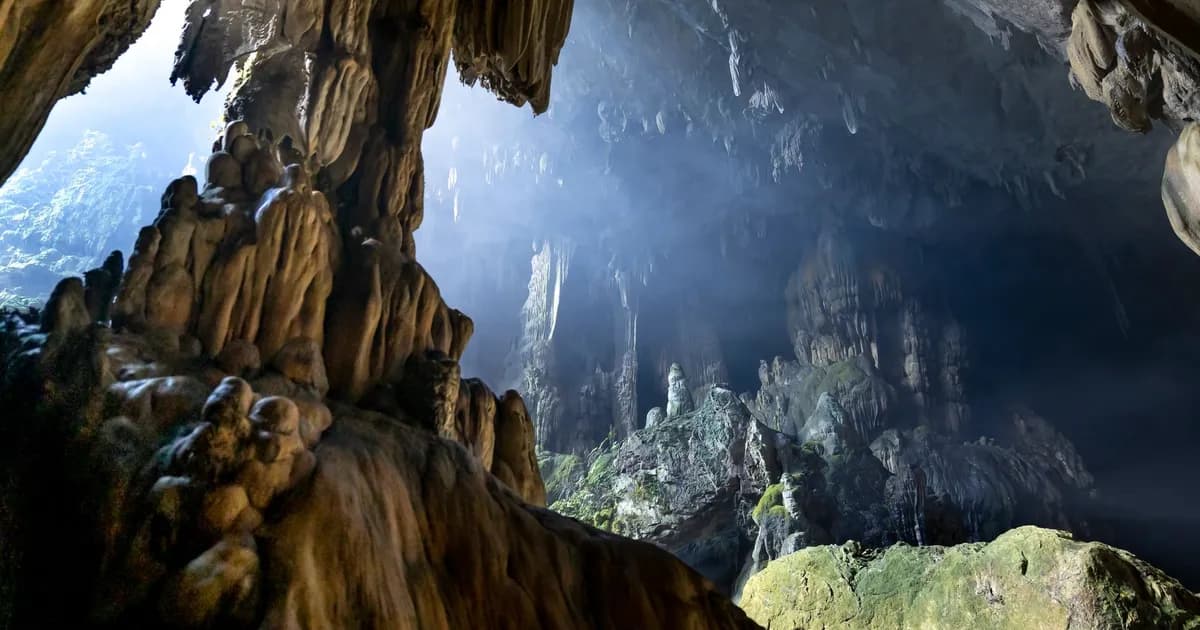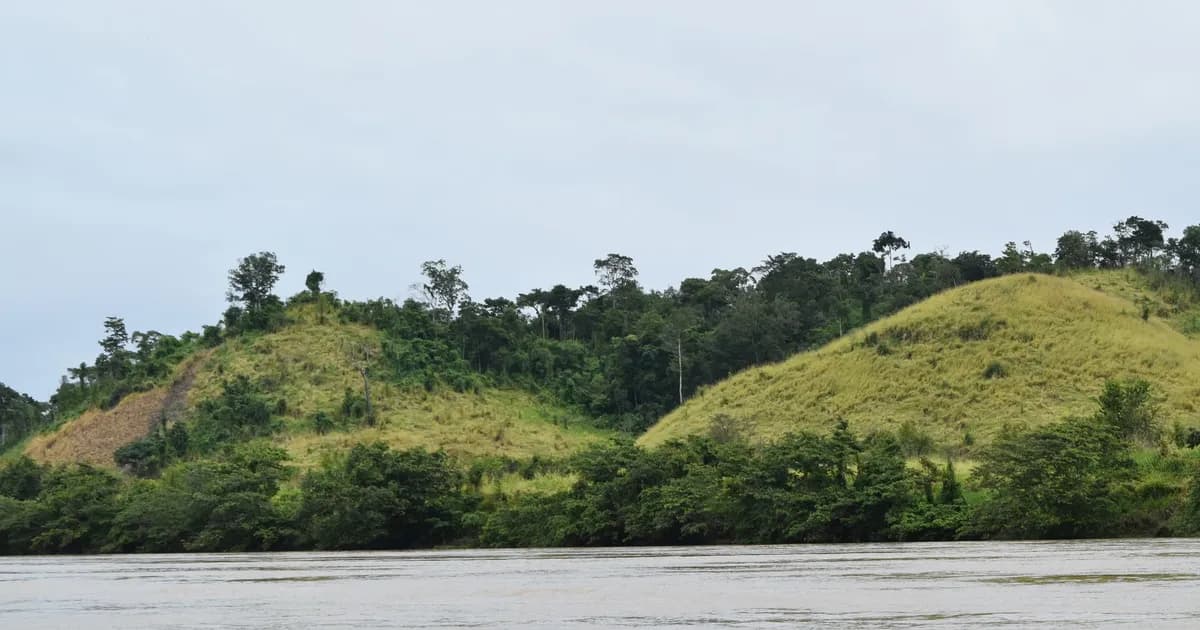


Ipoh sits in a bowl of limestone hills about two hours north of Kuala Lumpur, and for most of the past half-century it was a city travellers passed through rather than stopped in. That has changed, quietly and without much fanfare. The tin money that built its shophouses drained away when the industry collapsed in the 1980s, leaving behind an unusually intact grid of colonial-era civic buildings, Chinese clan halls and five-foot ways that nobody had the budget to knock down. Today those same streets are the reason to come. Ipoh does not perform for visitors. It is a working Malaysian city with exceptional food, a walkable historic core, and a valley full of caves, old mining towns and back roads around it. That combination makes it close to ideal for the kind of travel that measures a trip in mornings rather than in sights.
Why Ipoh rewards a slower pace
Most itineraries give Ipoh a single night, usually squeezed between Kuala Lumpur and Penang. It is the wrong shape for the place. Ipoh's pleasures are cumulative rather than spectacular: the same kopitiam three mornings running, the way the light hits the limestone cliffs behind Gunung Rapat in the late afternoon, a conversation with a shopkeeper who remembers when the street was full of tin brokers. There is no single monument that justifies a detour. There are forty small things that justify four days.
The city is also a good corrective to the way Malaysia is usually sold. Kuala Lumpur is skyline and shopping. Penang is heritage tourism at full volume. Ipoh has the same historical layers as George Town — Malay, Chinese, Indian, British, all stacked into a few square kilometres — but far fewer visitors negotiating for the same table. Prices reflect that. So does the temperature of the welcome.
If you are still sketching a route, our overview of where to go and when in Malaysia is a useful frame for slotting Perak into a longer trip rather than treating it as a stopover.
One request. Up to five tailored proposals.
Skip contacting agencies one by one — share your trip once and let up to five trusted Malaysia agencies come to you. Free, with no obligation.
Get my free quotesGetting there: the train makes the case
The strongest practical argument for Ipoh is that reaching it is genuinely pleasant. KTM's Electric Train Service runs from KL Sentral to Ipoh in roughly two hours to two and a half hours depending on class and stopping pattern, with around eighteen departures a day at the time of writing. Platinum and Express services are quickest; Gold services stop more often and cost less. Book through the KTMB website or app, ideally a few days ahead for weekend travel and well ahead around public holidays, when the northern corridor fills up fast.
Arriving by rail also delivers you into one of the best buildings in the country. Ipoh Railway Station, completed in 1917 in the same Indo-Saracenic idiom as its counterpart in Kuala Lumpur, is often nicknamed the Taj Mahal of Ipoh. Its long white arcade faces the Town Hall across a green, and from the platform you can walk into Old Town in ten minutes without touching a taxi.
Trains also make the onward legs easy: north to Kuala Kangsar and Taiping, or on to Butterworth for the ferry across to Penang. For the wider rail picture, including the slower cross-country lines, see our guide to travelling peninsular Malaysia by train.
Old Town and New Town: reading the grid
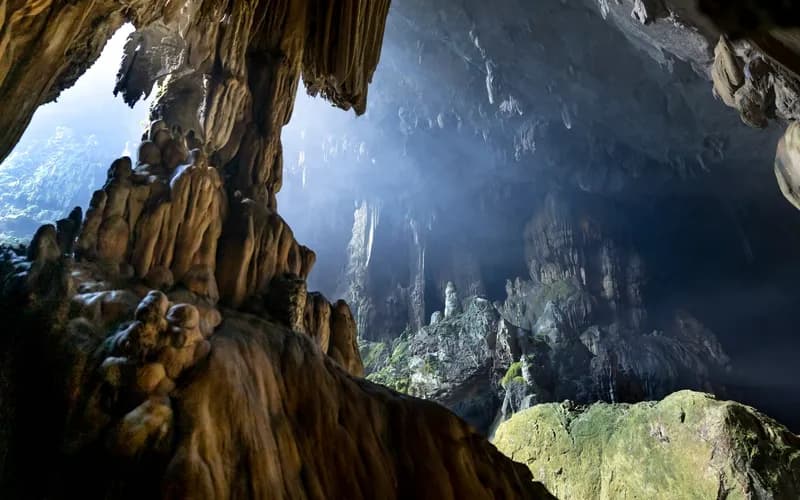
Ipoh is split by the Kinta River. Old Town, on the west bank, is the tin-era core: a compact rectangle of shophouses, banks and association buildings laid out when the Kinta Valley was producing a significant share of the world's tin. New Town, east of the river, was developed slightly later and is busier, scruffier and better for everyday eating.
In Old Town, start with the streets rather than a list. Jalan Sultan Yussuf, Jalan Panglima and the lanes between them hold the densest concentration of pre-war facades. Han Chin Pet Soo, once a private Hakka tin miners' club, is now a small museum that explains the industry and its less respectable side lines with unusual honesty; entry is by pre-booked timed slot, so check before you turn up. The Birch Memorial Clock Tower carries a painted frieze of historical figures that is worth reading closely for what it says about who was writing history in 1909. Concubine Lane — Lorong Panglima — has been thoroughly commercialised and is still worth ten minutes, mostly for the contrast with the quiet lane one block over.
New Town rewards a different kind of walking. Jalan Yau Tet Shin's morning market, the coffee shops around Jalan Raja Ekram, and the residential streets north of the centre give you the city as it is actually lived in. Neither half takes more than a morning; doing both across two mornings, with a long breakfast in between, is the better plan.
Get matched with up to 5 trusted Malaysia agencies
- Free
- No obligation
- Up to 5 agencies
The cave temples of the limestone hills
The karst outcrops that ring Ipoh are riddled with caves, and several have been Buddhist and Taoist temples for well over a century. They are the city's signature sight and, handled properly, an unexpectedly calm half-day.
- Perak Tong, north of the city on the Kuala Kangsar road, has painted murals through its chambers and a long staircase climbing to a viewpoint over the valley.
- Sam Poh Tong, south at Gunung Rapat, is the oldest of the group and has a tortoise pond and a rock garden in front.
- Kek Lok Tong, reached through a quiet park on the far side of the same hill, is the most atmospheric: a huge open cavern with light entering at both ends and a landscaped lake garden behind.
- Ling Sen Tong, near Sam Poh Tong, is the most exuberant, with brightly painted Taoist statuary crowded against the cliff.
Entry is generally free with a donation box at the door. Dress modestly, keep your voice down, and go early — the caverns are cool in the morning and the light through the openings is at its best before the day heats up. A half-day by Grab covering two or three of them costs little and avoids the frustration of infrequent buses.
Eating Ipoh: white coffee, bean sprouts and dim sum
Ipoh is a serious food city and the reason many Malaysians drive up for the weekend. Three things define it.
White coffee — kopi putih — was born here: beans roasted with margarine rather than sugar and wheat, producing a lighter, less bitter cup. The old kopitiams of Jalan Bandar Timah serve it strong, over condensed milk, in thick-walled cups. Order it iced in the afternoon and hot at seven in the morning, when the shops are full of retirees reading newspapers.
Nga choi kai, or bean sprout chicken, is the dish outsiders are sent to try: poached chicken, a plate of unusually plump local bean sprouts said to owe their texture to the limestone-filtered water, and either rice or flat rice noodles in a clear broth. It sounds austere and is not. Ipoh hor fun, prawn-and-chicken noodles in a clean stock, is the everyday version.
Dim sum is the third pillar, and Ipoh's is closer to Cantonese standards than most of Malaysia's. Sessions start early and are over by mid-morning; if you arrive at eleven expecting a leisurely brunch you will find the trolleys already parked. For the wider national picture, our guide to Malaysian food is a good primer on what to order elsewhere.
Beyond the city: Kellie's Castle, Gua Tempurung and the old tin towns
The Kinta Valley is the real subject of a longer stay. Within an hour of Ipoh you can string together an entire industrial and colonial history without ever queueing.
Kellie's Castle, at Batu Gajah roughly thirty to forty kilometres south, is an unfinished mansion begun in 1915 by William Kellie-Smith, a Scottish planter and tin magnate who died before it was completed. It is romantic, slightly absurd, and instructive about how quickly that world ended.
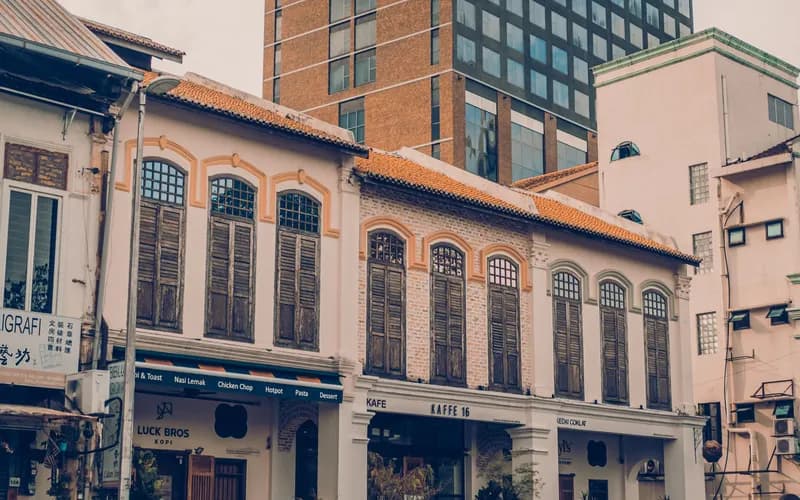
Gua Tempurung, near Gopeng, is one of the largest show caves in peninsular Malaysia. Short walkway routes suit anyone with reasonable mobility; longer wet routes involve wading and crawling through an underground river and need proper shoes, a change of clothes and a guide.
Then there are the towns. Papan, Gopeng, Batu Gajah and Tanjung Tualang were all built on tin and left behind when it went. Tanjung Tualang is now known for freshwater prawns and for the preserved tin dredge on its outskirts — a piece of floating industrial archaeology that makes the scale of the industry legible in a way no museum does.
Further out: Kuala Kangsar, Taiping and the Lenggong Valley
Give Perak a week and the radius widens. Kuala Kangsar, the royal town forty-five minutes north by train, holds the Ubudiah Mosque and the timber Istana Kenangan, built without nails. Taiping, further north again, has the Lake Gardens — old mining pools softened into one of the loveliest public parks in the country — and a reputation as one of the wettest towns in Malaysia, which is precisely why it is so green.
The Lenggong Valley, inland and north, was inscribed on the UNESCO World Heritage List in 2012 for four archaeological sites spanning close to two million years of human presence, including the cave where Perak Man was found. The small archaeological museum is the sensible starting point. Lenggong remains a rural town with very little tourist infrastructure, which is either the drawback or the entire attraction depending on how you travel.
North Perak also holds the Royal Belum State Park, one of the oldest rainforests on earth, reached across Temengor Lake and requiring permits arranged in advance through a licensed operator. If that side of the country interests you, our piece on Malaysia's ecotourism shift sets out how conservation-linked travel is developing nationally.
Where to stay and how long to give it
Old Town is the right base. A cluster of heritage shophouse hotels and small guesthouses sits within walking distance of the station, the kopitiams and the start of the temple road, and the area is quiet after dark. New Town has more mid-range chain options and cheaper food at street level. Rates in Ipoh are noticeably lower than in Penang or Kuala Lumpur for comparable quality.
On duration: two nights is the minimum that makes the journey worthwhile. Four nights lets you walk both halves of the city, do the cave temples properly, take one full day in the valley and still have a morning with nothing planned. A week turns Ipoh into a base for the whole of Perak. Travellers combining Ipoh with the hills often continue to the Cameron Highlands, which are around three hours away by road and make a natural cool-weather counterpoint.
The practical frame: money, weather and getting around
Ipoh has an equatorial climate with rain possible year-round and a tendency towards heavy late-afternoon downpours that clear as fast as they arrive. There is no season to avoid, only a rhythm to work with: move in the morning, eat and rest in the early afternoon, walk again at five.
Grab is the default for anything outside the centre and is cheap by regional standards. Old Town itself is comfortably walkable, though pavements are uneven and the five-foot ways are often blocked. Cash still matters in older kopitiams and at markets, while QR payments are near-universal in newer places.
If Ipoh is your first stop after a heritage-heavy stay elsewhere, it pairs unusually well with Penang and George Town — same architectural vocabulary, entirely different atmosphere, and an easy connection by train and ferry.
What to do next
- Fix your dates around the train rather than the other way round: check ETS availability on the KTMB app first, then book accommodation in Old Town within walking distance of the station.
- Give Ipoh a minimum of three nights. Block one full morning for Old Town, one for New Town and its markets, and one half-day for the cave temples.
- Reserve a timed slot at Han Chin Pet Soo before you arrive, since walk-ins are not usually possible.
- Choose one valley day trip rather than three: Kellie's Castle and Gua Tempurung together, or Tanjung Tualang and the old tin towns, but not both in twenty-four hours.
- Decide early whether Lenggong or Royal Belum is in scope. Both need transport arranged in advance and neither works as a spontaneous add-on.
- If you want the valley explained rather than merely visited, work with a local operator; our directory of vetted Malaysian travel agencies is the place to start.
Frequently Asked Questions
How many days do I need in Ipoh?
Two nights is the practical minimum and three or four is much better. Two nights gives you the Old Town walk and one meal-focused morning. Three or four lets you add the cave temples and a day in the Kinta Valley without rushing, which is the point of coming at all.
Is Ipoh better than Penang?
They are not competitors. Penang has more restored heritage, a bigger restaurant scene and far more visitors; Ipoh has a similar architectural fabric, better value, and a quieter, more everyday atmosphere. Many travellers do both, and the train and ferry connection makes that straightforward.
Do I need a car to visit the Kinta Valley?
No, but you need a plan. Grab covers the cave temples and Batu Gajah cheaply. For Gua Tempurung, Tanjung Tualang or Lenggong, either hire a car for the day with a driver or join an organised trip, since public transport to these places is infrequent and awkward to combine.
When is the best time to visit Ipoh?
There is no bad month. Perak's rainfall is spread across the year, with wetter spells around April and again from October to November. Heat and humidity are constant, so plan around the time of day rather than the season, and accept that a heavy shower is likely at some point.
Is Ipoh a good destination for solo travellers?
Yes. It is safe, compact, walkable in the centre, and the kopitiam culture makes eating alone completely normal. Public transport within the city is limited, so budget for ride-hailing, and be aware that Old Town is very quiet late in the evening.
What should I eat in Ipoh if I only have one day?
White coffee and kaya toast at an Old Town kopitiam for breakfast, dim sum before ten if you can manage two breakfasts, bean sprout chicken with hor fun for lunch, and something from a New Town street stall in the evening. That covers the city's four defining flavours in a single day.
Can I visit the cave temples respectfully as a non-Buddhist?
Yes, and visitors are welcome. Cover your shoulders and knees, remove shoes where indicated, do not photograph people at prayer, keep your voice low, and leave a small donation. These are working places of worship rather than monuments, and behaving accordingly is the whole of the etiquette.