

The Philippines welcomed roughly 4.11 million international visitors in the first eight months of 2026, about 3.7 percent more than the same period a year earlier. That single sentence hides a more interesting story: growth that started the year in double digits and then flattened, a source-market mix that looks meaningfully different from a decade ago, and a country still well short of where it stood before the pandemic. For a slow traveller, none of this is abstract. It determines which islands feel busy in February, which flights get added, and where your money lands.
The Numbers Behind the Headlines
Start with the shape of the year. Arrivals in the first quarter of 2026 came in around 1.83 million, up more than ten percent on the same quarter of 2025. By the halfway mark the country had received about 3.16 million inbound travellers, of whom roughly 260,000 were overseas Filipinos coming home rather than foreign nationals. By the end of August the total stood at about 4.11 million, and the year-on-year gain had narrowed to under four percent.
That deceleration matters more than the headline total. It means the strong start was partly a base effect and partly a burst of pent-up demand from newly visa-liberalised markets, and that the underlying trend is closer to modest growth than to a boom. The Department of Tourism has been working toward a full-year figure in the region of 6.7 million, with public statements at various points setting the ambition anywhere from 6.4 to 7 million. On the eight-month run rate, the lower end of that range looks like the realistic outcome.
Set against 2019, when the country received roughly 8.3 million international visitors, the Philippines remains one of the slower recoveries in Southeast Asia. Neighbouring destinations have already passed their pre-pandemic peaks. The Philippines has not, and the reasons are structural rather than seasonal.
One request. Up to five tailored proposals.
Skip contacting agencies one by one — share your trip once and let up to five trusted Philippines agencies come to you. Free, with no obligation.
Get my free quotesWhere the Growth Is Actually Coming From
The United States remained the largest single source market in the first eight months of 2026, with roughly 818,000 arrivals. South Korea followed at about 727,000. Those two markets have anchored Philippine tourism for years, and they behave very differently: American arrivals skew heavily toward the Filipino diaspora and long multi-week family visits, while Korean travel is concentrated in short, resort-based holidays in Cebu, Boracay and Clark.
The fastest growth in 2026 came from China and India. Both markets received significant visa liberalisation, and both are starting from a low base, which flatters percentage figures. Japan, Australia and the traditional European markets have grown more slowly and more steadily.
The practical consequence is a country whose visitor profile is bifurcated. A large share of arrivals are not tourists in the conventional sense at all, but returning Filipinos with family accommodation and their own transport patterns. Another large share is packaged, short-haul and destination-specific. The independent long-stay traveller who spends three weeks moving between provinces is a minority in the statistics, which is exactly why so much of the country still feels unvisited outside a handful of hotspots.
The Gap With 2019, and Why It Persists
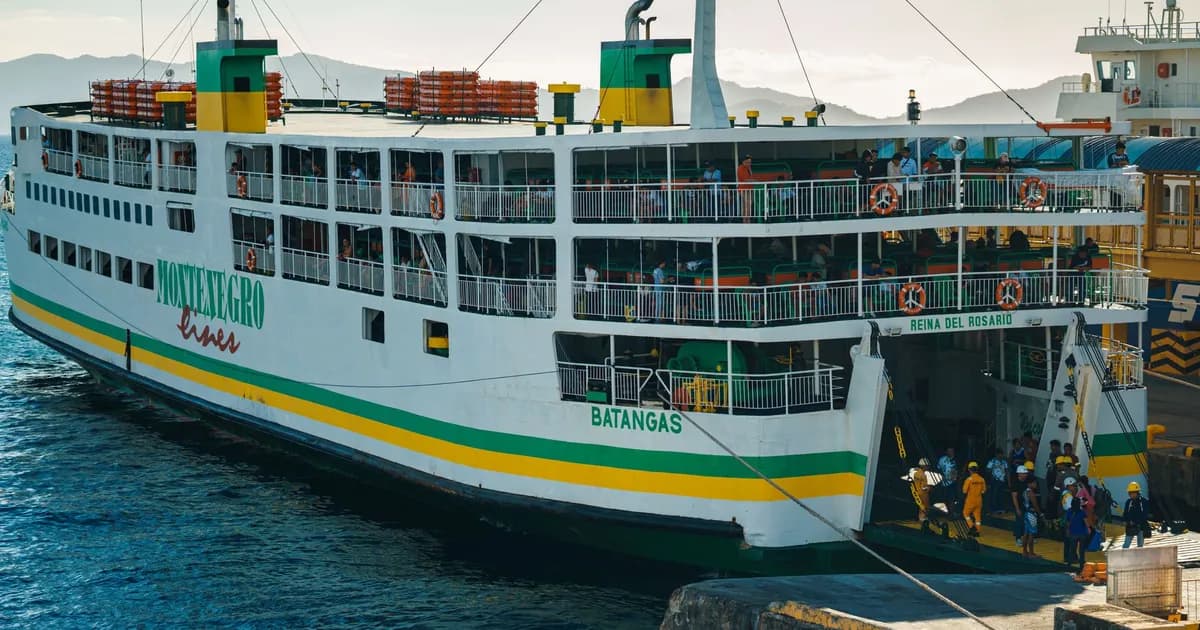
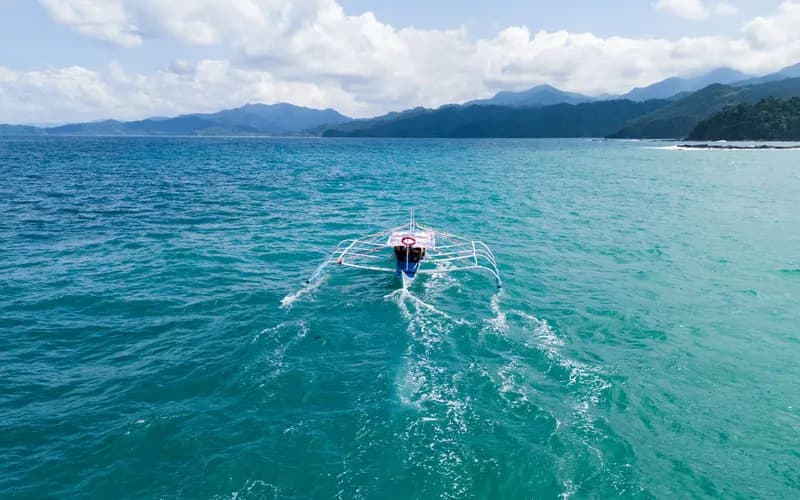
Three factors keep the Philippines behind its neighbours. The first is geography: the country is an archipelago of more than seven thousand islands, and almost every worthwhile destination requires a domestic flight or a ferry on top of the international arrival. That adds cost, time and friction that a mainland destination does not carry.
The second is connectivity. International long-haul capacity into Manila and Cebu has recovered unevenly, and several European carriers that once flew the route have not returned. Most European visitors arrive via a Gulf or East Asian hub, which lengthens the journey and raises the price.
The third is the reputational drag of concentration. When the country's tourism story is told through Boracay and El Nido, potential visitors reasonably conclude that the Philippines is either crowded or expensive. The national response has been to push dispersal, capacity limits and secondary destinations, a policy shift we examined in our analysis of how the Philippines is capping crowds on its islands. Dispersal is the right instinct, but it takes years to show up in arrival numbers.
Get matched with up to 5 trusted Philippines agencies
- Free
- No obligation
- Up to 5 agencies
Visa Policy Is Doing the Heavy Lifting
Most of 2026's growth is traceable to entry rules rather than marketing. Visa-free entry for Chinese nationals for stays of up to 14 days took effect on 16 January 2026, initially through a restricted set of entry points, with subsequent announcements extending the gateways available. Indian nationals also gained short visa-free access on comparable terms. Meanwhile the long-standing arrangement that lets citizens of more than 150 countries enter without a visa for 30 days remains the backbone of the system for most Western visitors.
This is worth understanding because visa-driven growth is volatile. It responds to political relations, aviation capacity and reciprocal arrangements, and it can reverse quickly. A destination whose growth rests on entry policy rather than on product development is a destination whose crowd levels can change between one season and the next. That is an argument for planning around places with genuine local depth rather than around whatever is trending.
What a Changing Mix Means on the Ground
A shift in source markets does not spread evenly across a country this fragmented. It lands in specific places. Short-haul, package-oriented growth concentrates in the same four or five destinations that already have direct international access, charter capacity and large resort inventory: Cebu and Mactan, Boracay via Caticlan, Clark and its hinterland, and increasingly Bohol and Palawan.
What this means in practice is that the Philippines is becoming more crowded and less crowded at the same time. Peak-season Boracay, Panglao and El Nido are busier and pricier than they were three years ago. Meanwhile provinces one ferry further out remain almost untouched by the trend. Islands like the one we profile in our field notes on Marinduque, the country's heart-shaped island see essentially none of this growth, which is both their charm and their fragility.
For travellers, the arbitrage is obvious and it is not a secret: one additional travel day, taken deliberately, buys a completely different quality of experience. The cost is a boat ride and a willingness to accept fewer amenities.
There is a second-order effect worth watching. When package volume concentrates in a few destinations, prices there decouple from the rest of the country: a beachfront room in Panglao can cost three times what an equivalent room costs two islands away, and boat operators price for the group market rather than for the individual traveller. Visitors who compare a Palawan quote with a Visayas quote and conclude that the Philippines is expensive are usually comparing two entirely different economies that happen to share a currency.
The Seasonal Squeeze Nobody Talks About
The other thing the annual totals conceal is how compressed Philippine tourism is in time. Demand piles into the dry months from December to April, with a hard peak over Christmas, Chinese New Year and Holy Week. Add domestic travel, which is far larger in volume than international arrivals and which surges on exactly the same long weekends, and you get a country that is genuinely crowded for perhaps fourteen weeks a year and comfortable for the rest.
Domestic demand is the variable most foreign visitors ignore entirely. Filipino families travel in force during the school break from late March to May, over All Saints Day at the start of November, and on every long weekend the government declares, and they fill exactly the ferries and provincial resorts that independent travellers rely on. Checking the national holiday calendar before fixing dates is a five-minute task that prevents a fortnight of full boats.
Slow travellers are unusually well placed to exploit this. Late May and early June, before the rains fully set in, are often excellent. September and October carry typhoon risk but deliver empty beaches and low prices for those with flexible dates. The trade-offs by month are set out in our guide to where to go in the Philippines and when.
How to Read This as a Slow Traveller
Three conclusions follow from the 2026 data. First, the Philippines is not overwhelmed. A country receiving four million visitors in eight months, spread across dozens of provinces, is not in the same category as destinations dealing with genuine overtourism. The problem is concentration, not volume.
Second, growth driven by short-haul packages tends to produce a specific kind of tourism economy: high-volume, low-margin, dependent on tour operators and vulnerable to a single market pulling back. Local operators who work at a smaller scale, with their own guides and long-term community relationships, are the ones who keep value in the province. That is the standard we apply when we assess operators on our Philippines travel agencies page.
Third, the recovery gap is an opportunity with a limited shelf life. The infrastructure now being built — new terminals, better roads, expanded ferry booking — will eventually make today's quiet provinces easier to reach, and easier means busier. The islands that feel undiscovered in 2026 will not all feel that way in 2031.
What to Do Next
- Plan your trip around the calendar rather than the destination: avoid Christmas, Chinese New Year and Holy Week unless you specifically want the festivities.
- Assume the four or five headline destinations will be busier each year, and treat them as short visits rather than the spine of an itinerary.
- Add one deliberate extra travel day to reach a province that short-haul package tourism has not touched.
- Choose locally rooted operators over volume-driven ones, and ask directly where your money goes and who your guide is.
- Read our charter for slow travel before booking, and use it as a checklist when comparing itineraries.
Frequently Asked Questions
How many tourists visit the Philippines in 2026?
The country recorded about 4.11 million international arrivals between January and August 2026, roughly 3.7 percent more than the same period in 2025. The full-year figure is likely to land near the lower end of the official ambition of around 6.4 to 6.8 million, still short of the roughly 8.3 million recorded in 2019.
Which countries send the most visitors to the Philippines?
The United States led in the first eight months of 2026 with about 818,000 arrivals, followed by South Korea with around 727,000. China and India posted the fastest year-on-year growth after visa liberalisation, while Japan, Australia and European markets grew more slowly.
Is the Philippines crowded?
Only in a handful of places and for a handful of weeks. Boracay, Panglao, El Nido and central Cebu absorb a disproportionate share of arrivals during the December to April peak. Most provinces see very few international visitors at any time of year.
When is the best time to avoid crowds?
Late May and early June offer good weather with thinner crowds before the rains establish themselves. September and October are the quietest and cheapest months, with a real risk of typhoons and cancelled sailings that requires flexible dates and buffer days.
Does visa-free entry apply to most travellers?
Citizens of more than 150 countries can enter the Philippines without a visa for up to 30 days for tourism. Chinese and Indian nationals gained shorter visa-free access during 2025 and 2026, with entry-point conditions that have been adjusted several times, so current rules should be checked before booking.
Will the quiet islands stay quiet?
Not indefinitely. Airport upgrades, road improvements and digital ferry ticketing are steadily reducing the friction that has kept secondary provinces empty. The islands that feel undiscovered today are likely to be materially better connected within five years, which is a good argument for going now and treating them gently.