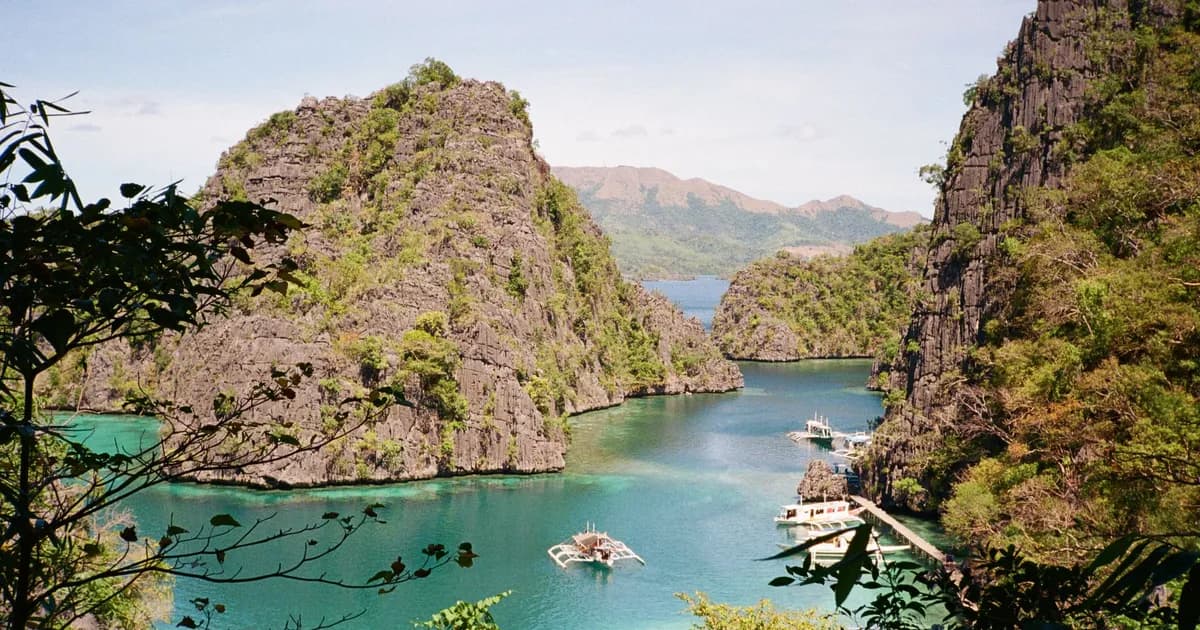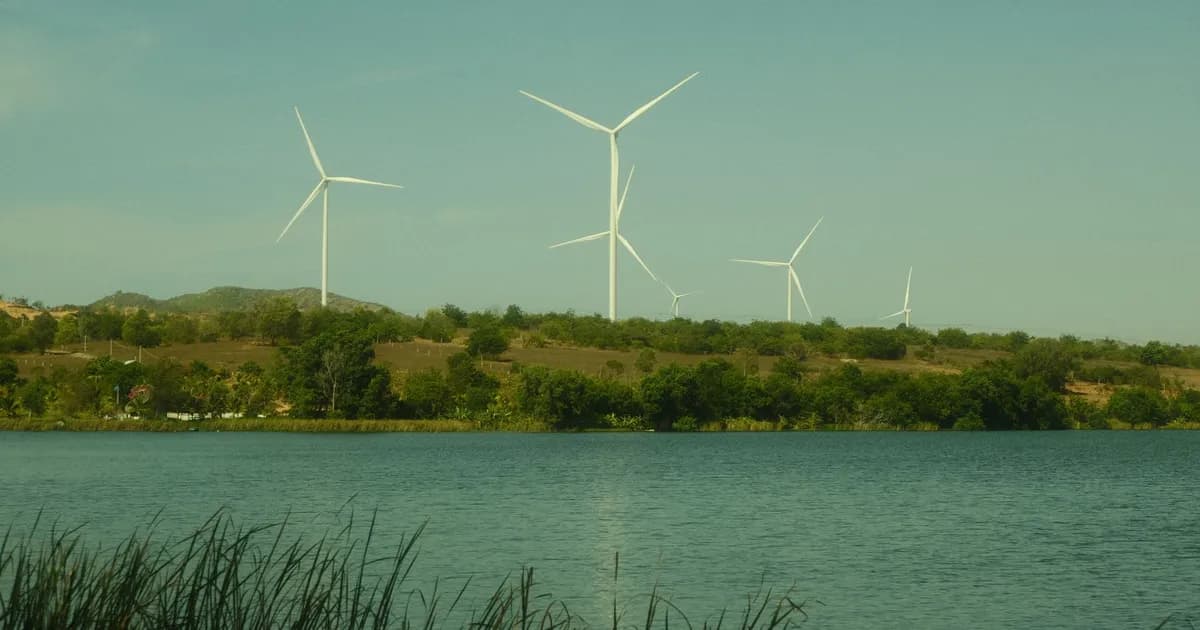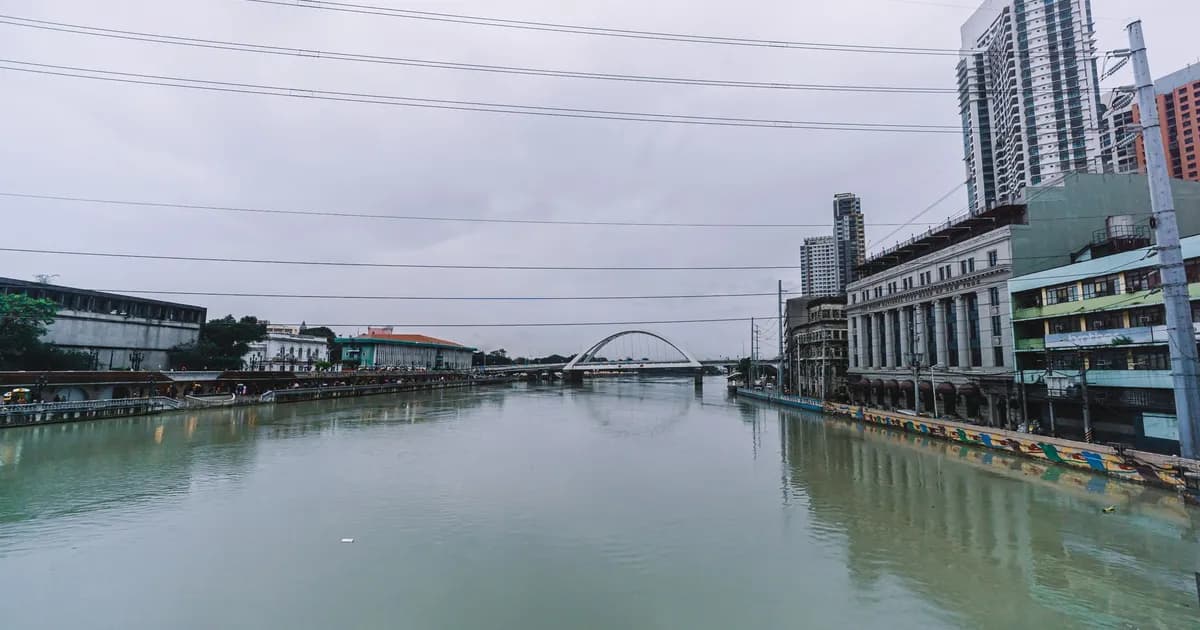


Marinduque sits almost in the geographic centre of the Philippines: a heart-shaped island of six small towns, one dormant volcano and a coastal road you can loop in a long morning. Most travellers pass it without noticing. There is no resort strip, no queue of dive boats, no arrivals hall full of transfer touts. What there is instead is a slow circuit of coves and old churches, ferries that leave when they leave, and a Holy Week ritual so distinctive that it carries its own name. This is an island that rewards a week and a loose plan far more than a rushed weekend.
Where Marinduque Sits, and Why That Matters
Marinduque belongs to the MIMAROPA region and lies in the Sibuyan Sea between southern Luzon and the northern Visayas. Look at a ferry map of the country and it is the island everything sails past: Mindoro to the west, Romblon to the south, the Bicol peninsula across the water to the east. That position explains almost everything about the place. Marinduque was never on the route to anywhere commercially important, so it was never built out for volume, and its six municipalities — Boac, Mogpog, Gasan, Buenavista, Torrijos and Santa Cruz — still run on farming, fishing and the unhurried rhythm of provincial life.
For a slow traveller this is close to ideal, and it comes with exactly the trade-offs you would expect. The roads are paved but narrow, and they are shared with tricycles, goats and drying rice. Accommodation tops out at comfortable rather than polished. In most towns the evening choice is a carinderia, a bakery and whatever the resort kitchen has decided to cook. If you need variety every night, Marinduque will frustrate you within three days. If you would rather learn one island properly — its place names, the bends in its road, the family who runs the sari-sari store near your guesthouse — it is one of the most quietly satisfying provinces in the country, and it belongs on the same shelf as the destinations in our guide to the Philippines beyond the usual routes.
One request. Up to five tailored proposals.
Skip contacting agencies one by one — share your trip once and let up to five trusted Philippines agencies come to you. Free, with no obligation.
Get my free quotesGetting There: The Ferry Rhythm from Lucena
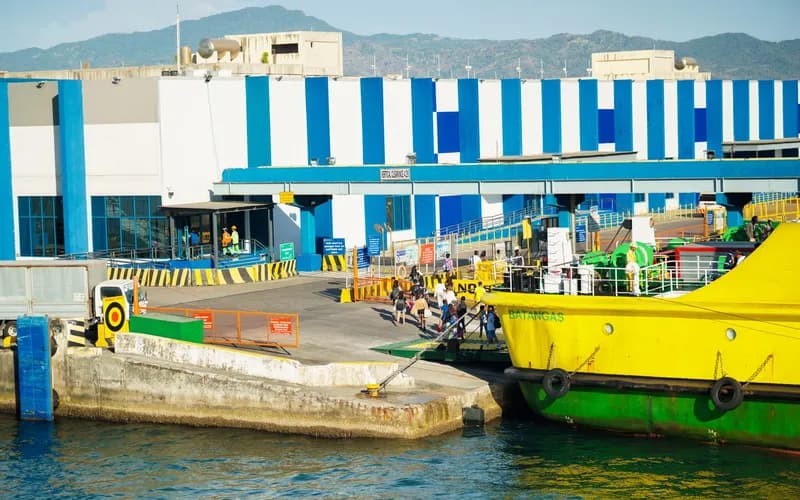
The standard approach is overland to Lucena City in Quezon province, then a roll-on roll-off ferry across to Marinduque. Buses leave Manila for Lucena through the day and take roughly four hours in reasonable traffic, longer if you hit the Friday exodus. From Dalahican port in Lucena, RoRo ferries sail several times a day to Balanacan port in Mogpog, on the island's north coast. The crossing takes around three to four hours and passenger fares generally sit in the region of PHP 200 to 350, with vehicles charged separately. Some sailings also serve Cawit in Boac and Buyabod in Santa Cruz, so check which port your ticket actually lands at before you arrange a pickup.
Door to door from Manila, budget eight to ten hours and treat the arrival day as a travel day rather than a sightseeing day. Several operators now sell tickets and vehicle slots online, which matters enormously in peak weeks; the wider shift to digital ferry booking across the country is worth understanding before you travel, and it changes how you should sequence any multi-island trip, as we set out in our piece on island-hopping the Philippines slowly.
There is an airstrip at Masiga in Gasan, but scheduled commercial service to Marinduque has come and gone repeatedly over the years. Do not build an itinerary around a flight until you have confirmed that it is currently operating and actually selling seats.
Boac, Gasan and the Island's Small Towns
Boac is the provincial capital and the natural base for a first visit. Its old core sits on a rise above the Boac River, crowned by the Cathedral of the Immaculate Conception — a thick-walled colonial church built on high ground as a refuge from raiders, with views over red roofs and coconut crowns. Around it are heritage houses in varying states of repair, a working municipal market, and a handful of cafes that have quietly appeared in the last few years.
Gasan, on the west coast, is the sunset side of the island and the traditional centre of Marinduque's butterfly-breeding trade, a cottage industry that supplies live specimens and displays. Santa Cruz in the north-east is the largest municipality by population and the jumping-off point for the island group offshore. Torrijos in the south-east has the best-known mainland beach. Buenavista sits under the volcano, and Mogpog, where most ferries dock, is where the Moriones tradition is often said to have started. None of these towns takes more than an afternoon to walk, which is precisely the point: you are not ticking them off, you are learning the island's shape.
Get matched with up to 5 trusted Philippines agencies
- Free
- No obligation
- Up to 5 agencies
Beaches, Sandbars and the Maniwaya Cluster
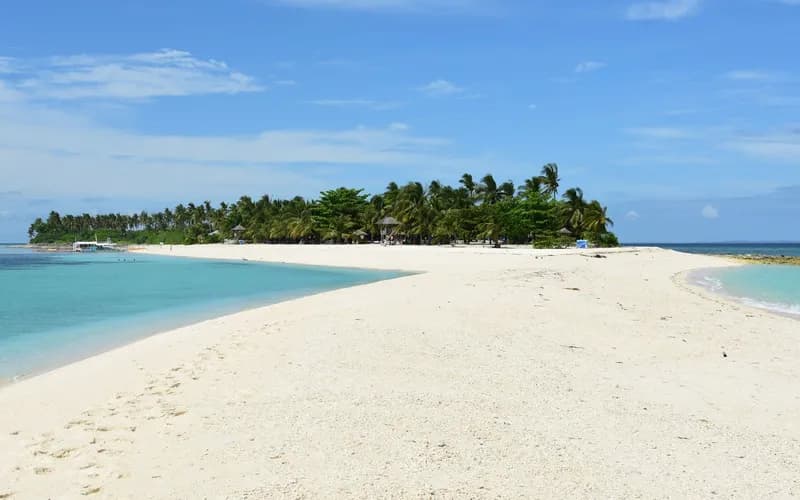
Marinduque's best swimming is offshore. From Buyabod port in Santa Cruz, boats run out to a cluster of small islands — Maniwaya, Mongpong and Polo — where the water is calm, the sand is pale and the development is limited to modest beach resorts and homestays. Maniwaya is the one most people head for, with Palad Sandbar appearing at low tide as a curved spit of sand you can walk along, and the Ungab rock formation at the island's edge. Off Gasan on the other coast lie the three small Tres Reyes islands, named Gaspar, Melchor and Baltazar; Gaspar has the best snorkelling of the group.
On the main island, Poctoy White Beach in Torrijos gives you a decent stretch of sand with Mount Malindig rising behind it, which is the postcard shot of the province. Be realistic about the snorkelling: this is not Tubbataha or Apo Reef, and coral cover varies from patchy to good depending on how well the local marine sanctuary has been enforced. What you get instead is space. On an ordinary weekday outside Holy Week you may find yourself the only foreign visitor on a sandbar.
Boat trips are arranged locally rather than through a booking platform. Expect to negotiate a day rate for the whole boat, with the price moving according to fuel costs, group size and how far you want to go. If you enjoy this scale of island — small, marble-quiet, run by the people who live there — the neighbouring province south of here works the same way, and we have covered it in our field notes on Romblon.
Mount Malindig and the Green Interior
Mount Malindig, a dormant volcano of roughly 1,157 metres straddling Buenavista and Torrijos, is the island's high point and its landmark from every direction. It is a manageable climb by Philippine standards, done with a local guide and registration at the barangay, and it is emphatically not a walk-up: the upper section has been restricted at times for military and safety reasons, so the current rules are worth confirming on arrival rather than assuming. Lower down, the Malbog sulphur springs are a rough-and-ready soak rather than a spa experience.
In Santa Cruz, the Bathala Caves are a set of limestone chambers with bats, stalactites and, in one of them, human remains that local guides treat with appropriate seriousness. Go with a guide, wear shoes you can ruin, and accept that lighting is a torch you brought yourself. If mountains are the reason you travel, the permit systems that govern them in the Philippines are stricter and more varied than most visitors expect, and we have unpacked them in our guide to hiking Philippine mountains responsibly.
Moriones: The Week That Changes Everything
For six days a year, Marinduque stops being quiet. During Holy Week, men and women in carved wooden masks and Roman centurion costumes — the morions — take to the streets of Boac, Mogpog and Gasan in a folk drama built around the legend of Longinus, the blind soldier. It is part passion play, part street theatre, part village-wide inside joke, and it culminates on Easter Sunday. In 2027, Easter falls on 28 March, so the Moriones week runs from 22 to 28 March.
If you want to see it, plan far ahead. Rooms on the island are booked months in advance, ferry vehicle slots sell out, and prices rise. If you want the quiet island described in the rest of this article, avoid that week entirely and come in January, February or May instead. Either choice is valid; what does not work is arriving unaware. Timing around the Philippine religious calendar is a skill in itself, and our article on planning around fiestas and Holy Week covers the mechanics.
Where to Stay, and What a Week Costs
Accommodation on Marinduque runs from simple homestays and inns in Boac to small beach resorts in Torrijos, Gasan and on Maniwaya. Air-conditioned rooms in the towns are inexpensive by national standards; beachfront cottages on the islands cost more and often include meals because there is nowhere else to eat. Book directly by phone or messaging app where you can, since many small places are not on international platforms at all.
Cash discipline matters here. Banks and ATMs cluster in Boac and Santa Cruz, and machines do run out, particularly over long weekends. Card acceptance outside a few resorts is minimal. Draw what you need before you leave the main towns, keep small notes for tricycles and carinderias, and treat mobile wallets as a convenience rather than a guarantee. Mobile data coverage is generally workable along the coastal road and patchy in the interior and on the smaller islands.
A realistic slow week here means two or three nights in or near Boac, two or three on Maniwaya or in Torrijos, and a day of doing very little in between. Renting a motorbike or hiring a tricycle driver for the day is the standard way to move; the loop road around the island is roughly 120 kilometres and can be driven in a few hours, though there is no reason to do it in one go.
When to Go, and What Can Go Wrong
The dry season runs roughly from November to May, with March to May the hottest and driest. The rainy months bring the risk that governs all island travel in the Philippines: rough seas, cancelled sailings and the occasional typhoon crossing the Sibuyan Sea. The coast guard suspends departures when conditions warrant, and no amount of planning overrides that decision. Build a buffer day before any onward flight, and expect that a buffer day may be spent watching rain from a covered terrace.
Other honest caveats: medical facilities on the island are basic, and anything serious means a transfer to Lucena or Manila. Power interruptions happen. English is widely spoken, but the local language is Tagalog with a distinct Marinduque accent, and a few words of it will be received with genuine delight. Nothing here is dangerous or difficult; it simply requires the patience that the island itself runs on.
What to Do Next
- Decide first whether you want Moriones or quiet, then pick your month accordingly — the two experiences barely overlap.
- Confirm the current Lucena to Balanacan ferry schedule and buy passenger and vehicle tickets online where the operator offers it, especially for weekends and holidays.
- Block eight to ten hours for the Manila to Marinduque journey and do not schedule anything on arrival day.
- Split your stay: town nights in Boac for markets and heritage, island or beach nights in Santa Cruz, Maniwaya or Torrijos for water and silence.
- Withdraw cash in Boac or Santa Cruz before heading to the smaller islands, and leave one unplanned buffer day at the end for weather.
Frequently Asked Questions
How many days do you need in Marinduque?
Five to seven nights is the sweet spot. Two days is enough to see the cathedral and one beach, but it wastes most of a full day at each end on ferries. A week lets you settle into a town, take a boat to the offshore islands, walk part of the interior and still have a spare day for weather or for doing nothing.
Is Marinduque worth visiting outside the Moriones Festival?
Yes, and for many slow travellers it is better outside it. Holy Week brings crowds, higher prices and full ferries; the rest of the year brings empty sandbars and unhurried towns. Choose the festival if you want the ritual and the noise, and any other month if you want the island itself.
How do you get from Manila to Marinduque?
Take a bus or drive to Lucena City in Quezon, roughly four hours, then a RoRo ferry from Dalahican port to Balanacan in Mogpog, roughly three to four hours. Fares are modest and several sailings run daily. Flights to the island's airstrip have operated only intermittently over the years, so verify before relying on one.
Are there ATMs and is card payment accepted?
There are banks and ATMs in Boac and Santa Cruz, but machines can run dry over holidays and card acceptance beyond a few resorts is limited. Carry enough cash for your island days, keep small denominations for tricycles and local eateries, and top up in the larger towns.
What is the best time of year to visit?
November to May is the dry season, with March to May the hottest and clearest. June to November brings rain and the risk of cancelled ferry sailings during typhoons. Whatever month you choose, add a buffer day before any onward international flight.
Can you climb Mount Malindig?
It is climbed with a local guide and barangay registration, and it is a moderate rather than technical ascent. Access to the upper slopes has been restricted at various times, so confirm the current situation locally before planning the climb rather than assuming the trail is fully open.