

Slow Travel Guides Singapore
A structured approach to understanding Singapore through immersive and responsible travel. Singapore is a compact city-state of striking density, diversity and depth.
Table of Contents
- Explore Our Singapore Travel Guides
- Understanding Slow Travel in Singapore
- Singapore: A Destination of Diversity and Complexity
- Slow Travel Principles of a More Meaningful Journey
- How to Design a Coherent Slow Travel Experience
- Common Mistakes in Singapore Slow Travel Planning
- Understanding Singapore and Moving Forward
From the waterfront core to the residential heartlands and the island's green fringe, each district reflects a distinct cultural, spatial and human reality. Approaching Singapore through a slow travel perspective allows for a more coherent, immersive and meaningful experience.
This section provides structured insights, district perspectives and editorial guidance to better understand how to explore Singapore beyond predefined itineraries.
Understanding Singapore requires more than selecting attractions. It requires structuring the journey.
Explore Our Singapore Travel Guides
Understanding Singapore requires both structure and context. The following guides provide detailed insights into specific districts, travel conditions and local realities, helping to build a more informed and coherent journey.
A Structured Editorial Approach
Each guide is designed to provide a clear and contextual understanding of a specific destination or travel topic.
Rather than listing highlights, these guides focus on how districts function, how they can be explored and how they connect within a broader itinerary.
Local and Thematic Perspectives
The guides cover different aspects of travel in Singapore, including:
This allows travelers to approach Singapore from multiple angles while maintaining a structured understanding.
Supporting Travel Decisions
By combining editorial depth with practical insights, these guides help travelers refine their expectations and better understand how to design their journey.
They serve as a bridge between initial inspiration and structured planning.
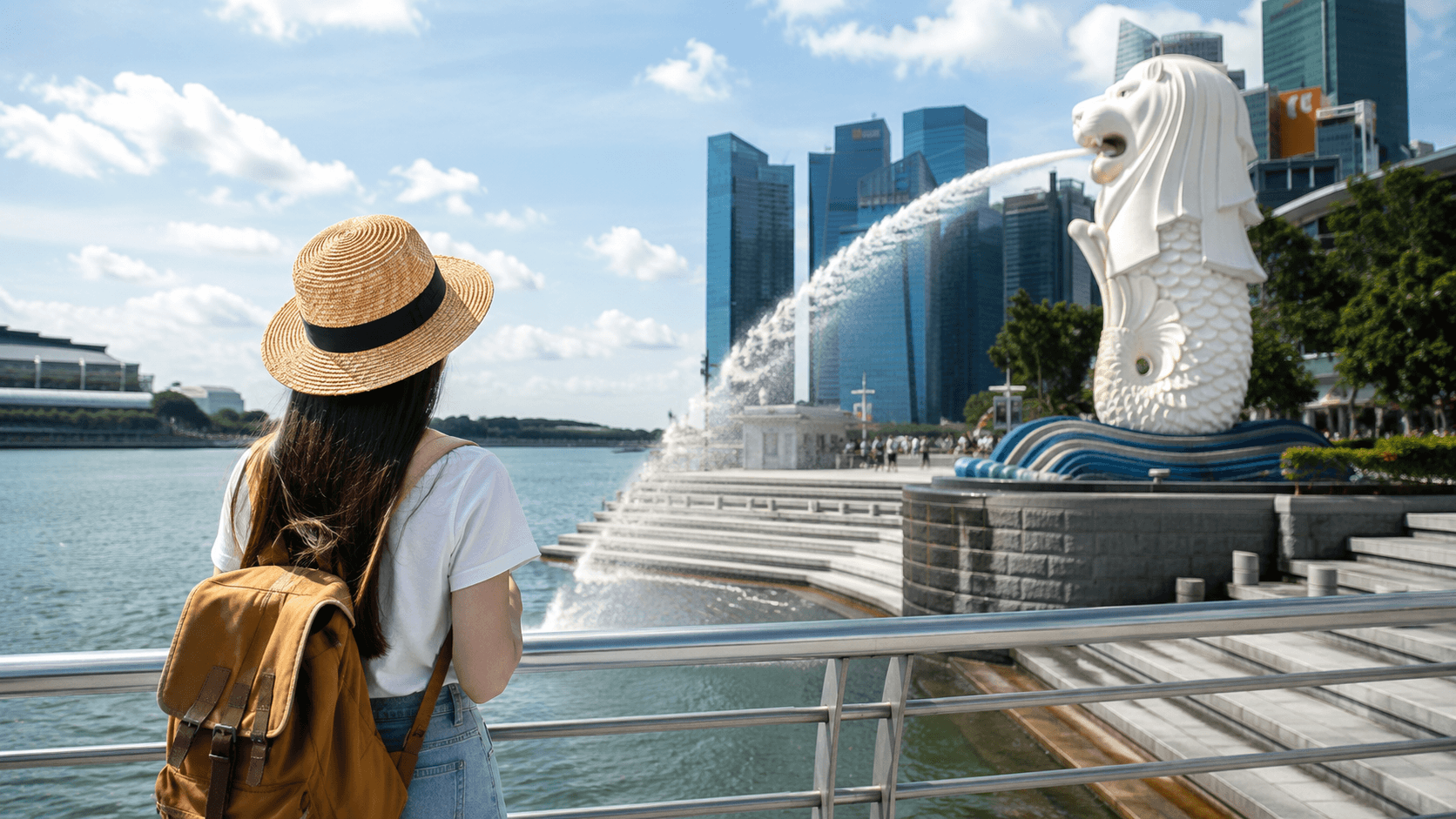
Off the Beaten Path in Singapore: Hidden Gems for Slow Travelers
Beyond Marina Bay and Orchard Road lies a quieter Singapore: rustic islands, jungle trails, heartland markets and Peranakan lanes. A slow traveller's guide.
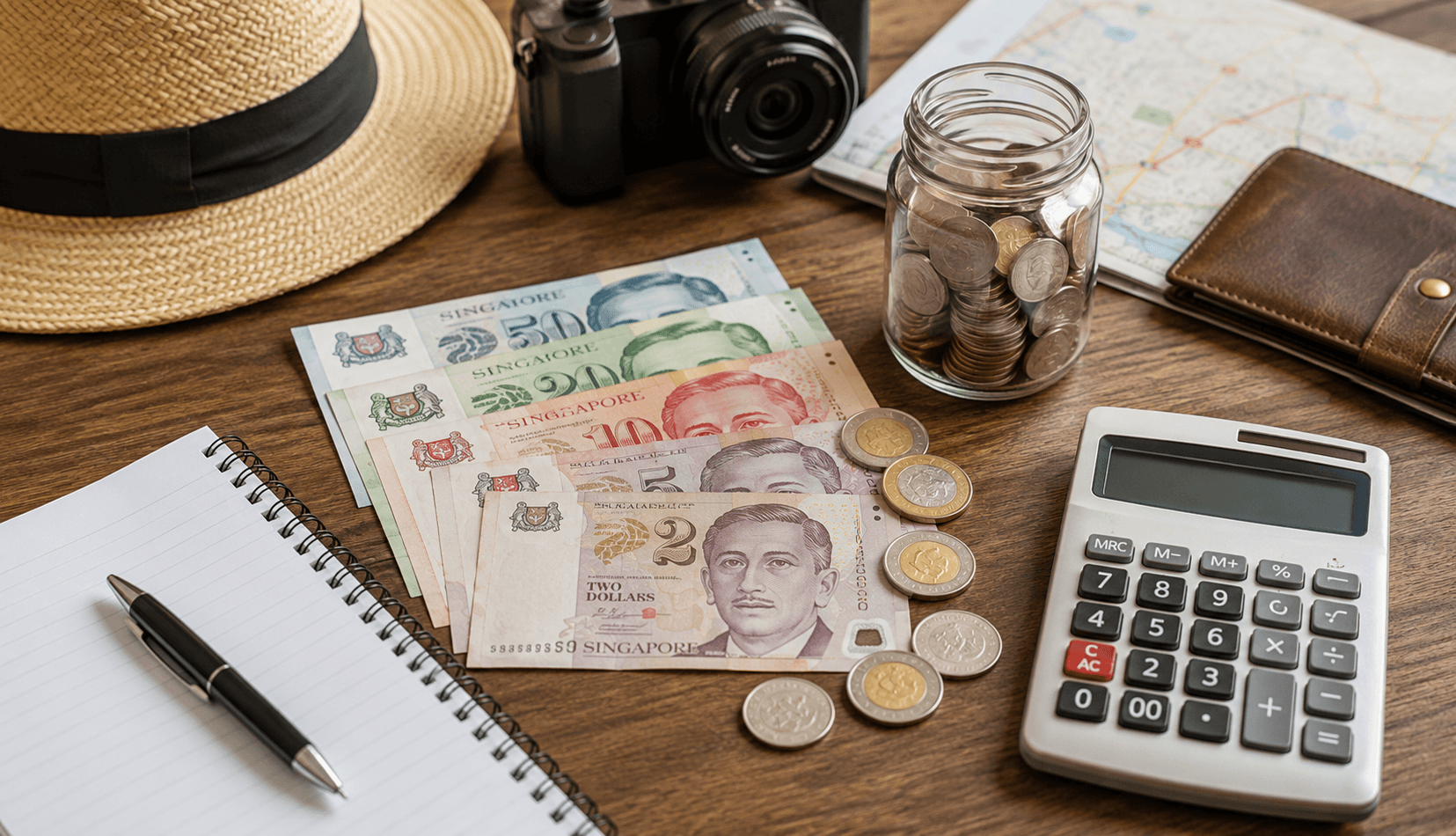
How Much Does a Trip to Singapore Cost in 2026?
Singapore's honest cost breakdown for 2026: daily budgets in SGD, where the city is dear and where it's a bargain, plus three fully costed itineraries.
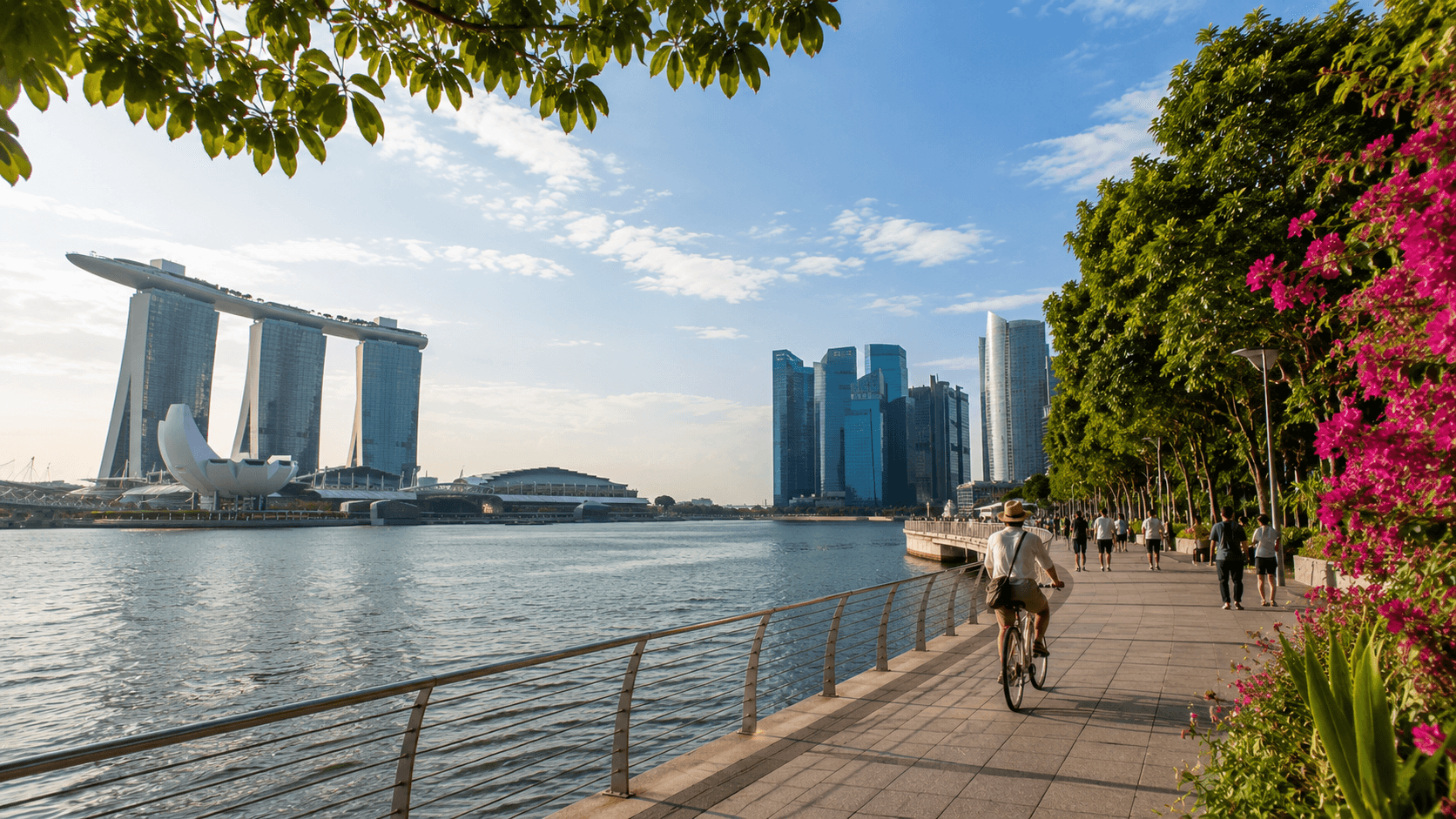
The Slow Traveler's Guide to Singapore: Where to Go and When
Where to go and when in Singapore, the slow way: neighbourhood by neighbourhood, plus the year-round climate and the festival calendar that matters most.
Ready to travel? Get free quotes from up to 5 Singapore agencies
Request free quotesUnderstanding Slow Travel in Singapore
Slow travel is often associated with taking more time, visiting fewer places and seeking more authentic experiences. In the context of Singapore, this approach takes on a deeper meaning, shaped by the city-state's density, cultural diversity and layered neighbourhoods.
Beyond the Idea of "Traveling Slower"
Slow travel is not simply about reducing the number of destinations.
It is about structuring a journey that allows for a better understanding of places, people and local realities.
In Singapore, where a compact territory concentrates remarkable cultural and environmental contrasts, this approach becomes essential to experience the city with depth rather than speed.
A Response to Standardized Tourism
Many travel experiences in Singapore are built around predefined routes designed to cover the main landmarks within a short stopover.
While efficient, these formats often lead to fragmented experiences, where the traveler moves quickly between locations without fully engaging with them.
Slow travel offers an alternative by focusing on depth rather than accumulation.
Aligning Travel with Local Realities
Singapore cannot be reduced to a single, uniform destination.
Each district operates with its own rhythm, atmosphere and cultural context.
A slow travel approach allows for better alignment between travel expectations and on-the-ground conditions, reducing inconsistencies and improving the overall experience.
Slow travel in Singapore is not about doing less, but about understanding more.
Singapore: A Destination of Diversity and Complexity
Singapore is often perceived as a single, uniform city. In reality, it is a mosaic of distinct districts and landscapes, each with its own atmosphere, cultural identity and character. Understanding this diversity is essential to building a coherent journey.
A City of Distinct Districts and Landscapes
Singapore has no regions in the conventional sense, but it is best understood through its districts, its residential heartlands and its green, island fringe.
The central civic and waterfront core brings together Marina Bay, the Civic District and Orchard Road, the city's institutional, commercial and skyline heart.
The cultural quarters, including Chinatown, Little India, Kampong Glam and the Peranakan streets of Katong and Joo Chiat, preserve the communities and heritage that shaped the city.
Beyond them lie the residential heartlands of the HDB neighbourhoods and Tiong Bahru, and a surprising green and island fringe: the Bukit Timah and MacRitchie nature reserves, Gardens by the Bay, Sentosa, the Southern Islands and Pulau Ubin.
Each of these areas invites a different pace and a different way of exploring.
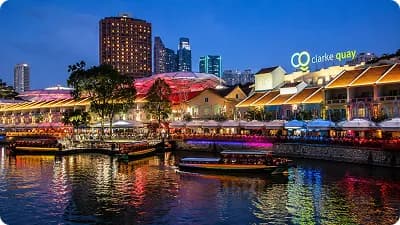
Variations in Climate and Seasonality
Singapore's climate is equatorial: hot and humid throughout the year, with temperatures generally ranging from around 25 to 33°C.
There is no true dry or wet season, but a wetter Northeast Monsoon roughly from November to January brings frequent afternoon downpours, February to April tends to be relatively drier, and a regional haze can occasionally affect the city around August to October.
As a year-round destination, timing in Singapore is less about a best season and more about events, crowds and rainfall.
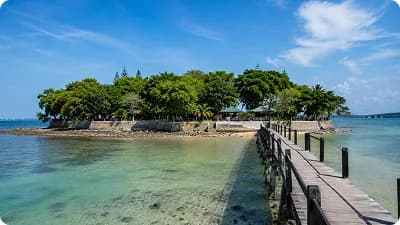
Infrastructure and Accessibility
Singapore is one of the world's easiest, safest and cleanest cities to navigate.
The MRT metro and bus network cover the island, the core is highly walkable, Changi Airport is a major regional hub and English is widely spoken.
The main constraint is not logistics but a high cost of living, which is worth factoring into the journey's design.

Cultural and Local Contexts
Singapore is a multicultural society bringing together Chinese, Malay, Indian, Peranakan and Eurasian communities, with four official languages, English, Mandarin, Malay and Tamil, and religions that coexist side by side.
Engaging with this context means appreciating its UNESCO-recognised hawker culture and respecting the rules and social norms that shape daily life in the city.
Singapore is not a destination to be covered, but a city to be understood.
Slow Travel Principles of a More Meaningful Journey
A structured journey in Singapore is not defined by a list of attractions, but by how these places are connected and experienced. Slow travel relies on a set of principles that help create coherence, depth and balance throughout the journey.
1. Travel Pace
The rhythm of a journey determines how places are experienced. Moving too quickly between attractions reduces the ability to engage with them and creates fatigue. A slower pace allows for better understanding, adaptation and immersion.
2. District Coherence
A coherent itinerary is built around geographical and cultural logic. Grouping neighbouring districts with shared character reduces unnecessary movement and improves the overall structure of the journey.
3. Cultural Immersion
Experiencing Singapore goes beyond visiting landmarks. It involves engaging with local environments, understanding daily life and interacting with communities in a respectful and meaningful way.
4. Local Interactions
Direct contact with local actors, including guides, communities and small-scale initiatives, plays a key role in shaping the travel experience. These interactions add depth and context to the journey.
5. Environmental Awareness
Traveling responsibly requires an understanding of the environmental impact of movement, accommodation and activities. A structured approach helps reduce unnecessary transfers and promotes more sustainable choices.
A meaningful journey is built on coherence, not accumulation.
How to Design a Coherent Slow Travel Experience
Designing a journey in Singapore requires more than selecting attractions. It involves structuring an itinerary that aligns geography, timing and expectations into a coherent and balanced experience.
1. Choosing the Right Duration
Singapore rewards more time than a single stopover day allows.
Attempting to see everything in a rushed visit often results in a fragmented experience. A well-structured journey prioritizes depth over coverage, allowing time to understand each district.
2. Building a Logical Itinerary
A coherent itinerary follows a geographical logic.
Rather than crossing the island back and forth, it is more effective to structure the days around neighbouring districts, reducing unnecessary movement and maintaining a consistent rhythm.
3. Managing Travel Pace
Even in a compact city, pace remains a key variable in Singapore.
Moving constantly between attractions, even with an efficient transport network, can impact the experience. Balancing time in transit and time spent in each place is essential to avoid fatigue and maintain coherence.
4. Adapting to Local Conditions
Heat, humidity, rainfall and local events influence travel conditions.
A well-designed journey takes these elements into account, ensuring that each part of the itinerary aligns with the best possible conditions.
A coherent journey is not defined by how much you see, but by how well it is structured.
Common Mistakes in Singapore Slow Travel Planning
Planning a journey in Singapore without a structured approach often leads to inconsistencies. Certain recurring mistakes can significantly impact the quality and coherence of the travel experience.
1. Trying to Cover Too Much
One of the most common mistakes is treating Singapore as a quick stopover and trying to see everything in a day or two.
Given the density and depth of the city, this often results in a rushed itinerary and limited immersion in each district.
2. Ignoring Seasonal Variations
Although Singapore is a year-round destination, weather and events still shape the experience.
Planning without considering these factors can lead to unfavorable moments, such as heavy afternoon downpours, intense humidity or occasional regional haze.
3. Relying on Standard Itineraries
Predefined travel programs often follow generic routes designed for efficiency rather than coherence.
These formats may not reflect individual expectations or the specific realities of the destination.
4. Choosing a random Agency
The diversity of travel agencies makes it difficult to assess their positioning and expertise.
Without a structured framework, selecting an agency can become a random or inconsistent process.
A well-structured journey avoids unnecessary complexity and improves overall coherence.
Get matched with up to 5 trusted Singapore agencies
Describe your trip once. Receive tailored proposals from up to five vetted travel agencies — and choose the one that fits you best.
- Free
- No obligation
- Up to 5 agencies
Understanding Singapore and Moving Forward
Designing a coherent journey in Singapore requires both a structured approach and a clear understanding of local realities. Access to relevant expertise plays a central role in translating travel intentions into a balanced and consistent experience.
The Role of Local Expertise
Local agencies bring contextual knowledge that cannot be captured through generic information.
They understand local dynamics, logistical nuances and cultural subtleties, allowing for a more accurate and adapted travel design.
A Structured Framework
UNRUSH provides a framework that connects travel projects with agencies whose positioning and expertise align with the context of the journey.
This approach helps reduce inconsistencies and ensures that proposals are grounded in both expectations and local realities.
From Understanding to Action
By combining editorial guidance with a structured matching process, travelers can move from initial research to a clearly defined travel project.
This transition allows for more relevant exchanges and more coherent travel proposals.
A better understanding leads to better decisions.