The Slow Traveler's Guide to Singapore: Where to Go and When
Singapore is small enough to cross in an afternoon and deep enough to keep you busy for a lifetime. That paradox is the whole point. Most itineraries treat this city-state as a checklist to be cleared in forty-eight hours: the Gardens, the Merlion, a rooftop pool, a hawker meal, done. But Singapore does not reward the sprint. It rewards the second coffee, the wrong turn down a five-foot way, the willingness to sit in a coffee shop until the neighbourhood tells you what it actually is.
This is a guide to where to go and when to go, written the slow way. Because Singapore is a compact city rather than a sprawling country, "where" here means neighbourhoods, not regions, and each of its precincts is really a small world with its own language, food, faith, and rhythm. And because it sits almost exactly on the equator, "when" has almost nothing to do with seasons in the temperate sense and almost everything to do with the festival calendar and the shape of your own days. Get both right and the city opens up in a way the checklist crowd never sees.
The Slow-Travel Mindset for a Compact City
There is a peculiar trap that catches travellers in Singapore. Precisely because everything is so close and so efficient, the temptation is to do everything, and quickly. The MRT is spotless and fast, taxis are cheap, distances are short. You can see six neighbourhoods in a day. You just shouldn't.
Slow travel in Singapore means choosing depth over distance in a place already famous for having very little distance. The unit of exploration is the neighbourhood, and the goal is to inhabit one at a time rather than to collect them. Spend a whole morning in Tiong Bahru and you will notice the same aunties returning from the wet market, the pre-war Streamline Moderne curves of the walk-ups, the way the cafés fill and empty. Try to fit Tiong Bahru, Chinatown, and Little India into one day and all three blur into a montage of nice photos and no memory.
The reward for going slowly is that Singapore is a genuinely layered city. A single street corner in Kampong Glam might hold a two-hundred-year-old sultan's mosque, a shop selling Persian carpets, a third-wave coffee roaster, and a mural-covered alley of independent boutiques. None of that reveals itself at speed. The whole texture of the place lives in the transitions between things, and transitions only appear when you walk.
Practically, this means planning fewer things per day than you think you should. Two neighbourhoods a day is plenty; one, done properly with a long lunch and an aimless hour, is often better. It means treating the hawker centre not as a refuelling stop but as a destination in its own right. And it means accepting that you will not "finish" Singapore, which is liberating, because it gives you permission to actually enjoy the part you are standing in. If you want a fuller sense of how much time and money a considered trip really takes, our Singapore trip cost and budget guide for 2026 breaks down what a slower, deeper stay looks like in numbers.
One request. Up to five tailored proposals.
Skip contacting agencies one by one — share your trip once and let up to five trusted Singapore agencies come to you. Free, with no obligation.
Get my free quotesWhen to Go: Why the Calendar Beats the Season
Let us dispatch the biggest misconception first. Singapore does not really have seasons. It sits just over one degree north of the equator, which means the sun is close to overhead all year and the temperature barely moves. Expect roughly 25 to 33 degrees Celsius almost every single day, with humidity that hovers high enough to fog a camera lens the moment you step outside an air-conditioned room. There is no cool month to wait for and no dry month that is truly dry. This is a tropical rainforest climate, and it is warm and humid every week of the year.
What does change is rainfall, and only in emphasis. The Northeast Monsoon, running roughly from November through January, brings the wettest stretch: heavy, dramatic afternoon downpours, sometimes days of grey, and December in particular can be soggy. These storms are usually short and theatrical rather than all-day washouts, but they are frequent. The inter-monsoon and the drier window of roughly February through April tend to offer the most reliably sunny mornings, though "drier" here is relative and you should still expect the odd thunderstorm. The Southwest Monsoon around June to September is warm and a little less wet, but it carries a separate wildcard: haze. In some years, agricultural fires in the wider region drift smoke over Singapore, most likely between roughly August and October, occasionally pushing air quality into unpleasant territory for a few days. It does not happen every year and is impossible to predict far ahead, but it is worth knowing exists.
Here is the slow traveller's reframe: because the weather is broadly the same all year, the far more useful question is not what season but what is happening. Singapore's calendar is defined by its festivals, and those festivals are the single best reason to choose one set of dates over another. They also, crucially, transform specific neighbourhoods. Little India during Deepavali is a different place than Little India in June. Chinatown in the fortnight before Chinese New Year is electric in a way it simply is not the rest of the year.
So plan around the calendar. If you dream of lantern-lit streets and lion dances, aim for the run-up to Chinese New Year (17 to 18 February in 2026). If you want to witness one of the most extraordinary acts of devotion anywhere, Thaipusam (1 February in 2026) sees devotees carry ornate kavadi in a procession that runs for hours. Deepavali lights up Little India around its date (8 November in 2026), the Hari Raya period brightens Geylang Serai, and the Formula 1 Singapore Grand Prix turns the whole Marina Bay waterfront into a floodlit night circuit over its weekend (9 to 11 October in 2026, running the new sprint format). The trade-off is real, though: festival weeks mean higher prices and fuller streets, and the Grand Prix in particular fills hotels and reshapes downtown traffic. A slow traveller can equally choose to come in a quieter stretch and simply enjoy an emptier city. There is no wrong answer, only an informed one. For help matching your dates to your interests, the local specialists on our Singapore plan-your-journey page can shape an itinerary around whatever is on while you are in town.
Marina Bay and the Civic Core
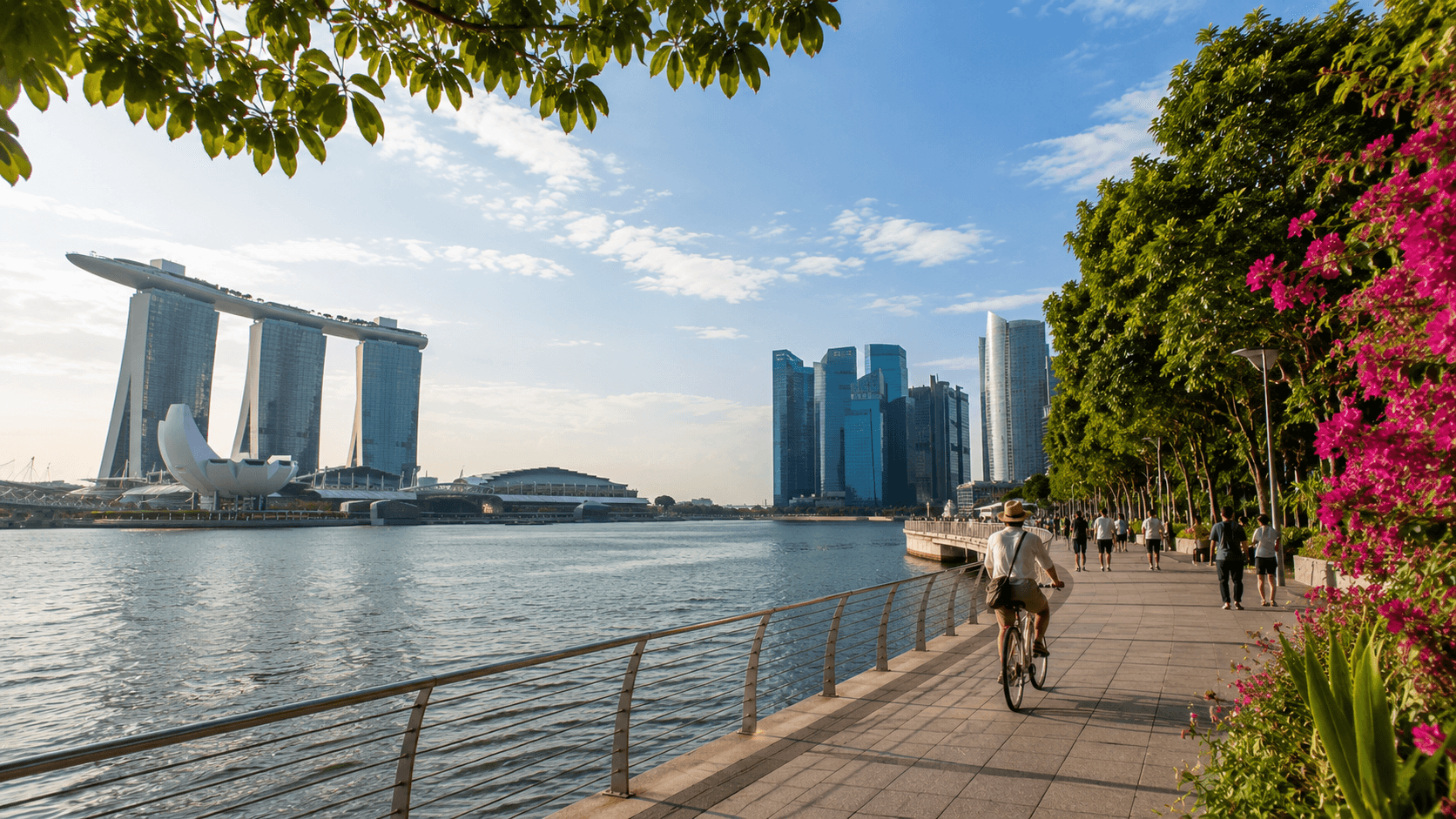
If Singapore has a face it shows the world, it is the sweep of Marina Bay: the three towers of Marina Bay Sands crowned by their sky-park, the crouching double curve of the Merlion spitting into the water, and the great glass biomes and Supertrees of Gardens by the Bay glowing after dark. This is the postcard, and it is genuinely spectacular. The slow-travel move is not to skip it but to unhook it from the rush.
Gardens by the Bay deserves unhurried hours rather than a lap. The Cloud Forest, with its indoor mountain and falling mist, and the Flower Dome reward slow wandering, and the outdoor gardens are free to walk. Time it so you are among the Supertrees for the nightly light-and-sound show, when the crowds thin into a hush and the canopy hums. The waterfront promenade that loops the bay is one of the best walks in the city, especially in the cooler light of early morning or after sunset, linking the Merlion, the durian-spiked Esplanade theatres, and the Helix Bridge.
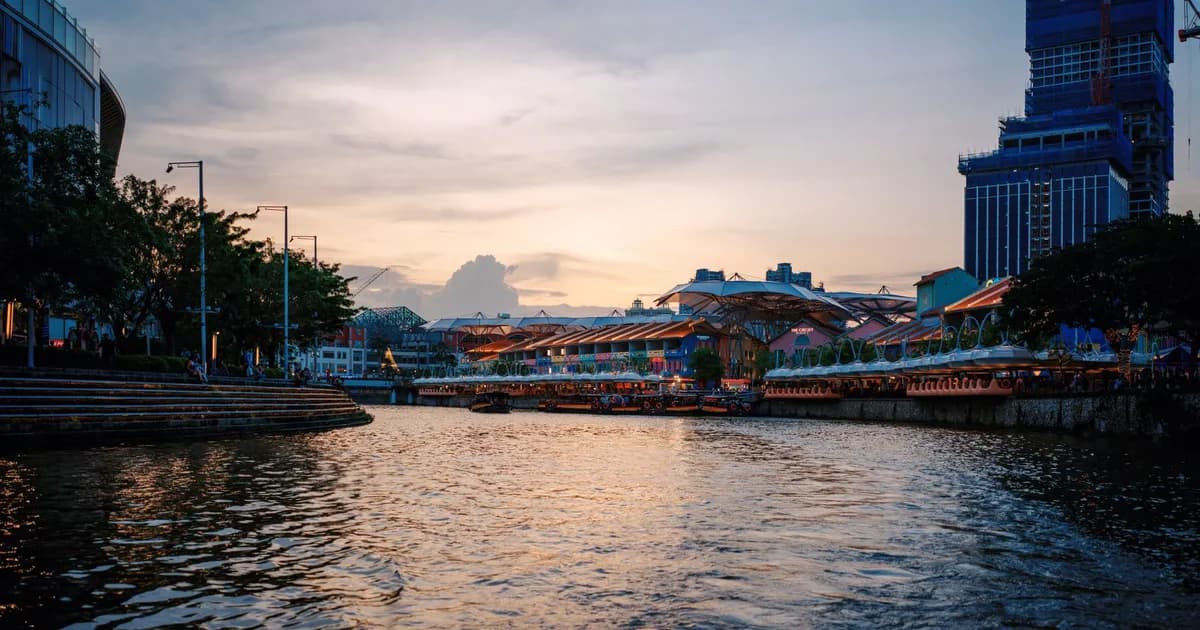
Just inland sits the Civic District, the historic and cultural heart that most bay-gazers walk straight past. This is where Singapore keeps its memory: the National Gallery, occupying the old Supreme Court and City Hall, holds the world's largest collection of Southeast Asian art; the National Museum tells the long, complicated national story; and the Asian Civilisations Museum sits on the river with the restored shophouses of Boat Quay and Clarke Quay just downstream. The Padang, the cricket green ringed by colonial-era buildings, anchors the whole quarter. Give the museums a real half-day. They are where the neighbourhoods you will visit later start to make sense.
Get matched with up to 5 trusted Singapore agencies
- Free
- No obligation
- Up to 5 agencies
Chinatown
Chinatown is not a relic and not a theme park, though it can look like both if you only skim the main souvenir drag of Pagoda Street. Go a little deeper and it becomes one of the most layered quarters in the city. This is where much of Singapore's Chinese community put down roots, and its temples, medicine halls, and clan associations still function.
The set-piece is the Buddha Tooth Relic Temple, a five-storey Tang-dynasty-style building whose upper floors are quieter than the ground floor suggests; go early. But the real texture is in the ordinary streets: a shop drying herbs on the pavement, an old kopitiam serving kaya toast and soft-boiled eggs, tailors and calligraphers who have been in the same unit for decades. Sri Mariamman Temple, the city's oldest Hindu temple, sits right in the middle of Chinatown, a reminder that these labels were always more porous than they sound. The Maxwell Food Centre and the hawker stalls of Chinatown Complex are among the best eating in the city, the latter home to more stalls than you could try in a month. For the deep version of that story, see our slow traveller's guide to Singapore food, which is really a guide to how the city eats. Come to Chinatown in the weeks before Chinese New Year and the whole district transforms into a blaze of red and gold, with a night market that spills down the streets.
Little India
Little India is the city at its most gloriously unfiltered. Where much of Singapore is planned to within an inch of its life, this quarter runs on colour, noise, and the smell of jasmine and spice. It is the most sensory neighbourhood in the country, and the one that most rewards simply walking without a plan.
Serangoon Road is the spine, lined with sari shops, gold merchants, flower-garland stringers, and stores selling everything from brass pots to Bollywood soundtracks. The Sri Veeramakaliamman Temple, dedicated to the fierce goddess Kali, is a riot of painted deities, and the Tekka Centre wet market and food hall is a full-immersion introduction to South Indian cooking: banana-leaf thali, dosa, teh tarik pulled high between two cups. The restored shophouses of the Little India Arcade and the famous rainbow-coloured Tan Teng Niah house give the area its Instagram anchors, but the pleasure is in the ordinary flow. This is also the emotional home of Deepavali; in the weeks around it the streets are strung with lights and the shopping reaches a joyful frenzy. Come hungry, come curious, and come without a schedule.
Kampong Glam and Haji Lane
Kampong Glam is the historic Malay and Muslim quarter, and today one of the most effortlessly cool neighbourhoods in the city, a place where heritage and independent creativity sit side by side without friction. Its heart is the golden-domed Sultan Mosque, Singapore's most important mosque, whose presence sets the tone for the streets around it.
Arab Street is lined with textile merchants and carpet sellers; Bussorah Street is a palm-lined pedestrian approach to the mosque, dotted with cafés and perfume-oil shops; and Haji Lane, the narrowest and most famous of them, is a single tight alley crammed with independent boutiques, bars, and some of the best street-art murals in Singapore. The Malay Heritage Centre, housed in a former sultan's palace, grounds all of it in history. What makes Kampong Glam special for the slow traveller is the density of contrast in a tiny footprint: you can hear the call to prayer, browse vintage clothing, drink a flat white, and eat superb murtabak or Middle Eastern food all within a two-minute walk. Come in the evening, when Haji Lane lights up and the whole quarter softens.
Katong, Joo Chiat and the Peranakan East
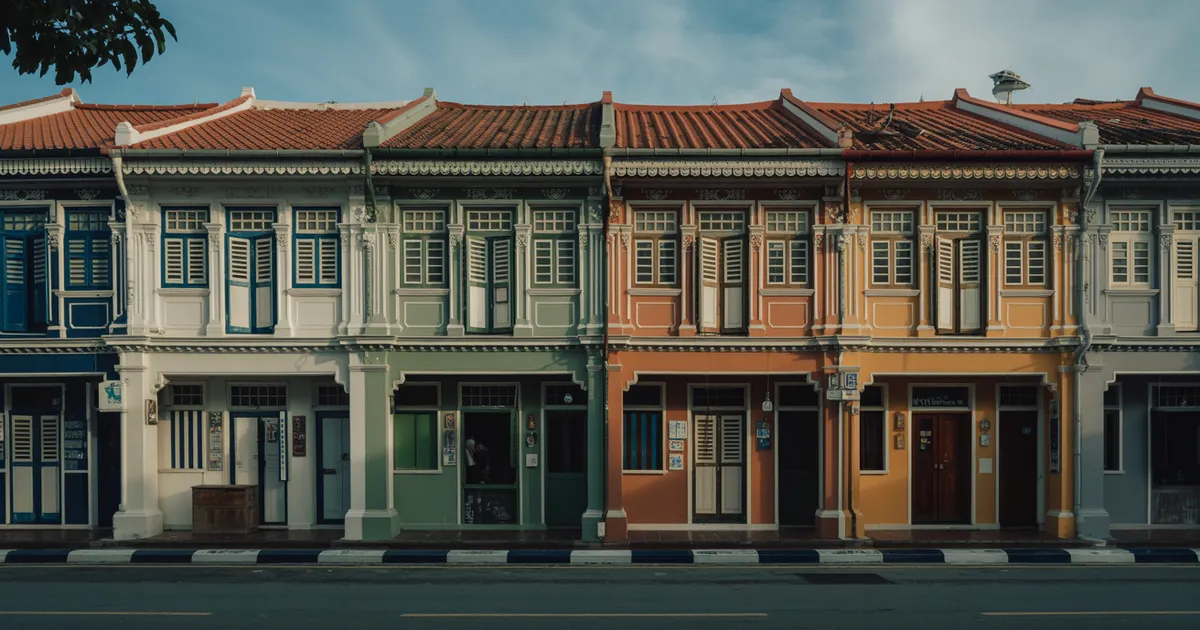
To understand the Singapore that existed before the skyline, take the short trip east to Katong and Joo Chiat. This is the heartland of Peranakan culture, the community descended from early Chinese settlers who intermarried with local Malays, producing a distinctive hybrid of food, language, and design. The architecture alone justifies the journey: rows of impossibly pretty two-storey shophouses in pastel pinks, greens, and blues, their façades crusted with ceramic tiles, carved timber, and floral plasterwork. Koon Seng Road is the single most photographed stretch, and deservedly so.
But Katong is a living neighbourhood, not an open-air museum. This is where you eat katong laksa, a rich coconut-and-prawn noodle soup so identified with the area that stalls still argue over the original. Peranakan restaurants serve ayam buah keluak and other dishes you will find nowhere else, and small museums and shophouse boutiques keep the beadwork and kebaya traditions alive. Because it is a residential district a little off the tourist grid, the pace here is gentler; wander the side streets, stop at an old bakery, and let the afternoon go long. The east is also where a lot of Singapore's hidden character lives, and if that appeals, our off-the-beaten-path Singapore guide is built entirely around corners like these.
Tiong Bahru and the Heartlands
Tiong Bahru is the neighbourhood slow travellers tend to fall for hardest. One of Singapore's oldest housing estates, it is a cluster of low-rise 1930s walk-up apartments in curving Streamline Moderne lines, air-wells and spiral staircases and all, now gently colonised by independent bookshops, bakeries, and cafés without losing its resident soul. The wet market and hawker centre at its core still hums with old-timers, and the contrast between an auntie buying vegetables and a designer buying sourdough two doors down is the whole appeal. It is walkable, low, quiet, and utterly unlike the downtown skyline. Spend a slow morning here.
Tiong Bahru is also a gateway to a bigger idea: the heartlands, the residential HDB estates where the overwhelming majority of Singaporeans actually live. Neighbourhoods like Tampines, Toa Payoh, Ang Mo Kio, and Queenstown are almost never on tourist itineraries, and that is exactly why they are worth an afternoon. Ride the MRT out, walk through the void decks and neighbourhood markets, eat at a genuinely local hawker centre where you may be the only visitor, and you will see the real, everyday Singapore that the postcard leaves out. It is the single easiest way to make the city feel less like a stopover and more like a place people call home.
The Green and Island Side
For all its concrete, Singapore is startlingly green, and a slow traveller should give at least a day to it. The green side begins in the very centre: the Singapore Botanic Gardens, a UNESCO World Heritage Site, is a vast, free, beautifully kept oasis whose National Orchid Garden is worth the small entry fee. But the wilder green lies a little further out. The MacRitchie Reservoir sits within a genuine patch of rainforest, and its trails lead to the TreeTop Walk, a suspension bridge strung high through the forest canopy where you have a real chance of seeing long-tailed macaques and monitor lizards. Bukit Timah Nature Reserve protects one of the last fragments of primary rainforest and, at 164 metres, Singapore's highest hill.
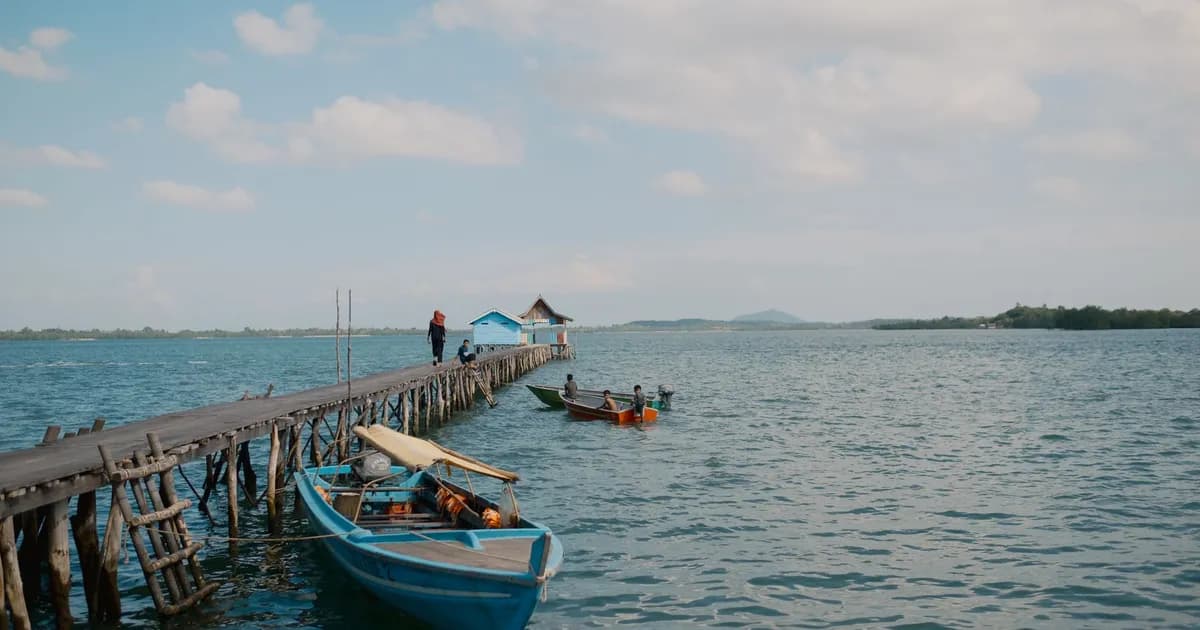
The Southern Ridges string together a series of parks and hills via elevated walkways, the sinuous Henderson Waves bridge among them, for one of the best forest-and-city walks in the country. For the island side, Sentosa is the engineered resort island of beaches, attractions, and a certain amount of theme-park gloss, best approached selectively rather than as an all-day obligation. But the quieter counterpoint is more rewarding: Pulau Ubin, a short bumpy bumboat ride off the northeast coast, is a scrap of old kampong Singapore preserved almost by accident, where you rent a bicycle and pedal past wooden houses, mangroves, and the wetland boardwalks of Chek Jawa. And the Southern Islands, including Lazarus and St John's, offer quiet beaches a ferry ride from downtown. This is where the slow traveller finally exhales.
How to Structure a Visit
Because Singapore is so compact, the art of planning is not logistics but restraint. Here is how the days can flow at different lengths.
Two days. With only forty-eight hours, resist the urge to sample everything. Give the first day to Marina Bay and the Civic core: a slow morning walking the waterfront, a museum in the heat of the afternoon, and Gardens by the Bay for the evening light show. Give the second day to one heritage neighbourhood done properly, Chinatown or Kampong Glam, anchored by a long hawker lunch. You will leave having actually felt two parts of the city rather than skimmed six.
Three to four days. Now you have room to breathe. Keep the Marina Bay and Civic day, then dedicate a full day each to Chinatown and Kampong Glam or Little India, letting the food and the temples set the pace. Add a green day: the Botanic Gardens in the morning, MacRitchie and the TreeTop Walk if you want the forest, or the Southern Ridges walk. If you have a fourth day, spend it in the east among the Peranakan shophouses of Katong and Joo Chiat, or take the bumboat to Pulau Ubin.
A week or a long stopover-plus. A week is where Singapore stops being a stopover and becomes a stay. Now you can afford a whole day in the heartlands, an unhurried Tiong Bahru morning, a full Little India immersion, an island day out to Pulau Ubin or the Southern Islands, and still leave time to return to the neighbourhood that grabbed you and go deeper. This is also the length at which day-trips make sense, and the pace at which the festival calendar becomes a genuine organising principle rather than a happy accident. A week rewards you with the thing two days can never give: the feeling of having a local corner, a coffee shop that knows you, a route you take by instinct.
However long you have, a private guide or a tailored plan can turn a good itinerary into a great one. Our Singapore travel agencies are vetted local specialists who build exactly this kind of slow, neighbourhood-led trip.
Getting Around: Why the MRT and Walking Win
Singapore has one of the best public transport systems on earth, and leaning on it is not a compromise but part of the pleasure. The MRT is clean, cheap, air-conditioned, punctual, and reaches nearly everywhere a visitor wants to go. A contactless bank card or a stored-value pass taps you straight through the gates, and trains run frequently from early morning until around midnight. For a slow traveller the MRT is ideal precisely because it removes the friction of getting between neighbourhoods, freeing you to spend your energy inside them.
The real secret, though, is to combine the MRT with your own two feet. Take the train to the edge of a district, then walk it. Singapore is intensely walkable at the neighbourhood scale, and its sheltered five-foot ways, covered walkways, and shophouse arcades were literally built for the climate, keeping you out of both sun and sudden rain. Buses fill in the gaps with routes that show you the city at street level, and taxis or ride-hailing are cheap and useful for late nights or the heaviest downpours. What you almost never need is a car. Driving here is expensive and pointless for a visitor. Walk when you can, tap onto a train when you cannot, and let the distances stay short. If you would rather hand the logistics to someone else entirely, our charter for slow travel approach is built around exactly that ease.
Festivals and Events
Singapore's multicultural makeup means its calendar is packed, and the festivals are not tourist spectacles bolted on for visitors but living celebrations the whole country observes. Timing a visit to one is the closest you can get to seeing the city with its guard down.
Chinese New Year (17 to 18 February in 2026) is the biggest of them all, and the run-up matters as much as the days themselves: Chinatown blazes with lanterns and a heaving night market, families gather, and much of the city slows for the reunion. Thaipusam (1 February in 2026) is a Hindu festival of astonishing devotion, in which participants carry elaborate kavadi structures, some pierced through the skin, in a long procession between temples; it is intense, moving, and utterly memorable. The Muslim festivals of Hari Raya Puasa and Hari Raya Haji shift earlier each year with the Islamic lunar calendar, and in the weeks before them the Geylang Serai bazaar lights up with food and stalls. Deepavali, the Hindu festival of lights (8 November in 2026), transforms Little India. Beyond the religious calendar, the Great Singapore Sale brings mid-year shopping, National Day on 9 August fills the sky over Marina Bay with a parade and fireworks, the Formula 1 Singapore Grand Prix (9 to 11 October in 2026) turns downtown into a night circuit with concerts alongside the racing, and Orchard Road glitters with an enormous Christmas light-up from November into the new year. The one thing to plan for: festival periods and the Grand Prix push hotel prices up and fill the streets, so book ahead and decide whether you want the buzz or the calm.
Responsible and Respectful Travel
Singapore is famously orderly, and a little awareness goes a long way toward travelling here gracefully. Some of its rules are genuinely enforced with fines, and while the "fine city" reputation is often played for laughs, the underlying etiquette is worth taking seriously. Eating and drinking are not allowed on the MRT, littering carries real penalties, and jaywalking is technically an offence. Chewing gum cannot be sold in the city, and smoking is restricted to designated areas. None of this is onerous; it simply asks you to be tidy and considerate, which is easy.
More important is respect at places of worship, because you will be visiting many. Singapore's mosques, temples, and churches are active religious sites, not attractions. Dress modestly with shoulders and knees covered, remove your shoes where asked, be quiet, ask before photographing people at prayer, and follow any guidance about where you may and may not go. During festivals like Thaipusam, remember you are witnessing an act of devotion, not a performance; hang back, stay respectful, and let the participants have their space. Beyond the rules, the deeper courtesy is simply to treat the city's diversity as the point rather than a backdrop, to eat where locals eat, to learn a word or two, and to move at a pace that lets you actually notice the people around you. That, in the end, is what slow travel in Singapore is really about.
Frequently Asked Questions
When is the best time of year to visit Singapore?
Because Singapore sits on the equator, it is warm and humid all year, so there is no single "best" month in the seasonal sense. Temperatures stay around 25 to 33 degrees Celsius every week of the year. The relatively drier and sunnier window tends to fall between February and April, while the Northeast Monsoon from November to January brings the heaviest afternoon storms. The more useful way to choose your dates is by the festival calendar, since events like Chinese New Year, Thaipusam, and Deepavali transform the city and matter far more than the weather.
How many days do you need in Singapore?
You can see the headline sights in two days, but Singapore rewards a slower pace. Three to four days lets you give proper time to Marina Bay, a couple of heritage neighbourhoods, and a green or island day without rushing. A full week turns the trip from a stopover into a genuine stay, with room for the heartlands, Pulau Ubin, and the luxury of returning to whichever neighbourhood grabbed you. Even on a short layover, focusing on one or two areas beats trying to tick off everything.
Is Singapore expensive to visit?
Singapore can be as costly or as affordable as you choose. Hotels and cocktails sit at world-city prices, but the food, which is one of the best reasons to come, is remarkably cheap if you eat at hawker centres, where a superb meal costs a few dollars. Public transport is inexpensive, and many of the best experiences, from walking the neighbourhoods to the Botanic Gardens and the outdoor Gardens by the Bay, are free or nearly so. Our dedicated budget guide breaks down realistic daily costs for a slower, deeper trip.
What is the best way to get around Singapore?
The MRT combined with walking is ideal. The metro is clean, cheap, air-conditioned, and reaches almost everywhere, and you can tap in with a contactless bank card. The slow-travel method is to take the train to a neighbourhood and then explore it on foot, using the city's sheltered walkways to stay out of the sun and rain. Buses and cheap ride-hailing fill the gaps, and you almost never need a car.
Which neighbourhoods should a first-time visitor prioritise?
Start with Marina Bay and the Civic District for the iconic skyline, gardens, and museums, then choose among the heritage quarters based on what draws you: Chinatown for temples and hawker food, Little India for colour and spice, and Kampong Glam for the Sultan Mosque and the boutiques of Haji Lane. If you have more time, the Peranakan shophouses of Katong, the quiet charm of Tiong Bahru, and a green day at MacRitchie or the Botanic Gardens round out a fuller picture of the city.
Do I need to worry about the haze in Singapore?
Haze is an occasional rather than constant issue. In some years, regional agricultural fires send smoke over Singapore, most likely between roughly August and October, which can push air quality down for a few days at a time. It does not happen every year and cannot be predicted far in advance. If you are travelling in that window, it is worth checking the air-quality index during your stay, but there is no need to plan your whole trip around a possibility that may never materialise.
Is Singapore a good destination for slow travel?
Singapore is one of the most rewarding slow-travel cities anywhere, precisely because it looks like the opposite. Its compactness and efficiency tempt visitors to rush, but its depth only reveals itself when you linger: the layered neighbourhoods, the living festivals, the food culture, and the green spaces all reward time over speed. By exploring one precinct at a time, eating where locals eat, and leaning on the MRT and your own feet, you experience a Singapore that the two-day checklist crowd never sees.