Off the Beaten Path in Singapore: Hidden Gems for Slow Travelers
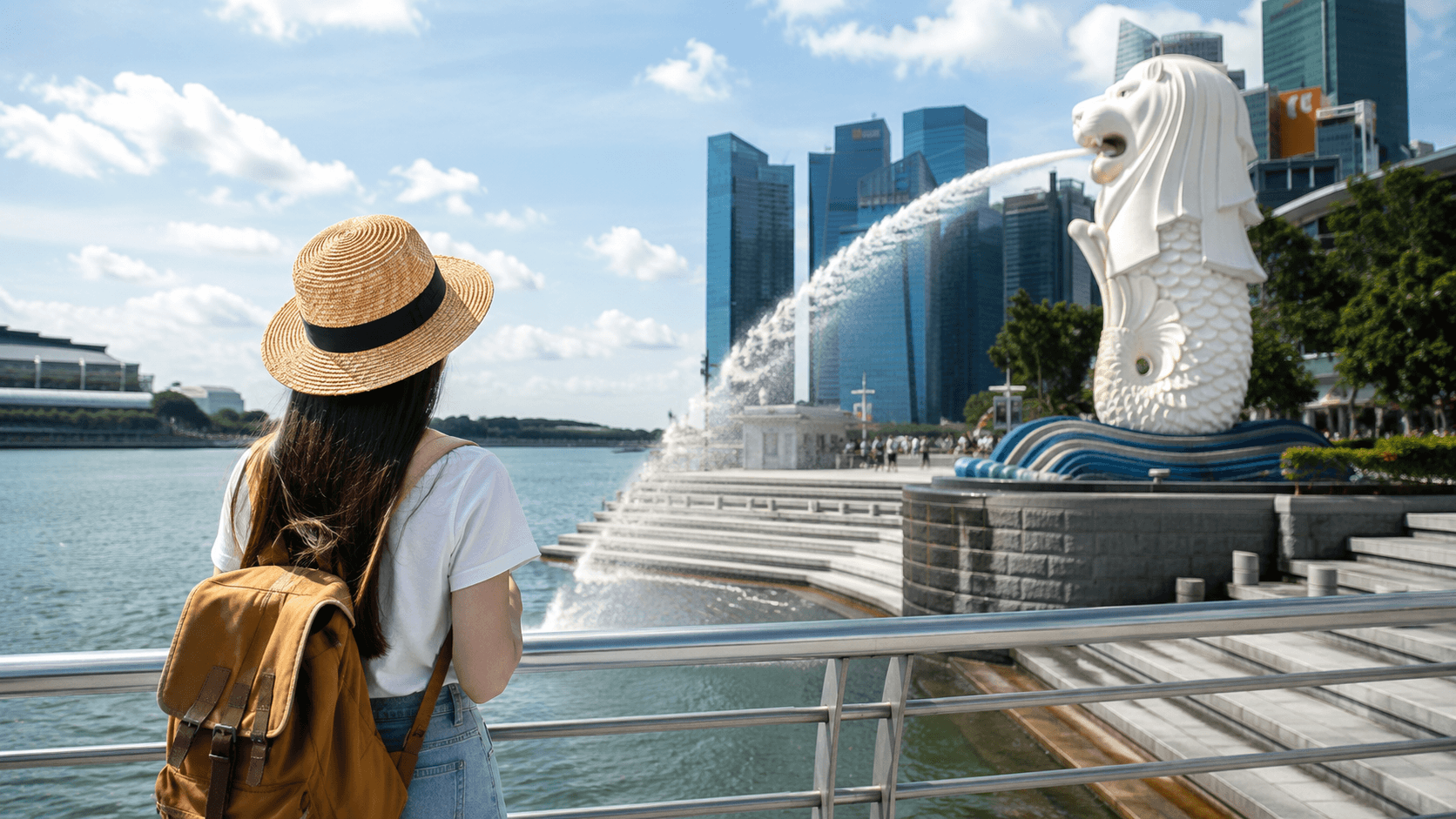
Most people give Singapore a day. A layover, a stroll past the light show at Marina Bay, a photo of the Merlion, a shopping afternoon on Orchard Road, and off to the next place. It is easy to leave believing you have seen a city that is really an airport with hotels attached, gleaming and efficient and a little cold.
That Singapore is real, but it is the smallest version of the place. A few MRT stops away there is a Singapore of rustic islands where the only traffic is a slow bicycle and a wild boar crossing the path. There are rainforest reservoirs loud with cicadas, heartland markets where uncles still brew kopi by hand, Peranakan shophouses painted the colour of sherbet, and mangroves where kingfishers hunt at low tide. This is the Singapore that rewards a slow traveller, the one you only find if you decide, on purpose, to stay a few days longer and walk the streets that no guidebook cover ever shows.
This guide is for that decision. Below is a route through the quieter corners of the island: the wild green side, the offshore islands, the living heartlands, the heritage lanes and the far edges. Everything here is easy to reach on public transport, most of it is free, and all of it asks only that you slow down enough to notice. If you are still deciding when to come and how to shape the trip, our overview of where to go and when in Singapore is a good companion to read alongside this one.
Why go off the beaten path in a city everyone thinks they can see in a day
Singapore is small, barely fifty kilometres across, and that smallness is exactly why the tourist trail is so concentrated. Almost everyone funnels through the same handful of postcard sights in the same central few kilometres, which is why those places feel crowded and the rest of the island feels like a secret. Step outside that ring and the crowds vanish almost immediately.
There is also a deeper reason. The polished centre is the Singapore that the country built to show the world. The heartlands, the islands and the nature reserves are the Singapore that Singaporeans actually live in and love. Nearly eighty per cent of residents live in public housing estates that most visitors never set foot in, and it is there, in the wet markets and the void decks and the hawker centres, that the real texture of daily life sits. Going off the beaten path is not about ticking off obscure sights for their own sake. It is about meeting the place on its own terms rather than through the window of a tour bus.
Slow travel suits Singapore unusually well. Because the island is compact and its transport is superb, you can base yourself in one neighbourhood and reach a jungle, a fishing village, an offshore island or a century-old temple in under an hour, then be back for dinner at a hawker stall. You never need to pack and repack. You can afford to have a slow morning, follow a whim in the afternoon, and let a place unfold instead of rushing it. That rhythm is the whole point, and it is what turns a stopover into a proper stay.
One request. Up to five tailored proposals.
Skip contacting agencies one by one — share your trip once and let up to five trusted Singapore agencies come to you. Free, with no obligation.
Get my free quotesThe wild green side
Singapore calls itself a City in Nature, and away from the manicured gardens that phrase turns out to be true. Nearly half the island is green, and a surprising amount of that is genuine rainforest, reservoir and mangrove rather than lawn.
MacRitchie Reservoir and the TreeTop Walk. MacRitchie is the beloved heart of the Central Catchment Nature Reserve, a huge tract of secondary rainforest wrapped around a calm reservoir. The boardwalks at the water's edge are gentle and popular with joggers, but the real prize is the HSBC TreeTop Walk, a suspension bridge slung high across a forested valley. Reaching it is a proper walk of around seven kilometres through the trees, where you are very likely to meet long-tailed macaques, monitor lizards and, if you are quiet, a family of wild boar. The bridge itself is open Tuesday to Sunday and closed on Mondays, and it runs one direction only, so plan the loop rather than expecting to double back. As of early 2026 a couple of the connecting boardwalks, including the Jering Boardwalk and the Lower Peirce boardwalk, are closed for repairs, so check the NParks route notes before you set out and be ready to use the Lornie Trail as an alternative. Go early: the forest is coolest and most alive with birdsong just after it opens.
The Southern Ridges and Henderson Waves. On the other side of the city, a ten-kilometre chain of green connects a string of hilltop parks from Mount Faber to Kent Ridge. The signature stretch is Henderson Waves, the highest pedestrian bridge in Singapore, an undulating ribbon of timber that curves like a wave thirty-six metres above the road. Walk it at dusk when the ribs of the bridge glow softly and the skyline turns pink. The adjoining Forest Walk lifts you on an elevated steel path through the canopy, and the whole route is free, well signed and blessedly quiet on weekday mornings.
Bukit Timah Nature Reserve. This is the primary rainforest, one of very few patches of original jungle left, wrapped around Singapore's highest hill at a modest one hundred and sixty-three metres. The main summit path is short but genuinely steep and sweaty, and the reserve protects an astonishing density of life, from flying lemurs to pangolins. It is popular at weekends, so come on a weekday morning for the forest more or less to yourself.
The Rail Corridor. When the old Malayan railway line through Singapore closed, the land it left behind became a twenty-four-kilometre green spine running almost the length of the island. Walking or cycling it is one of the most quietly moving things you can do here: you pass the beautifully restored Tanjong Pagar and Bukit Timah railway stations, old truss bridges and stretches where the corridor feels genuinely wild. Note that trail improvement works continue in phases through 2026, so a central section around Henderson Road may be closed when you visit; the NParks Rail Corridor site lists exactly which stretches are open, and there is always a walkable segment somewhere along the line.
Coney Island. Off the north-east coast, reached by a short bridge from Punggol, Coney Island is a deliberately rustic park of casuarina woodland, quiet beaches and grassland. There is a resident population of birds, the occasional otter, and a famous long-horned cow. Bring water, sun cover and a bicycle if you can, because there are no shops once you cross onto the island.
The islands
Singapore is not one island but more than sixty, and a handful of them are open to visitors who want a complete change of pace.
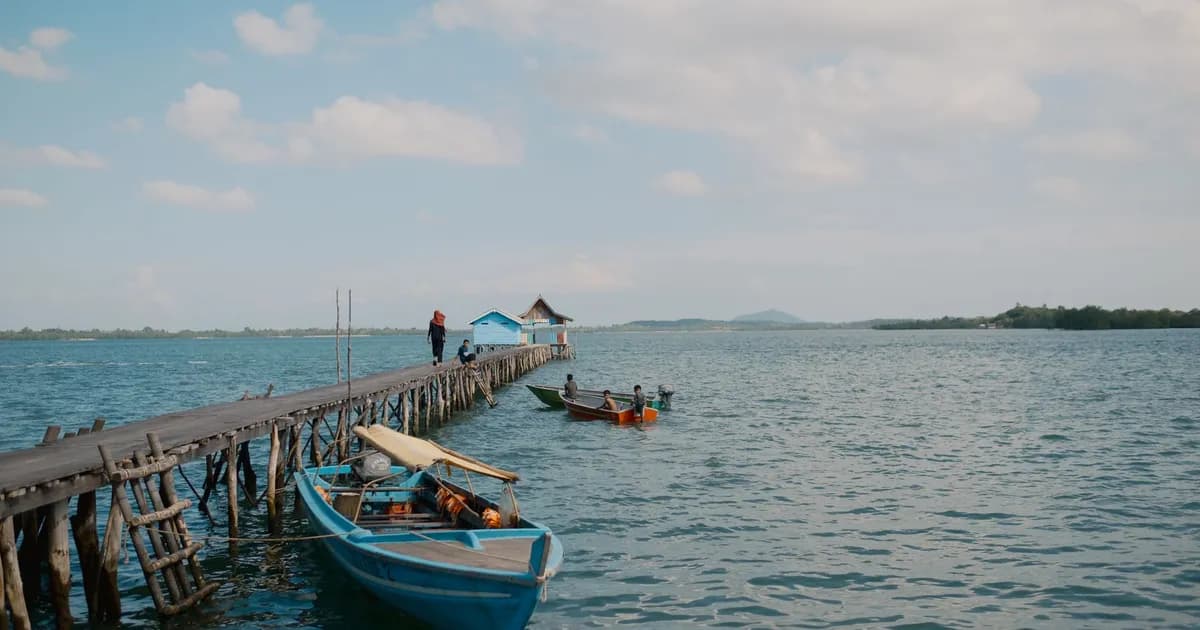
Pulau Ubin and Chek Jawa. This is the island that stops time. A ten-minute bumboat ride across the Johor Strait from Changi Point Ferry Terminal drops you into a version of Singapore that has otherwise vanished: a rustic kampong of wooden houses, dirt tracks, coconut palms and one of the last granite-quarry landscapes in the country. The boats leave when roughly a dozen passengers have gathered rather than to a fixed timetable, run from around seven in the morning until early evening, and cost only a few dollars each way in cash. Hire a bicycle at the jetty village and pedal out to Chek Jawa Wetlands on the eastern tip, where a boardwalk loops out over one of the richest intertidal ecosystems in the region, home to seagrass, corals, crabs and wading birds. Time your ride around the boat hours and the wetland's daytime opening, bring your own water and snacks, and give yourself the whole day. Nowhere else so close to a global financial centre feels this gloriously left behind.
The Southern Islands. From Marina South Pier, ferries run out to a little archipelago of calm: St John's Island, Lazarus Island and Kusu Island. Lazarus is the one people dream of, with a crescent of quiet sand and turquoise shallows connected to St John's by a causeway you can walk. Kusu carries a gentle spiritual weight, with a Chinese temple and Malay shrines that draw pilgrims each year. Ferry schedules are limited and change with maintenance, and at the time of writing the St John's main jetty is under enhancement works with boats routed via Lazarus, so check the current timetable and buy a return, since there are no shops or reliable food on the islands. Bring everything you need and take everything home with you.
Get matched with up to 5 trusted Singapore agencies
- Free
- No obligation
- Up to 5 agencies
The living heartlands
If the islands are where Singapore escapes itself, the heartlands are where it lives. These are the residential neighbourhoods, most of them built around clusters of public housing blocks, and they are the single best way to understand the country.
Tiong Bahru. The oldest housing estate in Singapore has become quietly fashionable, but its charm is genuine. The curving 1930s Streamline Moderne blocks, with their rounded balconies and spiral staircases, sit among independent bookshops, third-wave coffee roasters and one of the best traditional markets in the city. Come in the morning for the wet market and the old-school hawker fare upstairs, then wander the low-rise streets as the cafes open. It is the easiest heartland to love on a first visit.
Toa Payoh. One of the first satellite towns Singapore built, Toa Payoh is heartland life at full volume: a dragon playground beloved by generations, a busy central hawker centre, temples and a genuine sense of a self-contained town. It rarely sees a tourist and rewards an aimless afternoon.
Queenstown and Ang Mo Kio. Queenstown, the country's first satellite town, layers 1950s blocks, a much-loved public library and the last surviving stretch of old shophouses at Tanglin Halt. Ang Mo Kio, further north, is classic middle Singapore, with a huge hawker centre and an unhurried, entirely local rhythm. In all of these places the pleasure is not a single sight but the whole ordinary fabric: the wet markets stacked with tropical fruit and live seafood, the kopitiams where an uncle still pulls kopi through a cloth sock filter, the void decks where weddings and funerals and chess games all happen. A cup of thick local coffee with kaya toast and soft eggs at a heartland kopitiam is one of the country's great cheap pleasures, and our guide to what to eat in Singapore will help you order like a regular.
Heritage corners
Between the towers and the housing estates, Singapore keeps whole quarters of older architecture and layered culture, and the quieter ones repay slow attention.
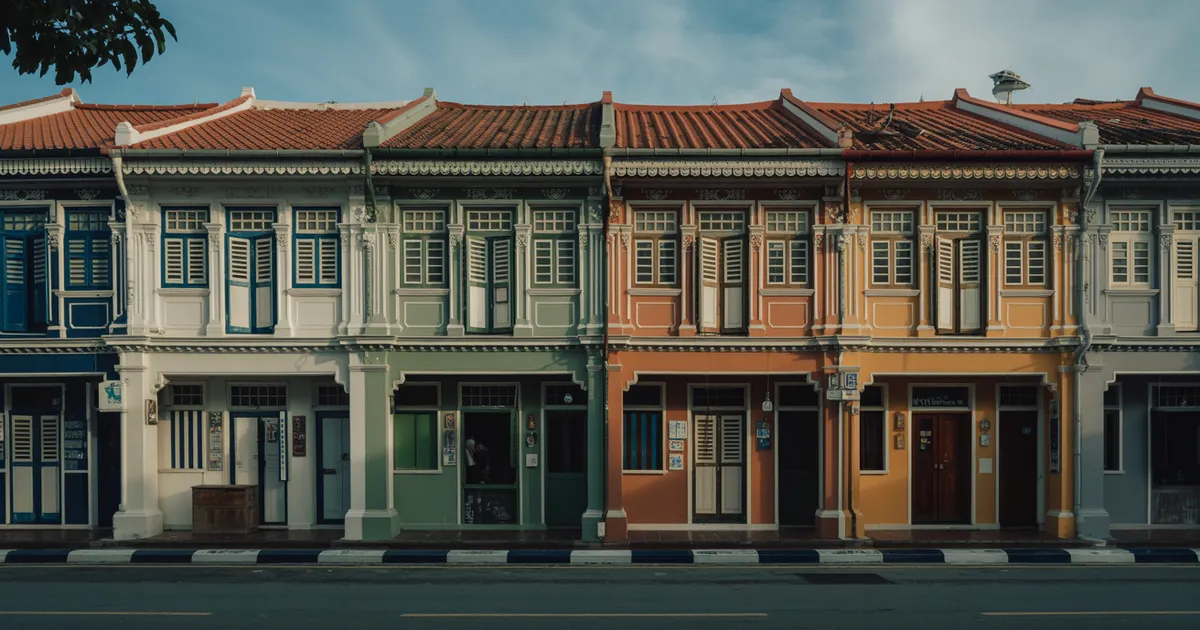
Katong and Joo Chiat. This is the heartland of Peranakan culture, the community descended from early Chinese settlers who married into the Malay world and created something entirely their own. The pastel shophouses along Koon Seng Road are among the most photographed buildings in the city, with their carved swinging doors and ceramic tilework, but the real reward is the food: this is the home of Katong laksa, and the neighbourhood is thick with kueh shops, kopitiams and Peranakan restaurants. Wander Joo Chiat Road slowly and read the buildings.
Kampong Glam and Chinatown back lanes. Both districts have famous fronts and quieter backs. In Kampong Glam, once you have seen the golden Sultan Mosque, slip into Haji Lane and the smaller streets around it for independent shops, murals and Malay-Arab heritage. In Chinatown, step off the souvenir spine of Pagoda Street into the residential lanes and old association buildings, the wet market and the temples, and the neighbourhood turns real again.
Haw Par Villa. Perhaps the strangest attraction in Singapore, this free 1930s theme park was built by the brothers behind Tiger Balm to teach Chinese mythology and morality through thousands of lurid painted statues. Its centrepiece, the Ten Courts of Hell, is a gleefully gruesome walk-through depicting the punishments of the Chinese underworld. It is odd, atmospheric and completely unlike anywhere else, and it is quiet on weekdays.
Fort Canning Park. A green hill in the very centre of the city, Fort Canning holds nine hundred years of history, from a fourteenth-century royal settlement to colonial fortifications and the underground bunker where the British surrendered Singapore in 1942. The famous tree tunnel spiral staircase draws a queue for photos, but the rest of the hill, with its old gates, spice garden and shaded lawns, is calm and cool. Nearby, at Bukit Batok, Little Guilin is a former granite quarry flooded into a still lake beneath a sheer rock face, named for its resemblance to the karst scenery of Guilin in China, and it is a lovely, low-key spot for an early walk.
The quiet edges
The far corners of the island are where the pace drops right off and Singapore feels almost rural.
Changi Village and the boardwalk. Out at the north-eastern tip, far from the airport terminals that share its name, Changi Village is a low-rise, salt-air pocket with a famous hawker centre known for nasi lemak, a small ferry point, and the long Changi Point Coastal Boardwalk that curves along the shore past old sea-facing bungalows and mangrove. It is the departure point for Pulau Ubin and a lovely, breezy place to spend a slow late afternoon.
Kranji countryside. In the north-west, near the strait that separates Singapore from Malaysia, a pocket of working countryside survives: vegetable and hydroponic farms, a goat dairy, a frog farm and small nurseries. The number of farms has shrunk over the years as land use shifts, so check what is open before you go, but the Kranji area remains the closest thing Singapore has to a rural day out.
Sungei Buloh Wetland Reserve. Along the same north-western coast lies Singapore's first ASEAN Heritage Park, more than two hundred hectares of mangrove, mudflat and pond. It is a serious birdwatching site, a vital stop on the East Asian-Australasian migratory flyway, and a place to watch mudskippers, monitor lizards and, if you are very lucky, a wild estuarine crocodile. Entry is free, the boardwalks are flat and easy, and free guided walks run on Saturday mornings if you register ahead. The migratory season from roughly September to March is the most rewarding time. Reach it via Choa Chu Kang MRT and a short bus ride.
Sample slow routes and day plans
The joy of Singapore is that these places link into unhurried days without any rush. A few ideas to build around.
A wild green day: start early at MacRitchie for the TreeTop Walk while the forest is cool, take an unhurried lunch back in town, then walk the Southern Ridges to Henderson Waves for sunset. Two contrasting forests, bookending a slow city afternoon.
An island day: catch an early bumboat from Changi Point to Pulau Ubin, hire a bicycle, ride out to Chek Jawa, picnic under the trees, and drift back mid-afternoon for dinner and the boardwalk at Changi Village. One full day, entirely away from the crowds.
A heritage and heartland day: begin in Tiong Bahru with market breakfast and coffee, cross town to Katong and Joo Chiat for laksa and Peranakan shophouses, and end at Haw Par Villa or Fort Canning as the heat eases.
A far-edge day: head north-west to Sungei Buloh for a morning among the mangroves and migratory birds, then explore what is open in the Kranji countryside before returning to the city. For help turning ideas like these into a realistic, well-paced itinerary, our tools to plan your journey are a good place to start, and mixing one off-the-beaten-path day with one central day keeps the trip balanced.
Travelling respectfully in the heartlands
The heartlands are not attractions. They are people's homes, and going there well means going quietly. Keep your voice down in the void decks and lift lobbies, do not photograph residents, and especially not children, without a warm and obvious ask, and be sensitive around temples, mosques and any religious rite you may stumble on. Wet markets are working places: buy something, keep out of the traders' way, and do not block the aisles for a photo.
The same care applies to neighbourhoods like Geylang, which is at once a beloved food destination and Singapore's licensed red-light area, and to Little India's Tekka, a densely local market and community hub. Both are absolutely worth visiting for the food and the atmosphere, but visit as a considerate guest: dress modestly, be discreet with your camera, and read the room. The reward for this quietness is real. Slow down, buy the kaya toast, sit at the shared table, and the heartlands open up in a way they never do for someone passing through in a hurry.
Logistics and local help
Getting around is the easy part. The MRT and bus network reaches almost everywhere in this guide, is spotlessly reliable and very cheap, and a contactless bank card or a stored-value pass covers every ride. Grab is useful for the last stretch to trailheads and ferry points. For the islands and reserves, remember the practical rules: bumboats to Pulau Ubin leave when full and take cash, Southern Islands ferries run to a limited schedule you should check in advance and buy a return for, and there is little or no food on either, so carry your own water and snacks.
Singapore is hot and humid all year, so treat every outdoor day as a tropical one: start early, carry more water than you think you need, use sun protection and a hat, and build in shade and rest. Sudden afternoon downpours are common and usually brief, so a small umbrella earns its place in your bag. None of this is expensive; Singapore has a costly reputation, but hawker meals, free parks and cheap public transport make the off-the-beaten-path version of the city genuinely affordable, and our Singapore trip cost and budget guide breaks down what a realistic slow trip actually costs.
If you would rather not piece it together alone, working with a good local operator can turn these scattered corners into a coherent, well-paced experience, especially if you want a guide who can read the heritage and the ecology for you. You can browse trusted, vetted Singapore travel agencies through our directory, and if you care about travelling gently and responsibly, our slow travel charter sets out the principles we look for in the partners we recommend.
The reward of going deeper
Singapore rewards slowness more than almost any city its size, precisely because it is so easy to mistake the shiny centre for the whole. Give it three or four days instead of one and the place quietly reorganises itself in your mind. The skyline stops being the headline and becomes a backdrop to something warmer: the smell of a wet market at dawn, a bumboat engine chugging across the strait, cicadas roaring in a reservoir forest, an uncle sliding a cup of kopi across a marble table without being asked.
None of these moments will be on the postcard, and that is exactly the point. The Singapore worth remembering is not the one everyone photographs in an afternoon. It is the one you have to slow down to find, and once you have found it, the version you saw in a day never feels like enough again.
Frequently Asked Questions
Is Singapore really worth more than a day or two?
Yes, far more. A single day only reaches the polished central sights, which are a tiny fraction of the island. Three to four days lets you add a rustic island like Pulau Ubin, a rainforest reservoir, a heritage quarter such as Katong, and a couple of heartland neighbourhoods, which together give you a completely different and much richer sense of the country. Because the island is small and transport is excellent, a longer stay never feels slow or padded; it simply lets the real Singapore come into focus.
How do I get to Pulau Ubin, and do I need to book?
No booking is needed. Make your way to Changi Point Ferry Terminal in the far north-east and take a bumboat across the Johor Strait, a crossing of about ten minutes that costs only a few dollars each way in cash. The boats do not run to a fixed timetable; they leave once roughly a dozen passengers have gathered, from around seven in the morning until early evening. On the island you can hire a bicycle at the jetty village to reach Chek Jawa and the trails. Bring your own water and food, as options are limited.
Do I need a ferry or a permit for the Southern Islands and Sungei Buloh?
The Southern Islands, including Lazarus, St John's and Kusu, are reached by ferry from Marina South Pier on a limited daily schedule, so check the current timetable and buy a return ticket. No permit is needed for general visits, but there are no shops, so carry everything you need. Sungei Buloh Wetland Reserve, by contrast, needs no ferry or permit at all: it is free to enter and reached by MRT to Choa Chu Kang and a short bus ride, with free guided walks on Saturday mornings if you register in advance.
Are the nature trails and TreeTop Walk open in 2026?
The major green spaces are open, but a few sections have ongoing works, which is normal for Singapore's constantly maintained parks. The MacRitchie TreeTop Walk runs Tuesday to Sunday and is closed on Mondays, and in early 2026 some connecting boardwalks are shut for repairs with signed detours. Parts of the Rail Corridor are also closed in phases during 2026 while the trail is improved, though other stretches remain open. Check the NParks website for the current status of any specific trail before you set out, and you will always find plenty that is accessible.
Is it appropriate for tourists to visit the heartlands and neighbourhoods like Geylang and Little India?
Yes, and doing so respectfully is one of the best ways to understand Singapore. These are living neighbourhoods rather than attractions, so behave as a considerate guest: keep noise down, ask before photographing people, dress modestly around temples and mosques, and stay out of the way in busy wet markets. Geylang is both a famous food destination and Singapore's licensed red-light district, so visit for the food with a little extra discretion. Approached with courtesy, the heartlands are welcoming, safe and deeply rewarding.
When is the best time of year for the off-the-beaten-path side of Singapore?
Singapore is hot and humid all year with no real seasons, so any month works for most of this guide. Two things fine-tune the timing. For birdwatching at Sungei Buloh and the wetlands, the migratory season from roughly September to March is far richer. For comfort on the jungle and island days, the slightly drier, less stormy stretch early in the year can be a little kinder, though sudden downpours are possible in any month. Whenever you come, start outdoor days early to beat the heat.
How much does the off-the-beaten-path version of Singapore cost?
Much less than the city's expensive reputation suggests. Almost everything in this guide is free or nearly so: the parks, reserves, Rail Corridor, heritage lanes and Haw Par Villa cost nothing to enter, the bumboat and island ferries are only a few dollars, and public transport is very cheap. Your main spending is on food, and hawker centres and heartland kopitiams serve some of the best meals in the city for a few dollars. It is entirely possible to have a rich slow-travel day here on a modest budget.