How Much Does a Trip to Singapore Cost in 2026?
Singapore has a reputation, and the reputation is half right. Yes, it is regularly ranked among the most expensive cities on earth. Yes, a rooftop cocktail here can cost more than a whole day of eating in Hanoi. But the reputation misses the more interesting truth: Singapore is also one of the great value destinations in Asia, provided you know which doors to walk through. A plate of chicken rice from a hawker stall that has been perfected over forty years costs less than a coffee in London. The metro is world-class and absurdly cheap. Some of the city's finest experiences, from the Supertree light show to a slow morning in a heritage neighbourhood, are free.
This guide is about spending well in Singapore, not spending little for its own sake. The slow-travel approach here is not about scraping by; it is about putting your money where the real experience lives, the food, the walking, the small conversations, and quietly stepping around the traps designed to separate visitors from their cash. Below you will find honest daily budgets, current 2026 prices in Singapore dollars, three fully costed itineraries, and a clear-eyed look at where the city is genuinely dear and where it is a bargain.
The honest answer: what Singapore costs per day
Let us start with numbers, because that is why you are here. The figures below are per person, per day, excluding international flights, and assume you are travelling as a couple sharing a room. Solo travellers should nudge accommodation upward; groups can share taxis and split more. All prices are in Singapore dollars (SGD), with rough US dollar equivalents at the mid-2026 rate of about 1 USD to 1.28 SGD.
| Tier | Daily budget (per person) | Roughly in USD | What it looks like |
|---|---|---|---|
| Shoestring | SGD 90 to 130 | USD 70 to 100 | Hostel dorm, hawker meals, MRT everywhere, mostly free sights |
| Mid-range | SGD 230 to 380 | USD 180 to 300 | Three-star or good four-star room, mix of hawker and restaurants, two or three paid attractions |
| Premium | SGD 550 and up | USD 430 and up | Central four or five-star hotel, fine dining, private guiding, cocktails with a view |
A few honest caveats. The shoestring figure is real but tight, and it depends heavily on eating almost every meal at hawker centres and treating alcohol as an occasional treat rather than a habit. The mid-range band is where most thoughtful travellers land, and it stretches a long way because the expensive line items, hotels and drinks, are optional, while the cheap ones, food and transport, are excellent. The premium tier has essentially no ceiling; Singapore will happily take as much money as you care to give it.
The single biggest variable is accommodation. It is entirely normal for your room to cost more than everything else you spend combined. That is the defining feature of a Singapore budget, and once you have made peace with the hotel line, the rest of the city is far kinder to your wallet than its reputation suggests.
One request. Up to five tailored proposals.
Skip contacting agencies one by one — share your trip once and let up to five trusted Singapore agencies come to you. Free, with no obligation.
Get my free quotesWhy Singapore feels expensive (and where it really doesn't)
Singapore feels expensive because the things visitors instinctively reach for, a central hotel, a drink at a rooftop bar, a taxi across town, a table at a smart restaurant, are all priced at genuine world-city levels. Land is scarce, labour is not cheap, and alcohol is taxed heavily. If you build your trip around those four habits, you will spend like you are in Zurich or New York.
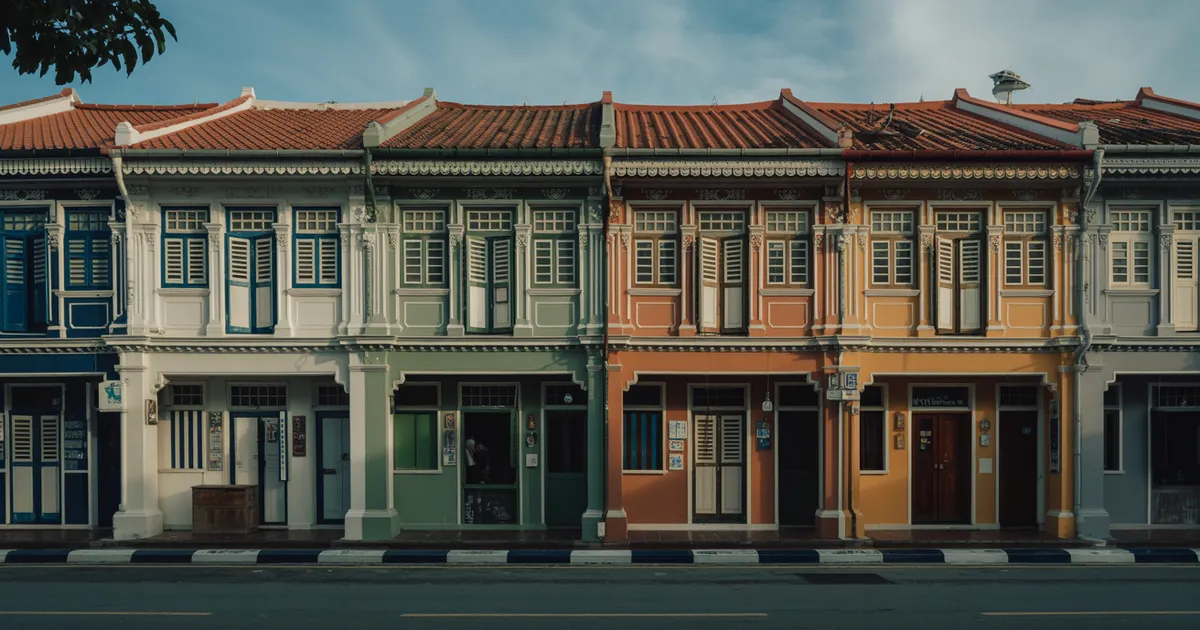
But step sideways and the picture changes completely. A superb meal at a hawker centre costs a few dollars. A cross-island train ride costs less than three. World-class parks, gardens and neighbourhoods cost nothing at all. The city is small enough to walk large parts of, and walking is where Singapore reveals itself anyway, the shophouses of Tiong Bahru, the temples of Chinatown, the spice-scented lanes of Little India. The expensive Singapore and the cheap Singapore sit side by side on the same street; you simply choose which one to spend your day in.
This is why the slow-travel instinct serves you so well here. Rushing pushes you toward the expensive options, taxis instead of trains, whatever restaurant is nearest instead of the hawker stall two blocks over. Slowing down lets you find the value, which in Singapore is usually the more authentic choice as well. For a fuller sense of which districts reward this kind of unhurried attention, our companion guide on where to go and when in Singapore is a good place to start planning the shape of your days.
The Singapore dollar, cards and cash
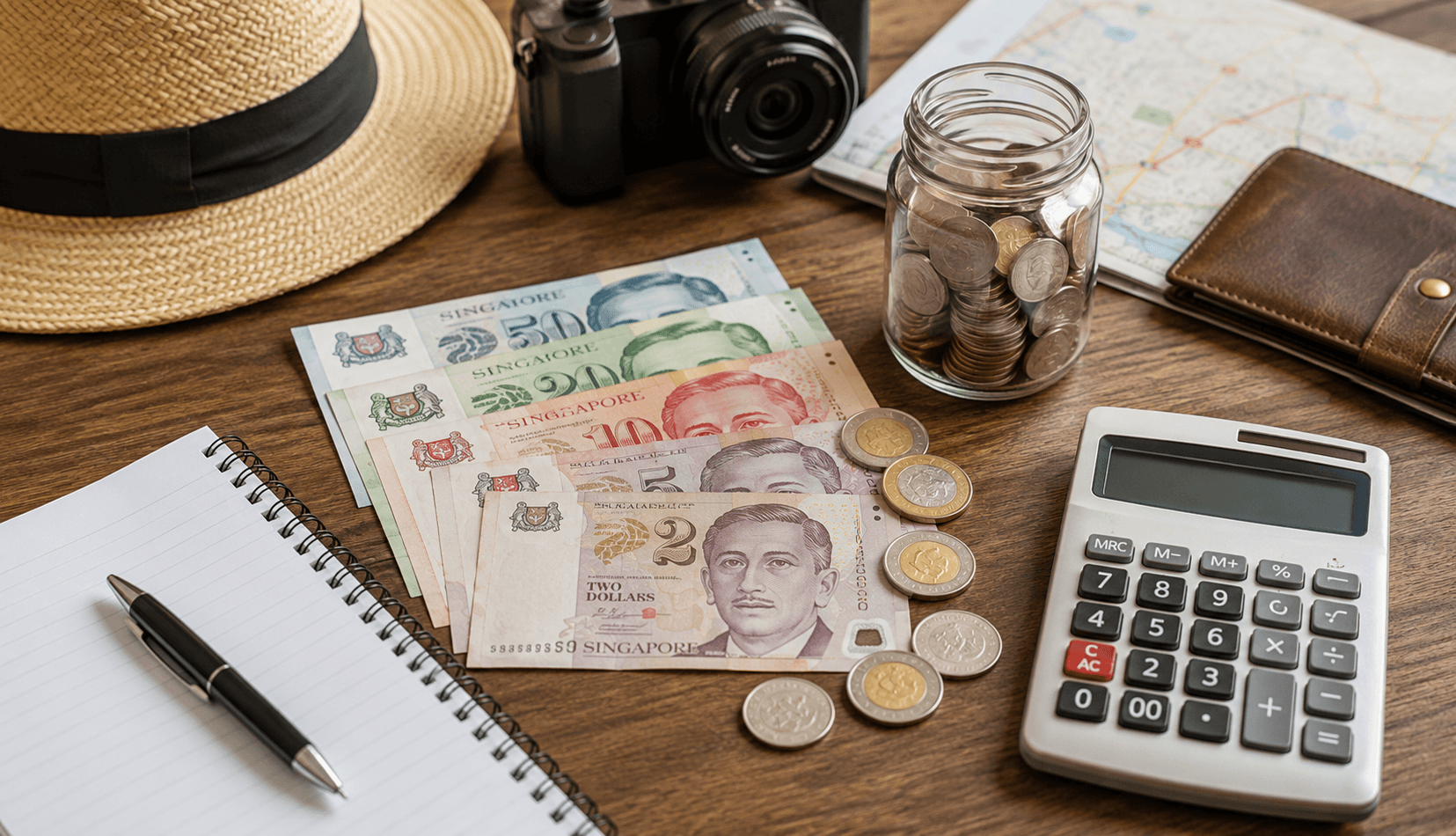
The currency is the Singapore dollar, written SGD or S$, divided into 100 cents. In mid-2026 one US dollar buys roughly 1.28 SGD, one euro roughly 1.47 SGD, and one pound roughly 1.70 SGD; put another way, SGD 100 is about USD 78, EUR 68 or GBP 59. The Singapore dollar is stable and strong, so there are no wild swings to worry about, but it does mean prices that look small in local terms are not as small as they seem once converted.
Singapore is close to a cashless society. Contactless cards and phone wallets are accepted almost everywhere, from department stores to many hawker stalls, and tapping a foreign Visa or Mastercard straight onto the MRT gate works fine. You will still want a little cash, ideally small notes, for the oldest hawker vendors, wet markets and the occasional stall that only takes physical money or the local QR system. Withdraw from a bank ATM rather than the currency-exchange kiosks at tourist sights, and pay in Singapore dollars, not your home currency, whenever a card machine offers you the choice, so you avoid the poor conversion rate of dynamic currency conversion.
Two taxes are worth understanding because they shape what you actually pay. The Goods and Services Tax (GST) is 9 percent and is usually already included in shelf and menu prices at ordinary shops and hawker stalls. Sit-down restaurants and bars, however, often show prices followed by "++", which means a 10 percent service charge and 9 percent GST are added at the till. A dish listed at SGD 20++ actually costs about SGD 23.98. Always read the small print on a restaurant menu before you assume a price.
Get matched with up to 5 trusted Singapore agencies
- Free
- No obligation
- Up to 5 agencies
The SG Arrival Card and getting in
Singapore is refreshingly simple to enter. Most Western, Gulf and many Asian passport holders are granted visa-free entry, typically for 30 or 90 days depending on nationality, so for a short city break there is usually no visa to buy and no fee to pay. What everyone does need, regardless of nationality, is the SG Arrival Card, a free electronic form that also carries a short health declaration.
Submit the SG Arrival Card online within the three days before you arrive, and only through the official ICA e-Service or the MyICA app. This matters: a cluster of look-alike websites will happily charge you a "processing fee" for a document that is completely free through the government channel. There is no paper card to fill in on the plane any more, and no departure card either, so once you are through immigration, the paperwork is behind you. Keep a screenshot of your acknowledgement, though you will rarely be asked for it.
Because entry is so smooth, it is easy to underestimate how much this saves you in both money and friction compared with destinations that charge visa-on-arrival fees. Budget zero for entry beyond the cost of getting to the airport, and put the fifteen minutes it takes to fill in the arrival card on your pre-trip list. Our plan your journey hub keeps a current checklist of these practical steps so nothing catches you out at the gate.
Where to sleep: accommodation by tier
Accommodation is where Singapore earns its expensive reputation, and it is worth being clear-eyed about why. The island is small, land is precious, and demand from business and leisure travellers is relentless, so even ordinary rooms command prices that would feel steep elsewhere. This is the line item to think hardest about, because it will likely be your single largest cost.
At the shoestring end, Singapore has a genuinely good hostel scene. A bed in a clean, well-run dormitory typically costs SGD 25 to 45 a night, and the best of them cluster in Chinatown, Little India, Bugis and Geylang, all safe, characterful and sitting right on top of MRT stations and cheap food. These neighbourhoods are, not coincidentally, some of the most rewarding places to actually stay, so budget and experience pull in the same direction. A private room in a budget hotel or a capsule-style bunk runs closer to SGD 90 to 150.
The mid-range is broad. A solid three-star or a good four-star hotel with a pool and gym generally runs SGD 160 to 260 a night, more if you insist on a Marina Bay or Orchard Road address, less if you base yourself a couple of MRT stops out in a neighbourhood like Tiong Bahru, Katong or Lavender. This is the sweet spot for most travellers: comfortable, well located, and a fraction of what the headline luxury properties charge.
At the top, the sky is the limit. An iconic address such as Marina Bay Sands, or a heritage grande dame like Raffles, will run from around SGD 500 to well over SGD 1,000 a night in high season, and the famous infinity pool is a Marina Bay Sands guests-only affair. The honest slow-travel view is that a central five-star hotel is a want, not a need, in a city where the MRT puts everything within twenty minutes. Spend the difference on food, guiding and time instead, and you will remember the trip more fondly.
Eating on any budget: the hawker-centre superpower
This is where Singapore turns its reputation on its head. The city has one of the world's greatest street-food cultures, and it is preserved in the hawker centre, a covered hall of independent stalls, many run by families who have cooked one dish for decades. A plate of Hainanese chicken rice, char kway teow, laksa or a bowl of bak chor mee typically costs SGD 3.50 to 7, and it is not a compromise; some hawker stalls have earned Michelin recognition. Eat three meals a day this way and you can feed yourself superbly for under SGD 20. Maxwell, Old Airport Road, Lau Pa Sat, Tekka and Chinatown Complex are all rightly famous, and every neighbourhood has its own beloved centre.
The contrast with sit-down restaurants is stark. A casual restaurant meal runs SGD 20 to 40 a head before drinks, a smart one far more, and once the 10 percent service charge and 9 percent GST are added the bill climbs faster than the menu suggested. None of this is bad value in absolute terms, Singapore has genuinely world-class restaurants, but it is a different order of spending, and the joy of the city is that you never have to eat expensively to eat brilliantly. A good rule is to let hawker centres carry your everyday eating and save restaurants for one or two deliberate occasions.
Then there is alcohol, which deserves its own warning because it is where budgets quietly haemorrhage. Singapore taxes alcohol among the highest in the region: excise duty runs to SGD 60 per litre of alcohol for beer and SGD 88 for wine and spirits, and 9 percent GST sits on top. In practice a pint of craft beer in a bar costs SGD 14 to 18, a cocktail SGD 20 to 24, and a drink at a rooftop bar SGD 24 to 32. Even a supermarket can of beer is SGD 3 to 5, several times what it costs across the causeway in Malaysia. If you enjoy a drink, this single habit can add SGD 50 or more to a day without much to show for it. To dig deeper into eating well rather than expensively, our dedicated guide on what to eat in Singapore maps the dishes and stalls worth planning a day around.
Getting around: why the MRT is the best value in the city
If there is one place Singapore is unambiguously, gloriously cheap, it is public transport. The MRT metro is clean, fast, air-conditioned, easy to navigate and reaches almost everywhere a visitor wants to go, and single fares run only about SGD 1.28 to 2.57 depending on distance. The ride from Changi Airport into the city is roughly SGD 2.50, one of the cheapest airport transfers anywhere in the world. Buses cover the gaps at the same low fares and offer a scenic, ground-level view of the city for the price of a couple of dollars.
You have two easy ways to pay. The simplest is to tap a contactless Visa, Mastercard or Amex, or your phone, straight onto the gate; the fare is identical to a stored-value card, with only a small foreign-card admin fee of around SGD 0.60 a day. Alternatively, buy an EZ-Link card for SGD 10 (a SGD 5 non-refundable card fee plus SGD 5 of travel credit) from any station or convenience store. The Singapore Tourist Pass offers unlimited rides for SGD 17, 24 or 29 for one, two or three days, but the sums only favour it if you are taking four or more trips a day; most travellers spend less simply paying per ride.
Which brings us to taxis and Grab. They are perfectly good and not outrageously priced by global standards, a typical cross-town trip runs SGD 15 to 20, but next to a SGD 2 train they are an expensive habit, and during rain or peak hours surge pricing can double the fare. Save them for late nights, heavy luggage, or when you are a group of three or four and can split the cost so it undercuts four separate train fares. You do not need, and will not want, a rental car here; parking, congestion charges and the sheer excellence of the trains make driving pointless for a visitor. Put simply, the MRT is not just the cheap option, it is the good one.
Attractions: what's worth paying for, and the brilliant free things
Singapore's headline attractions are genuinely excellent and genuinely priced. It pays to be selective rather than trying to tick every box, because the tickets add up quickly. Here is where the money goes in 2026.
Gardens by the Bay is the emblem of the city, and the two climate-controlled conservatories, the Flower Dome and the Cloud Forest, cost around SGD 48 for an adult combined ticket. They are worth it. Crucially, though, the vast outdoor gardens and the nightly Supertree light show, Garden Rhapsody, are completely free, and they are the images most people carry home. The Singapore Flyer observation wheel is about SGD 40. Universal Studios on Sentosa runs roughly SGD 83 to 88 for a day pass, the S.E.A. Aquarium around SGD 44, and the various Sentosa rides SGD 20 to 40 each, which is why a whole family day on the island can quietly reach several hundred dollars. The Night Safari and Singapore Zoo are around SGD 50 to 55 each and are among the paid attractions most people feel are worth every cent. The ArtScience Museum sits around SGD 20 to 25 depending on the exhibition.
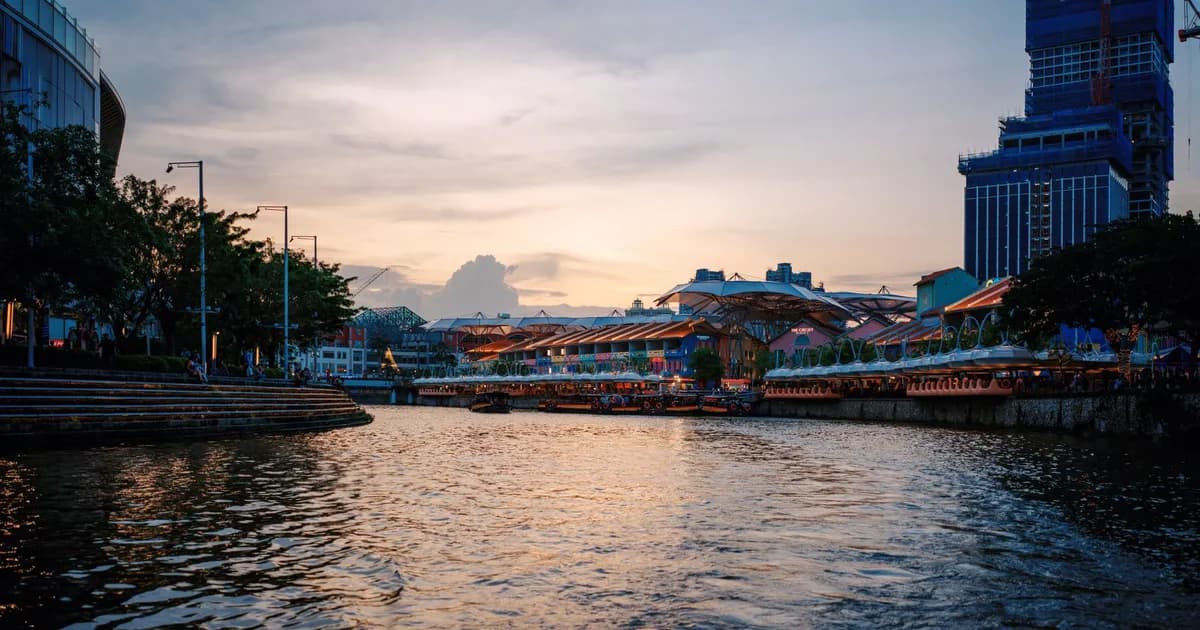
Now the good news, which is very good. An enormous amount of the best of Singapore is free. The hawker centres are an attraction in themselves. The Supertree Grove after dark, the Marina Bay waterfront promenade, the colonial civic district, the shophouse quarters of Chinatown, Little India, Kampong Glam and Tiong Bahru, the sweeping trails of the Southern Ridges and MacRitchie Reservoir, the Botanic Gardens (a UNESCO site, and free to enter) all cost nothing. You could fill three days with rich, characterful experiences and pay for barely a ticket. If your instinct is to skip the queues and the crowds altogether, our guide to the hidden gems and off-the-beaten-path corners of Singapore points to the quieter, mostly free side of the city that rewards a slower pace.
Three costed itineraries
Numbers make budgets real, so here are three fully costed plans for a three-to-four-day city break, per person, excluding international flights. Each assumes a couple sharing a room; solo travellers should raise the accommodation line.
The shoestring trip (four days, about SGD 520 to 640)
Sleep in a well-run hostel dorm in Chinatown or Little India at roughly SGD 35 a night (SGD 140 for four nights). Eat every meal at hawker centres, budgeting around SGD 20 a day (SGD 80). Travel entirely by MRT and bus, about SGD 8 a day plus the card (SGD 42). Keep paid attractions to two, say the Gardens by the Bay conservatories at SGD 48 and the Night Safari at SGD 53 (SGD 101), and fill the rest with free neighbourhoods, parks, waterfronts and the Supertree show. Allow a modest SGD 40 for the odd coffee, snack or single drink. This is a real, comfortable, genuinely rich trip, and proof that Singapore does not have to be expensive.
The mid-range trip (four days, about SGD 1,500 to 1,900)
Take a good four-star hotel a short MRT ride from the centre at around SGD 200 a night (SGD 800). Mix hawker meals with a couple of proper restaurant dinners, budgeting SGD 55 a day (SGD 220). Use the MRT for almost everything with a couple of Grabs when it rains, about SGD 15 a day (SGD 60). Choose three or four paid experiences across the trip, perhaps the conservatories, the zoo, the ArtScience Museum and the Singapore Flyer (roughly SGD 155). Allow SGD 200 for a few good drinks, a rooftop sunset and incidentals. This is where most thoughtful travellers land, and it buys a very full, very comfortable Singapore.
The premium trip (four days, about SGD 3,800 and up)
Stay central at a five-star hotel at SGD 550 or more a night (SGD 2,200 and up). Eat at a mix of destination restaurants and the best hawker stalls, budgeting SGD 150 a day (SGD 600). Add a half-day private guided walk to bring the neighbourhoods to life, cocktails at a rooftop bar, and whichever marquee attractions appeal without counting the cost. This tier is about comfort, time and access rather than any single splurge, and a good local partner is what turns the spending into a genuinely memorable trip rather than a series of expensive tickets.
Hidden costs and money traps
A few things quietly inflate a Singapore budget, and all of them are avoidable. Alcohol is the biggest by far; because of the tax regime, a few rounds of drinks can cost more than a night's accommodation, so treat bar visits as deliberate occasions rather than a default. Rooftop bars in particular charge a heavy premium for the view, and the free Marina Bay promenade offers much the same skyline for nothing.
Sentosa is the second trap. Entry to the island is cheap, but the individual attractions, Universal Studios, the aquarium, the rides, the cable car, add up alarmingly fast, and a family can spend several hundred dollars almost without noticing. Decide in advance which two or three things you actually want and consider a combination pass rather than paying separately. Taxis and Grab during rain or rush hour are the third, with surge pricing quietly doubling fares that the MRT would have covered for a couple of dollars. Watch, too, for the "++" on restaurant menus, which adds nearly 20 percent to the printed price, and for dynamic currency conversion at card machines, which quietly skims your exchange rate; always choose to pay in Singapore dollars. None of these are scams, exactly, but they are the reasons a carelessly planned Singapore trip costs twice what a thoughtful one does.
How to get more value without going cheap
Getting value in Singapore is not about deprivation; it is about spending on the right things. Base yourself a stop or two outside the tourist core, in a neighbourhood like Tiong Bahru, Katong or Lavender, where rooms are cheaper and the local texture is richer, then let the fast, cheap MRT carry you into the sights. Eat the way Singaporeans do, at hawker centres, and reserve restaurants for one or two chosen occasions rather than every night. Front-load the free experiences, the gardens, the waterfront, the neighbourhoods, the parks, and pay only for the attractions that genuinely move you.
Travel in the shoulder periods where you can, avoiding the peak of the year-end holidays and the Formula 1 weekend in September or October, when hotel rates spike hardest. Carry a contactless card for the MRT and a little cash for the oldest hawkers. And give yourself time, because the single most expensive thing you can do in Singapore is rush, which pushes you into taxis and tourist-trap meals. A slower trip is almost always a cheaper and a better one. The charter for slow travel sets out the principles behind this approach, and they apply as neatly to your budget as to your experience of the city.
Planning with a good local partner
For a short city break, Singapore is easy enough to arrange yourself; the entry is simple, the transport is intuitive, and the food finds you. But the moment you want more than the surface, a private walk through a heritage district with someone who knows its history, a food trail led by a real enthusiast, a day that threads together the parts of the city most visitors miss, a good local partner earns its fee many times over. The value is not in booking things you could book alone; it is in the judgement, the access and the time saved, and in turning a checklist of attractions into a coherent, personal experience of the place.
A thoughtful operator will also steer you away from the money traps described above, toward the hawker stall rather than the tourist restaurant, the free viewpoint rather than the paid one, the neighbourhood rather than the queue. That is precisely the slow-travel ethos, spending on what deepens the trip and skipping what merely inflates the bill. If you would like help shaping an unhurried, well-judged Singapore, our vetted Singapore travel agencies are chosen for exactly this kind of considered, value-conscious local expertise.
Frequently Asked Questions
Is Singapore really as expensive as people say?
It depends entirely on how you travel. Central hotels, restaurant dining, alcohol and taxis are priced at genuine world-city levels, and if you build your trip around them Singapore is among the most expensive places on earth. But hawker food is superb and costs a few dollars, the MRT is world-class and cheap, and many of the best experiences are free. A thoughtful traveller can enjoy Singapore richly on SGD 90 to 130 a day; a careless one can spend that on lunch and drinks alone. The reputation is true only if you let it be.
How much should I budget per day for Singapore?
As a rough guide, plan on SGD 90 to 130 per person per day for a shoestring trip staying in hostels and eating at hawker centres, SGD 230 to 380 for a comfortable mid-range trip with a good hotel and a mix of dining, and SGD 550 or more for a premium trip with central luxury accommodation. These figures exclude international flights and assume a couple sharing a room; solo travellers should raise the accommodation portion, as it is the largest and least flexible cost.
What is the cheapest way to eat well in Singapore?
Eat at hawker centres, which is also the best way to eat well, not just cheaply. These covered halls of independent stalls serve some of the finest food in the country, chicken rice, laksa, char kway teow, satay, for SGD 3.50 to 7 a dish, and some stalls have earned Michelin recognition. Three hawker meals a day can cost under SGD 20 and leave you eating better than most restaurant tables. Save sit-down restaurants for one or two deliberate occasions rather than everyday meals.
Do I need a visa for Singapore, and what is the SG Arrival Card?
Most Western, Gulf and many Asian passport holders enter Singapore visa-free, typically for 30 or 90 days, so for a short trip there is usually no visa to buy. Everyone, however, must complete the free SG Arrival Card online within three days before arrival, using only the official ICA e-Service or the MyICA app; it includes a short health declaration. Beware look-alike websites charging a fee for what is a free government form, and keep a screenshot of your acknowledgement.
Should I use the MRT, taxis or Grab to get around?
The MRT is the clear winner for value and convenience. It is clean, fast, air-conditioned and reaches almost everywhere, with single fares of only about SGD 1.28 to 2.57 and an airport ride of around SGD 2.50. Tap a contactless card or phone straight onto the gate, or buy an EZ-Link card. Reserve taxis and Grab, which run SGD 15 to 20 for a typical trip and surge in rain or rush hour, for late nights, heavy bags, or when a group can split the fare. You do not need a rental car.
How much are the main attractions in Singapore?
In 2026, expect around SGD 48 for the two Gardens by the Bay conservatories combined, SGD 40 for the Singapore Flyer, SGD 83 to 88 for Universal Studios, roughly SGD 44 for the S.E.A. Aquarium, SGD 50 to 55 each for the Night Safari and the Zoo, and SGD 20 to 25 for the ArtScience Museum. Sentosa rides run SGD 20 to 40 apiece and add up fast. Balance these against the wealth of free experiences, the outdoor gardens, the Supertree light show, the Botanic Gardens, the waterfront and the neighbourhoods.
Is tipping expected in Singapore?
No. Tipping is not part of the culture and is genuinely not expected. Most sit-down restaurants and bars already add a 10 percent service charge, shown as "++" alongside the 9 percent GST, so a bill listed at SGD 20++ actually comes to about SGD 23.98. There is no need to add anything further, though you may of course round up or leave a little for exceptional service. Hawker centres, taxis and casual eateries carry no service charge and expect no tip at all.