Bangkok to Vientiane by Train in 2026: The Laos-China Rail Link Explained
For decades, the dream of boarding a train in Bangkok and stepping off in China felt like a map-drawer's fantasy. In 2026 it is closer than ever, and part of it already works. A direct sleeper now crosses the Mekong into the Lao capital, where it meets a modern railway that runs all the way to the Chinese border and beyond. The seamless, single-ticket Bangkok-to-Kunming journey is not here yet, but the pieces are falling into place, and for a slow traveller the current, imperfect version is arguably more interesting than the polished one to come.
This is an update on where the rails actually reach in 2026: what you can ride today, what is under construction, and how to plan a cross-border train journey now rather than waiting for the high-speed future.
The train that already crosses the border
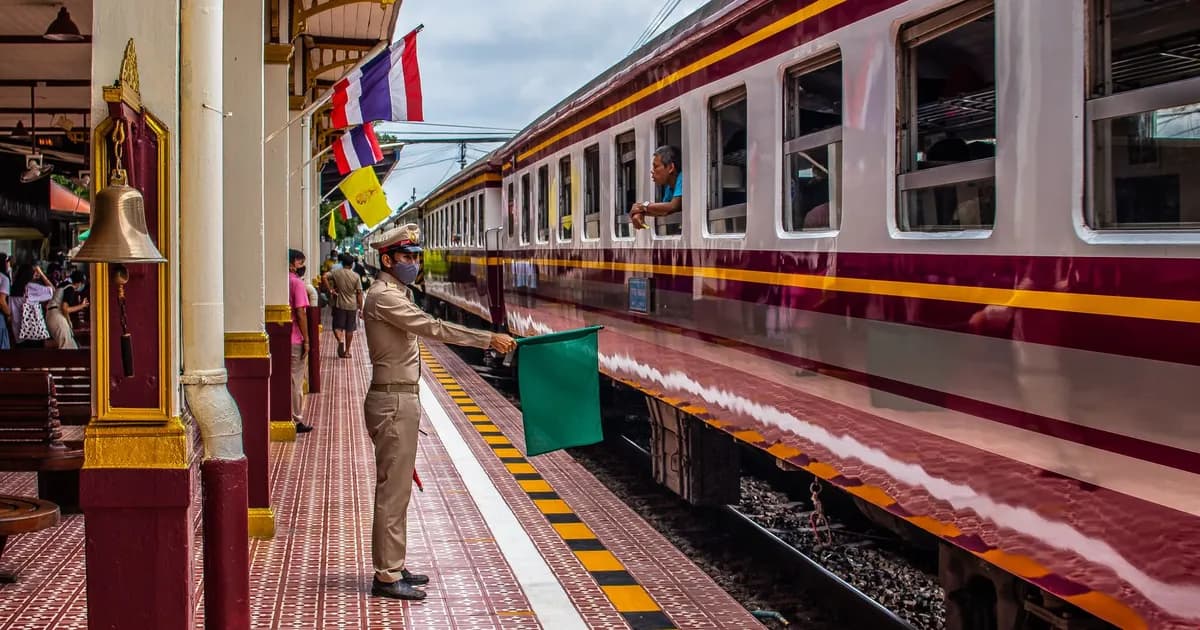
The headline, often missed, is that you can already take a direct train from Bangkok across the border to Vientiane. Train 133 runs the full route without a change of carriage, delivering you to the Lao capital's Khamsavath station in roughly eleven hours, with a second-class sleeper costing in the region of 28 US dollars. This is a genuine cross-border service: you board in Bangkok, sleep through Isan, cross the Mekong on the railway bridge, and wake up in Laos.
That single fact rewrites how the two countries connect. Where travellers once had to reach Nong Khai, cross to the border station, and piece together onward transport, the through-train now handles the whole journey. It is not fast, and it is not fancy, but it is exactly the kind of slow, overnight, border-dissolving journey that this style of travel is built around. Our wider guide to travelling Thailand by train sets out how the sleeper network feels and how to make the most of a night on the rails.
One request. Up to five tailored proposals.
Skip contacting agencies one by one — share your trip once and let up to five trusted Thailand agencies come to you. Free, with no obligation.
Get my free quotesConnecting to the Laos-China Railway
What makes this more than a Thailand-Laos link is what waits at the other end. Since late 2021, the Laos-China Railway has run modern, fast trains from Vientiane north through Luang Prabang to the border town of Boten, and on into China's Yunnan province towards Kunming. It transformed travel within Laos overnight, turning journeys that once took a punishing day by road into a few comfortable hours.
For the cross-border traveller, this means the two halves of the journey already exist: the overnight sleeper from Bangkok to Vientiane, and the sleek Chinese-built line from Vientiane onward. What is missing is the seamless join. Today you arrive in Vientiane, spend time in the city, then take the Laos-China Railway as a separate ticket on a separate day. That is not a hardship for a slow traveller; it is an invitation to break the journey in the Lao capital rather than rush through it. If you are weaving this into a longer overland trip, our guide to crossing Thailand's land borders to Laos and Malaysia puts the rail link in the context of the wider crossings.
What is running in 2026, and what is not
It is worth being precise, because rail projects attract a lot of premature excitement. What runs today is the conventional network: the Bangkok-Vientiane through-train, and the separate Laos-China Railway. What does not yet run is Thailand's own high-speed line, which is still under construction and years from completion. The glossy vision of a 250-kilometre-an-hour bullet train from Bangkok to the border is real, but it is a project for 2030 and beyond, not for this year's trip.
For 2026, in other words, the answer to "can I take the train from Bangkok towards China?" is a qualified yes: yes on conventional trains with a change in Vientiane, and no on a single high-speed service. Understanding that distinction saves disappointment and lets you plan around what actually exists. For the fuller status of the bullet-train project, our dedicated report on Thailand's high-speed rail in 2026 tracks the construction in detail.
Get matched with up to 5 trusted Thailand agencies
- Free
- No obligation
- Up to 5 agencies
The high-speed future: Bangkok to Nong Khai
The line that will eventually knit everything together is the Bangkok-Nong Khai high-speed railway, a flagship of the regional rail vision. Its first phase, the 253-kilometre stretch from Bangkok to Nakhon Ratchasima, is under construction, with trains designed to run at 250 kilometres an hour and stops at Bangkok, Don Muang, Ayutthaya, Saraburi, Pak Chong and Nakhon Ratchasima. That first phase is scheduled to open around 2030, cutting the run to Nakhon Ratchasima to well under two hours.
The second phase, extending the line from Nakhon Ratchasima to Nong Khai on the Lao border, is the piece that would complete the through route; contracts for its civil works are expected to be auctioned by the end of 2026, with construction to follow and completion projected for the early 2030s. A planned new railway bridge across the Mekong would then link the Thai high-speed line to the Chinese-built track in Laos, making a genuine Bangkok-to-Kunming rail journey possible. It is coming, but it is not soon, and the slow traveller need not wait for it.
How to book and ride it now
Booking the current cross-border service takes a little planning but no special expertise. Tickets for the Bangkok-Vientiane train can be reserved in advance through the State Railway of Thailand, and sleeper berths on the popular overnight services sell out ahead in busy periods, so book early. Bring your passport details when you book, since this is an international service, and remember that you are crossing a border: the usual immigration formalities apply at the crossing.
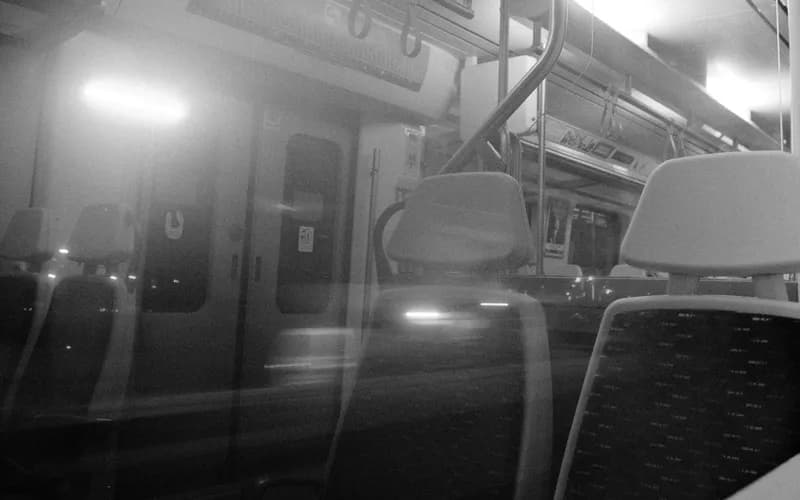
On the Lao side, tickets for the Laos-China Railway are best secured a few days ahead through an agent or the official channels, as the fast trains are popular and seats are limited. Because you are re-entering Thailand at the end of any round trip, complete the Thailand Digital Arrival Card before your return crossing; our summary of Thailand's 2026 entry rules and the TDAC covers the current requirements. Give yourself a night in Vientiane between the two trains, and the whole thing becomes a relaxed three-country corridor rather than a race.
Why this matters for slow travel
The romance of this route is not speed; it is continuity. A train that carries you from a Bangkok platform across a great river into another country, to connect with a line that reaches towards China, restores something that cheap flights erased: the felt experience of distance. You see the land change, you sleep to the rhythm of the rails, and you arrive having travelled rather than merely transferred.
For the slow traveller, 2026 is a sweet spot. The through-train exists, the Laos-China Railway exists, and the high-speed line has not yet arrived to make the journey too quick to savour. Riding it now means experiencing the corridor at a human pace, with time to break the trip where it deserves breaking. To build a rail-based itinerary that makes the most of these connections, our Thailand plan-your-journey page is the place to start.
What the ride is actually like
It helps to know what you are signing up for, because a cross-border sleeper is a particular kind of experience. On the Thai side, second-class sleeper carriages are the sweet spot: berths that fold down into curtained bunks, reasonably clean, sociable without being chaotic, and far more comfortable than a night bus. Lower berths cost a little more than uppers and are worth it for the window and the extra room. Air-conditioning can run cold overnight, so a light layer and a scarf earn their place in your bag.
Meals are part of the rhythm. Vendors and a buffet car keep you fed with simple Thai dishes and drinks, though bringing your own snacks and plenty of water is wise for a journey this long. The train leaves Bangkok in the afternoon or evening and reaches the border in the morning, which means you see the Isan countryside slide by at dusk and dawn rather than in the flat light of midday, a small gift of the timetable.
The crossing itself is the memorable part: the train pauses for immigration, then eases across the Mekong bridge into Laos, the river wide and brown below. It is not a luxury service and it is not trying to be. What it offers instead is the increasingly rare pleasure of watching two countries join at ground level, at the pace of a train rather than the blur of a plane. Come with patience and curiosity, and the journey becomes the destination.
What to Do Next
- Decide your scope: Bangkok to Vientiane only, or onward into Laos and towards China on the Laos-China Railway.
- Book the Bangkok-Vientiane sleeper early through the State Railway of Thailand, with your passport details to hand.
- Reserve Laos-China Railway seats separately a few days ahead, and plan a night in Vientiane between the two.
- Do not wait for the high-speed line: it is a 2030-and-beyond project, and the current route is more rewarding to travel slowly.
- Complete the Thailand Digital Arrival Card before your return crossing, and confirm current entry rules before you go.
Frequently Asked Questions
Can you take a direct train from Bangkok to Vientiane in 2026?
Yes. Train 133 runs directly from Bangkok to Vientiane's Khamsavath station without a change of carriage, taking around eleven hours, with a second-class sleeper costing roughly 28 US dollars. It crosses the Mekong on the railway bridge into Laos.
Can I travel by train from Bangkok all the way to China?
Not on a single service yet. You can take the through-train to Vientiane, then the separate Laos-China Railway north towards Boten and on into Yunnan. A seamless Bangkok-to-Kunming service awaits the completion of Thailand's high-speed line in the 2030s.
Is Thailand's high-speed train to the Lao border running yet?
No. The Bangkok-Nakhon Ratchasima first phase is under construction and expected to open around 2030, and the extension to Nong Khai is projected for the early 2030s. In 2026 the cross-border journey still uses conventional trains.
How far in advance should I book the Bangkok-Vientiane train?
Sleeper berths on the overnight service sell out during busy periods, so book as early as you can, ideally well before your travel date. You will need your passport details at the time of booking, as it is an international service.
Do I need to do border formalities on the train?
Yes. Although it is a through-service, you are crossing an international border, so standard immigration procedures apply at the crossing. Keep your passport accessible and, for your return into Thailand, complete the Thailand Digital Arrival Card beforehand.
Is the Laos-China Railway worth adding to the trip?
For many slow travellers, yes. It turns long, rough road journeys within Laos into comfortable hours and opens a scenic route north through Luang Prabang towards the Chinese border, making Vientiane a natural hinge in a longer overland itinerary.
Keep reading
More from the ground · Thailand