
How to Travel Thailand Overland: Slow Border Crossings to Laos and Malaysia
There is a particular satisfaction in arriving in a country by land. No airport, no baggage carousel, just a river or a fence and the slow business of stamping out of one place and into another. For the slow traveller, Thailand's land borders are one of the great underused pleasures of the region: they turn a country into part of a continent, and they let a journey unspool at the pace of trains and rivers rather than the jolt of a flight. This is a guide to doing it well in 2026, with an honest account of which borders are open and which are not.
Thailand shares land frontiers with Laos, Myanmar, Cambodia and Malaysia, and between them there are more than twenty international crossings. But not all are equal, and in 2026 not all are usable. Before you plan a route, it is worth knowing where the good slow crossings are, where the rules will trip you up, and where the border is simply shut.
Why go overland at all
Flying between Southeast Asian capitals is cheap and quick, which is precisely why it flattens the experience. An overland crossing does the opposite: it restores the sense of distance and difference that makes travel feel like travel. You watch the landscape, the food and the language change gradually rather than stepping out of a pressurised tube into somewhere unrelated. You also cut the carbon of your trip dramatically, and you arrive in border towns that most fly-in visitors never see.
There is a practical dividend too. Overland routes stitch neatly into a longer regional journey, and they reward the traveller who is not in a hurry. If you are already planning to move slowly within Thailand, our guide to getting around Thailand by its slow transport sets out the trains, buses and boats that connect naturally to the border routes below.
One request. Up to five tailored proposals.
Skip contacting agencies one by one — share your trip once and let up to five trusted Thailand agencies come to you. Free, with no obligation.
Get my free quotesThe Laos crossings: bridges and the Mekong
Laos is the most rewarding neighbour to reach overland, and the crossings are straightforward. The busiest is at Nong Khai, where the First Thai-Lao Friendship Bridge spans the Mekong to Vientiane; you can even take a train across the bridge itself. From Bangkok, an overnight sleeper to Nong Khai followed by the short hop across the river is one of the classic slow entries into Laos.
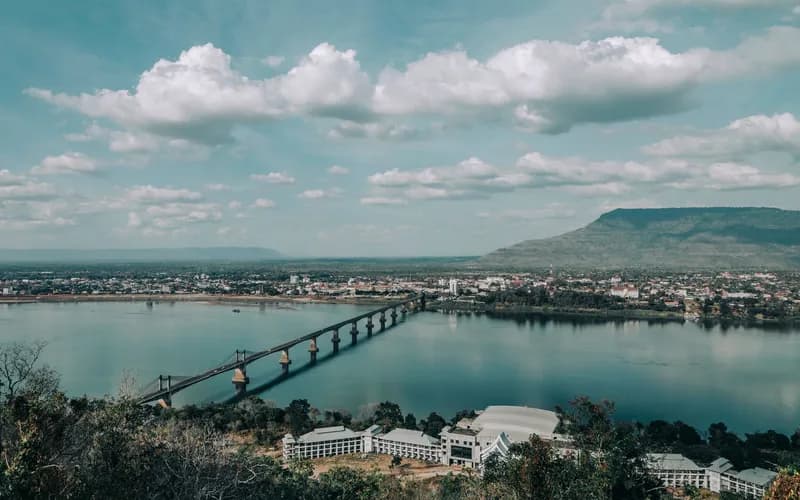
Further north lies the traveller's favourite: Chiang Khong to Huay Xai. Cross the Mekong here and you can pick up the two-day slow boat down the river to Luang Prabang, one of the great lazy journeys of Southeast Asia. Other bridges at Mukdahan (for Savannakhet) and Nakhon Phanom open up central and southern Laos. All of these are calm, well-worn crossings where the formalities are simple and the setting, almost always the Mekong, is half the reward. If trains are your preferred thread through a trip, our guide to travelling Thailand by train explains how to reach the northern and northeastern railheads that feed these borders.
The Malaysia crossings: trains and the deep south
To the south, the land border with Malaysia is one of the most civilised overland crossings anywhere in Asia, because you can do much of it by train. The classic route runs from Bangkok down to Hat Yai, then across at Padang Besar, where Thai and Malaysian railways meet and immigration for both countries sits under one roof. From there Malaysian trains carry on towards Butterworth, for Penang, and Kuala Lumpur. It is possible to travel from Bangkok to Kuala Lumpur almost entirely by rail, changing trains rather than crossing on foot.
There are road crossings too, notably the busy Sadao and Bukit Kayu Hitam route used by buses between Hat Yai and Penang. A word of care about the far south: the Thai provinces of Pattani, Yala and Narathiwat, which include some eastern crossings such as Sungai Kolok, carry standing security advisories, and many travellers prefer the western, Padang Besar side for that reason. The train route keeps you comfortably clear of the sensitive districts.
Get matched with up to 5 trusted Thailand agencies
- Free
- No obligation
- Up to 5 agencies
Cambodia and Myanmar: the closed and the complicated
Here is the honest part. The land border between Thailand and Cambodia has been closed since a border dispute flared in 2025, and it remains closed through 2026. The popular Poipet and Aranyaprathet crossing that once linked Bangkok to Siem Reap is not usable, and travellers are advised not to approach the border zone at all. If you want to combine Thailand and Cambodia on one trip right now, you will have to fly between them. This is a genuine change from the guidance of a couple of years ago, and it is worth building into your plans rather than discovering at the frontier.
Myanmar is a different kind of complicated. Some crossings, such as Mae Sot to Myawaddy, have historically been open for limited travel, but the country's instability means access is unreliable and onward overland travel is heavily restricted. For most slow travellers in 2026, Myanmar is best treated as off the overland map. That leaves Laos and Malaysia as the two dependable directions, which is no bad thing given how good both journeys are.
The rules that govern land entry
Land crossings come with their own rulebook, and it is stricter than the one for arriving by air. Under the visa exemption, most eligible nationalities are limited to a maximum of two land-border entries per calendar year, a limit that is enforced, so serial "border runs" no longer work as they once did. A visa-exempt entry by land typically grants 30 days, not the 60 that air arrivals may receive, and it is not extendable in the same easy way.
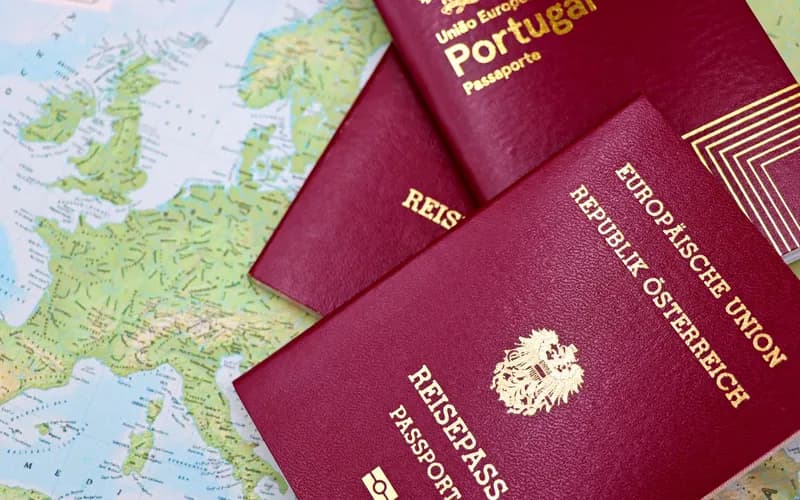
You will also need to complete the Thailand Digital Arrival Card before crossing back in, the same online formality that applies at airports. Because the details of exemptions, allowances and fees shift from year to year, it is worth confirming the current position before you travel; our roundup of Thailand's 2026 entry rules, visa and TDAC keeps track of the specifics. If you plan to enter and leave Thailand more than twice by land in a year, look into a proper visa rather than relying on the exemption.
The rhythm of a slow border day
A land crossing rewards a little patience and a relaxed timetable. Arrive at the border in the morning rather than late in the day, when offices are fresh and onward transport is plentiful. Carry the local currency you will need on the far side, along with a passport valid for at least six months and, where relevant, a printed onward plan. Expect the process to have two halves: stamping out of Thailand, then stamping into the neighbour, sometimes with a bridge, a bus or a boat in between.
Above all, do not schedule a tight connection on the other side. The joy of an overland crossing is that it is not a flight; it does not run to the minute, and it is better for it. Build in a night in the border town, let the day breathe, and treat the crossing itself as part of the journey rather than an obstacle between two destinations.
Packing and paperwork for a smooth crossing
A land crossing is only as smooth as your preparation, and a few small things save a lot of friction. Carry your passport with at least six months of validity and a couple of spare passport photos, which some counters still ask for. Keep a modest amount of both currencies on hand: Thai baht to reach the border and pay for any exit-side transport, and the neighbour's currency for the first taxi or bus on arrival, since ATMs at remote crossings can be unreliable. A printed copy of your onward booking and accommodation smooths any questions from immigration officers who want to see that you are passing through, not settling in.
Expect touts and unofficial helpers at the busier land borders, especially on the Lao and Malaysian sides. They are rarely a threat, but you do not need them; the formalities are simple enough to handle yourself, and paying a stranger to walk you to a window you could reach alone only invites confusion. Change money at a bank or official booth rather than with the men waving calculators. And give yourself daylight: aim to be across and settled before dark, when onward transport thins out and unfamiliar border towns are harder to read. None of this is difficult, but a calm, well-prepared crossing is the difference between an adventure and an ordeal.
What to Do Next
- Decide your direction: Laos for the Mekong crossings, Malaysia for the rail route south. Rule out Cambodia by land for 2026.
- Book an overnight train to your border railhead, Nong Khai or Chiang Khong for Laos, Hat Yai for Malaysia.
- Check your visa-exemption position, remembering the two-land-entries-per-year limit and the 30-day land allowance.
- Complete the Thailand Digital Arrival Card before any re-entry, and carry six months' passport validity.
- Plan a night in the border town on at least one side, and let a specialist on our Thailand plan-your-journey page help thread the crossing into a longer route.
Frequently Asked Questions
Can I still cross between Thailand and Cambodia by land in 2026?
No. The Thailand-Cambodia land border has been closed since the 2025 dispute and remains shut through 2026, including the Poipet and Aranyaprathet crossing. Travel between the two countries is only possible by air, and you should not approach the border zone.
What is the best overland crossing from Thailand into Laos?
For convenience, Nong Khai to Vientiane over the Friendship Bridge is hard to beat, and you can reach it by overnight train. For scenery, Chiang Khong to Huay Xai lets you continue by slow boat down the Mekong to Luang Prabang.
Can I travel from Thailand to Malaysia by train?
Yes. You can go from Bangkok to Hat Yai, cross at Padang Besar where both immigrations sit together, and continue on Malaysian trains to Penang and Kuala Lumpur. It is one of the most comfortable overland crossings in the region.
How many times can I enter Thailand by land in a year?
Under the visa exemption, most nationalities are limited to two land-border entries per calendar year, and this is enforced. If you need to cross more often, apply for an appropriate visa rather than relying on the exemption.
How long can I stay if I enter Thailand overland?
A visa-exempt land entry usually grants 30 days, shorter than the allowance sometimes given on arrival by air, and it is not extendable in the same straightforward way. Confirm the current rules before you travel, as they change periodically.
Do I need to fill in the Thailand Digital Arrival Card at land borders?
Yes. The Thailand Digital Arrival Card applies to land crossings as well as airports, so complete it online before you cross back into the country to avoid delays at the checkpoint.