

If you plan to get around Thai cities by app this winter, the ground rules have changed. After years in a legal grey zone, ride-hailing in Thailand now has its first dedicated framework, enforced from 31 March 2026. For a visitor, the practical effects are mostly invisible, but a few of them matter: which app you can rely on, what a metered taxi should cost, and where to stand at the airport.
This update sets out what the rules say, what is still uncertain, and how to move around Bangkok and beyond with fewer surprises. Details here are drawn from published reports on the rules and from fare and airport information available at the time of writing. Regulations and licences in Thailand change quickly, so confirm anything that affects a booking with the operator or the Department of Land Transport before you travel.
What changed on 31 March 2026
Thai authorities, including the Department of Land Transport and the Electronic Transactions Development Agency, announced that new rules for app-based ride services would be enforced from 31 March 2026. The rules were described as the first specific legal structure for a sector that had grown rapidly without one.
The main requirements reported are:
- Drivers must hold a public driving licence rather than a private one, pass a criminal-record check, and be at least 22 years old for cars or 20 for motorcycles.
- Cars must be registered in the public Ry.18 category and be no more than nine years old.
- Motorcycles must be registered in the Ry.17 category and have engines between 50 and 125 cc.
- Platforms must verify driver licences and vehicle registration, provide fare and journey details and maintain complaint channels.
- Non-compliant drivers can be suspended from receiving jobs until they meet the requirements, rather than banned permanently.
- Penalties for platforms that do not comply are reported to include suspension orders, withdrawal of their business notification, fines of up to 100,000 baht and up to one year in prison. Reports disagree on some penalty figures and on the final compliance deadline, which has been given as August or 30 September 2026.
For a visitor, this is mostly good news. The intent is safer rides, clearer records and a more accountable sector. The practical risk is that a driver or an app may stop operating at short notice if they are not compliant.
One request. Up to five tailored proposals.
Skip contacting agencies one by one — share your trip once and let up to five trusted Thailand agencies come to you. Free, with no obligation.
Get my free quotesThe Bolt question
Grab
The main app for visitors: widely used across Thai cities and the one most likely to be available. It accepts cash, cards and GrabPay, and shows the fare before you accept.
Bolt
Often reported 10 to 25 percent cheaper, a saving of about 30 to 80 baht on a typical trip, but it was under a licence review in 2026 and has sometimes failed with foreign cards. Useful for price checks while it operates; carry cash.
Metered taxi
The simplest street option in Bangkok, starting at 35 to 40 baht on the meter. Fair when the meter is used; decline any flat-fare offer and keep small notes, as drivers often cannot break large ones.
The most visible uncertainty has been Bolt. In late April and May 2026, Thai media reported that the government was considering not renewing the company's operating certificate, which the Department of Land Transport said would expire on 31 May 2026. About 2,000 of roughly 6,000 compliance cases across all platforms were reported to involve Bolt. Bolt said it was cooperating with a certification review and had introduced facial recognition for drivers and route-deviation alerts, and it kept operating while the review continued.
I could not confirm the final outcome at the time of writing, so treat Bolt's status as something to check rather than assume. Open the app before you rely on it, and keep a second option ready. Because of this uncertainty, the reasonable approach is:
- Use Grab as your main app, because it is widely used and accepts cash, cards and GrabPay.
- Treat Bolt as a second option for price checking while it operates. It is often reported as 10 to 25 percent cheaper, which may save 30 to 80 baht on a typical trip, but it has sometimes failed with foreign cards, so carry cash.
- Avoid starting long inter-city trips on any app you have not used successfully in the same city.
Other recognised apps in the regulatory listing include inDrive, LINE MAN, Maxim, Lalamove, TADA and Fingogo. A listing is a regulatory fact, not a safety rating.
Metered taxis: what they should cost
Tip
Always insist on the meter in a Bangkok taxi. If a driver offers a flat fare instead, you are entitled to decline and take another taxi or book through an app. Keep small notes ready, because drivers often cannot break large ones.
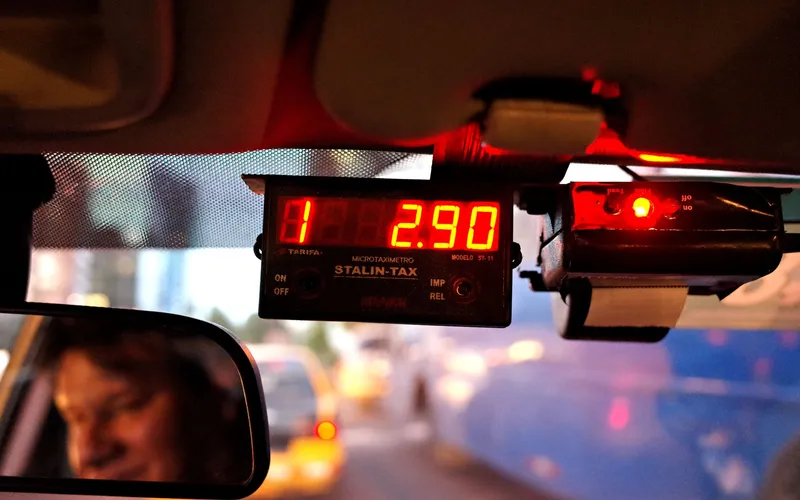
Metered taxis remain the simplest choice in Bangkok. Rates reported for the capital are:
- A flagfall of 40 baht in a large taxi and 35 baht in a small one.
- Distance charges of 6.50 baht per kilometre for the first 10 km, rising in steps to 10.50 baht beyond 80 km.
- A waiting charge of 3 baht per minute when moving slowly.
- Legitimate extras of 20 baht for a taxi booked by phone or app, and 50 baht for a public taxi picked up at Suvarnabhumi or Don Mueang airport, plus any tolls.
If a driver offers a flat fare instead of the meter, you are entitled to decline and take another taxi or book through an app. Keep small notes ready, because drivers often cannot break large ones.
For longer routes and the full picture of buses, boats and trains, see our slow guide to getting around Thailand.
A few honest limits apply. The rules govern drivers, vehicles and platforms, not what you personally pay or how an individual ride goes, so a compliant app can still produce a poor trip. Reports also differ on enforcement dates, penalty amounts and which apps will keep operating, and several details come from secondary summaries rather than official notices. The safest habit is to treat the framework as a reason to prefer licensed, recorded rides, while still checking the plate, the driver name and the price each time. If something feels wrong, end the ride in a public place and report it through the app.
Get matched with up to 5 trusted Thailand agencies
- Free
- No obligation
- Up to 5 agencies
Motorbike taxis
Motorbike taxis are fast in traffic and are covered by the same regulatory push. Reported fares start at 10 baht, with a maximum of 25 baht for the first 2 km and about 5 baht per kilometre after that, and stands usually display a fare board. Helmets are required, and the Land Traffic Act allows fines of up to 2,000 baht for both rider and passenger without one. If you are nervous about traffic, a car is the better choice, and you should check your travel insurance covers motorcycle passengers.
Airports: where to stand
Airports are where most visitors meet the system for the first time.
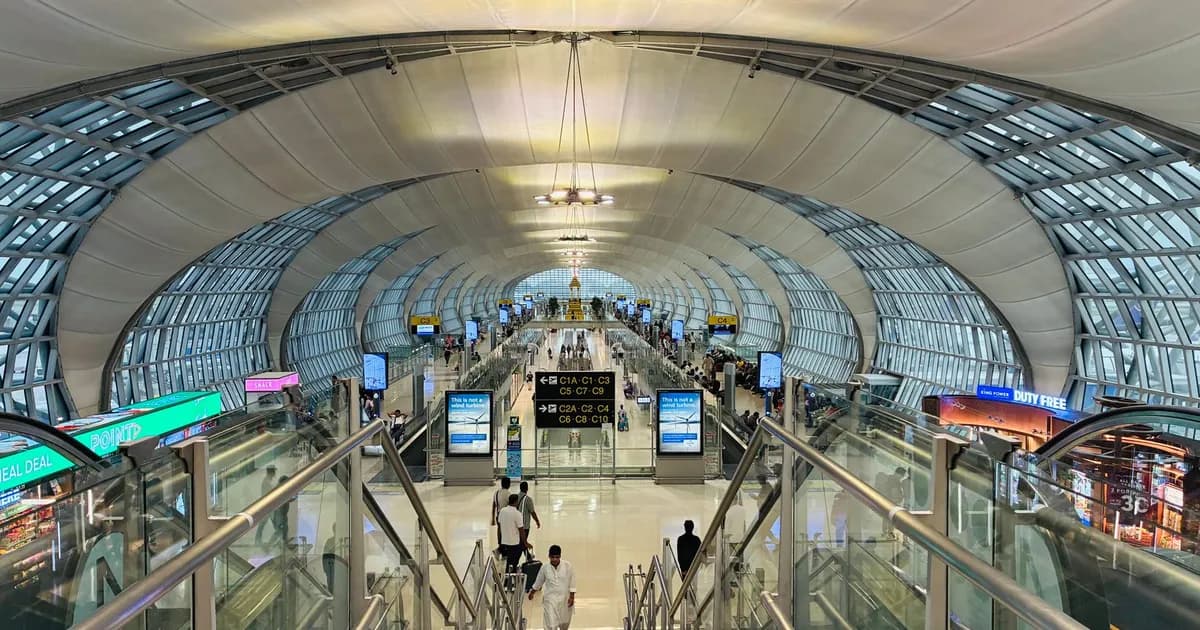
At Suvarnabhumi, the reported pickup points are:
- Grab: Level 1, Gate 4, outer curb.
- Public taxis: Level 1, between Gates 4 and 7, inner curb.
- Airport Rail Link: Level B1, running from about 05:30 to 24:00, with fares of roughly 15 to 45 baht. This is usually the cheapest way into the city.
- Airport limousine: Level 2, with fixed fares of roughly 550 to 1,300 baht.
At Don Mueang, the Grab counter is in the domestic terminal and taxi meter counters are on the first floor of the terminals. Ignore anyone inside the terminal who offers a taxi or limousine. Every legitimate option has a fixed location. The rail link itself is changing, and our update on the Airport Rail Link handover explains what to expect in the city.
Expressway tolls are charged to the passenger. Reported four-wheel tolls include 90 baht on the Din Daeng to Don Mueang section of the Don Muang Tollway, 45 baht on the Chalong Rat Expressway and 80 baht on the Burapha Withi Expressway.
Using apps without surprises
- Set up before you land. Install Grab and add a payment card, and keep cash as a backup. A local eSIM or SIM makes it easier; our money and connectivity guide explains the options.
- Confirm the price in the app. The fare is shown before you accept, with tolls and surcharges added afterward. Check the plate and driver name against the booking before you get in.
- Share your trip. Most apps let you share a live journey with a friend. It takes ten seconds.
- Meet in the right place. Pickup points at airports and malls are often marked. Do not accept rides from drivers who approach you.
- Keep in mind that app drivers may cancel. In busy areas, drivers may ask you to cancel or pay extra. You are entitled to refuse and rebook.
If you are in Bangkok, check how fares work on public transport too. Our guide to the 20-baht flat fare and what visitors actually pay is a useful companion.
When to skip the car altogether
Ride-hailing is best for short urban hops, late arrivals and journeys with luggage. For longer trips, trains and buses are cheaper and more relaxing. A trip to the old capital of Ayutthaya, for example, is cheaper and more pleasant by train, as we describe in our guide to staying in Ayutthaya beyond the day trip. Reported alternatives to a long app ride include buses from Bangkok to Pattaya at about 130 to 180 baht per person, and Bangkok to Hua Hin at about 240 to 280 baht.
What to Do Next
- Install Grab before you travel and add a payment method. Keep 200 to 500 baht in small notes as a backup.
- Check Bolt in the app before relying on it, and keep a second option available.
- Decide how you will leave the airport: Airport Rail Link, a metered taxi from the official queue, or a booked pickup at the marked point.
- Know the metered-taxi basics so you can spot a refusal to use the meter.
- Avoid long inter-city rides on apps; use trains and buses for those.
- For a wider plan of how to move through the country, start with our plan your journey page.
Frequently Asked Questions
Is Grab legal in Thailand in 2026?
Grab is among the platforms recognised in the regulatory framework that began to be enforced on 31 March 2026. Rules for drivers and vehicles apply, and compliance deadlines have been reported as August or 30 September 2026, so check the app for current availability.
Is Bolt still working in Thailand?
Bolt was under a licence review in May 2026, with the Department of Land Transport saying its certificate expired on 31 May. I could not confirm the final result, so open the app before you rely on it and keep another option ready.
Are metered taxis in Bangkok safe and fair?
Generally yes, if the meter is used. Insist on it, expect a 35 or 40 baht starting fare, and note that a 50 baht airport surcharge and tolls are legitimate. If a driver refuses the meter, take another taxi.
What is the cheapest way from Suvarnabhumi Airport into Bangkok?
The Airport Rail Link, which runs from Level B1 for roughly 15 to 45 baht. Confirm the current operating hours and any changes before you travel.
Do I need to wear a helmet on a motorbike taxi?
Yes. Helmets are required, and fines of up to 2,000 baht can apply to both rider and passenger. Check that the helmet fits and that your insurance covers motorcycle trips.
Can I pay with a foreign card?
Grab accepts cards and GrabPay, but Bolt has been reported to fail with some foreign cards. Keep cash as a backup, particularly for metered taxis and motorbike taxis.
Will these rules raise fares?
There is no confirmed fare increase tied to the rules. Fares can still change with demand, tolls and surcharges, so check the price in the app before you accept.