
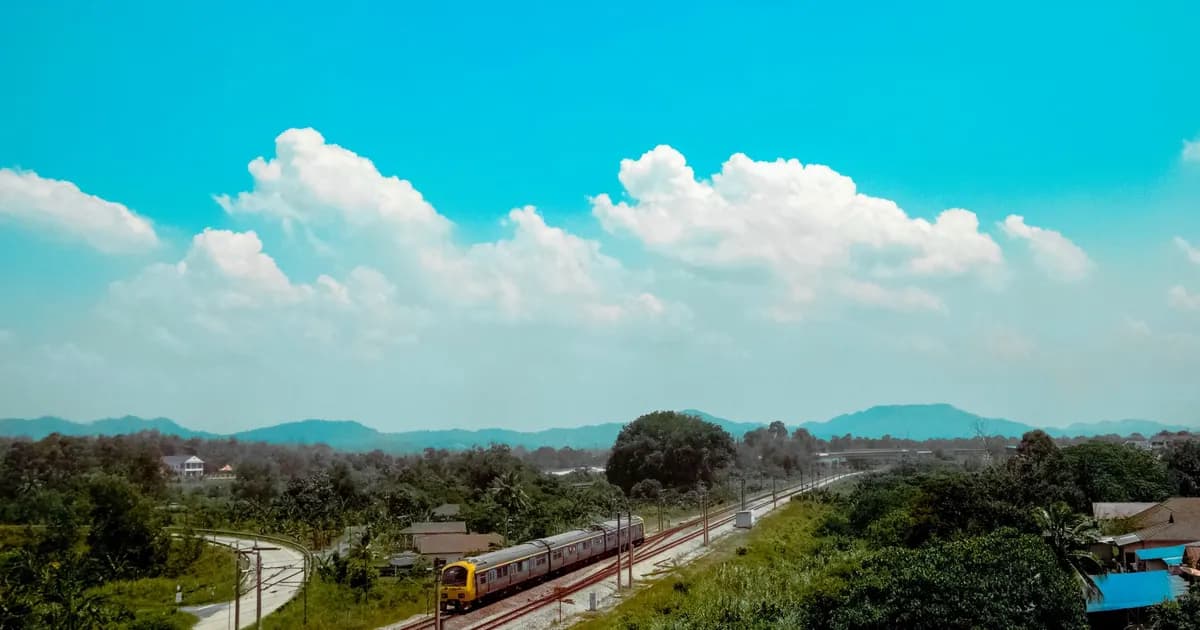

The train is the slowest sensible way to cross Thailand, and that is exactly the point. Flying gets you there in an hour and shows you nothing. The railway shows you the country, rice paddies sliding past the window, towns waking up at small stations, the long climb into the northern hills, and it does it for a fraction of the carbon and often the cost of flying. For the slow traveler, Thai rail is not a compromise; it is the journey itself. This guide covers the lines, the classes, how to book, what it costs, and the honest caveats that will keep your expectations sensible.
Thailand's network is run by the State Railway of Thailand, the SRT. It is old in places and modern in others, frequently late, and consistently characterful. Approached with patience, it is one of the great rail experiences in Southeast Asia. The network is also remarkably affordable by international standards, which means the financial barrier to choosing rail over road or air is low. What you trade away is speed; what you gain is a window seat onto a country that most visitors only ever see from a taxi or an airport shuttle. That trade is the heart of slow travel, and the railway makes it almost effortless once you accept the rhythm.
A few practical habits make the whole experience smoother. Carry small cash for snacks and station vendors, keep your passport handy because conductors check tickets against it, and download offline maps so you can track your progress when the announcements are only in Thai. Vendors walk the carriages selling food and drinks on most long-distance trains, and station platforms often have excellent, cheap local dishes worth stepping off for during longer stops.
The main lines and where they go
Most long-distance trains now depart Bangkok from Krung Thep Aphiwat Central Terminal, also known as Bang Sue, the modern hub that has taken over from the old Hua Lamphong station for the majority of long-distance services. Knowing this saves you a stressful morning at the wrong station.
From there, four main lines fan out across the country:
- Northern Line. Bangkok to Chiang Mai, passing through Ayutthaya, Nakhon Sawan, Phitsanulok, Lampang and Lamphun. This is the classic long-distance run and the spine of any northern itinerary.
- Southern Line. Heading down the peninsula to Hua Hin, Chumphon, Surat Thani, Hat Yai and on to the Malaysian border at Padang Besar. Surat Thani is the gateway for the Gulf islands and for Khao Sok.
- Northeastern (Isan) Line. Running into the northeast toward Nong Khai, near the Laos border, and Ubon Ratchathani.
Each line opens up a different Thailand. The Northern Line is the one most travelers ride first; the Southern Line is the route to the beaches and rainforest; the Isan line reaches the country's least-touristed and arguably most rewarding region.
One request. Up to five tailored proposals.
Skip contacting agencies one by one — share your trip once and let up to five trusted Thailand agencies come to you. Free, with no obligation.
Get my free quotesUnderstanding the classes
Picking the right class is the single most important decision, and it is simple once you understand the tiers.
- First class. Private cabins, comfortable but limited in availability and only on certain trains. Worth it if you want privacy and can book early.
- Second class. The sweet spot for most travelers. The air-conditioned sleeper berths are clean, comfortable and reasonably priced, with curtained bunks that convert from daytime seating. There is also a cheaper fan-cooled second class.
- Third class. Cheap bench seating, no frills, but genuinely pleasant for short, scenic daytime hops where you want the windows open and the local atmosphere.
For overnight journeys, the second-class air-conditioned sleeper is what most people should book. For a couple of hours of scenery, third class is part of the fun.
Sleeper journeys and the overnight to Chiang Mai
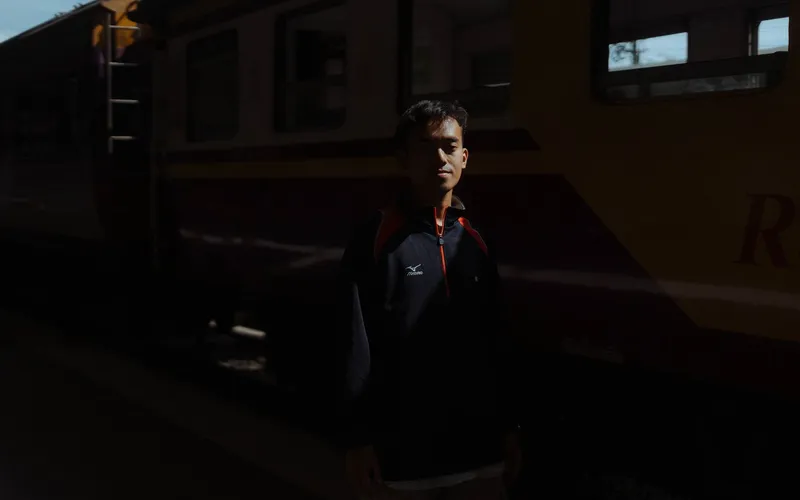
The overnight Bangkok to Chiang Mai sleeper is the most popular sleeper journey in Southeast Asia, and deservedly so. You board in the evening, eat, read, watch the lights of the central plains slide by, sleep in a proper berth, and wake to the northern hills. It also quietly saves you a night's hotel, which makes the economics better than they first appear.
A second-class air-conditioned sleeper berth on this route costs roughly 1,100 THB, around 32 US dollars. The newest rolling stock, the modern CNR trains often called the Red Train sleepers, are noticeably cleaner and more comfortable than the older carriages, so it is worth checking which train you are booking.
One practical rule governs sleepers: book early. Berth tickets typically open 90 days before departure, and the good berths on popular trains sell out, especially around holidays. If you have fixed dates, reserve as soon as the window opens. Fitting these long hauls sensibly into a wider route is its own small art, and our slow traveler's guide to where to go and when helps you sequence them.
Get matched with up to 5 trusted Thailand agencies
- Free
- No obligation
- Up to 5 agencies
How to book
There are several ways to get tickets, and they suit different travelers:
- SRT D-Ticket. The State Railway's official online system lets you book and pay directly. It is the cheapest route and increasingly the simplest.
- At the station. You can buy in person, useful for short hops and for third class, though sleepers may already be sold out for popular dates.
- Agents and resellers. Platforms such as Baolau and 12Go sell SRT tickets with a small markup, in exchange for an easier interface and support in English.
For sleepers on busy routes, book online the moment the 90-day window opens. For flexible, short daytime journeys, buying at the station on the day is fine.
The scenic routes worth planning around
Some stretches of the network are destinations in themselves. The northern climb past Lampang toward Chiang Mai winds through hills and forest and is among the most beautiful rail scenery in the country. The Death Railway line out of Bangkok toward Kanchanaburi crosses the River Kwai and runs along the wooden Wampo viaduct clinging to a cliff above the river, a journey heavy with wartime history and visually striking. The southern run down the Gulf coast offers long views of sea and coconut country on the way to the islands.
If you are routing toward the rainforest, the Southern Line to Surat Thani is your access point for Khao Sok National Park, one of the most rewarding slow stops in the south. These scenic stretches reward a small amount of planning. Where possible, book a daytime departure for the most beautiful segments so you actually see them, rather than sleeping through the best scenery on an overnight service. Sitting on the correct side of the carriage matters too: ask station staff or check a route map so the views fall on your window. And keep your camera or phone within reach, because the finest moments, a temple framed by hills or a river bend below the tracks, arrive without warning and pass quickly. And if the misty north is calling, the Northern Line puts you within reach of quieter corners like Chiang Dao.
The honest caveats
Thai trains are not fast, and they are not punctual. Delays of an hour or more are common, and longer ones happen, particularly on the long northern and southern hauls. If you have a tight connection, a flight to catch, or a rigid schedule, the train will frustrate you. This is the single most important thing to understand before you commit.
The point of rail in Thailand is not to save time. It is to travel low-carbon, to see the country at ground level, and to make the journey part of the trip rather than dead time between destinations. That is precisely the slow-travel proposition. Build slack into your plans, treat delays as part of the texture, and the railway rewards you. A useful mindset is to plan your trip so that no single day depends on the train arriving on time. Arrive in a city the day before you need to be anywhere important, never book a same-day onward connection that you cannot afford to miss, and you will find the occasional late arrival becomes a shrug rather than a crisis. The travelers who hate Thai trains are almost always those who expected them to behave like a Japanese or Swiss service; the travelers who love them are those who came for the journey itself. To map a realistic, unhurried itinerary around these journeys, start with our plan your journey resources.
What to do next
- Decide which line fits your route: Northern for Chiang Mai, Southern for the islands and Khao Sok, Isan for the northeast.
- Choose your class: second-class air-conditioned sleeper for overnights, third class for short scenic daytime hops.
- For sleepers, mark the date 90 days before departure and book the moment the window opens.
- Book via SRT D-Ticket for the best price, or use Baolau or 12Go for an easier English interface.
- Depart from Krung Thep Aphiwat Central Terminal, not the old Hua Lamphong, for long-distance trains.
- Build slack into your itinerary to absorb delays, and bring water, snacks and something to read.
Frequently Asked Questions
Where do long-distance trains leave from in Bangkok?
Most long-distance services now depart from Krung Thep Aphiwat Central Terminal, also called Bang Sue, which has replaced the old Hua Lamphong station for the majority of long-distance routes. Check your ticket, but plan for Bang Sue.
What class should I book for an overnight train?
The second-class air-conditioned sleeper is the sweet spot: clean, comfortable curtained berths at a reasonable price. First class offers private cabins but is limited; fan-cooled second class is cheaper but less comfortable in the heat.
How much does the Bangkok to Chiang Mai sleeper cost?
A second-class air-conditioned sleeper berth costs roughly 1,100 THB, about 32 US dollars. Because it saves a night's hotel, the real cost of the journey is lower than the fare alone suggests.
How far in advance should I book?
Sleeper tickets typically open 90 days before departure, and good berths on popular trains sell out, especially around holidays. Book the moment the window opens if your dates are fixed.
How do I buy tickets?
Use the SRT D-Ticket official online system for the lowest price, buy in person at the station for short hops, or use resellers like Baolau or 12Go for an easier English-language interface at a small markup.
Are Thai trains reliable and on time?
Often not. Delays of an hour or more are common, and longer ones happen on the long hauls. The train is not the way to save time; it is the way to travel low-carbon and see the country, so build slack into your plans.
Which train journeys are the most scenic?
The northern climb past Lampang toward Chiang Mai, the Death Railway over the River Kwai and Wampo viaduct near Kanchanaburi, and the southern run down the Gulf coast are the standout scenic stretches.