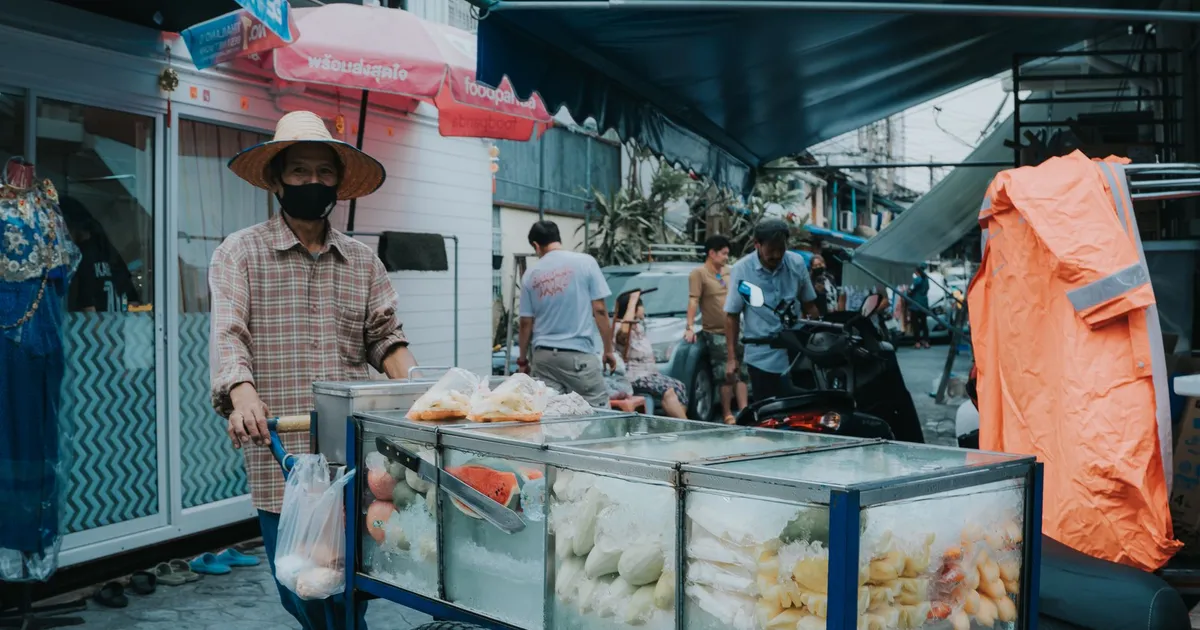
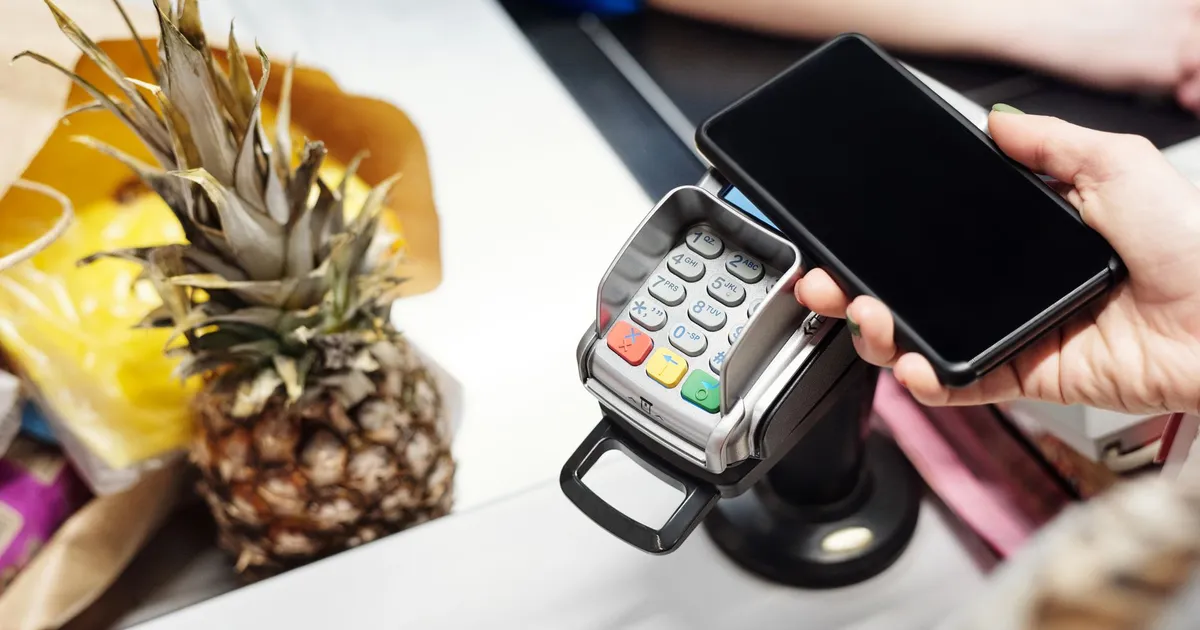

Thailand runs on two currencies now: the baht in your pocket and the QR code on your phone. A decade ago, a trip here meant carrying a thick fold of cash and hunting for an ATM before every ferry. Today a bowl of noodles, a longtail boat, and a night-market beer can all be paid by scanning a printed square of black and white. But the old rules have not vanished, they have layered on top of the new ones. The result is a country that rewards travelers who understand both systems and plan a little ahead.
This guide is for the slow traveler who wants fewer surprises and lower costs, not the fastest shortcut. We cover how to move money into and around Thailand, the real fees nobody advertises, how QR payments work when you do not hold a Thai bank account, what to tip and when, and how to stay connected from a Bangkok rooftop to a jungle trailhead. Everything below reflects how things actually work in 2026, including the shutdown of the old 2G and 3G networks and the spread of scan-to-pay into the smallest of stalls.
Cash Still Matters, But Less Than You Think
Thailand has moved a long way toward digital payments, yet cash remains the backbone of daily life outside the malls and chain restaurants. Street food vendors, rural guesthouses, temple donation boxes, songthaew drivers, and small family shops still prefer physical baht, even where a QR sticker sits by the register. As a slow traveler spending weeks rather than days, you will want a working cash habit alongside your phone.
The honest advice on getting the best rate is unglamorous: bring some of your home currency in large, clean banknotes and exchange it inside Thailand at a reputable booth rather than at the airport or your hotel. Chains like SuperRich, which actually operate as two separate but similar companies (the green SuperRich Thailand and the orange SuperRich 1965), consistently beat airport counters and bank branches. The rate difference between the two is a rounding error, so use whichever is nearest. Bring your passport, exchange on a weekday for a marginally better spread, and favor your highest-denomination notes, as a US$100 bill typically earns a better rate than five US$20 bills.
A sensible approach for a multi-week trip is to exchange a modest cash float on arrival to cover your first days, then top up through a mix of ATM withdrawals and QR payments as you go. You rarely need to carry large sums, and you should never feel pressured to change everything at once.
One request. Up to five tailored proposals.
Skip contacting agencies one by one — share your trip once and let up to five trusted Thailand agencies come to you. Free, with no obligation.
Get my free quotesATMs and the Fee Nobody Warns You About
Here is the single most expensive surprise for visitors: nearly every Thai ATM charges a flat foreign-card fee of around 220 baht per withdrawal, and some banks now charge 250 baht for Visa and up to 350 for Mastercard. This fee is fixed regardless of how much you take out, which changes the math entirely. Withdrawing 2,000 baht and paying 220 in fees is a punishing rate; withdrawing the machine's maximum in one go spreads that same fee across far more cash.
Three habits will save you real money:
- Withdraw large, withdraw rarely. Take out the maximum the machine allows to dilute the flat fee.
- Always choose to be charged in baht. When the screen offers to convert to your home currency, decline it. This dynamic currency conversion quietly bakes in a poor exchange rate on top of every other fee.
- Seek out lower-fee machines where you can. AEON ATMs have historically charged less than the big Thai banks, though availability is limited outside cities.
Your home bank adds its own layer on top, often a foreign-transaction fee of one to three percent plus a flat surcharge. A travel-focused account with fee rebates or a multi-currency card can genuinely change your trip budget over several weeks. If you are already mapping out costs, our companion piece on how to plan a Thailand trip budget in 2026 puts these small charges in the context of the whole journey.
PromptPay and QR Payments Without a Thai Bank Account
PromptPay is Thailand's national instant-payment system, and scan-to-pay QR codes are now everywhere, from tuk-tuks and street stalls to 7-Eleven and floating-market vendors. For Thais the system is effortless. For visitors without a local bank account it takes one setup step, but it is worth doing if you are staying a while.
The most reliable route for short-term visitors is a prepaid card linked to the system. You can visit a bank foreign-exchange booth, apply with your passport, receive a prepaid card such as the PAY&TOUR product, top it up, and link it to the TAGTHAi app to access PromptPay QR payments. Once set up, you scan a merchant's QR code, enter the amount, confirm, and the transfer settles in real time.
Two other paths are worth knowing. If you are arriving from an ASEAN neighbor or several linked Asian markets, cross-border QR connectivity may let you pay Thai merchants directly from your home banking app. And some international money apps have been rolling out the ability to scan Thai QR codes and pay through PromptPay without any Thai account at all, a genuinely useful option that continues to expand through 2026. Check whether your provider supports it before you fly.
QR payments shine for exactly the small, frequent purchases that define slow travel: the morning coffee, the market fruit, the shared taxi. They reduce your cash handling, cut your ATM trips, and leave a tidy record of what you spent. They do not fully replace cash in the deep countryside, so treat them as your first choice in towns and your backup in villages.
For how these everyday costs add up across a whole trip, see our Thailand budget guide.
Get matched with up to 5 trusted Thailand agencies
- Free
- No obligation
- Up to 5 agencies
Tipping in Thailand: Honest and Restrained
Tipping in Thailand is genuinely optional, a gesture of thanks rather than an obligation, and getting it right is more about restraint than generosity. Over-tipping is not kind, it distorts local norms; the calm approach is to tip modestly where service was good and to skip it without guilt where it was ordinary.
A few practical anchors:
- Restaurants: Mid-range and upscale places often add a 10 percent service charge to the bill. When they do, no further tip is expected. At simple local eateries with no service charge, leaving the coins from your change or 20 to 50 baht is a warm gesture.
- Taxis and ride-hailing: No tip is expected. Rounding the fare up to the nearest convenient note is the normal courtesy, a little more if the driver helped with heavy bags.
- Hotels: A small note of 20 baht for a porter carrying bags a long way, or some loose change left for housekeeping, is appreciated but never required.
- Massage and spa: This is where a tip lands hardest. Therapists often earn modest base pay, so 50 to 100 baht for a good massage makes a real difference and is the one place we would gently encourage it.
The through-line is proportion. Thailand is not a heavy-tipping culture, and pretending otherwise helps no one.
eSIM or Local SIM: Choosing Your Connection
Getting online in Thailand is cheap and easy; the only real question is how much convenience you want to pay for. There are two sensible routes, and the right one depends on how long you are staying and how much fuss you can tolerate on arrival.
An eSIM is the frictionless choice. You buy it before you fly, install it as a QR-code profile, land, switch off airplane mode, and you are already online to order a Grab, message your guesthouse, or open a map. Tourist eSIM plans in 2026 are inexpensive, often in the range of a 10-day allowance for around US$10, with unlimited-style plans widely available. The trade-off is that most unlimited plans carry a fair-use policy, typically full speed up to roughly 2.5 GB per day before throttling, which is ample for maps, messaging, and the occasional video.

A local SIM is usually cheaper over several weeks and gives you a Thai phone number, which is occasionally handy for bookings and deliveries. AIS, and the merged True Corporation network (which absorbed the old dtac and TrueMove H brands), sell tourist SIMs at the airport and at 7-Eleven, with 30-day plans commonly running from a few hundred baht upward. The cost is a little friction: you need your passport and a few minutes to register the SIM properly, which is a legal requirement in Thailand.
For a slow traveler, a reasonable strategy is an eSIM for a smooth arrival, then a decision on day two or three about whether a longer local SIM makes sense for the rest of your stay. If your itinerary weaves through remote coasts and quiet islands, connectivity is one more factor in the choice, which our guide to choosing your Thai island by coast and season weighs alongside crowds and weather.
Coverage naturally depends on where you roam, which our guide to where to go and when in Thailand can help you map.
Staying Connected From City to Jungle
Thailand's mobile coverage is excellent where most travelers spend their time and genuinely absent in a few of the places slow travelers most want to reach. Understanding the map keeps you from either over-worrying or getting caught out.
In Bangkok, Chiang Mai, Phuket, and the larger islands, 5G is widespread and 4G is essentially everywhere populated. Note that the old 2G and 3G networks were switched off through 2026, so a very old handset may no longer connect at all; bring a phone that supports modern bands. AIS has the deepest rural and island footprint and consistently wins speed tests, which matters if you are heading beyond the tourist core.
Then come the honest dead zones. Deep inside Khao Sok National Park and out on Cheow Lan Lake, signal simply disappears. Jungle trekking routes in parks like Doi Inthanon and Khao Yai have well-known weak spots, and the interiors of smaller, less-touristed islands can drop to patchy 4G or nothing. This is not a flaw to fix; for a slow traveler it is part of the appeal. The practical response is to prepare: download offline maps and any tickets or bookings before you leave signal, tell someone your rough plan, and let the disconnection be intentional rather than stressful. Our slow-travel guide to Khao Sok describes exactly what that off-grid rhythm feels like on the water.
Sorting money and a SIM sits alongside the other pre-arrival essentials we cover in our guide to Thailand's 2026 entry rules.
What to Do Next
- Order an eSIM before you fly so you land connected, and confirm your phone supports current 4G and 5G bands.
- Bring a modest amount of home currency in large, clean notes to exchange at a reputable booth like SuperRich on arrival.
- Set your ATM habit now: plan to withdraw large amounts rarely, and always decline the machine's offer to charge you in your home currency.
- Check whether your bank or money app supports scanning Thai QR codes, or plan to set up a prepaid PromptPay-linked card once you arrive.
- Keep a small cash float for street food, songthaews, and rural stops where QR is not yet universal.
- Download offline maps and save your bookings before heading into national parks or remote islands where signal drops.
Frequently Asked Questions
Can I get by in Thailand with just a card and no cash?
Not comfortably. Cards and QR payments work well in cities, malls, and chain stores, but street food, rural guesthouses, songthaews, and small shops still lean on cash. Carry a modest baht float alongside your digital options.
What is the cheapest way to get baht?
For most travelers, bringing large-denomination home-currency notes and exchanging them at a reputable booth such as SuperRich beats both the airport and ATM withdrawals. If you use ATMs, withdraw the maximum in one go to dilute the flat 220-baht foreign-card fee, and always choose to be charged in baht.
Can tourists use PromptPay QR payments without a Thai bank account?
Yes, with one setup step. You can obtain a prepaid card linked to the TAGTHAi app via a bank foreign-exchange booth, and some international money apps and cross-border ASEAN links now let you scan Thai QR codes directly. Check your provider's support before you travel.
How much should I tip in Thailand?
Modestly, and only where deserved. Many restaurants add a 10 percent service charge, in which case no extra tip is needed. Round up taxi fares, leave small change for hotel staff, and tip 50 to 100 baht for a good massage. Tipping is appreciated but never obligatory.
Is an eSIM or a local SIM better for Thailand?
An eSIM is more convenient and gets you online the moment you land, ideal for shorter trips. A local SIM is often cheaper over several weeks and gives you a Thai number, at the cost of registering it with your passport on arrival. Many slow travelers start with an eSIM and switch if they are staying longer.
Will I have mobile signal in the countryside and on islands?
Mostly yes in towns and on major islands, where 4G and 5G are strong. Expect genuine dead zones deep in national parks such as Khao Sok and Cheow Lan Lake, and patchy coverage on the interiors of smaller islands. Download offline maps before you go.
Do I need to worry about the 2G and 3G shutdown?
Only if you are carrying a very old phone. The legacy 2G and 3G networks were retired through 2026, so any recent handset that supports 4G and 5G will connect normally. If your device is more than a decade old, test it or bring a newer one.