How to Choose a Thai Massage, and a Massage Course, Without Regrets
A good Thai massage can be the best hour you spend all week. A bad one can be forgettable, painful or oddly expensive. The difference rarely lies in the price alone. It lies in knowing what to look for, how to ask for what you want, and how to spot the shops that exist mainly for tourists in a hurry.
This guide is for travellers who treat massage as part of the rhythm of a slow trip rather than a box to tick. It covers what traditional Thai massage actually is, the main types you will be offered, what it costs in 2026, the phrases that make a real difference, the etiquette that keeps everyone comfortable, and, for the curious, how to choose a school if you want to learn the craft yourself.
What Thai massage actually is
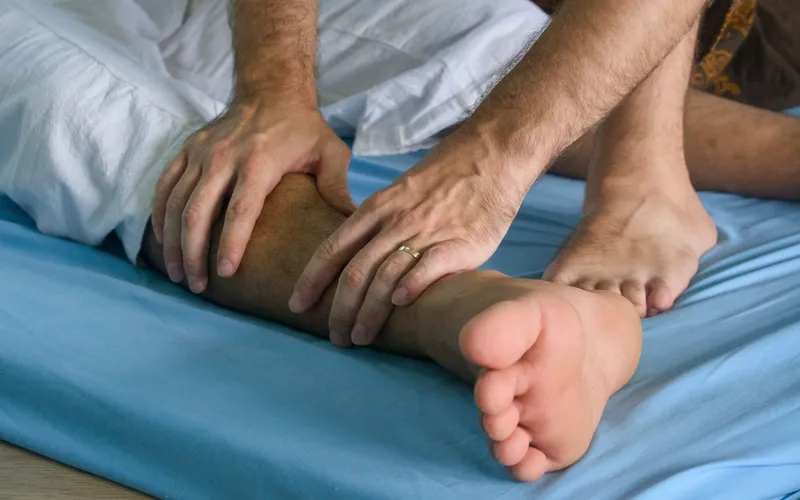
Traditional Thai massage, nuad thai, is closer to assisted stretching than to the oil-based massage most Europeans expect. You lie on a mat on the floor, usually fully clothed in loose cotton clothes provided by the shop, while the therapist uses palms, thumbs, elbows, knees and feet to apply pressure along energy lines, stretch the limbs and move the body through yoga-like positions. There is no oil. A session is often 60 or 120 minutes.
The practice has roots in Buddhist temple medicine and was recognised by UNESCO on its list of intangible cultural heritage in 2019. Temples such as Wat Pho in Bangkok remain centres of teaching and practice, which is why you will see so many massage shops advertising a link to them. That link is not always genuine, so treat it as a marketing line rather than a guarantee.
If you have an injury, are pregnant, take blood-thinning medication or have a heart or back condition, say so before you start, or speak to a doctor first. Our guide to staying healthy in Thailand covers the basics of medical preparation and insurance.
One request. Up to five tailored proposals.
Skip contacting agencies one by one — share your trip once and let up to five trusted Thailand agencies come to you. Free, with no obligation.
Get my free quotesThe main types you will be offered
- Thai massage. The traditional dry massage on a mat. Typically the best place to begin.
- Foot massage. Done in a reclining chair, focusing on the soles and lower legs, often with a short back and shoulder finish. It suits people who prefer to stay clothed and upright.
- Oil or aromatherapy massage. Closer to a Western relaxation massage, using oil on bare skin under a towel.
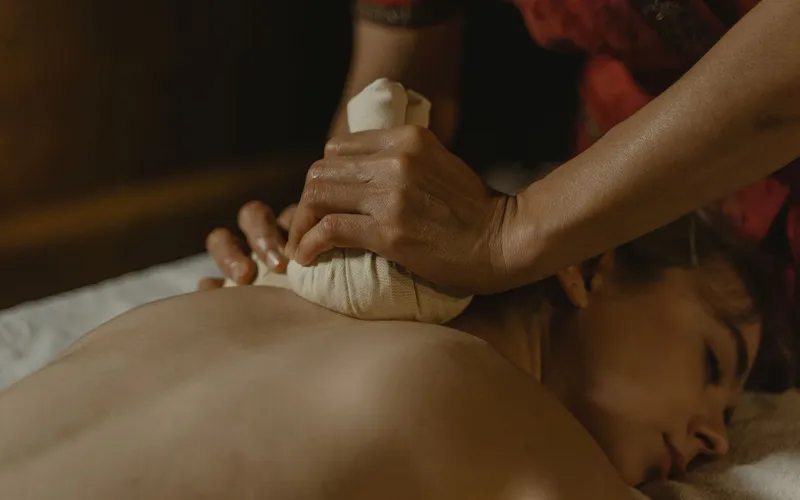
- Herbal compress massage. Warmed cloth bundles of herbs are pressed over the body. It is soothing and often more expensive.
- Neck, shoulder and back. A shorter, more focused session, popular after long journeys.
For a first experience, choose a one-hour traditional Thai massage and tell the therapist about any sensitive areas.
What it costs in 2026
Prices vary more by the type of venue than by the city. Reported figures for an hour in Chiang Mai give a useful scale:
- Budget shops: about 300 to 350 baht for a Thai massage, 300 to 600 for a foot massage, 350 to 600 for oil, and 400 to 790 for herbal compress.
- Mid-range spas: about 400 to 600 baht for Thai massage, and 650 to 1,000 for oil.
- Day spas: about 800 to 990 baht for Thai massage, and 1,300 to 1,500 for oil.
- Resort spas: about 1,600 to 2,700 baht for Thai massage.
In Bangkok and the main tourist areas, prices run higher, especially near tour-bus stops. In smaller cities, a 100 to 200 baht massage is still possible, and some travellers report their best experiences at those prices. Treat those numbers as a guide rather than a rate card. If a place is serving fruit juice with a flower in it, you are almost certainly paying for the setting.
For wider trip budgeting, see our Thailand cost and budget guide.
Get matched with up to 5 trusted Thailand agencies
- Free
- No obligation
- Up to 5 agencies
How to choose a good shop
Look for signs that the shop is run by therapists rather than by touts.
- A visible, simple price list. Prices should be displayed with durations, and the staff should repeat them clearly before you begin.
- Real, trained therapists. Many licensed therapists carry a certificate from a recognised school. You can politely ask where they trained.
- A clean, quiet space. Mats or beds should be tidy, towels fresh and the room reasonably calm.
- No hard sell at the door. If staff pull you in from the pavement and push you toward longer or more expensive sessions, walk on.
- Locals inside. A shop that is busy with Thai customers on a weekday is usually a reliable sign.
A useful trick: ask your hotel receptionist or a local cafe owner where they go. They often use a quieter, cheaper place than the one nearest your hotel.
One social enterprise worth knowing about is Lila Thai Massage, with several branches in Chiang Mai's Old City. It was set up to employ women released from prison, and a one-hour Thai massage there has been reported at about 400 baht. It is a good example of how a booking can also be a small act of support.
What to say: five phrases that help
You do not need much Thai to get the pressure right. These work well:
- Nak (heavy) and kaw nak kwaa nee noi: a stronger massage, please.
- Bao (light) and kaw bao bao noi: gentler, please.
- Jep (pain): say it firmly if it hurts, and the therapist will ease off.
- Mai duht: no joint-cracking or back-twisting techniques, if you would rather skip them.
- Kaw nen khaen: please focus on the arms; replace the body part as needed.
Speak calmly, smile, and use the words early. A therapist cannot read your discomfort if you are silent. If the first twenty minutes do not suit you, it is acceptable to ask for a different therapist or to leave without paying for the time you did not receive.
Etiquette and tipping
Thai massage is a professional service, and a few cultural points keep it comfortable for both of you. Our guide to cultural etiquette in Thailand covers respect for the head and feet, which are relevant here: feet are considered the lowest part of the body, and the head the most respected, so a therapist will be careful around your head, and you should avoid pointing your feet at anyone.
Tipping is optional. A common guide is 50 to 100 baht for an hour of good service, and 100 to 200 baht for two hours. At hotel spas that add a service charge, extra tipping is not expected. You can decide for yourself, and there is no obligation to tip because staff are standing by the door.
Any shop offering sexual services is not a traditional massage business, and legitimate therapists will not be offended if you ask clearly what is on the menu. If anything makes you uncomfortable, you may stop and leave.
If you want to learn: choosing a massage course
Thailand is one of the best places in the world to study traditional massage, and short courses are popular with travellers who want a skill rather than a souvenir. The sensible approach is to decide what you want first.
Introductory courses run three to five days and typically cost around 200 to 400 US dollars. They suit travellers who want to learn to massage a partner or friends.
Foundation courses last one to four weeks, with reported prices of roughly 1,000 to 1,600 dollars. They are meant for people adding skills to existing practice.
Professional diplomas run two to six months, from about 2,500 to 5,000 dollars, for those changing careers.
Two well-known options show the range. The Wat Pho Thai Traditional Medical and Massage School in Bangkok offers a general Thai massage course of about 5 to 10 days, a professional programme of up to seven weeks and a child massage course, with reported prices of 200 to 2,500 dollars depending on the course. The International Training Massage school in Chiang Mai's Old City offers Thai massage levels I to V, each lasting a week, and a longer teacher training programme, with reported prices of about 250 to 2,800 dollars. Confirm current details directly, because schools change their offerings.
What to check before you pay
- Recognition. Ask the school to confirm its status with Thailand's Department of Health Service Support. Do not rely on a logo on a website.
- Syllabus and hours. Request a full syllabus with the number of hours, the student-to-teacher ratio and the proportion of hands-on practice. A class of around eight to twelve is a good size.
- What the certificate means. A Thai certificate does not automatically allow you to practise at home. Requirements differ by country and, in some places, by state or province. Non-Thais are not permitted to work as Thai massage therapists inside Thailand.
- What is included. Ask whether accommodation, meals, materials and a visa letter are included.
- Red flags. A very low price with little practice time, a vague syllabus, or a promise that a short course will qualify you for professional work abroad.
If you are considering a longer stay, the same logic applies as in our coverage of coffee farms in the northern hills: the best experiences come from choosing a small, honest operator and giving it time.
What to Do Next
- Decide what you want: a relaxing hour, a therapeutic session, or a course.
- Pick two or three shops near where you are staying, check their price lists and look for local customers.
- Learn the five phrases above and use them in the first ten minutes.
- Carry small notes for a tip, and decide your own limit in advance.
- If you want to study, write to two schools, ask for the syllabus, the hours and the certification details, and compare answers before paying a deposit.
- Read our slow-travel charter if you want to see how we think about spending time and money in the places we visit.
Frequently Asked Questions
Is Thai massage painful?
It can be firm, especially along the legs and back, but it should not be painful. Say "jep" if it hurts and ask for "bao" (lighter). A good therapist will adjust.
How much should I pay for a Thai massage?
In city shops, expect about 250 to 350 baht for an hour, higher in tourist areas and much higher in day spas and resort spas. Smaller towns can be cheaper. Check the price list first.
Should I tip, and how much?
Tipping is optional but appreciated. A guide is 50 to 100 baht for an hour and 100 to 200 baht for two hours. At spas that add a service charge, you do not need to tip extra.
What should I wear?
Most shops provide loose cotton clothes. If you wear your own, choose comfortable, stretchy clothing. Tell the therapist about injuries before you start.
Can I learn Thai massage in a week?
You can learn the basics in an introductory course of three to five days, but a week will not make you a professional. Longer foundation or diploma courses are needed for career work.
Will a Thai certificate let me work as a therapist at home?
Not automatically. Requirements vary by country and region, so check your local regulator before you invest in a long course.
Is it safe to get a massage when travelling alone?
Yes, in reputable shops. Choose a place with a visible price list and clear information, trust your instincts, and leave if anything feels wrong.