
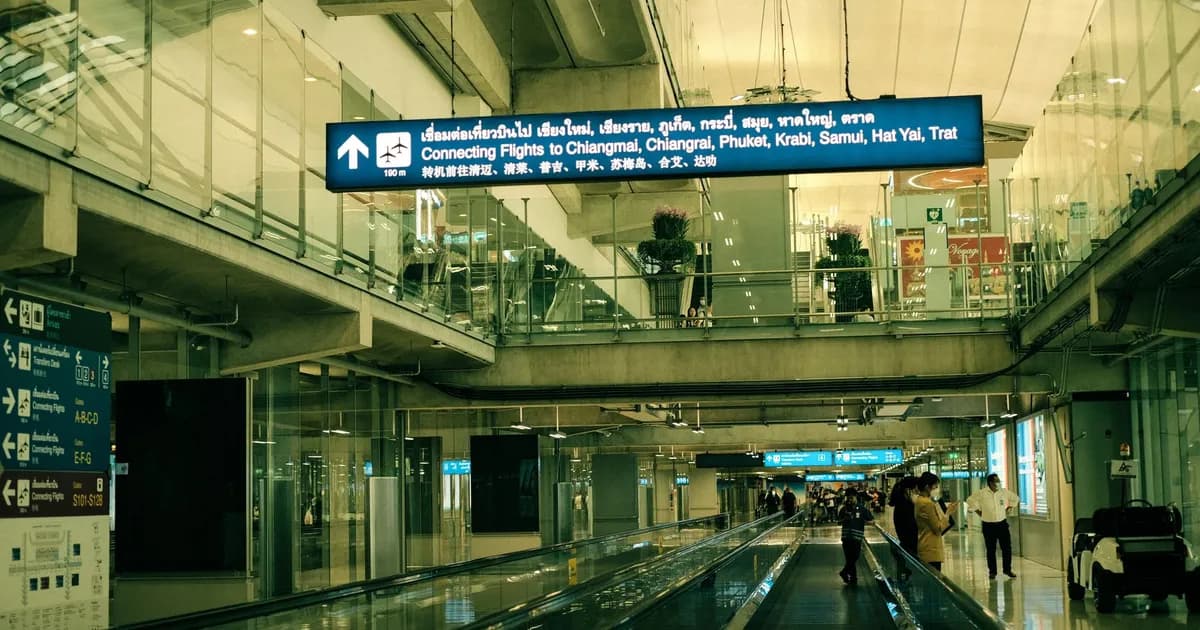
Thailand's 30-Day Visa Exemption: What Changed in September 2026
On 15 September 2026, Thailand halved the length of stay most visa-free visitors are granted on arrival. The 60-day visa exemption introduced in July 2024 is gone, replaced by a 30-day framework for the large majority of eligible nationalities. If you are planning a long, unhurried trip, this is the single most consequential rule change of the year, and it is worth understanding precisely rather than through headlines.
What actually changed on 15 September
The regulation was published in the Royal Gazette on 31 August 2026 and took effect two weeks later, on 15 September. It repeals the ministerial measure of 15 July 2024, which had extended visa-free stays to 60 days for 93 countries and territories.
Under the replacement framework:
- Nationals of 60 countries and territories receive a 30-day visa exemption on arrival. This list includes the United States, the United Kingdom, Canada, Australia and most of Western Europe.
- Two nationalities, Mauritius and Seychelles, receive a separate 15-day visa exemption.
- Visa on Arrival remains available to three nationalities: Azerbaijan, Belarus and Serbia.
- A number of nationalities that previously held visa-free access, reported at around 21, now require a visa obtained before travel.
The 30-day exemption is a return to Thailand's long-standing historical norm rather than a novelty. The 60-day period was always framed as a temporary stimulus measure, introduced during the post-pandemic recovery push. It lasted a little over two years. The general entry requirements around it, including the arrival card and airport charges, have not changed, and we cover those in detail in our overview of Thailand's 2026 entry rules.
One request. Up to five tailored proposals.
Skip contacting agencies one by one — share your trip once and let up to five trusted Thailand agencies come to you. Free, with no obligation.
Get my free quotesWho is affected, and who barely notices
For most holidaymakers this changes nothing at all. The average international stay in Thailand is well under two weeks, and a 30-day permission is more than sufficient.
The people genuinely affected fall into three groups. First, long-haul travellers from Europe, North America and Oceania who structure trips around six to eight weeks in Southeast Asia and used Thailand as the anchor. Second, remote workers and semi-retired travellers who had been chaining 60-day exemptions with extensions to achieve stays of three months at a time. Third, anyone building an itinerary that treats Thailand as a base with side trips to neighbouring countries, where the arithmetic of re-entries now matters considerably more.
There is also a subtler effect on visitors from the nationalities that lost exemption entirely. For them the change is not a shortening but a new administrative step: applying for a visa in advance, with documents, fees and lead time. If you hold a passport that previously entered visa-free, confirm your current status directly with a Thai embassy or consulate before booking anything. Lists circulating on travel sites have been inconsistent, and the official position is the only one that counts.
The transition rule, and why it matters
The regulation was not applied retroactively, which is unusually sensible.
Travellers admitted to Thailand before the new rules took effect retain the period of stay they were granted on entry. In plain terms: if you entered in late August 2026 and received a 60-day stamp, that 60 days remains valid in full. Your permission was not shortened on 15 September, and you are not required to leave earlier than your stamped date.
What the transition rule does not do is carry forward. Once you exit and re-enter, you are assessed under the new framework and will receive 30 days. There is no grandfathering of travellers, only of stays already granted.
Check the date stamped in your passport rather than assuming. Immigration officers have discretion over the period granted, and the stamp is the only record that governs your legal status. If you cannot read it clearly, ask at the counter before leaving the hall rather than discovering a discrepancy at the airport six weeks later.
Get matched with up to 5 trusted Thailand agencies
- Free
- No obligation
- Up to 5 agencies
Extensions, land borders and repeat entries
Three practical mechanics sit around the 30-day permission and are frequently misunderstood.
Extensions. A visa-exempt entry can generally be extended once, by 30 days, at an immigration office inside Thailand, for a fee of 1,900 baht. That makes a maximum of 60 days from a single visa-free arrival, which happens to be the old figure, but requires a trip to an immigration office, a photograph, a form and often a long morning. Do it before your permission expires, not after; overstaying carries daily fines and can lead to a re-entry ban.
Land borders. Visa-exempt entries at land crossings are limited to two per calendar year. This has been in force for some time and is enforced. Air arrivals are not subject to the same cap, but they are subject to officer discretion.
Repeat entries. Immigration officers may ask more questions of travellers who enter visa-free repeatedly, particularly in short succession. This is not a fixed rule but a pattern of practice, and the answer is to be able to show onward travel, accommodation and funds. If you are moving in and out of Thailand as part of a regional loop, our guide to travelling Thailand overland to Laos and Malaysia sets out how the crossings work and where the friction usually is.
Legal ways to stay longer than 30 days
If 30 days is not enough, there are straightforward options and you should use them rather than improvising at the border.
The single-entry Tourist Visa, known as the TR, grants 60 days and carries a government fee of around 1,000 baht, or roughly 40 US dollars when applied for through the e-visa system. It can be extended once by 30 days for 1,900 baht, giving up to 90 days from one application. For a traveller planning a genuine two- or three-month stay, this is now the default choice rather than the fallback.
The Destination Thailand Visa, or DTV, is designed for remote workers, long-stay visitors and people coming for extended cultural activities such as Muay Thai training or Thai cooking courses. It operates on a multi-year basis with long permitted stays per entry and has become the main legal route for anyone spending a significant part of the year in Thailand. We have covered it in depth in our guide to the DTV for long-stay slow travellers, including who qualifies and what the financial requirements are.
Other categories exist for retirement, education, volunteering and marriage, each with its own documentation. What none of them tolerate is improvisation. Thai immigration is generally courteous and generally strict, and the cheapest approach is always the one you sort out before departure.
The digital arrival card still applies
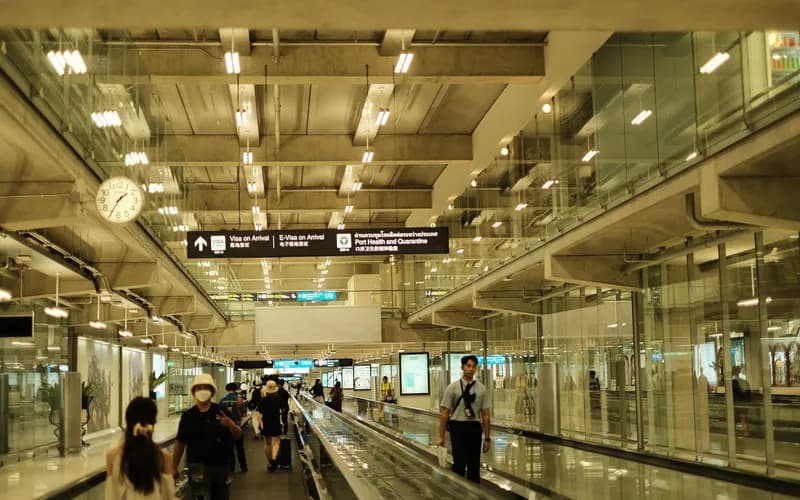
Separate from any visa question, every foreign national entering Thailand must complete the Thailand Digital Arrival Card, or TDAC, before arrival. It is free, it is filled in online at the official immigration portal, and it must be submitted within the 72 hours before you arrive.
Two points cause most of the trouble. First, the TDAC is not a visa and confers no permission to enter; it is a declaration made by people who already have the right to enter. Second, a large number of lookalike websites charge fees for a form that costs nothing. Use only the official government portal, and be suspicious of any site that asks for payment or appears as a sponsored search result.
If you need a visa rather than an exemption, the application itself is now handled through Thailand's online e-visa system rather than by post or in person at most missions. Our walkthrough of how the Thai e-visa system works covers the document requirements, the processing times and the common reasons applications get held up.
What this means for slow travel in practice
Practically, the change pushes thoughtful travellers in a direction many were already heading: fewer countries, longer stays, more paperwork done in advance.
A 30-day permission is a reasonable amount of time to see one region of Thailand properly. It is not enough to do the north, the northeast and two coasts, and attempting it was never a good idea anyway. If your instinct on reading this news was that a month is not enough, that is worth examining: a month in Chiang Mai and the northern valleys, or a month across the southern Gulf coast, is a richer trip than six weeks spent moving every third day.
If you do want a longer stay, decide before you book flights. Applying for a 60-day tourist visa from home costs about 1,000 baht and an afternoon. Trying to solve the same problem from inside Thailand costs a border run, a night in a border town and considerably more stress. Sketching the shape of the trip first is the cheapest planning you will ever do, and our plan your journey page is designed for exactly that stage.
One final caveat, stated plainly: Thai entry policy has changed repeatedly over the past three years, in both directions. The 60-day measure lasted twenty-six months. Nothing described here should be treated as permanent, and everything should be verified against an official Thai government source within a few weeks of travel.
What to Do Next
- Check your own nationality's current status with a Thai embassy or consulate, not with a travel blog or an aggregator list.
- Look at the date stamped in your passport if you are already in Thailand, and confirm what you were actually granted.
- Decide now whether your trip needs more than 30 days. If it does, apply for a 60-day tourist visa through the e-visa system before you leave home.
- If you expect to spend several months a year in Thailand, assess whether you qualify for the DTV rather than repeatedly extending short stays.
- Complete the TDAC online within 72 hours of arrival, using only the official immigration portal.
- If your route includes land crossings, count them: visa-exempt land entries are capped at two per calendar year.
- Re-verify all of the above two weeks before departure, because this framework has already changed twice in three years.
Frequently Asked Questions
How long can I stay in Thailand without a visa now?
For most eligible nationalities, 30 days from the date of entry, following the rules that took effect on 15 September 2026. Mauritius and Seychelles nationals receive 15 days. The permission can normally be extended once by 30 days at an immigration office inside Thailand for 1,900 baht.
I entered before 15 September on a 60-day stamp. Do I have to leave early?
No. Travellers admitted before the change retain the period of stay granted on entry, so a 60-day stamp remains valid for its full term. The shortened period applies from your next entry onwards.
Can I still get 60 days in Thailand?
Yes, in two ways. You can enter visa-free for 30 days and extend once by 30 days at an immigration office for 1,900 baht. Or you can apply in advance for a single-entry tourist visa, which grants 60 days for around 1,000 baht and can itself be extended by a further 30.
Why did Thailand reduce the visa exemption?
The 60-day measure was introduced in July 2024 as a temporary stimulus during the post-pandemic recovery. Officials have cited concerns about long visa-free stays being used for unauthorised work and residence, alongside a broader policy shift towards managed, higher-value tourism rather than maximum volume.
Does the change affect the digital arrival card?
No. The Thailand Digital Arrival Card remains mandatory for every foreign national on every entry, regardless of visa status. It is free, completed online, and must be submitted within 72 hours before arrival. Avoid third-party sites that charge for it.
How many times can I cross a land border into Thailand visa-free?
Visa-exempt entries at land borders are limited to two per calendar year. Arrivals by air are not subject to that specific cap, but repeated short entries may attract questions from immigration officers, who retain discretion over the period granted.
What happens if I overstay?
Overstaying carries a daily fine, payable on departure, up to a maximum amount, and longer overstays can result in bans on re-entry ranging from one year upward. It is also recorded against you permanently. Extending at an immigration office before your permission expires is always cheaper and simpler than dealing with the consequences afterwards.