
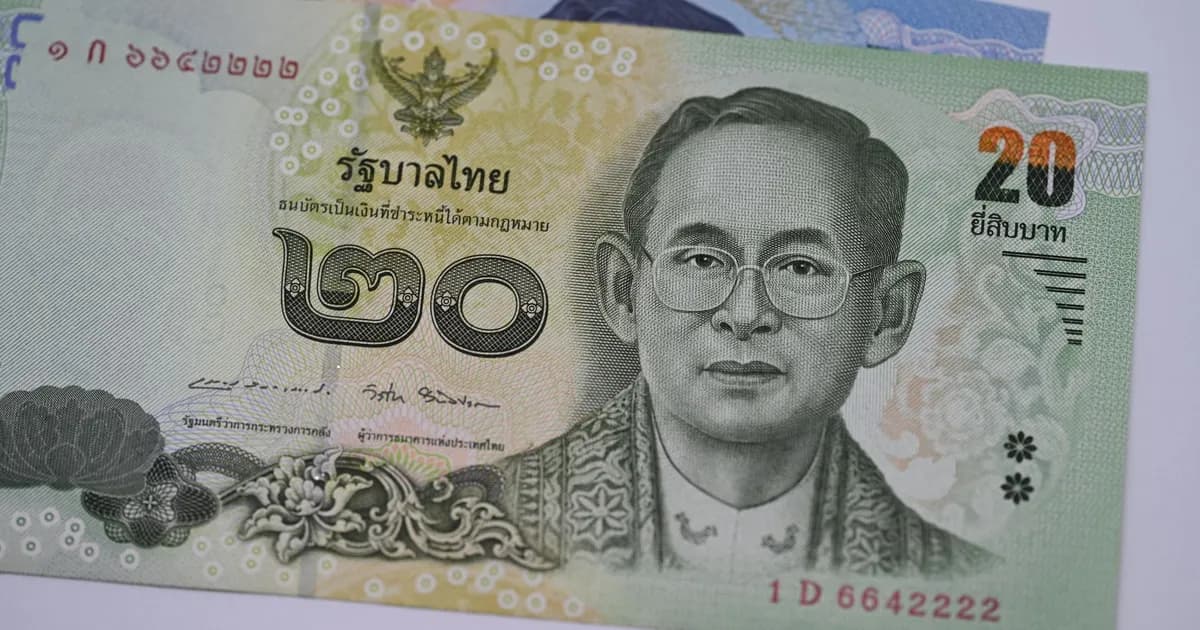
The Strong Baht: What Thailand's Currency Is Doing to Value in 2026
Ask a hotel manager in Chiang Mai why European bookings are soft this year and you will not hear about prices. You will hear about the exchange rate. Thailand in 2026 is a country where domestic inflation has flattened, where hotel rates have in many places gone backwards, and where travellers nonetheless arrive convinced the place has become expensive. Both things are true at once, and the bridge between them is the baht. Understanding that gap is the single most useful piece of financial literacy a slow traveller can bring to Thailand this year.
What Actually Happened to the Baht
The short version: the baht had a very strong run through 2025, appreciating by roughly nine percent over the year, and has held most of that ground through 2026. Against the US dollar it has spent the year in the low thirties, quoted at around 33 baht to the dollar in the middle of September 2026, with Thailand's own Fiscal Policy Office forecasting a full-year average somewhere between 32 and 32.5, an appreciation of a few percent on the 2025 average. Against the euro the picture has been choppier rather than one-directional, with the pair trading broadly in the 36 to 39 baht range across the year.
Two forces are behind it. A generally weaker US dollar and expectations of American rate cuts pushed capital into Asian currencies. And Thailand runs a large current account surplus with record foreign reserves, which gives the baht a structural floor that a slowing tourism sector has not managed to break. The Bank of Thailand has intervened to smooth the moves, but it has not tried to reverse them.
For visitors the mechanics are simple and unforgiving. You are not paying more baht. You are handing over more of your own currency to get the same number of baht.
One request. Up to five tailored proposals.
Skip contacting agencies one by one — share your trip once and let up to five trusted Thailand agencies come to you. Free, with no obligation.
Get my free quotesWhy a Strong Currency Is a Tourism Problem
Thai tourism operators have been unusually blunt about this. The Association of Thai Travel Agents has warned repeatedly through 2026 that an overstrong baht, arriving at the same time as higher airfares, amounts to a double hit on price competitiveness. The Tourism Authority of Thailand has trimmed its own numbers: its base case now sits around 32.6 to 32.7 million foreign arrivals for the year against an earlier target of 33 million, with roughly 2.7 trillion baht in total tourism revenue, of which 1.6 trillion is expected from international visitors.
The awkward part for the industry is that the currency undoes its own price cutting. A hotel that drops its rate by eight percent in baht has given away real margin, and a European guest may still see a number in euros that looks no better than last year. Thailand has spent two decades selling itself partly on the arithmetic of being cheap. When the arithmetic moves against you, the pitch has to change, which is exactly why you are now hearing so much about quality, wellness and high-value travel from Thai tourism bodies.
What This Looks Like in Your Own Money
Work an example. A modest guesthouse room at 1,200 baht a night is about 36 US dollars at 33 baht to the dollar. At 36 baht to the dollar, a level seen not so long ago, the same room was about 33 dollars. Nothing changed in Thailand; the room got ten percent more expensive for the visitor. Multiply that across two weeks of rooms, meals, trains and entrance fees and you have the entire perceived price rise that people arrive complaining about.
The same logic works in reverse for anyone who prepaid or pre-bought baht at a better rate, and it explains why travellers from different countries describe Thailand completely differently this year. If your home currency has held up against the dollar, Thailand feels much as it did. If it has not, the country feels noticeably dearer even though nothing on the ground has changed. Our full breakdown of what a Thailand trip costs in 2026 is built in baht for exactly this reason: baht figures stay honest, conversions do not.
Get matched with up to 5 trusted Thailand agencies
- Free
- No obligation
- Up to 5 agencies
Where the Value Has Not Gone
Here is the part the headlines miss. The strong baht compresses the value of Thailand mainly at the top and middle of the market, where you are buying internationally priced goods and services: resort rooms benchmarked against Bali and Vietnam, imported wine, spa packages, dive courses, branded retail. It barely touches the parts of the country where value comes from local labour and local supply chains.
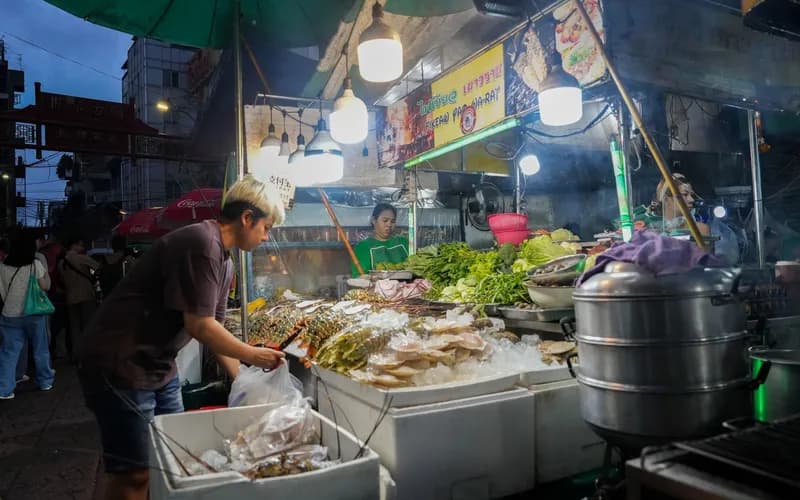
A bowl of noodles at a market stall, a second-class train seat across Isan, a homestay run by a family, a 100-baht temple entry, a local bus, a morning of fruit from a pickup truck: these have not become expensive in any meaningful sense, and Thai consumer inflation has been flat to slightly negative on the back of cheaper energy, which means local prices have genuinely not chased the currency. The slow traveller who eats where Thais eat, moves by train and bus, and stays in small independent places is largely insulated from this story. The two-week resort holiday is not.
Where You Now Feel It Most
Three categories have become conspicuously worse value in 2026, and it is worth naming them plainly.
- Anything sold to foreigners at a foreigner price already: private transfers, tourist-boat charters, island day trips, tailored tours. These were priced with a margin for the exchange rate and have not been reduced.
- Imported and branded goods. Thailand taxes imported wine and spirits heavily; a strong baht does not help you when the tax base moves with it.
- Domestic flights during high season. Airline capacity has not fully recovered and fuel costs have been volatile, so the one part of Thai travel where you might have saved time cheaply is the one that has risen fastest.
The instinctive response is to cut days. The better response is to cut movement. Fewer flights, longer stays, more ground transport: the slow-travel playbook happens to be the same as the cost-control playbook this year.
The Hotel Discount Working Against the Exchange Rate
There is a genuine offset in play. Room rates across much of Thailand have softened in 2026 as occupancy has slipped, and in some markets the discounting has been substantial. In baht terms, many hotels are cheaper than they were two years ago. That is a real transfer of value to the visitor, and it is why some travellers report Thailand as good value this year while others insist it has become dear: they are looking at different parts of the bill. We looked at this in detail in our analysis of what the 2026 room-rate reset actually means, including where the discounts are real and where they come with quiet reductions in service.
The practical implication: this is a good year to negotiate directly with small hotels for stays of a week or more, and a poor year to assume that a package price quoted in your own currency reflects local conditions.
The Regional Comparison Travellers Are Actually Making
None of this happens in isolation. The comparison that matters to a European or American planning six weeks in Southeast Asia is not Thailand versus last year but Thailand versus Vietnam, Japan and Malaysia. A weak yen has made Japan startlingly affordable by its own historical standards. Vietnam remains cheaper across the board and has been aggressive on visas and air links. Thailand's answer has to be depth of infrastructure, food, transport and ease, rather than headline cheapness, and that is a genuinely defensible position for slow travellers even if it loses the price war outright. We unpacked that rivalry in Thailand versus Vietnam and what regional competition means for travellers.
How to Lose Less to the Exchange Rate
Currency moves are out of your hands. The friction on top of them is not, and most travellers lose more to avoidable fees than to the rate itself.
- Always choose to be charged in baht. Dynamic currency conversion, the helpful-looking offer to bill you in your home currency, typically carries a markup of three to seven percent. Decline it at ATMs, card terminals and hotel desks.
- Withdraw large amounts rarely. Thai ATMs charge a flat foreign-card fee, long standing at around 220 baht and in 2026 reaching 250 and even 350 baht at some machines. That fee is 4.4 percent of a 5,000-baht withdrawal and 1.1 percent of a 20,000-baht one.
- Use a card without foreign-transaction fees for card payments, and expect QR payment to be everywhere while remaining largely closed to foreign bank accounts.
- Skip airport exchange counters for anything beyond taxi money. In-town exchange booths in Bangkok and Chiang Mai consistently beat them.
- Do not try to time the market on a two-week trip. The spread you will pay changing money twice is usually larger than the move you are trying to catch.
Our guide to money, cards and staying connected in Thailand goes through the payment landscape in more detail.
What It Means for How You Plan a Trip
If you take one structural lesson from the 2026 currency picture, it is that length now buys more than breadth. A strong baht penalises the things a fast trip is made of, flights, transfers, tours and short hotel stays with high daily overheads, and barely touches the things a slow trip is made of, weekly room rates, markets, trains and time. A month in two provinces has probably never compared more favourably against two weeks in five.
It also argues for booking in baht wherever you can, for holding a modest baht buffer if you are travelling for months, and for building your budget from local prices rather than from a converted daily figure that will drift. If you are starting from scratch, our plan-your-journey framework for Thailand is structured around exactly that sequence: shape, then length, then cost.
What to Do Next
- Build your budget in baht, not in your home currency, and convert only once at the end to sanity-check the total.
- Check the current rate against the year's range before you commit to prepaid packages; if your currency is at a weak point, favour pay-on-arrival options in baht.
- Set your card up properly before departure: no foreign-transaction fee, DCC declined by default, a second card held separately.
- Reduce internal flights first. Swapping two domestic hops for overnight trains is usually the largest single saving available.
- Ask small hotels directly about weekly and monthly rates rather than booking seven separate nights online.
- Reallocate the savings towards the parts of Thailand that are labour-rich and import-poor: markets, local transport, family-run places, smaller provinces.
Frequently Asked Questions
Is Thailand actually more expensive in 2026?
In baht, mostly no. Consumer inflation has been flat to slightly negative and hotel rates in many areas have fallen. In foreign currency, yes, for most visitors, because the baht has appreciated. That distinction matters because it tells you where to look for savings: local prices are still low, so the leak is in fees, packages and imported goods.
Will the baht weaken and make things cheaper again?
Nobody can tell you that honestly. Thai official forecasts for 2026 have clustered around 32 to 32.5 baht per US dollar on average, which implies continued strength rather than a reversal, and the current account surplus and record reserves behind it are structural rather than seasonal. Plan your trip on the rate you can see, not on the rate you hope for.
Should I bring cash or rely on cards?
Both, deliberately. Card acceptance is good in cities, tourist areas and modern retail, and QR payment is near universal among Thai residents but largely inaccessible with a foreign bank account. Markets, songthaews, small guesthouses, temples and rural provinces remain cash-first. Carry enough baht to function for two or three days and withdraw in large, infrequent amounts.
Is it better to change money at home or in Thailand?
In almost all cases, in Thailand, at an in-town exchange booth rather than an airport counter, or by ATM withdrawal with a fee-friendly card. Bringing crisp large-denomination notes of a major currency to change locally often gets the best rate of all. Airport counters and home-country bureaux de change usually carry the worst spreads.
Does the strong baht change where in Thailand I should go?
It sharpens an argument that already existed. Provinces with little international tourism price in local terms, so Isan, the lower Gulf coast, the northern valleys and the smaller islands have felt no currency effect on the ground at all. The places where you notice it are the internationally benchmarked resort markets. If value matters to you this year, weight your itinerary towards the former.
Is now a bad time to visit Thailand?
No, and arguably the opposite. Softer arrivals, discounted rooms and quieter sites are a real benefit for anyone travelling slowly, and they partly offset the currency. What has changed is the kind of trip that represents good value: fewer flights, longer stays, more local spending. That is a rearrangement, not a reason to stay home.
Keep reading
More from the ground · Thailand