

How to Choose a Responsible Ha Long Bay Cruise
Few images sell Vietnam like the karst towers of Ha Long Bay rising from jade water. Few experiences are also as easy to get wrong. The bay is a UNESCO World Heritage Site and one of the most heavily marketed cruises in Asia, which means the gap between a thoughtful trip and a crowded, forgettable one is wide. Choosing well is not about spending the most money; it is about understanding which bay to visit, what a responsible operator looks like, and how to travel here in a way that does the seascape justice rather than adding to its strain.
The Problem With "Ha Long Bay" as a Default
Ha Long Bay is extraordinary, but its fame is also its burden. Hundreds of boats work the water, the most popular routes and caves can feel like a floating traffic jam, and the sheer volume of visitors has put real pressure on the environment. Booking the first cheap overnight cruise you find often means a rushed, crowded experience on an ageing boat, sharing every viewpoint with a dozen others. The good news is that a little knowledge changes everything, and much of the crowding can be avoided simply by choosing a different corner of the same seascape. If your instinct is to seek the quieter version of a famous place, our guide to quieter alternatives to Ha Long and Hoi An is written in exactly that spirit.
One request. Up to five tailored proposals.
Skip contacting agencies one by one — share your trip once and let up to five trusted Vietnam agencies come to you. Free, with no obligation.
Get my free quotesThree Bays, Not One: Ha Long, Bai Tu Long and Lan Ha
The single most useful thing to know is that the famous karst seascape spans three connected areas, not one. Ha Long Bay proper, launched from Ha Long City in Quang Ninh province, is the busiest and most developed. Bai Tu Long Bay, to the north-east, is part of the same protected area but sees far fewer boats and feels noticeably wilder.

Lan Ha Bay, to the south and reached via Cat Ba Island and Hai Phong, is arguably the sweet spot for slow travellers: the same towering limestone and hidden lagoons, but quieter beaches, more kayaking and a fraction of the traffic. Choosing Bai Tu Long or Lan Ha over the main Ha Long route is the simplest single decision you can make to improve the experience.
Day Trip or Overnight?
A day cruise can technically show you the bay, but it rarely does it justice. The magic of this seascape is in its quiet hours — early morning mist, the light after the day boats have gone, a night at anchor among the towers — and those belong to overnight guests. A two-day, one-night cruise is the standard and, for most people, the right choice. Three-day, two-night trips reach further into the quieter bays and suit travellers who want to slow right down. Whatever you choose, resist the temptation to cram a Ha Long cruise into a single rushed day from Hanoi.
Get matched with up to 5 trusted Vietnam agencies
- Free
- No obligation
- Up to 5 agencies
What a Responsible Operator Actually Looks Like
Not all operators are equal, and the differences matter for both your experience and the bay itself. A responsible operator holds the proper licences and follows the environmental regulations that govern the bay; treats waste and sewage properly rather than discharging it; limits group sizes so viewpoints and kayaks are not overwhelmed; pays and treats its crew well; and is transparent about its itinerary rather than hiding a shopping stop or a crowded cave behind glossy photos. Reading recent, detailed reviews — not just star ratings — is the best way to separate the genuine from the merely marketed. This is the same ethic of travelling in a way that respects a place that underpins our slow travel charter.
Reading the Boat: Size, Cabins and What "Luxury" Means
Boats range from converted wooden junks to large steel cruisers with dozens of cabins. Bigger is not better here. Smaller vessels reach quieter anchorages, feel less like a floating hotel, and put you closer to the water. "Luxury" in Ha Long marketing often means more cabins and more buffet, not a better experience of the bay.
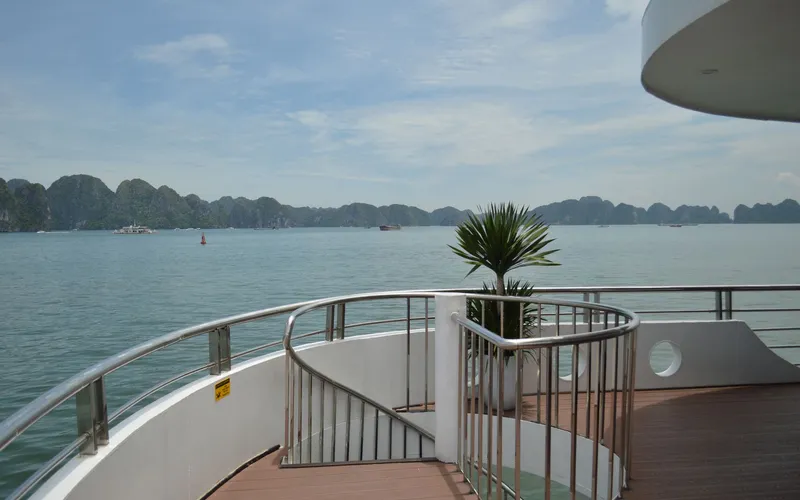
For slow travellers, a small or mid-sized boat with a good guide, a sensible itinerary and time built in for kayaking and swimming will almost always beat a larger, showier vessel packed with a hundred guests. Ask how many cabins a boat has before you book; the answer tells you more than the star rating.
The Environmental Reality and the New Rules
Ha Long's popularity has come at a cost, and the authorities have tightened the rules in response, with periodic restrictions on routes, boat numbers and operating standards aimed at easing pressure on the water and the marine environment. As a visitor you can support this by choosing licensed operators, not buying single-use plastic to bring aboard, keeping to designated swimming and kayaking areas, and never touching or taking anything from the caves and reefs. The bay's future as a place worth visiting depends on exactly these small collective choices.
Timing, Weather and Booking
The best months are roughly October to April, when skies are clearer and the sea calm, though winter can bring haze. Summer, from June to September, is warm and green but carries a real risk of typhoons, which can cancel sailings at short notice; build a buffer day into any summer plan. Book a few weeks ahead for the better small-boat operators, especially around Vietnamese holidays, and confirm the itinerary and boat details in writing before you pay.
The Slow-Travel Alternative: Cat Ba and Beyond
For travellers who want the seascape without the cruise-industry machinery, basing yourself on Cat Ba Island and exploring Lan Ha Bay by day boat and kayak is a quietly brilliant option. You sleep on land, travel at your own pace, and dip into the karst on your own terms. Those drawn to this kind of landscape should also consider its inland cousin: the guide to Ninh Binh's karst country of Trang An covers the same dramatic limestone, reflected in rivers and rice fields rather than the sea, and with far fewer boats.
What Happens on a Typical Overnight Cruise
Knowing the rhythm of a cruise helps you judge whether an itinerary is generous or rushed. A standard two-day trip picks you up from Hanoi in the morning, reaches the harbour around midday, and boards in the early afternoon. The first day usually mixes a cave visit, a kayak or bamboo-boat session and a swim, followed by sunset on the top deck and dinner aboard. The night is spent at anchor among the karst, often the quietest and most memorable part of the trip. The second morning brings an early tai chi session for the willing, a lighter activity such as a floating village or a smaller cave, brunch, and a return to harbour by late morning. A three-day cruise simply stretches this out, with more time in the quieter bays and less rushing. If an itinerary seems to promise a dozen stops in a day, treat that as a warning sign rather than a selling point.
Kayaking, Caves and Doing Less
The best moments in Ha Long are rarely the headline sights. The famous Sung Sot Cave is impressive but crowded; a quiet paddle into a hidden lagoon at the base of a karst tower, with only the sound of your own oar, is the memory that lasts. Choose an itinerary that builds in real time for kayaking and swimming rather than one that races between photo stops. Ask whether kayaking is included or costs extra, and whether the boat visits the busy central caves or the quieter corners. On the water as on land, the slow-travel principle holds: fewer things, experienced properly, beat a packed schedule every time.
What to Do Next
- Choose your bay first: favour Lan Ha or Bai Tu Long over the busy main Ha Long route for a quieter experience.
- Book an overnight cruise, not a rushed day trip, so you get the bay's quiet early and late hours.
- Vet the operator for licensing, small group sizes, waste handling and honest itineraries, reading detailed recent reviews.
- Pick a smaller boat over a larger "luxury" one, and ask how many cabins it has before booking.
- Build your trip with a grounded local operator from our Vietnam travel agencies directory, and plan around the weather.
Frequently Asked Questions
Which is better, Ha Long Bay or Lan Ha Bay?
For slow travellers, Lan Ha Bay is usually the better choice. It shares the same dramatic karst scenery as Ha Long Bay but sees far fewer boats, with quieter beaches and more kayaking. It is reached via Cat Ba Island and Hai Phong rather than Ha Long City. Bai Tu Long Bay is another quieter alternative within the same protected area.
Should I do a day trip or an overnight cruise?
An overnight cruise is strongly recommended. The bay is at its most beautiful in the early morning and late afternoon, after the day boats have left, and only overnight guests experience those hours. A two-day, one-night cruise is the standard and suits most travellers; three-day trips reach further into the quieter bays.
How do I know if a cruise operator is responsible?
Look for proper licensing, compliance with the bay's environmental regulations, small group sizes, good treatment of crew, honest itineraries without hidden shopping stops, and responsible waste handling. Detailed recent reviews are more revealing than star ratings alone. Reputable operators are transparent about their boats and routes before you book.
When is the best time to cruise Ha Long Bay?
October to April generally offers the calmest seas and clearest skies, though winter can be hazy. Summer, from June to September, is warm and lush but carries a genuine typhoon risk that can cancel sailings, so leave a buffer day if you travel then. Avoid the busiest Vietnamese public holidays if you can.
How much does a Ha Long Bay cruise cost?
Overnight cruises commonly range from around 140 to 230 US dollars per person for a two-day, one-night trip, depending on the boat and season, with luxury vessels costing more. Beware very cheap options, which often mean older boats, larger crowds and cut corners. Paying a little more for a small, well-run boat is usually worth it.
Is Ha Long Bay too crowded to be worth visiting?
Not if you choose carefully. The main Ha Long route can feel overwhelmed, but Lan Ha and Bai Tu Long bays remain far quieter, and basing yourself on Cat Ba Island lets you explore the karst at your own pace. With a responsible operator and the right bay, the seascape still lives up to its reputation.