
Most travellers arrive in Vietnam with two anxieties about money: that they will be overcharged, and that they will get the etiquette wrong. Both worries are reasonable, and both are easier to manage than they seem. Tipping is optional and modest. Bargaining is expected in some places and out of place in others. And a fair price is usually less about winning a negotiation than about knowing where negotiation belongs at all.
This guide sets out how to think about money in everyday Vietnamese situations: markets, restaurants, taxis, tours, guides and spas. It gives concrete amounts in Vietnamese dong, because vague advice is no help at a stall, and it explains the logic behind each rule so you can adapt when a situation is not in the book. The approach is a slow-travel one: spend where it matters, pay fairly, and spare yourself the stress of turning every purchase into a contest.
Start with the principle: fair, not cheap
The first thing to settle is what you are trying to achieve. A fair price is one that the seller can live with and that you are happy to pay. It is not the lowest possible number. Travellers who treat bargaining as sport tend to argue over sums that mean a lot to a vendor and almost nothing to themselves, and the exchange sours for both sides.
Vietnamese commerce has a concept often described as face, the idea that both parties should leave an exchange feeling respected. A calm, friendly negotiation that ends in a sale leaves everyone with face intact. A hard, public haggle that ends with you walking off in irritation does not. Keep that in mind and you will avoid most of the awkward moments.
It also helps to know the numbers. A cup of coffee at a local cafe, a bowl of noodles, or a bus fare costs a small sum, and the difference between a good and a bad price on those items is pennies. The sums that matter are on larger purchases: tours, private transfers, tailoring and accommodation on arrival. Save your energy for those.
One request. Up to five tailored proposals.
Skip contacting agencies one by one — share your trip once and let up to five trusted Vietnam agencies come to you. Free, with no obligation.
Get my free quotesWhere bargaining belongs, and where it does not
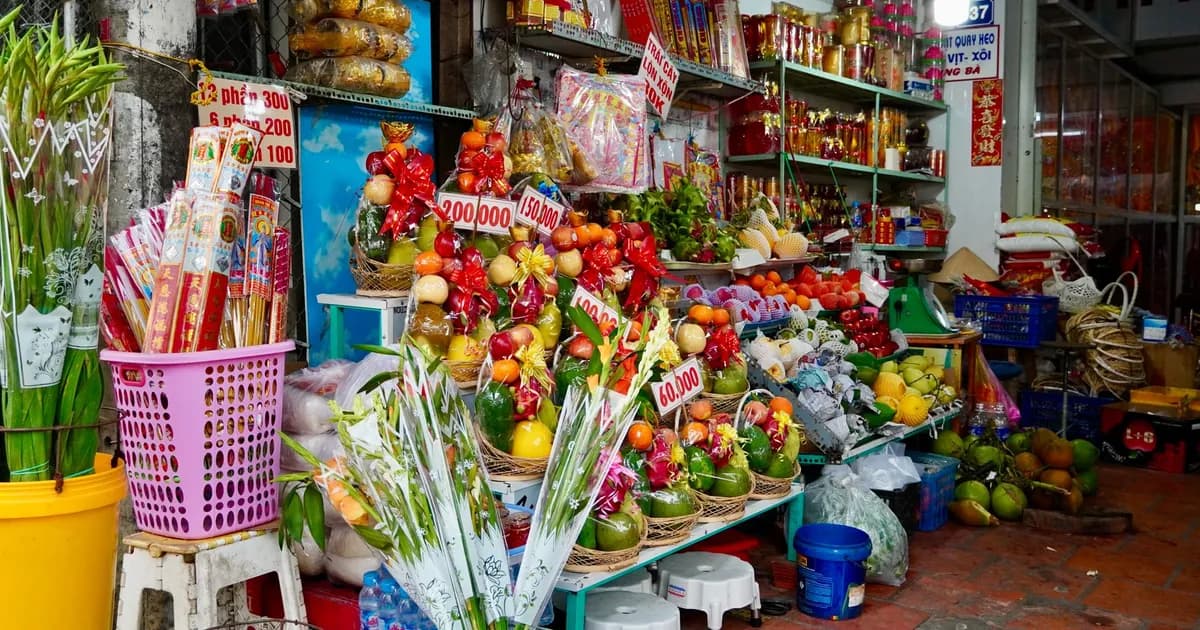
Bargaining is normal at traditional markets, among street vendors who display no prices, on handicrafts, souvenirs and clothing, with unmetered transport such as cyclos and informal motorbike taxis, and when buying tours or arranging accommodation on the spot. In these settings the first price is an opening bid, and sellers expect you to counter.
Bargaining is not normal in restaurants and cafes, supermarkets, pharmacies, clinics, public transport, or at official entrance ticket counters. In those places the price displayed is the price. Haggling over a printed menu, or over a ticket at a heritage site, will earn confusion rather than a discount. If you are unsure, look for a price tag or a printed menu: if one exists, you are almost certainly in a fixed-price environment.
For a sense of how much room there can be, one widely read local guide reports that initial tourist prices at markets are often three to five times what residents pay, and suggests typical final prices well below the opening ask, for instance a silk scarf starting at 300,000 to 500,000 VND settling around 80,000 to 150,000 VND, or a ceramic mug starting at 100,000 to 200,000 VND settling around 30,000 to 50,000 VND. Treat those as indicative rather than guaranteed, because quality varies enormously, and a hand-woven piece from a small producer is not the same product as a factory scarf.
A calm way to negotiate
You do not need clever tricks, but a few habits help. Ask the price and listen, rather than naming a number first. If the first price seems high, smile, and offer something around half, then expect to meet somewhere between. Pause after you make an offer: silence is a perfectly good negotiating tool, and sellers often fill it. If a price will not move to a level you consider fair, thank the seller and walk away. Sometimes you will be called back, and sometimes not, and either outcome is fine.
Buying several items from one stall gives you a reasonable case for a reduction, commonly something like 20 to 30 percent, but only if you ask politely. Typing numbers into a phone calculator, which many vendors will do themselves, removes the language barrier and keeps things light. Carry small notes, because it is hard to haggle down to 80,000 VND and then offer a 500,000 VND note with no change available.
Two cautions apply. First, do not bargain hard with small artisans selling handmade goods, or with older women selling a few vegetables or fruits. The saving to you is trivial and the cost to them is real. Second, never bargain for wildlife products, ivory or coral, which are illegal and harmful, and which you should not be buying at any price.
Get matched with up to 5 trusted Vietnam agencies
- Free
- No obligation
- Up to 5 agencies
Restaurants, cafes and the bill
In most Vietnamese restaurants, the price is the price. Street stalls and local eateries rarely add a service charge, and the amount on the menu or quoted is what you pay. Upscale restaurants and hotel dining rooms often add service charge and tax to the bill, commonly shown as plus-plus pricing, so read the small print before you tip on top.
A few habits prevent most disputes. Look at the menu prices before ordering, ask what is included when a dish arrives without a listed price, and be wary of anything placed on your table that you did not order. In some tourist areas, packaged wet wipes and side dishes appear without being requested and are then charged. Politely decline what you do not want. Our guide to avoiding common scams in Vietnam goes through these patterns in more detail, and it is worth reading before your first week.
Tipping: what is customary and what is generous
Tipping is not part of traditional Vietnamese culture, and nobody will chase you for it. In practice, though, a modest tip is welcomed in tourism settings, where wages are low and the habit is established. The guideline is to tip when service has been good, not as an obligation, and not in a way that makes anyone uncomfortable.
Commonly suggested amounts, drawn from travel guides aimed at visitors, are as follows.
- Restaurants: not required at casual places. At higher-end restaurants or on cruises, around 5 to 10 percent for exceptional service if no service charge is already included.
- Tour guides: roughly 200,000 to 500,000 VND per day for a good full-day guide, or around 5 to 10 percent of the tour price.
- Private drivers: around 50,000 to 100,000 VND per day for a good private driver.
- Taxi and ride-hailing drivers: rounding up the fare is plenty.
- Hotel porters: about 50,000 VND per bag.
- Housekeeping: 50,000 to 100,000 VND per day for notably good service, left on the pillow or with a note.
- Spa and massage: 10 to 15 percent if no service charge is included.
Treat these as ranges, not rules. A small family homestay that cooked every meal for you and arranged a day of activities deserves recognition, but may not expect cash. A shared box or an envelope for the whole team is often the most gracious way to tip at a lodge or on a multi-day trek, since it spreads the money fairly among cooks, porters and guides.
Transport, tours and the price you agree in advance
Unmetered transport is where most overpayment happens. Metered taxis from reputable companies and fixed-fare ride-hailing apps remove the need to negotiate, and they are the simplest option in cities. Our guide on using ride-hailing apps in Vietnam explains how the apps work. When you must agree a price, such as with a cyclo or a boatman, settle it before you step in, confirm whether the price is per person or per vehicle, and confirm the duration. A boat ride quoted around 150,000 VND for 20 minutes, for instance, is a reasonable reference in a popular tourist area, but anything dramatically higher is worth querying.
For tours, compare three or four operators and ask what is included: entrance fees, lunch, transfers, group size and guide language. Be wary of unusually cheap tours, which often recover their margin through compulsory shopping stops or add-on charges. A fair price is one that reflects the real cost of a good guide, transport and a decent lunch, and that does not rely on commissions from shops.
Paying and handling money
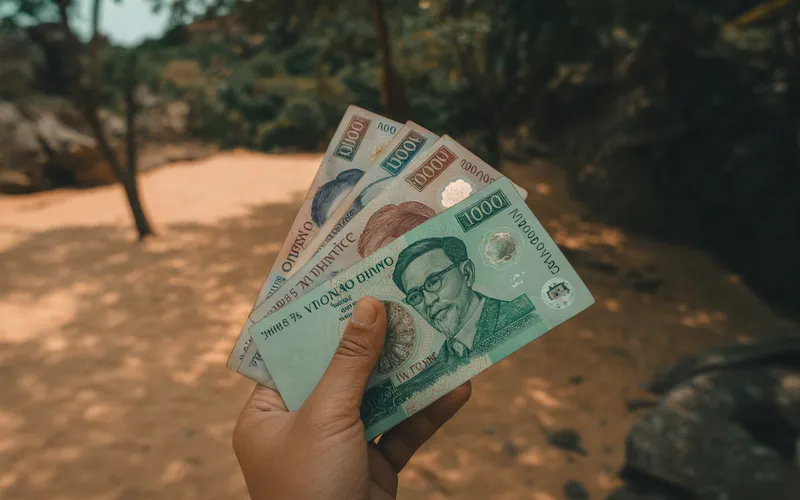
Pay in Vietnamese dong, not in foreign currency. Dollar prices are sometimes quoted in tourist settings, but the exchange rate offered is rarely in your favour. Keep a mix of notes, because large denominations are hard to change at small stalls, and count your change immediately, especially with notes of similar colour. Our overview of money, cards and connectivity in Vietnam covers ATMs, cards and QR payments.
What a fair budget looks like
A fair price is easier to judge when you know the general level of costs. For a wider picture of daily budgets, including accommodation and transport, read our guide to what a Vietnam trip costs in 2026. The short version is that Vietnam remains good value, and that a modest overpayment on an occasional souvenir does not change that. What matters more is the pattern: choose operators you trust, pay clearly for what you receive, and treat bargaining as a brief, friendly conversation rather than a battle.
What to Do Next
- Carry a stock of small dong notes, in 10,000, 20,000 and 50,000 denominations, for markets and tips.
- Learn the price of three everyday items, such as a coffee, a noodle soup and a short ride, in your first day, so you have a baseline.
- Decide in advance what you want to haggle for, such as souvenirs and tours, and leave the rest at fixed prices.
- Ask the price before you sit in, climb on or accept anything, and agree what the price covers.
- Prepare a small tipping budget for guides, drivers and lodge staff, and put it in envelopes for multi-day trips.
- If you want help choosing trustworthy operators, see our list of trusted travel agencies in Vietnam.
Frequently Asked Questions
Do you have to tip in Vietnam?
No. Tipping is not an obligation, and in many local settings it is not expected at all. It is, however, welcome in tourism contexts, particularly for guides, drivers and hotel staff. A small tip for good service is appreciated, but there is no social penalty for not leaving one.
How much should I tip a tour guide in Vietnam?
Travel guides commonly suggest around 200,000 to 500,000 VND per day for a good full-day guide, or roughly 5 to 10 percent of the tour price. The right amount depends on group size, length of the day and quality of service. For multi-day treks, a pooled envelope shared among the team is a gracious approach.
Is bargaining expected in Vietnam?
At markets, with street sellers and for unmetered transport, yes. In restaurants, supermarkets, pharmacies and at official ticket counters, no. If a price is printed or displayed, treat it as fixed.
How much can I reduce a market price?
It varies, but opening prices for tourists are often well above what residents pay. A final price somewhere around half the opening ask is a reasonable target for souvenirs, while buying several items can justify a further reduction of around 20 to 30 percent. Be gentler with small artisans, whose margins are slim.
Should I pay in dong or dollars?
Pay in dong. Prices quoted in foreign currency usually come with unfavourable exchange rates, and it is easier to keep track of what you spend in the local currency. Withdraw cash from bank ATMs and keep a stock of small notes.
Is there a service charge in Vietnamese restaurants?
Local eateries rarely add one. Upscale restaurants and hotels often add a service charge and tax, which is usually shown on the menu or the bill. Check before tipping on top, since you may already have contributed.
What if I think I have been overcharged?
Stay calm, ask politely for an explanation or a price list, and compare with what you know. If a small amount is involved, it may be wiser to let it go and learn from it. For larger amounts at hotels or tour operators, keep receipts and take a photo, and raise it with the manager. Our slow travel charter sets out the principles we apply: fair dealing, local benefit and respect on both sides.