How to Cross Vietnam's Land Borders: Cambodia, Laos and China by Road and Rail
There is a particular pleasure in leaving a country the slow way. You watch the landscape change on a bus window, you carry your own bag across a bridge or a barrier, and you step into the next country with the dust of the last still on your shoes. Vietnam shares land borders with Cambodia, Laos and China, and several of them are well used by travellers. They are also the part of a journey where small paperwork mistakes cause large problems.
This guide is a practical, evergreen walkthrough of how to cross Vietnam's land borders: how to choose a gate, what the e-visa rules mean at the barrier, what to carry, how the day tends to unfold, and the mistakes that cost travellers time and money. Gate lists and rules can change by government resolution, so treat this as a framework and confirm details with the official source before you book.
Start with the rule that catches people out: the gate on your e-visa
The single most important thing to understand is that an e-visa for Vietnam is tied to the port of entry you select when you apply. The 2025 expansion of the e-visa list took the total to 83 border checkpoints, and at the time of writing the list includes 17 airports, 27 land gates and 39 seaports. Industry sources note that you choose the exact gate on the application form, and that it cannot be changed after approval. If you turn up at a different gate, officers may compare the two and refuse entry.
That has a practical consequence for slow travellers, who often change their minds mid-journey. If you are not certain where you will cross, either apply only once your route is firm, or, if you hold a visa exemption instead of an e-visa, you avoid the issue altogether. Our explainer on e-visa versus visa exemption will help you work out which category applies to your passport.
Other points worth knowing from published guidance:
- A single-entry e-visa expires once you exit. If you enter by air and leave by land, or the reverse, that is fine on a single entry. If you plan to leave and come back, you need a multiple-entry e-visa, and both ports must be on the approved list.
- The government fee is commonly cited at 25 USD for single entry and 50 USD for multiple entry, whichever port you choose. Beware lookalike sites that add large service charges; the official portal is evisa.gov.vn.
- Passports should have at least six months of validity beyond arrival.
- Land arrivals do not benefit from the special visa-free rules that apply to some islands for direct air or sea arrivals.
One request. Up to five tailored proposals.
Skip contacting agencies one by one — share your trip once and let up to five trusted Vietnam agencies come to you. Free, with no obligation.
Get my free quotesWhich land gates accept the e-visa
Published lists show 27 land gates currently open to e-visa holders, split across the three neighbours. Gate lists change, so check the official portal, but the following names are a useful map.
Cambodia: Moc Bai (Tay Ninh), the main crossing opposite Bavet; Xa Mat (Tay Ninh); Tinh Bien and Vinh Xuong (An Giang), the latter on the Mekong; Ha Tien (the former Kien Giang area, a coastal gate); Le Thanh (Gia Lai); Binh Hiep, Tan Nam (limited services) in Tay Ninh; and Thuong Phuoc and Dinh Ba in Dong Thap.
Laos: Tay Trang (Dien Bien); Na Meo (Thanh Hoa); Nam Can (Nghe An); Cau Treo (Ha Tinh); Cha Lo (Quang Binh, now within Quang Tri); La Lay and Lao Bao (Quang Tri); Bo Y (Kon Tum); Long Sap (Son La); and Nam Giang (Da Nang).
China: Huu Nghi, also called Friendship Pass, and Dong Dang by rail (Lang Son); Lao Cai by road and by rail; Mong Cai (Quang Ninh); Tra Linh (Cao Bang); and Thanh Thuy (Tuyen Quang).
Several of these were added to the e-visa list as recently as December 2025, including Dong Dang rail, Lao Cai rail, Tra Linh, Long Sap, Nam Giang, Le Thanh, Binh Hiep, Thuong Phuoc, Dinh Ba, Tan Nam and Thanh Thuy. A newly listed gate is not always a fully equipped one, so ask your guesthouse or operator whether foreign travellers cross there routinely.
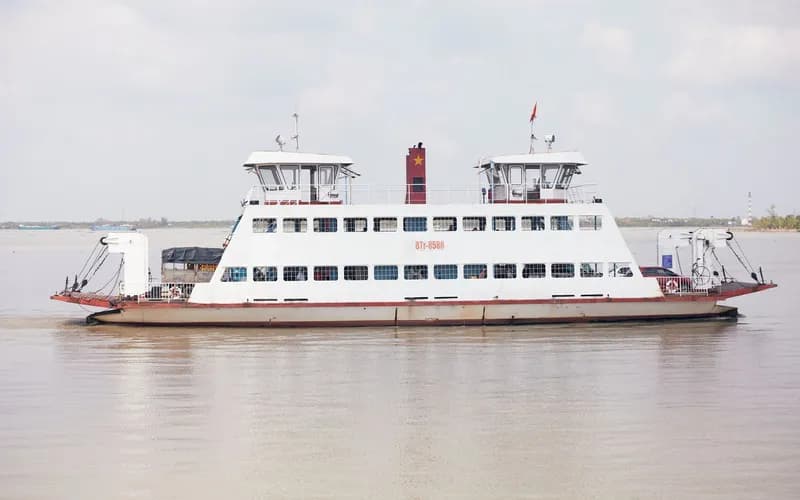
Crossing between Vietnam and Cambodia
This is the busiest corridor for travellers, and it comes in three flavours.
Moc Bai to Bavet is the main road crossing between Ho Chi Minh City and Phnom Penh. It is served by direct buses, which handle much of the paperwork logistics for you, though you still walk through immigration with your passport.
The Mekong route uses Vinh Xuong, with the border crossing handled by boat or road around Chau Doc. For travellers who want to spend time in the delta, this is the most scenic option, and our profile of An Giang and the Mekong borderlands explains why the area is worth more than a transit night.
The coast route uses Ha Tien, a gentle option for people linking the southern coast with Kampot and Kep on the Cambodian side.
Cambodia has its own entry rules and visa process, which change independently. Check Cambodian requirements separately from Vietnamese ones, and do not assume a visa sold at a border will be cheap or simple.
Get matched with up to 5 trusted Vietnam agencies
- Free
- No obligation
- Up to 5 agencies
Crossing between Vietnam and Laos
The Laos border is long, mountainous and, in many places, remote. A few gates are used regularly by travellers.
- Tay Trang (Dien Bien) connects the northwest with northern Laos and suits travellers combining Dien Bien Phu with Luang Prabang or Muang Khua.
- Cau Treo (Ha Tinh) and Nam Can (Nghe An) serve the central corridors toward Vientiane and Pakse side routes.
- Lao Bao (Quang Tri) is the long-established route linking Dong Ha and Hue with Savannakhet.
- Cha Lo (Quang Binh) sits near Phong Nha, and is a natural pairing with a stay in the caves; see our guide to Phong Nha-Ke Bang for what to do while you wait for the right moment to cross.
- Bo Y (Kon Tum) is the Central Highlands crossing toward southern Laos and Cambodia.
Remote Laos gates can have shorter opening hours, patchy transport and limited money-changing, so carry cash and plan to arrive mid-morning. Because services thin out as you approach the smaller crossings, an operator or a well-informed guesthouse is more useful here than on the Cambodia side.
Crossing between Vietnam and China
China is the most formal of the three crossings. Gates such as Huu Nghi (Friendship Pass) and Dong Dang by rail in Lang Son, Lao Cai by road and rail, and Mong Cai on the northeastern coast are the usual choices. Tra Linh in Cao Bang is a more recent and more scenic option near the Ban Gioc waterfall; our profile of Cao Bang gives context on the region.
China's own visa rules, entry cards and requirements are separate from Vietnam's and have changed several times in recent years. Verify them with Chinese official sources well before departure, and do not treat a Vietnamese e-visa listing as a statement about the Chinese side.
What to carry, and how the day tends to go
The checklist is short, but every item matters.
- Passport with enough validity and blank pages.
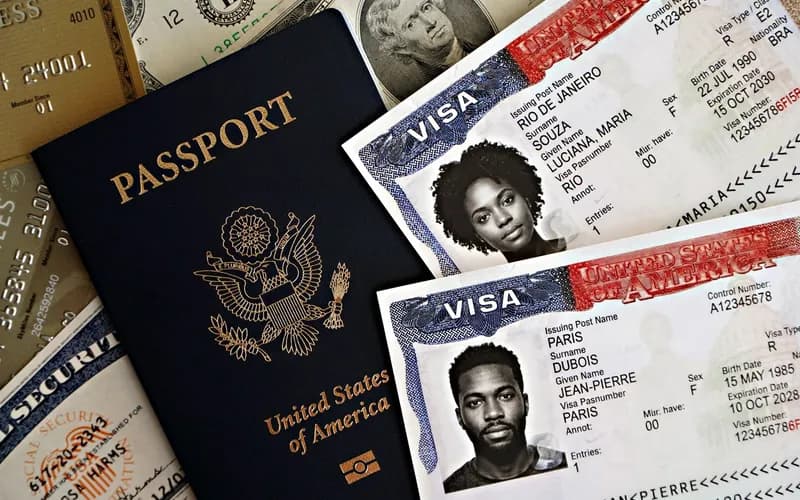
- Printed e-visa if you hold one. Guidance recommends printing it and carrying the passport at every land gate; an electronic file on a phone may not be accepted.
- Entry paperwork for the country you are heading to, printed where possible.
- Small amounts of both currencies, plus dollars. Border money-changing can be poor, so use it only for essentials.
- Water, snacks and patience. Queues are rarely dramatic, but they are unpredictable.
A typical crossing runs like this. You leave Vietnam through immigration, hand over your passport and have it stamped. You walk or ride across no-man's-land. You complete arrival formalities on the other side, which may include a health or arrival form, biometrics, and a fee paid in cash. Allow a couple of hours for the border itself even on easy days.
We would add a note on honesty: border towns are where informal fees and "helpful" fixers appear. Our guide to avoiding common scams in Vietnam covers the patterns. In short, ask the price before you accept help, keep your passport in your own hands, and be polite but firm if you are asked for an unofficial payment.
Choosing between land, air and rail
A land crossing is rarely the fastest way to change countries. It earns its place when the journey itself is the point, or when the border region is somewhere you want to see anyway. If time is tight, flying the same leg usually wins. For help weighing the options, see our guide to choosing between trains, flights and sleeper buses.
A few considerations tend to decide it:
- Time against experience. A day on the road gives a landscape no flight offers; a day lost to a late connection gives nothing.
- Weather. Mountain borders and Mekong river crossings are more vulnerable to storms and floods in autumn.
- Paperwork risk. A single-entry e-visa and a rigid gate choice leave little room for improvisation.
- Luggage. Walking across a border with a large bag is more tiring than it looks.
Common mistakes to avoid
- Applying for the e-visa without choosing the actual gate you will use.
- Assuming a gate is open to foreigners because it appears on a map; confirm that foreigners cross there and during which hours.
- Turning up with only a phone copy of the visa.
- Forgetting that the exit and the next country's entry are separate processes, with separate costs.
- Booking an onward connection the same evening, with no buffer for delays.
- Overstaying; the penalties under the newer rules are serious, as we explain in Vietnam's stricter overstay rules.
For wider planning, our flagship slow travel guide to Vietnam shows how border crossings fit into a longer, calmer route.
What to Do Next
- Decide your crossing point before you apply for the e-visa, and select that exact gate on the application.
- Check the official portal (evisa.gov.vn) for the current list of land gates and confirm your gate is on it.
- Print the e-visa and any entry documents for the next country, and carry them with your passport.
- Check the other country's visa or entry process separately and well in advance.
- Ask your guesthouse or operator whether foreigners cross at your chosen gate, and when it opens.
- Build in a buffer night on each side, and use our plan-your-journey page to see how the crossing fits the wider route.
Frequently Asked Questions
Can I cross into Vietnam by land with an e-visa?
Yes, if the land gate is on the approved e-visa list and you selected that gate on your application. Published figures show 27 land gates currently accept it, but the list can change, so verify on the official portal before travelling.
Can I change my entry gate after my e-visa is approved?
Generally no. Guidance indicates the port cannot be changed after approval, and a mismatch at the border can lead to refused entry. If your route changes, you may need to apply again.
Do I need to print my e-visa?
Printing it is strongly recommended. Guidance for land gates advises carrying a printed copy alongside your passport, because phone screens and weak signals cause avoidable problems at the barrier.
How much does an e-visa cost?
The commonly cited government fees are 25 USD for single entry and 50 USD for multiple entry, regardless of the port. Apply through the official portal and be wary of sites that add heavy service charges.
Is the Lao Bao crossing open to foreigners?
Lao Bao, in Quang Tri, is listed among the land gates accepting the e-visa and is a long-established route to Savannakhet. As with all gates, check current opening hours and any local conditions before you go.
Can I enter by air and leave by land?
Yes, provided the exit gate is on the permitted list. For a single-entry e-visa this works because you are leaving for good; if you plan to return to Vietnam afterwards, you need a multiple-entry e-visa with both ports eligible.
How long does a border crossing take?
Plan on at least a couple of hours even on a smooth day, and longer at smaller gates or during peak periods. Never schedule a tight onward connection on the same evening.